
Translated material
Get to Donetsk
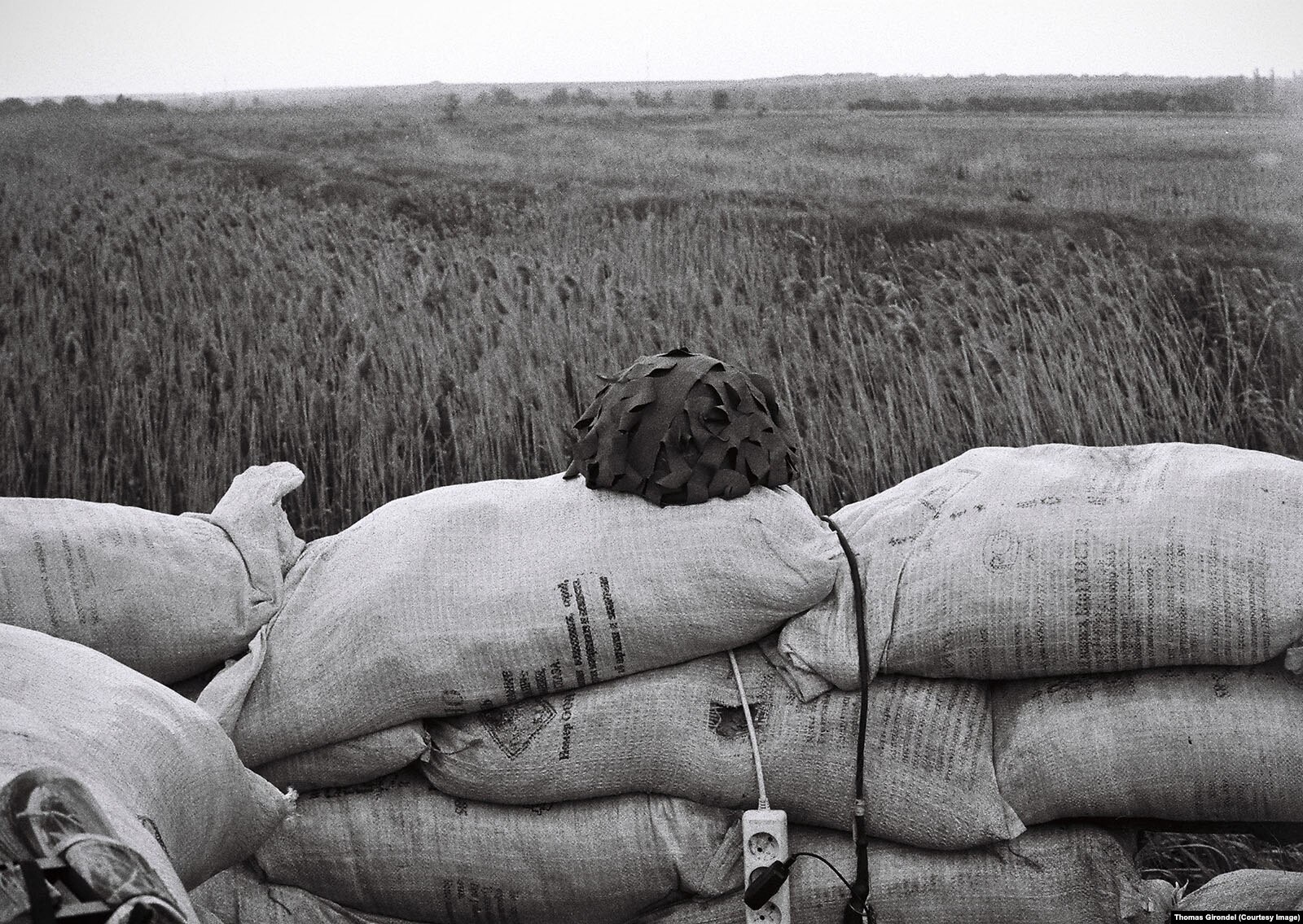
In the project of the French photographer, ordinary people of five European countries tell how they perceive events in Ukraine
The French photographer Thomas Girondel traveled to five European countries to ask ordinary people how they relate to the events in Ukraine and the presence of Russian troops in Crimea. The photographer visited not only the countries of the European Union, but also in Ukraine, where he visited Kyiv and Donetsk.
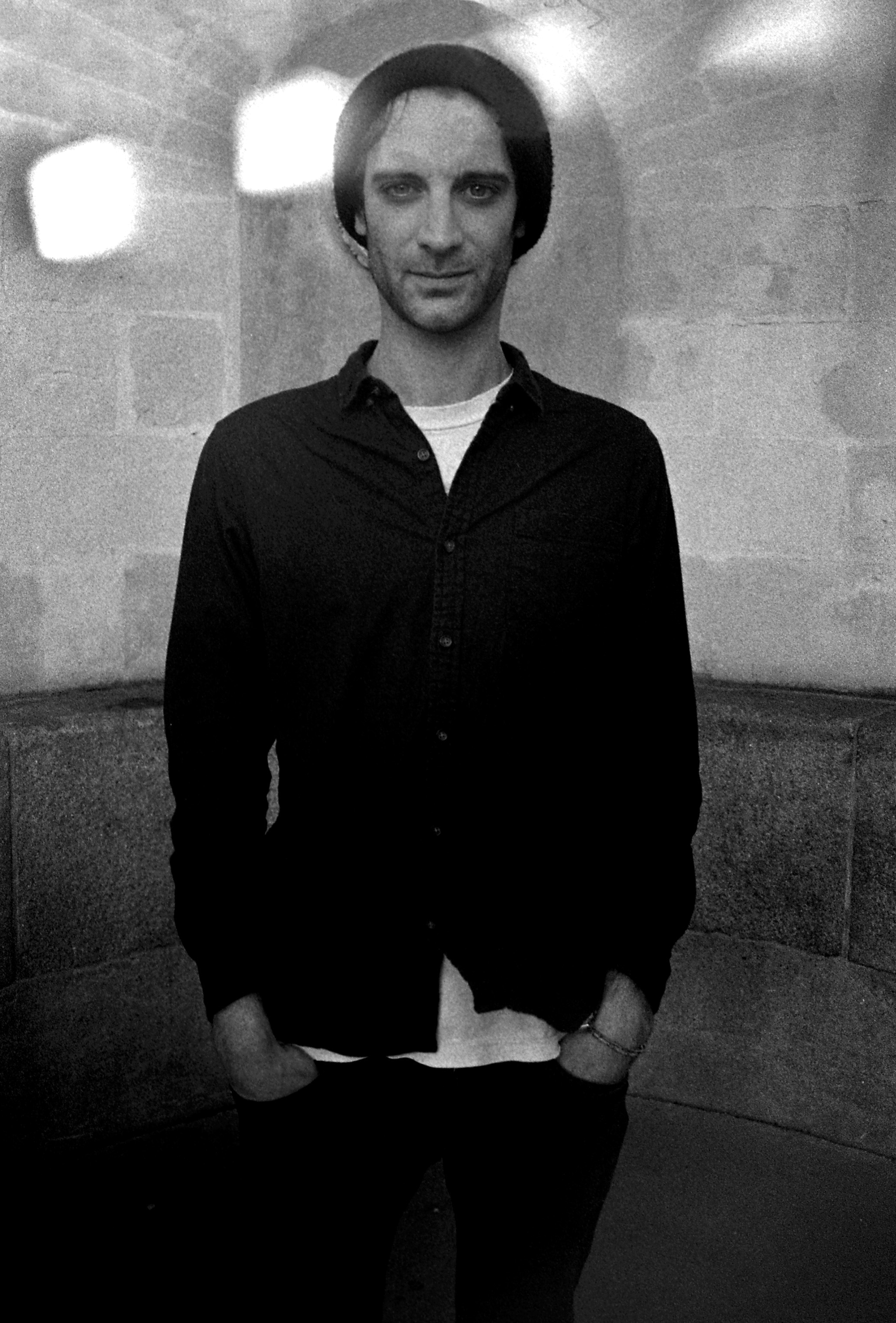
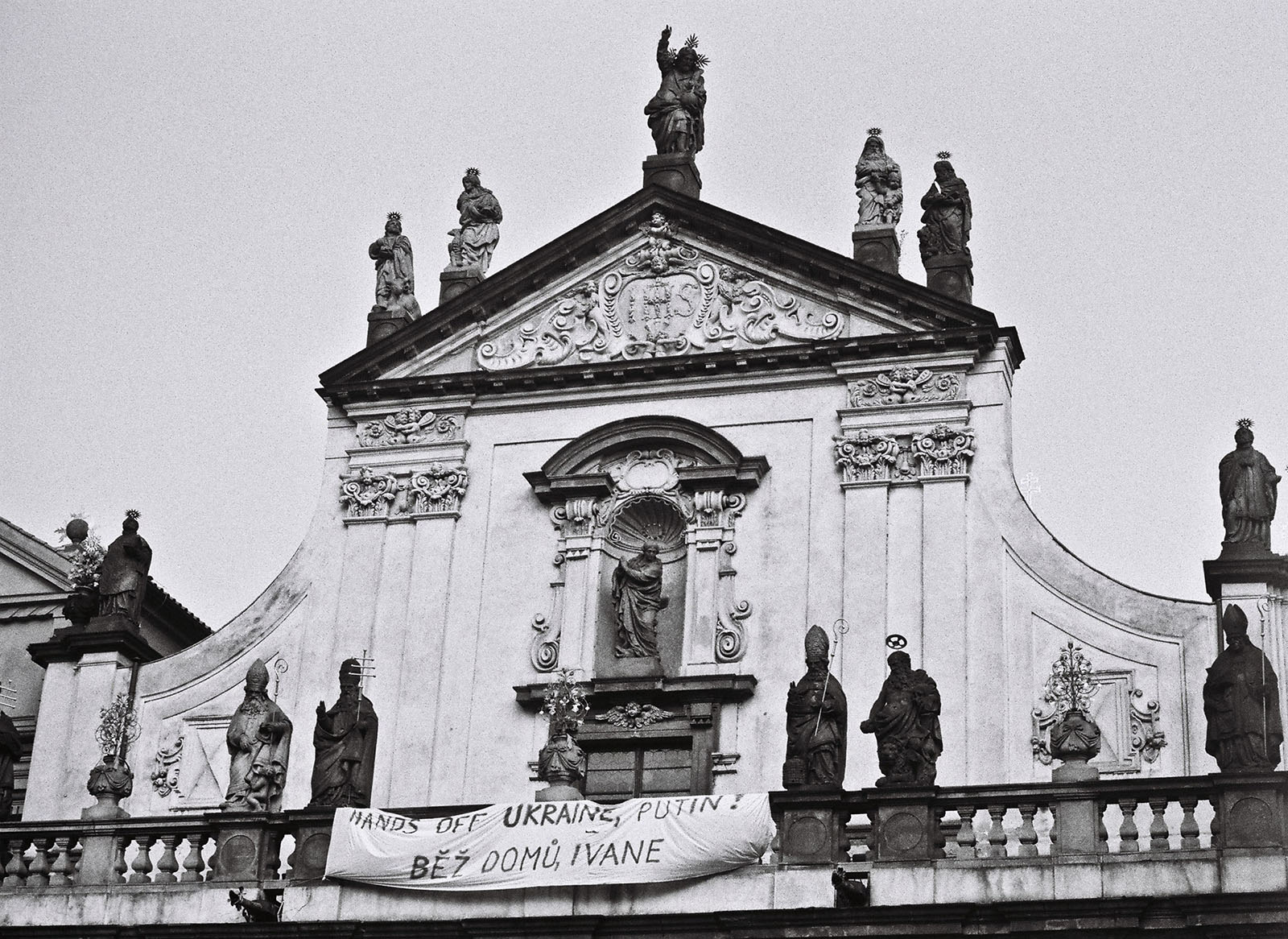
The photo project, called “Get to Donetsk,” is a series of black and white pictures, which depict the inhabitants of Berlin, Prague, Warsaw, Krakow, Minsk, Kyiv and Donetsk, with quotes taken from conversations with them. They are complemented by photographs conveying the atmosphere of the city in question. According to Thomas Girondel, it was very difficult for him to show a dictatorship or war with the help of one picture:
- The idea of the Donbass project occurred to me because I did not like how the Western media illuminate the Ukrainian crisis. It was like a generalized informing, as I call it. Its drawback is this: when a person has a lot of superficial information about a particular event, he receives it every day, a person seems to know something, but what really happens at that time in the country, he really does not understand. There is practically no such information in the French media. I was not sure that this was happening in other countries of the European Union, so I decided to leave France and first went to Germany, to Berlin, to get to Donetsk from there and find out what people think about what is happening in Ukraine. It seemed to me that the difference in the views of the inhabitants of different countries would help me, and finally, to figure out what was happening.
In the project of the French photographer, ordinary people of five European countries tell how they perceive events in Ukraine
- How did you manage to turn this idea into an exhibition project?
I managed to capture the moment when people could not calmly think about the future, some covered fear
- My current exhibition is a collection of photographs that I took in Berlin, Prague, Minsk, Warsaw and Krakow. I added quotes from conversations with people in these cities - their brightest statements. And plus to this are portraits. This is the first part. The second is dedicated to my trip to Ukraine, Kyiv and the period after the Maidan. I wanted to show how the protest participants perceived the most tragic events: clashes in January and February last year, shooting at Institutskaya, with which thoughts expected the appointed date of the presidential election. I managed to capture the moment when people were very depressed and could not calmly think about the future, some covered fear. After all, it was a time of problems that began in the Donbass.
At the same time, everyone whom I met in Kyiv hoped for the best future, wanted to be happy. We can say that they were waiting for their dream to join the European Union. Following Kyiv, I went to Donetsk to show the conflict zone what war is. I did not set myself the goal of taking reporting photographs, I wanted to show people living in the war zone, because at that time the first battles between the National Guard of Ukraine and the separatists at the Donetsk airport had already taken place. The presidential election was an important part of this narrative, because the inhabitants of Donetsk were not given the opportunity to take part in them. Today, of course, we can say that these photographs have become a story, simply a document that retained the memory of a careful attitude of the topic.

Get to Donetsk
- In the list of countries in which you communicated with people about Ukraine, there is no your own country, France. Why?
- The problem is that the inhabitants of France are not particularly concerned about what is happening in Ukraine. People just watch TV. For this reason, I decided to leave my homeland for a while and see what the attitude to the crisis in other countries. I tried to neutrally show what is really happening, and I hope that the French would treat this topic differently.
- When you went from Nantes to Berlin, then to other cities of Europe, did your expectations live up to that ordinary people pay more attention to what was happening?
All people were terribly scared by the actions of Russia
- During my trip to Germany, I met many people, but not everyone agreed to answer my questions precisely because they - just like the French - all the same. But the number of those who knew about the events in Ukraine and was ready to talk with me on this subject, in Berlin there were more than in France, it was 50 to 50, there were even more of them in Prague, Warsaw and Krakow. I remember one young man in Berlin, who was seriously scared by what was happening. And he said that, in his opinion, the European Union and NATO should not intervene. When I moved from Germany to the Czech Republic, and then to Poland, I was surprised, because in Prague, everyone I asked for my questions was ready to talk to me about Ukraine.
In other words, this topic was not alien to people. Many talked about the socialist past. Only one person refused to answer my questions - it was a woman who emigrated from Russia. I was very surprised that the fate of the Ukrainians did not care at all, she did not care. Then I went to Warsaw, where everyone I met, were ready to talk to me. The same thing happened in Krakow. And all these people were terribly scared by the actions of Russia.
- In your opinion, why the farther to the east, the more people are interested in Ukrainian events? People empathize with Ukrainians more because they live nearby?
- This attitude is connected, as it seems to me, with the history of these countries. Many told me that they perceive what was happening in Ukraine as at one time perceived the actions of the Soviet Union in the territory of the countries of the socialist camp. Many remember the suffering of the inhabitants of these countries and what joy the collapse of the USSR brought them. Although at the same time, some people with whom I talked told me that under socialism it was not so bad to live. But there were a minority. Most believe that the times were severe then.
- At the beginning of our conversation, you said that one of the goals of the project was to show the French what is really happening, because most of them relate to conflict in Ukraine in the same way as they relate to the war in Syria, as an event that is far from directly related to them. Why did you set yourself such a difficult task?
- This is a kind of duty, as a person and a photographer, to show what really happens in Ukraine, especially in the east of the country. We are talking about a European country located not so far from France. Secondly, in France, people are used to complaining about some minor things, for example, a lack of money, but this does not mean anything compared to how people near us suffer.
- You said that after the events on the Maidan, Kievans were very depressed. Tell us how they answered your questions?
For ordinary residents of Ukraine, what is happening is a real drama, especially for young people
- In just a couple of days, about 10 people volunteered to talk to me. All of them talked about different problems, some of the lack of the future, some of the sadness that appeared after the annexation of Crimea. One young man told me that he was very worried about what was happening, but he would very much like that the world would finally come between the East and the West of Ukraine and it would happen without blood. Moreover, he said this even before the armed confrontation in the Donbass, it was immediately after the annexation of Crimea. I talked with several ordinary protests on the Maidan. For obvious reasons, they were very angry in Putin. Many were upset that they could never go to Crimea, because after the annexation, such trips are not considered possible. Many did not understand Putin’s actions why it was necessary to take a tourist resort, which residents of both Russia and Ukraine went to rest.
But at the same time, some admitted that the operation to the annexation of the peninsula was carried out with a large degree of cunning. One of my interlocutors even expressed an point in sight that Ukraine deserved what happened because its politicians are more stupid than Russian, and the army was unable to resist the Russian military in the Crimea. Due to Crimean events, many of my interlocutors were suppressed, depressed, scared, but they, fortunately, had hope for a better future. Some, of course, were finally disappointed, as, for example, a woman with whom I stayed in Kyiv: she left for Germany. My other interlocutor left his studies to go to fight in the Donbass, and his father was killed before Christmas during the hostilities. It seems to me that for ordinary residents of Ukraine, what is happening is a real drama, especially for young people.
- You also asked about what was happening of the inhabitants of Minsk, what did they say?
- I was surprised that I managed to hear in Minsk. One girl told me that in the capital of Belarus it is impossible to go to a peaceful demonstration, so she put a small tent at home as a sign of the support of the Maidan. She cannot demonstrate her in public, because for supporting Kyiv protests, she can pay freedom. She is afraid to demonstrate her opinion on the street. It is interesting that, contrary to the tough attitude of the authorities, most young people dream of getting the opportunity to travel freely around Europe. Many people want to leave the country forever.
It is clear that such an opinion is formed by dictatorship
Although at the same time, among the inhabitants of Minsk, there are also those who are happy to go freely to Ukraine, to Russia and China. One of the girls I spoke, as it seemed to me, was afraid to tell me what she really thinks. She said that what happened in Ukraine was sad at her. Previously, she often visited Odessa, loves Crimea, but after the start of the crisis she cannot go to Ukraine, because allegedly Ukrainians now hate Belarusians, because they openly demonstrate their pro -Russian position. It is clear that such an opinion is formed by dictatorship. After all, many say that they see their future beyond the borders of their own country, that they want to leave, feeling that they are in a kind of imprisonment.
- There were no such moods in the Donbass? People did not want to leave there?
People there simply do not know the history of Ukraine and, unfortunately, Russian propaganda has a great influence
- The main theme of many of my conversations in the east of Ukraine was to one degree or another fascism. Although I saw a lot of neo -Nazis throughout Donbass. I remember one woman who told me that she could not study in Russian at school, because it was forbidden. And this was the reason why it was poorly tuned to the Kyiv government and the western part of the country. Quite a lot of negative emotions was caused by Stepan Bandera. But in general, this is a very difficult question, what the inhabitants of Donbass actually thought. Perhaps their reaction is associated with the advent of the "Right Sector" and the Freedom Party ... It seemed to me that people there simply poorly know the history of Ukraine and, unfortunately, Russian propaganda has a great influence. The Donetsk residents, perhaps, would have a great understanding of the inhabitants of Western Ukraine if the TV and Russian channels had not watched all the time. Unfortunately, the case here is in access to information.