
Translated material
"There was not enough heroic"
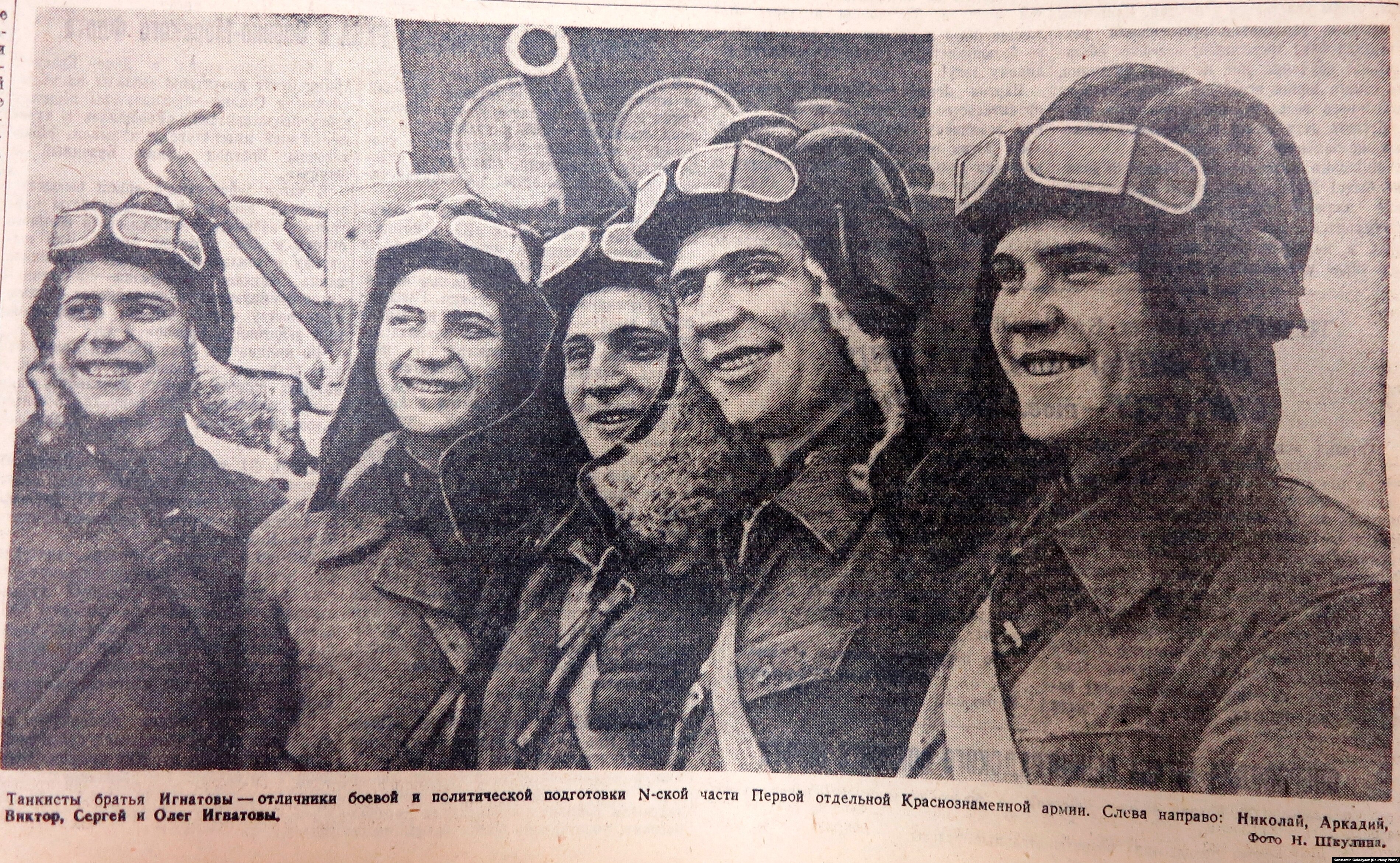
This summer in Novosibirsk, a half -forgotten Soviet propaganda myth was almost reanimated, in which there were no less frank lies than genuine facts. It all started with the fact that the vice speaker of the Legislative Assembly of the Novosibirsk Region Andrei Panferov turned to the mayor of the city Anatoly Lokty with a proposal to rename Sakko and Vanzetti Street, "named after Italian workers-anarchists", to the Ignatov family Street:
"Eight brothers and a sister of thirteen children of the Ignatov family went to the front of the Great Patriotic War. Victor, Sergey, Arkady, Oleg, Nikolai, Vladimir, they compiled two tank crews. Two Brothers of Ignatovs died. Their sister-Maria Ignatova left for the brothers. The 150th Siberian Volunteer Division, was on the account of the 150th Siberian Divine. 140 Germans.
Communist Anatoly Lokot neatly stood up for Sakko and Vanzetti. Say, he "respects the Novosibirsk residents who used to work in the city and made decisions about the name of streets and squares, so do not neglect their opinion and actions."
Be that as it may, for all, without exception, Novosibirsk media went for a walk a fairly praised story about the heroic family of fellow countrymen. None of the journalists bothered to check the facts given by Andrei Panferov.
Local local historian, member of the Commission on the name of city facilities Konstantin Golodyaev says that it is not customary to change toponyms in Novosibirsk:
- Such issues, as a rule, are not even considered, because this is due to large financial stress. So it was immediately clear that there would be no renaming. But once such a street in the city existed.
- Where did she go?
- In the city archive, I found a map of our Academgorodok in 1958, where this street is indicated - the Ignatov brothers. I also found the corresponding resolution of the city executive committee. Then they "ate" her. There were several small streets built up by huts. When the capital construction began at this place, these streets were gone. Now it is an intra -house territory.
- What then served as a reason for perpetuating the memory of the Ignatov family?
- At one time they were glorified. I began research by taking the binder of "Soviet Siberia", our regional newspaper. It turns out that since September 1939, they began to write about brothers from a large family of Ignatov quite often, almost monthly. Moreover, both in the local and in the central press. Then it was impossible not to seize for this: at the same time, four brothers, four beautiful slender people are being called into the army. Moreover, their mother herself brings them to the military registration and enlistment office. The fifth draft age has not yet come, but she insisted to take him too. And so they all go to the Far East, in the 48th tank brigade of the First Separate Red Banner Army. They serve in one regiment, study for two crews of tankers. Six months later, the sixth brother, Vladlen, sent to them. On the pages of the newspapers, welcoming words of military commissars immediately appear. Immediately the brothers fall into the presidiums of all meetings. They are placed everywhere as an example.
- In 1939, they simply serve in the army. They have not yet participated in any fighting. That is, we are not talking about the fact that the brothers were distinguished in some battles. What is the matter?
-They were members of the same family, this is still not an ordinary case. Look, the battles on Khalkhin-Gol have just ended. The Finnish war has already begun. Any reason had to be sought in order to raise the spirit of patriotism among the population. This is a completely understandable story from the point of view of propaganda.
Maria was awarded, but awarded as the foreman of the medical service
- In the publications for this period, it seems that there are no discrepancies with real events. From what year do you trace them?
- In one of the newspapers, it is already written that the sister of Maria returned to Novosibirsk. It was wounded and now works at one of the factories of our city. Served as a sanitary designer. And now we hear that she was a sniper, killed 140 fascists. I begin to raise war documents. These are award documents, documents about hospitals, who served where, what feats made. I find that, indeed, Maria was awarded, but awarded as the foreman of the medical service, for enduring the wounded during the shelling of the crossing of the Dnieper. She was seriously injured and then demobilized. In 1942 she went to the front, and in 1943 she had already returned. There are no references to snipers!
The case is simply shot and crushed by tanks. Almost the entire command staff dies, not to mention the rest
I am looking for documents about Oleg’s brother. He served in the Far East, that is, he was in reserve. When the war began with Japan, he deserves his first order there. We read that Oleg Ignatov on his tank as if it presses the fascists under Leningrad on his tank.
Arkady died on the first day of the war. Two brothers served in one regiment. Both tankers. Sergey is missing, Arkady dies. This is the 17th mechanized case. His story is terrible. Without weapons. What "mechanized"?! There were not even rifles there. The case just came to reorganize, stood on the border itself, a hundred kilometers from it. The case is simply shot and crushed by tanks. Almost the entire command staff dies, not to mention the rest. True, Sergey got out, local residents covered him.
The sixth tanker, as I said, was Vladlen. This was already sent to his brothers to the Far East in Sorokov. His documents have an inconspicuous record with a pencil: 1942. Convicted for 10 years. For what, it is incomprehensible. Some abbreviated word "raster". Either waste, or execution. Then Vladlen was nevertheless released and redirected to the combat part.
The sanitary designer becomes a sniper, and Oleg, who actually guarded the Far Eastern borders, presses the enemy on the tank near Leningrad
- They all really fought, and, apparently, honestly. Who and why had to come up with non -existent biographical lines? About the fact that everyone reached Berlin, for example. Or about Maria-Sniper. Not only did she carry the wounded under fire?
- I found, after all, the source. At first, I sinned at one of our journalists, who wrote about this five years ago. He already wanted to talk to him, but then he found out that back in 1985, the book of Lieutenant Colonel Ivan Verevkin “Continuation of the Feat” was published in the West Siberian Book Publishing House. There are all the facts and twisted. It was Verevkin’s sanitary designer who became a sniper, and Oleg, who actually guarded the Far Eastern borders, presses the enemy on the tank near Leningrad. The same Vladlen, who was convicted, becomes Vladimir in the book.
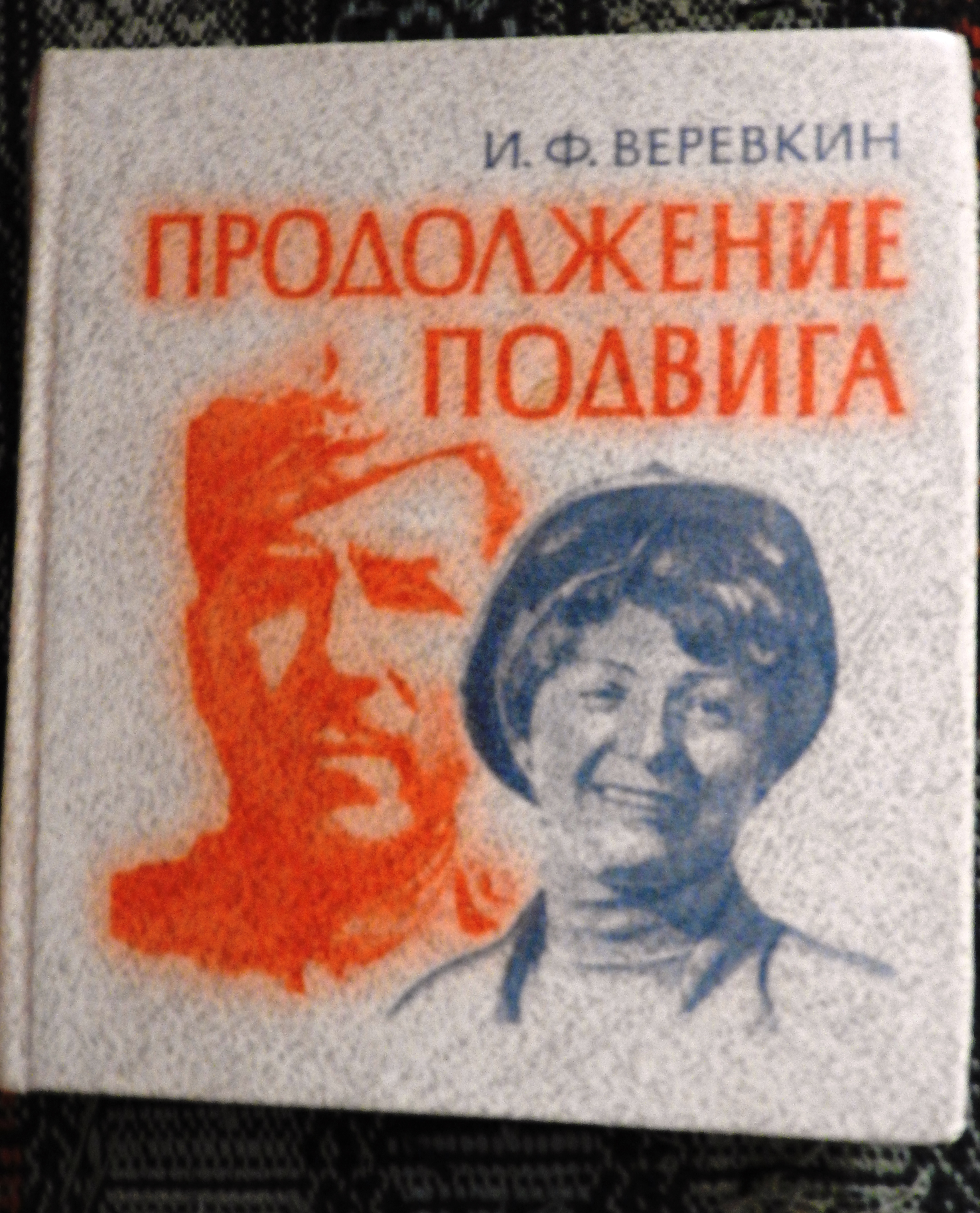
All this is Victory varnish. You remember the films of that time. The Germans run and fall, run and fall. And nothing happens to ours. It was impossible to talk about the war in gloomy colors. When in Novosibirsk in 1967 they opened a monument to Glory, there was a great struggle for it. In Moscow, Furtseva categorically prohibits such a monument. The authorities of the region and the Novosibirsk region allowed its installation and helped to build this monument, and the city government did not allow. The decision on the ban on this monument is still not canceled by anyone, it lies in the archive. Feared! 33 thousand names of the dead soldiers in pylons! What are you, we are the winners. So the military journalist Ivan Verevkin resorted to varnishing. Well, this family was not enough for him!
In 1970, the documentary director Kim Dolgin shot the honest film "Ignatovs" . Recently, the only surviving copy was restored and shown in the Killed Victory cinema. He talked with the father of this family. In the frame - a dumb gray man. Singing his head with his hands, he says: "They did not become heroes." It sounded very bitterly. It hooked me. How can he say that? The fact that they became heroes, I proved from the opposite. It doesn’t matter that they did not receive titles and they had very few orders.
“ But for some reason, the father says so!” What does he imply?
- Well, they did not have, in fact, heroic exploits. However, I think that this family needs some perpetuation. Best in the form of a monument. Here you need to keep in mind not the acts of each individual person, but a family feat. And be sure to be at the monument to the figure of the mother of Sophia Yakovlevna. Next to her can be the youngest son, nine -year -old Spartak, who did not get to the front, because he was a minor. Meanwhile, in the book of Ivan Verevkina Spartak, at the age of 13, Yunga is called up to the Pacific Fleet. And I managed to fight!
- And this is not the case?
- Of course not! He was really called up to the Pacific Fleet, but already at recruiting age, not Yunga, and this happened in 1949.
- You talked with the relatives of these people. How did all these fabrications perceive the family?
- Of course, they knew that much of what was written about the Ignatovs was not true. They put up with this. The descendants wrote to me, they say what to do, they raised us, and now the present has come out. At the same time, they met my questions with understanding and explained a lot of what they provided me with significant assistance. They accepted the final version of my study, noted that everything is written correctly and very correctly.
- How did the life of family members returned from the war?
The history of the Ignatov family is extraordinary. If only because nine out of eleven children fought, and from them, fortunately, seven returned
- Almost everyone returned to Novosibirsk. Most began to work at the city factories. And the same Sergey who was missing was suddenly found in 1943. This happened under strange circumstances. Where he was two years, no one asks him. In June, he was found, and in July he receives his first order. Then he receives the next title. Either he was partisan, or something else. Children do not know about it. There are no documents about this. This has yet to be studied where he was. So, Sergey stayed in Kerch. As a personnel military man first served, taught at a tank school, and then worked in the Kerch port.
- In other words, by Soviet standards, was the post -war life of the members of this family quite prosperous?
- Of course, their life was prosperous, but completely ordinary. Nobody particularly advanced service. It was a simple life of Soviet people. Perhaps this is what their father Andrei Andreyevich regretted about this, when he said that they did not become heroes. No one remembered their military past. They were treated as ordinary war veterans. And yet I think the story of the Ignatov family is extraordinary. If only because nine out of thirteen children fought, and, fortunately, seven returned from them. This is a family that saved our homeland. I think that for us, for our generation, they still became heroes.
- The descendants have preserved front -line letters of the Ignatovs. You read them. What is the most remembered?
- This is a touching story. They were very careful about each other. The guys in letters to parents described their feelings with warm words. As for the letters of the sisters to the front, this is evidence that the country was patriotic. The through line in these letters passes: fight, fight, we are with you, take victory over the enemy. And there is no whining, there is no defeatical mood in this correspondence, ”says Konstantin Golodyaev .