
Translated material
Where are the limits of man?
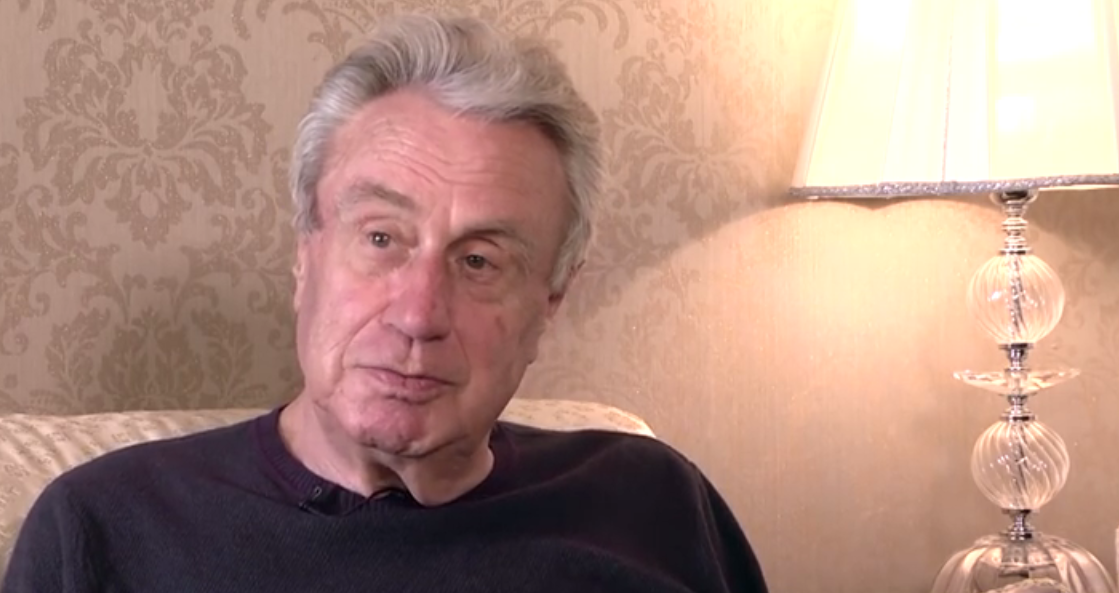
Philosophers Grigory Yudin and Elena Bryzgalina about Bioetics Boris Yudin
- The development of information and biological technologies, the progress in medicine, which is ready to radically extend the life of an individual, raise many philosophical problems.
- The emergence of androids, cyborgs, artificial intelligence poses questions: what are the limits of man, where is the border between a person and a machine?
- The problem of determining a person becomes relevant: what is a person, where the boundaries of his personality, the border between man and nature, man and animals?
- These and other questions are raised in the recently published book by the philosopher Boris Yudin under the name: "Man. Going beyond."
Sergey Medvedev: The future occurs in the form of various forms of integration of man and machine: Androids, cyborgs, chimeras, artificial intelligence. Medicine extends the capabilities of the human body, the question of practical immortality is already raised. And all this raises the problem of determining a person: what is a person, where the boundaries of his personality are, where is the border between man and nature, man and animal, living and inanimate?
Correspondent: People from ancient times dream of going beyond their capabilities. Modern rational transhumanists are confident that by introducing technologies and scientific achievements in computer science, medicine and biotechnology, human ability can be expanded to such an extent that even death is defeated. Many supporters of transgumanism believe that a person must constantly evolve and in the new world of a post -member will survive the most popular and adapted. Others are sure that progress will give space and excess resources for absolutely all people.
Tools to achieve such goals include biohaking, manipulations with a human genome, cybernetics and attempts to digitize the brain and drive the mind into the network so that a person can exist in a virtual world even after biological death. Transgumanists want to become a post -bundles with unlimited abilities, to rethink the very concept of consciousness.
Obviously, the evolution of mankind has not ended on this and only begins to experience a new round, which, of course, poses a number of philosophical issues. Is there a limit of human capabilities, will we lose humanity, interfering in natural processes, like post -men and supernatural machines will belong to those whose possibilities were not expanded?
Sergey Medvedev: All these issues were raised by the founder of bioethics in Russia, the philosopher Boris Yudin, whose work collection recently published in Moscow: "Man. Exiting beyond." And I am glad to present his son Grigory Yudin , philosopher, sociologist, professor Shaninka and publisher of the book of Father, and Elena Bryzgalin , specialist in bioetics, head of the Department of Education of the Faculty of Philosophy of Moscow State University .
I watch the years of Boris’s life: 1943–2017 - that is, in fact, he is the same age as the cybernetic revolution, which is greatly connected with the Second World War. Encryption codes led to the post -exceeded surge of cybernetics and then to the invention of the computer. He was a man of the era and a kind of sixties in this context of physicists and lyrics?
Grigory Yudin: At one time he came to philosophy, graduating from the Bauman MSTU, being an engineer, under the influence of his older brother Eric Yudin and became part of one of those most interesting philosophical movements that were possible in Soviet conditions: it was a systematic analysis. It was such a thing enough for its time, since in the framework of this direction a certain new model of a comprehensive knowledge of society was proposed through a description of the world as systems of systems. This approach gave sprouts in various disciplines. In this sense, he, of course, was a brainchild of cybernetics with a completely different approach to understanding how the world is organized, how they can be controlled on new grounds.
Science itself creates a number of new problems for the world in which exists
Subsequently, the father focused on the point with which systemic knowledge is taken - on science. His interests were slowly moved to the methodology of science, to the sociology of science, to the analysis of science as a system. By the 1980s, it became clear that scientific knowledge is not just a certain way to comprehend the world, not only a way of constructing it, but that science itself creates a number of new problems for the world in which exists. From that moment on, the father begins to be interested in issues of the influence of science on the world, the position of science in the world. At the very end of the 80s, he comes to the idea of bioethics, which appeared in America shortly before.
Elena Bryzgalina: Formally, bioetics can be talked from the beginning of the 70s, when this area of knowledge is institulated as an independent one, with its own special subject. A little later, the teaching of bioethics begins as a discipline, mandatory for everyone who claims a higher biological education.
My acquaintance with Boris Grigoryevich is largely connected with the development of bioethics not only as a scientific discipline, but also as a kind of special practice. Together we worked at the bioetical commission of Moscow University, taught bioetics together, testing at the University of the programs recommended by the European Union. We discussed their shortcomings and the possible advantages of our domestic tradition, an appeal to new problems generated by biotechnology.
The pathos of the researcher, included in science, is a very important and characteristic feature of Boris Grigoryevich, reflected in his texts. Often, philosophers who turn to the problems of the development of science are perceived as experts who evaluate, comparing with a certain model and ideal, criticizing what the researchers do. And this situation of the contrast of a natural science culture, which underlies Western civilization and gives rise to technology and culture of the humanitarian is fundamentally erroneous. The idea of the study when we enter into such zones where no one has ready -made answers: neither the biologist, nor the engineer, nor the philosopher - and gives rise to the need for interaction as a study in a particular field. I had the happiness to see Boris Grigoryevich conducted these studies.
Sergey Medvedev: The post-war technooptimism of the 60s was still supposed to stumble upon humanitarian, ethical issues sooner or later. In an interview, Boris Yudin says that the nucleus of a man swam. What did he mean? What is the idea of human identity in the digital world?
Grigory Yudin: On the one hand, within the framework of this paradigm there was always a clear understanding that a person, the reality in which we live, is the subject of a certain construction. We can create, construct, to some extent - of our own free will. George Shchedrovitsky came out of the same circle, who did a lot for constructivist thought and constructivist practices in Russia.
On the other hand, starting from some point, it becomes clear that this kind of design raises the question of the boundaries of what can be constructed and what cannot be constructed. For example, a topic that has recently been most interested in the father in the framework of bioethics is the development of biotechnologies: in recent years they really have been acquired by some unprecedented scope. An important topic among transgumanists and not only was the so -called improvement or expansion of a person. We really get the opportunity to go beyond the usual boundaries, to do something new with a person. We begin to finish the possibilities, think in the direction of immortality, omnipotence. At this moment, we are faced with the question: and in fact, at what point that we imagine in this form-is this no longer a person, but something else? At what point should we stop, think about whether we want to go into this qualitatively new state. So, we have to ask what a person is. Therefore, bioemic issues have recently become the subject of reasoning of all leading philosophers, regardless of whether they were originally bioetics.
Sergey Medvedev: Is the idea of a person and evolution modified now? Has the evolution of a person end or does it continue with the help of technology?
Elena Bryzgalina: Classic biologists will say that evolution is not finished, and not because we somehow clearly change externally. Our corporal, which has formed in such a ancestral form as a Cro -added man, has not undergone significant changes in all social changes. But biologists will say that the action of evolution factors, for example, of some forms of natural selection, continues. Say, no matter how a person develops medicine, it is impossible to derive the earliest stages of ontogenesis from the action of selection, when nature encounters some kind of violation, pregnancy does not develop or spontaneous aborting occurs. A person evolves, if only because he runs all the time, it can be imperceptibly outwardly, but this is the essence of what happens to human biology against the background of the development of technological and social progress.
If we stand on the positions of socio -humanities, then the answer to the question of whether a person evolves will be different. Here, criteria can be associated with morality, with the possibility of transforming the environment around, with the creation of a completely new type of objects. The fact that these different optics and different answers encounter the situation of the necessary dialogue, which Boris Grigorievich spoke about. The key problem that was interested in is how this interdisciplinary synthesis is possible.
The problem of synthesis is not so unambiguous. You can not put everything nearby that we know, for example, about the brain as a biological object of study, and what we know about the consciousness recorded by means of psychology or philosophy. This is a field for research, for collaboration. No one today has a monopoly for a ready answer.
Grigory Yudin: The key challenge that is today biotechnology, when a certain fundamentally new technology arises: is it necessary to resolve it? A typical example: is it necessary to allow cloning or some technologies that allow you to approach immortality? Who should make a decision on this issue? The father’s position was that it was impossible to make such a decision so that it was legitimate if different groups of society, not only scientists do not participate in it. Everyone should participate in such discussions, because this is a question that concerns everyone. And his father made a lot of efforts to create such discussion sites on which different groups of interests can be articulated, for example, the interest of religion, church, the interest of science, the interest of professional doctors, the interest of patients, and so on.
Sergey Medvedev: He saw the greatest danger, as I understand it in biotechnologies: editing the genome, DNA, experiments with human life.
Grigory Yudin: He distinguished four border zones in which a person’s nucleus begins to collapse, and we cease to understand where the person ends. This is, first of all, the problem of transition from non -existence to being, that is, birth, the problem of transition from being to non -being, that is, death, the problem of the border between humans and animals and the problem of the border between man and the machine. And in all these areas, thanks to modern biotechnologies, today we have much less clarity than before.
Sergey Medvedev: Man and animals - is it when a person is transplanted to an animal organs?
Grigory Yudin: In particular. This kind of manipulation can lead to the creation of chimera. Chimera is a hybrid between man and animal. There are many experiments that allow, for example, to create such hybrid species on animals or hybrid species with human participation. What is their subjectivity, who are they in essence?
Sergey Medvedev: Sharykov.
Grigory Yudin: Yes, this is a typical case. The most important thing is the social consequences of this, the question is whether we want such consequences. What rights are those who are in this situation? Did Sharikov provide a sanction to be carried out with him, did he give sanction for the reverse operation?
One of the first bioethics stories is the story of the back on the 20-30s, when in Germany the theologian Fritz Yar came up with the term “bioemic”, just bearing in mind that the ethical principles that we use when interacting with people should also apply to animals. At first, the problems of bioethics was a comparison of the principles that we use in relation to people and in relation to animals. It is clear that this is not a simple question, you cannot equalize people with animals, simply because it is impossible to enter the same communication with animals as with people. But the status of the animal is probably one of the key issues at this stage of the development of human civilization.
Participation in an animal experiment, which is anthropomorpho behaves and obviously suffers, has a traumatic effect on the scientist
Elena Bryzgalina: Because the answer to this question determines the person himself: whether a person is the only source of the value system, whether he can relate to other subjects as carriers of some values, is nature a source of wealth and strengthening human power over ourselves, or should we limit ourselves. Christian anthropology played a very large role in establishing the nature of relations between man and nature, and then it was supported by the science of the New Age, translating knowledge into technology in order to strengthen this power. Even now, when we are aware of our inclusion and dependence on natural processes, all the same, even at the level of the language, we record that there is man, and there is nature, there is nature, and there is society. The question of animal status is actually the question of human status.
Sergey Medvedev: And he is discussion, open, he is not resolved. As I understand it, the trend is nevertheless to endow animals with an increasing amount of existential rights.
Elena Bryzgalina: Bioetics develops some principles, following which, even to animals-participants in the experiment for the sake of knowledge, will nevertheless treat as suffering creatures. These are the principles associated with the minimization of the number of animals in the experiment, the qualitative conduct of the experiment, the inclusion of animals in the experiment, which are at the lowest levels of the psyche development. After all, participation in an animal experiment, which is anthropomorpho behaves and obviously suffers, has a strong traumatic effect on the scientist himself. Bioetics is not only an attempt to protect humanity, but also a certain way to protect scientists.
Sergey Medvedev: I think this is generally a way of attitude to life as such. As Albert Schweitzer said, reverence for life, at what stage of development it stands.
A large topic declared in many articles and an interview of this book: man and car, android and cyborg. Is the Internet a continuation of human evolution? A person with a smartphone, a person on the Internet is a plus person?
Grigory Yudin: At some point, a well-known example with a notebook appeared. It is clear that computer technology helps us think and does most of the mental work for us. Probably, a notebook is also part of my expanded consciousness. There was an idea of expanded consciousness, which is not localized in a physical body. From this point of view, any technology that the thought process is carried out is an expanded consciousness. But at the same time, we need to understand: if we admit that the networks in which I am included, which together with me carry out mental processes (or notebook), is part of my expanded consciousness, then considering me, my ego as the acting subject is no longer so simple: it is no longer clear who acts here. I am included in a certain social network: who is working - I act, or is the network acting me?
Sergey Medvedev: I often notice that I can think with Google. If there is some mental problem, I google keywords, I see what is on this subject, I turn to a certain array of knowledge. Or does Google think with me? Subject-object relationships are changing very much.
Elena Bryzgalina: But at the same time, you remain a man: for example, your nature contains neurotransmitters, with the help of which the possibilities of satisfying your needs are provided for you during evolution. Until we intervene in nature, we can talk about technologies as auxiliary for humans. The key problem that arises is not so much the problem of replacing a person’s consciousness with a thinking technological network, but the problem of evidence that a person plus artificial intelligence is better than just artificial intelligence.
Sergey Medvedev: Where is the person then? Is this a brain, is this a system of some computations? Suppose that after a nin number of years, one by one will begin to change human organs: they will change their hands, print the heart 3D, liver, joints. A person will live up to 150 years, by this age all organs will change. What then remains of a person, what is "I"? Brain?
Григорий Юдин: Мозг – это последняя надежда тех, кто хочет локализовать сознание на каком-то материальном носителе. Это сегодня главная метафора для человеческого эго. В этих условиях мозг оказывается как бы внешним, мы проводим некоторую границу между нами и нашим мозгом. Мы говорим: наш мозг влияет на нас. Но если мозг влияет на нас, значит, мы – это что-то другое.
Вторая проблема – с критерием смерти по мозгу. Понятно, что медики используют этот критерий, но даже он не всегда срабатывает. Известны случаи, когда люди были объявлены умершими по смерти мозга, а потом вдруг выяснялось, что какие-то участки мозга могут работать. Во-первых, не так просто установить, что такое смерть мозга, во-вторых, совершенно не факт, что смерть мозга – это правильный способ мыслить о том, где находится личность человека. С этой точки зрения ответы, которые дает религия, ничем не лучше и не хуже, чем ответ, который опирается на смерть мозга. Это тоже в некотором смысле произвольный ответ, и здесь нет правильного решения.
Сергей Медведев: Личность, не только биологическая, это, наверное, некая сумма транзакций, происходящих в мозге. И даже сами транзакции – абсолютно социальная вещь, личность не может быть какой-то монадой, летящей в космосе.
Елена Брызгалина: Традиционно понятие личности – это все-таки понятие социогуманитарного знания. Отвечая на ваш вопрос, где человек, наверное, нужно говорить о некоей целостности. Перспективы медицины, замены органов, точечного воздействия связаны с тем, что персонализация позволяет для каждого человека создавать фактически индивидуальную модель на разных уровнях: не только генов, но и, например, белков. Когда мы получаем эту разнообразную картинку нормальных патологических процессов, которые происходят в тканях, в мозге, на уровне органов и организма в целом, возникает задача объединить все эти естественнонаучные картинки каким-то гуманитарным понятием: "человек". Например, за жизнь у вас неоднократно поменялся эпителий, сменились клетки, выстилающие поверхность желудочно-кишечного тракта, но при этом вы остались собой, от юридического статуса (паспорт с фамилией) до самоидентичности.
Сергей Медведев: Один из моих любимых фильмов Альмодовара – "Кожа, в которой я живу". Молодому человеку, который изнасиловал девушку, ее отец, известный хирург, насильственным образом меняет пол. Он остается самим собой?
Григорий Юдин: Главный посыл, который стоит за биоэтикой как дисциплиной, состоит в том, что на такие вопросы невозможно дать надежных ответов, которые покоились бы на каком-то прочном знании. Да, есть определенное научное знание, которое может развивать ту или иную аргументацию. При этом оно может показать, при каких состояниях мозга мы можем констатировать смерть мозга. Но это не значит, что смерть мозга является человеческой смертью. Мы неизбежно находимся в мире, где существуют разные взгляды на то, что такое смерть и рождение, в какой момент человека можно считать зародившимся. Единственное, что можно сделать в этой ситуации, – это организовать осмысленный диалог между этими перспективами, а не объявить одну из них верной, а все остальные антинаучными.
Сергей Медведев: В этой книге поднята, в частности, проблема бессмертия. Человек по определению смертен? Останется ли бессмертный человек человеком?
Подлинное бытие человека – это бытие того, кто понимает, что он умрет
Григорий Юдин: С точки зрения Хайдеггера нет. Подлинное бытие человека – это бытие того, кто понимает, что он умрет. Настоящее важное решение в нашей жизни мы принимаем, когда понимаем, что нам предстоит умереть.
Елена Брызгалина: Конечно, в философской традиции индивидуализация, которая происходит в смерти, – это очень важное понятие. Для развития социума очень значимо то ограничение на бытие человека, которое задает наша биология. Крайне сложно сказать, каким будет общество, если допустить, что человечество станет бессмертным.
Традиционно не отрицалась возможность улучшения человека, но только средства для этого улучшения были связаны с воспитанием и образованием. А сегодня мы как будто считаем, что эти средства полностью реализованы или себя исчерпали, и мы перешли на трактовку улучшения только через технологические вмешательства в природу. Обратите внимание, как в этих дискуссиях затушевываются вопросы о заинтересованности ключевых игроков на этом поле достижения бессмертия! Ведь один из векторов формирования биоэтики, одна из причин ее формирования – это попытка противостоять тем тенденциям коммерциализации отношения к бытию человека, которым охарактеризовался конец ХХ века. При всей нерешенности вопроса о статусе человека, который мы сегодня обсуждали, уже есть продавцы бессмертия в варианте криоконсервации с недоказанной возможностью оживления через десятилетия, но с надеждой людей. Они продают технологии, которые помогают преодолеть страх.
Сергей Медведев: Или цифровое бессмертие – с этим очень много работает сериал "Черное зеркало". В одной из серий сознание переносится на некий чип, люди попадают в каникулы на берегу прекрасной Калифорнии, выбирают себе десятилетие века, в которое они хотели бы перенестись. Борис Григорьевич успел осветить вопросы цифрового бессмертия?
Григорий Юдин: В этой книге есть целый ряд текстов, посвященных бессмертию и отношениям с трансгуманизом. Посыл, связанный с тем, что человек – это существо, которое способно преодолевать свои границы, это как раз сильный, хороший посыл. Другой вопрос, в чем состоят эти границы и что мы хотим преодолевать. Иногда кажется как будто очевидным, что главные границы, которые нужно преодолевать, – это границы биологической смерти. Но это не обязательно так. Человек ограничен по массе других показателей. Например, интересный вопрос, можем ли мы преодолеть границы того общественного режима, который сложился сегодня на планете и практически везде имеет сходную форму.
Стоит подумать, так ли нам хочется жить вечно, не важно, как. Или, может быть, важно расширять пространство достойной жизни? Хотим ли мы жить голой биологической животной жизнью, чтобы продлевать ее бесконечно? Точно ли для этого мы существовали на планете? Биос – это осмысленная достойная жизнь, которую мы можем наделить каким-то значением, понимая, зачем она нужна. А внутри этой жизни мы понимаем, зачем нужна смерть, когда говорим: ради этого я готов умереть.
Елена Брызгалина: Ключевая задача биоэтики – как раз рефлексия над тем, что значит качественная жизнь. К сожалению, сегодня в культуре просто жизнь часто уже не является ценностью. Прагматизм как некоторая основа экономических отношений переносится сегодня во все сферы. Он объявляет достойным и оправданным то поведение, которое связано с максимизацией выгоды для того, кто действует прямо в ущерб другому. Под это попадает и ущерб, наносимый человечеством окружающей среде, и животным, и неживой природе, и сейчас – самому себе. Трактуя изменение как абсолютное благо, мы как будто не ставим вопрос о целях, а стремимся к прогрессу ради движения.
Сергей Медведев: Биоэтика сейчас очень сильно смыкается с экологией: понятие всего объема живого и уважение ко всем формам живого.
Григорий Юдин: В последнее время в некоторых странах: Боливии, Эквадоре, Новой Зеландии – моральной и даже юридической агентностью начинают наделяться элементы природы: леса, реки или природа в целом. От их лица можно подавать иски в суд. Это означает, что мы начинаем мыслить их симметрично человеческой природе.
Сергей Медведев: Я думаю, не только горы, реки и леса обладают правами, а, скажем, будущее поколение. Один из посылов радикальной экологии – понятие ледникового времени: ты думаешь не горизонтом своей биологической жизни и даже не жизнью рода, а большими геологическими циклами. И будущие люди, которые родятся через десять тысяч лет, тоже должны иметь голос в том, что мы сегодня будем делать с ядерными отходами.
По-моему, из этой книги можно вынести то, что недостаточно чисто правового или чисто научного решения для того, чтобы помыслить такие сложные дилеммы биоэтики, которые будут все больше и больше возникать перед нами в XXI веке.