
Translated material
"Each writer needs an editor"
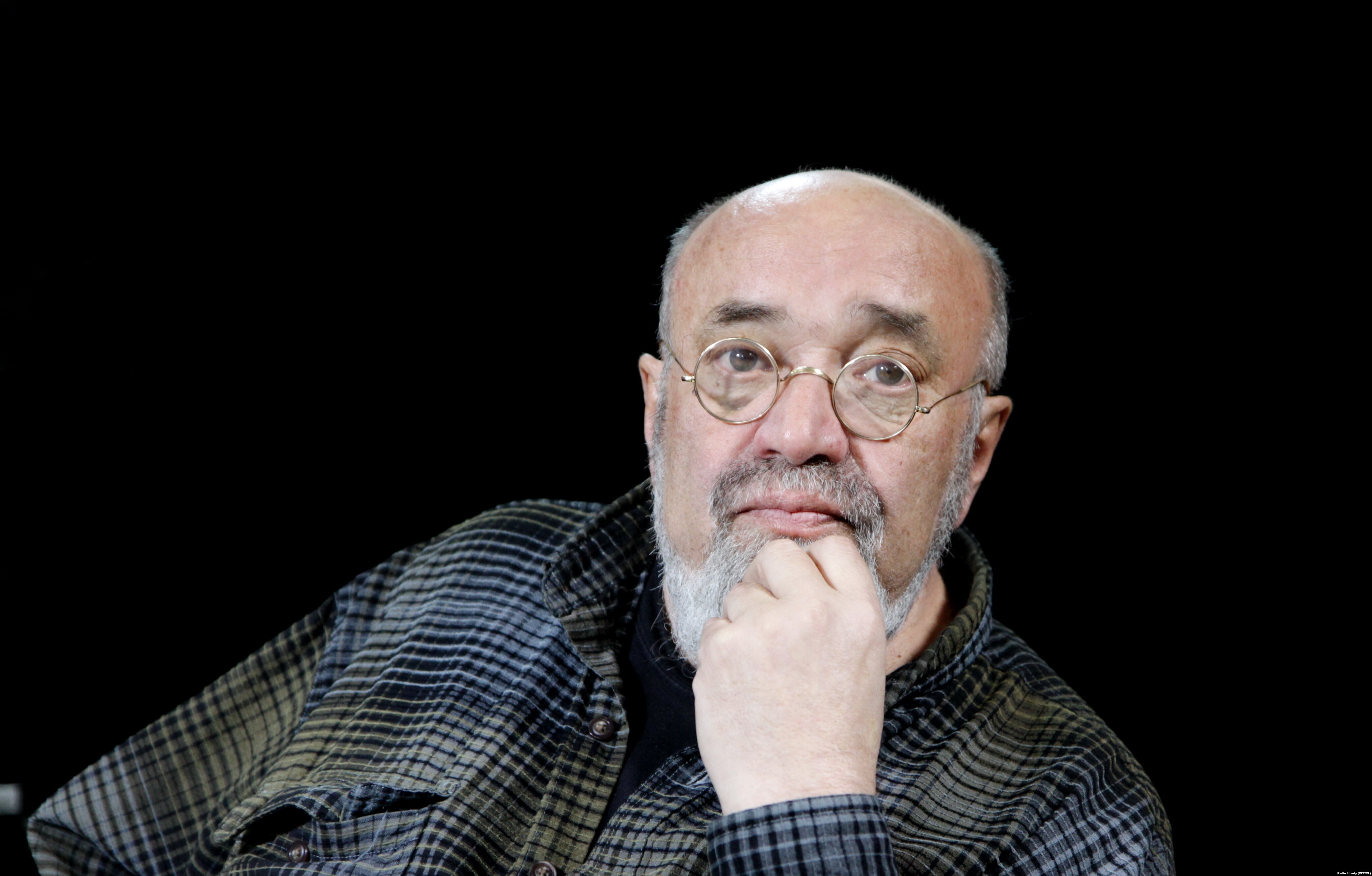
Evgeny Popov - about Joseph Brodsky, "Metropol", war and new realism
Evgeny Popov began to write in 16 years, in the early 60s. He never was in Komsomol, but was excluded from him for the publication of an innocent, according to him, magazine. He is one of the authors of the famous non -certificate almanac "Metropol", for which he was expelled from the Union of Writers of the USSR. Vasily Shukshin and Vasily Aksenov, with whom he was friends, consider his teachers.
Popov took part in a round table on the topic "Historical Truth or Artistic Fiction: what are the boundaries?", It took place in Ulyanovsk. Polemicing with supporters of patriotic unanimity in history, he said: “I am against a black and white outlook on life. The world of color, and two colors-“ yes ”and“ no ”-is not enough for culture and civilization. This leads to confrontation, war, blood and wildness. And what to do with liberal historians, if they think and argue so, they express different opinions, and a single story, and a single story. And we already had a "short course". "
At a meeting with readers, Yevgeny Popov spoke about his acquaintance with Dovlatov, Yevtushenko, Prigov, Aksenov ... This interview began with the question of his meeting with Joseph Brodsky in London.
- I went to London about my business, and he spoke there (now I don’t remember what year). He impressed me stunning. There he was, Cheslav Milos, other Nobel Prize winners. We were with Andrei Bitov, he is a powerful and confident person, but he turned to Brodsky with respect. After the banquet, we went to the Polish club, sat down and talked with Brodsky about all nonsense.
Firstly, he began to persuade me to drink red wine, because it is good for health. Secondly, he complained that he was forgetting the Russian language, for example, he forgot how “Fenhel” would be in Russian. And I tell him that there is no Fennel in Russia, I do not know what it is. He says: how is there no Fennel? Then I found out that this is a mixture of dill with anise. He smoked without ceasing, one after another, he dropped two packs while we were sitting.
I was struck by the fact that he knew the subtlest bends of Russian literary life, especially in St. Petersburg, and underground. He knew everything! Then he told the brilliant story: "I saw Sobchak here, he says - come back, Joseph, I will raise the whole intelligentsia to my feet. I imagined that the whole intelligentsia met me, the hunt completely disappeared." And everything ended rather strangely: he was with the lady (but it was not his future wife), who was jealous of him for not paying attention to her. There was a scandal: she was about to leave, he returned her.
He also read my book “The Female of Life”, there are 25 chapters, and each chapter as a sandwich is two stories, and a quote from Soviet newspapers between them. He called Bitova and said that he had read the book and that it was made under the influence of the DOS of the Passos. I would be amazed, because only I knew about it, not a single critic wrote about it, but he was drawn out.
-Some time ago I was at a creative meeting with Sergey Shargunov, and he said that the writer needs discipline: get up at six in the morning, put himself at the table, then something will work out. Do you somehow discipline yourself or wait for a surge of inspiration?
- I do not wait for the tie, I don’t wake up at six o’clock, but I write when there is time. I have never led a “writer” lifestyle, because I always worked somewhere. When I began to ride, I was convinced that a few units live on literary earnings, mostly authors of bestseller, and the rest have some kind of place of work: they teach, they work in publishers, there is a branched system of grants in the West. And so that, like the Soviet writer, dad sits in the office and works, and the whole family tiptoe - I never had this.
- Is it important for the writer to cook in literary broth, communicate with other writers, meet with readers?
-Actually, I began to avoid all this: if I don’t have to go anywhere, then I will be very pleased. Literary broth - it is different. There are creative meetings that are very important to me: I see readers, feedback arises. I will say directly: I am tired of the so -called literary environment. There is a specific conversation, I am 69 years old, and I have heard this for fifty years: who received the prize, who is not, who gets up at six in the morning - what do I care? This is how to report to a doctor, what a chair you had today - an intimate thing.
- There is such a joke: "Chukchi is not a reader, Chukchi writer." Do you manage to track literary novelties, at least that which is nominated for literary competitions?
“I follow this, but I can’t read everything in a row.” I do not read very quickly and choose what to read. And then the experience: you take the book - the beginning, middle and end - and everything is clear. I read a lot of manuscripts of young people - for the young writers near Moscow. Once I managed the prose section there, and once I was the chairman of the jury of the Debut Award, I had to read a lot there. And now - only what will be recommended or that I will accidentally open it myself. So I learned, for example, about the existence of the writer Alexander Kirov from Kargopol, Denis Osokin from Kazan ...
- There is a generation of young writers who are called "new realists." Why do you think it was among them that many joined the position of power about Ukraine?
- They are all different. German Sadulaev calls himself a Bolshevik, but he is a civilized person, he says well, leads master classes perfectly. Roman Senchin stands out sharply from this company, he wrote an article in the peak of Prilepin, which collects money for the Donbass: they say, it would be nice to restore the city of Minusinsk, Tobolsk, Uglich ... This is about how one guy from Vologda asked to attach their city to Russia with Crimea. These are their beliefs, so they are arranged. Moreover, I see the differences between Shargunov and Prilepin. I was printed a couple of times in their free press. I had a material that, oddly enough, I could not print anywhere, dedicated to Evgeny Roizman, who is pretty to me, and they published it. But when Zakhar Prilepin wrote his “letter to Comrade Stalin”, it struck me with his stupidity and anti -Semitism, this is an obscene letter, after which I refused to cooperate with them. At the meeting, Shargunov invited me to join the controversy, to which I said that I was not going to refute the abomination.
- If you believe Pushkin, a genius and villainy - two things are incompatible.
- Why incompatible? Full of brilliant villains. Prilepin is not an evil person. I attribute this letter not to anger, but to stupidity. For Zakhar, I, for example, like the collection of stories "Boots full of hot vodka." I told him that in his collection there is one fawning story, and one is wonderful. To the honor of the writer, he asked: "And what a failure?"
- How often do you have a desire to respond to current events with journalism?
I took the recorder, went to the monument to Marx and began to ask the passers -by to whom this monument. The most ingenious answer was: "Engels"
- I do not particularly go into journalism. Sometimes I respond to Facebook or somewhere else. There is no particular desire, I write only what I want. I am arranged so that I write a note or story with the same care: the text should be impeccable. I was a bad journalist, slowly wrote notes. I worked with Kabakov for two years in the "capital's evening newspaper". I had a specialty: I worked there as a writer Popov. That is, what he wanted, he wrote, it was a journalism in its purest form. It was good for me there, for the first time in my life I regularly came to work. Once I took the recorder, went to the monument to Marx and began to ask the passers -by to whom this monument. The most ingenious answer was: "Engels". Or he excavated the story of Ivan Susanin and wondered: if Susanin started the Poles in the swamp and they all died, then who told about it? I learned that the last secretary of the CPSU district committee died in the same swamp.
- People who are already at the age of mastering social networks and the Internet, like you, cause me respect. How do you feel about social networks?
- Positive. The Internet is a salvation for young Russian literature. I say this responsibly, because I do with young people at seminars. Fifteen years ago, I could accurately say: this guy is a metropolitan little thing, and this one is from the village. Today it is no longer possible, because they read the same books: a guy from a village near Krasnoyarsk reads the same as his peer in Moscow. I go a lot and see that readers in the province are deeper and more interesting than in Moscow, because in Moscow there are too many temptations. How can I scold social networks if I did a book about it - "Arbite. Wide canvas"? In 2009, I had a heart attack, and the doctors forbade me to work for more than two hours a day, and in two hours I could write no more than two thousand signs. And I came up with such a game: supposedly I am writing a novel about a certain writer Gdov, exhibited the chapter in a “live magazine” and received a wild number of answers, up to three hundred. From questions and answers, I made a book.
- For participation in the Almanac "Metropol" you were expelled from the Writers' Union. How was it?
- They accepted me to the Union with Viktor Erofeev on one day and excluded on one day. I remember that the old woman from the Writers' Union sympathizers with us, when we were accepted, hugged us and said: "Well, all guys, now it is for life." For the writer, the loss of membership in the Union meant the loss of everything. It was easier for me: I stayed in it for only seven months and thirteen days. Reception to the Union of Writers is a long procedure, for two years. While we were accepted, we have already done Metropol. I managed to get from the Union of Writers such a good as ration on November 7 - a grocery set. He came home and laid it out: a bank of red caviar, a piece of sausage, something else. Aksenov came and says: Well, you can draw a picture of socialist realism from you - "The First ration".
What to lie - under the Soviet regime, writers had many free blessings. They did not give an abyss there: the most crazy writer received as a good engineer. Of course, it was nomenclature - party assistants. I'm not talking about the houses of creativity, where you could live for 24 days for a penny. Then - Walking up for trips, the Little Fund gave out loans, while once every two years the writer began to scandal: why doesn’t the book come out? So the exclusion from the Writers' Union is serious. I remember, they pulled me at the Lubyanka, there is a gabeshnik, asks: "Who are you?" I say: "Writer." - "Member of the Union?" - "No, they excluded me." - "Well, say that the writer." This is not condemnation, he was accurate: a writer is one who is in the Union of Writers, and the rest - so, Shelupon.
- You said that the Writers' Union must be preserved, despite the fact that it was created by Gorky and Stalin, for a utilitarian reason: otherwise the property of the Union will go left. But today there are a lot of writing unions that are at war with each other, is there any meaning in such unions today?
- There is no sense, but in those days it made sense, it was torn there, and it was very difficult to go there: in order to join, it was necessary to have two books, and in order to have two books, it was necessary to be a member of the joint venture. And it was a conscious policy: while you join the Union, they mock you so much, so you will be “lowering” that you will already be silk and not very much let go.
-And yet, when the manuscript passed through the editing of the publishing house, this was some kind of guarantee of its quality, because today you can publish any nonsense at your own expense. Or am I wrong, and in those days the book emasculated in the editorial office?
- Each writer needs an editor: Dostoevsky, Solzhenitsyn, Aksenov - must. Another thing is that Soviet editors were 90 percent censors. But there were real editors, for example, Anna Samoilovna Berser, the editor of the New World, which issued "One Day of Ivan Denisovich." For me, the editor is a person who knows my manuscript better than me. When they began to print me again, I came to the editor Igor Vinogradov, and he has prepared a whole sheet of questions of this type: "Zhenya, do you consciously have the word in the wrong case?" - "Consciously." - "Crossing the question." Didn't go into my affairs. But the editor can say: you have a long phrase here, but here you went too far. The editor can be your friend. The manuscript must be shown to someone, even to the wife; There should be feedback, especially when you redo many times, the eye is “blurred”, and you can’t see your mistakes. So before the manuscript is issued even at your own expense, it must be brought to perfection.
- You had an editor about whom you can say: I was lucky that I had him?
- In my first publication in the New World, not a single word was changed, and, excuse me, the next morning I woke up famous: at that time, such shit printed that my stories, and even with the introduction of Shukshin, sounded. However, I was asked to fix one place. I had such a phrase there: "Where are you hanging around?" - his wife asked. "Where?" - Vaska asked and answered the rhyme. "Editor Inna Petrovna Borisova, the holy woman, did not know the mat. She later said to me:" Zhenya, they explained to me that he answered, but can we replace it? "And I myself, with my own hands, corrected:" Where? " - Vaska asked and answered where."
I am for common sense, and this war is a sign that the whole world has gone crazy, not just Russia
Not so much editors helped me as comrades, and in different ways. For example, when we were young, we wrote parodies on each other, we mocked in every possible way. I remember that Aksenov also made one blunder. When he came out of the novel "Rare Earth", I told him: "Vasya, you are quitting Komsomolsky songs." But he left his own way. Once he confused the winter crops with Yarovs, when he was indicated for this, he corrected, but in the next novel he inserted this mistake into the mouth of the writer-“village”.
- What is your attitude to events in the east of Ukraine?
- I hate any calls for blood and violence, because, whatever the wonderful goal, but when one person releases blood from another ... This should be excluded by any means. I regard all this as an explosion of barbarism and wildness in the 21st century. I probably will not find understanding of any of the parties, because I have the feeling that they eat from one trough. Montecki and Capuletti are arranged, and Romeo and Juliet die, and it does not matter who began, but who will finish is that great man, that is the Nobel Prize of the World. Setting aside political correctness ... I consider this conflict artificially created as the war of the witty and stupids. I am for common sense, and this war is a sign that the whole world has gone crazy, not just Russia. I am against double standards. If I critically belong to my government, for example, to Putin, then why should I love Obama? The main task of mankind is to communicate "on top of the barriers" and include common sense. I think that the West behaved incorrectly, the Russian mentality was not understood by him. When they say “we” and “they”, then “we” are you with you, and “they” are Putin, Obama, Cameron, they are their people, they “eat together”, know each other, and we will always be “population” for them.