
Translated material
Internet to help growth
The European Union came up with a way to increase the volume of the economy by 5 percent
The productivity of labor depends on the speed of Internet connection, so the Internet affects economic growth, approved in the documents of the program for the development of digital technologies of the European Union , developed after the start of the financial crisis to reduce unemployment and create new incentives for further economic growth.
The European Union came up with a way to increase the volume of the economy by 5 percent
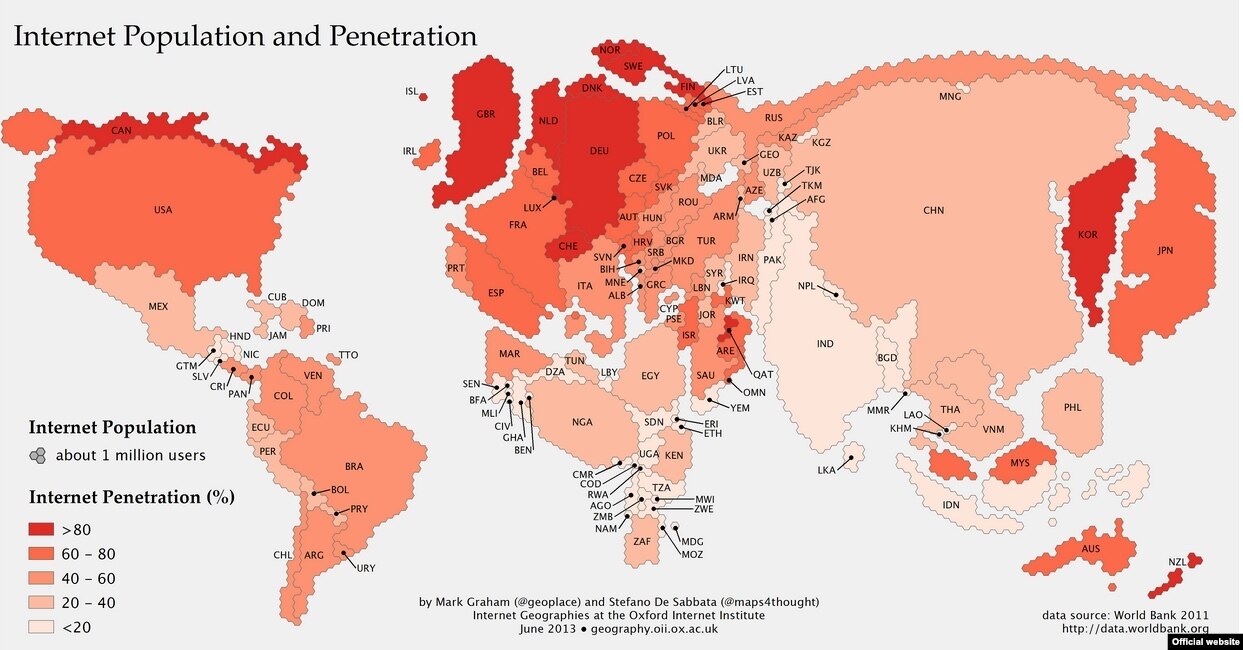
The program is designed for the coming years-until 2020-and provides for the development of the information technology industry. This, of course, is not the only economic program in the EU: in the coming years, it is planned to develop the use of alternative energy sources, which is spelled out in a large -scale document “Strategy of Europe - 2020” , but modern digital technologies are priority, since this sector of economics develops seven times faster than others. Her support was tested and justified in other countries - primarily in the United States and Japan. The EU, thus, is trying to catch up with the speed gaining speed, because the list of the most successful and profitable Internet projects, including Google, Ebay, Amazon, Facebook, Twitter, is not a single European company.
To implement such a large -scale economic project was entrusted to the Dutch politician and entrepreneur Neilly Croes . It was parallel to the deputy chairman of the European Commission. Speaking in Dublin at the Assembly dedicated to the EU digital technology program, she spoke about the main goals of the program: “Our primary task is to increase the productivity of the EU economy. And the increase in productivity implies the creation of new jobs. Take, for example, Ireland. Now the local information technology market lacks 40 thousand people. And if we talk about the entire European Union, until 2020, in our own, in our own ways The calculations will appear 1 million of the knowledge, for which knowledge of information and communication technologies will not be explained why so many young people in the EU cannot find a place, because unemployment among those who are not older than 27 years old is very great. We hope that the program of the development of digital technologies will be facilitated that this is not only the bureaucratic project.

Here are some of the developed projects: the creation of a database of the stories of Europeans' diseases, which will be available to any doctor in the EU, the possibility of establishing an individual online, access to public services via the Internet, for example, when filing a lawsuit, as well as to the Europeana library, where a book from all 28 EU countries will be stored in electronic form. As for the private business, the connection to the high -speed Internet will allow, for example, customs and tax documents without personal presence, as well as participate in state tenders. All these innovations can, on the one hand, can help create new jobs, and on the other, to spur the development of innovative technologies.
The next stage is the creation of a single Internet market. In this case, this refers to regulations, which are still being developed by each EU country in separate. Their unification should simplify the online trade between the countries of the European Union. Despite the fact that the development of Ecommerce also has negative aspects (for example, the disappearance of some forms of traditional trade), positively outweighs positive. Due to the increase in competition, margins are reduced, the choice increases, and less time is spent on the purchase of goods and services.
The development of electronic trade is still inhibited, on the one hand, the distrust of consumers, and on the other, various value tax rates, which is why some countries are in no hurry to let buyers go into online stores of neighboring states, where taxes are lower. For this reason, it is planned to harmonize consumer fees, but this process will be difficult, since taxation so far remains the prerogative of individual states, without Brussels intervention. As for consumer confidence, it will be conquered by the fight against cybercrime, strengthening the protection of personal data online and copyright.
According to the European Commission, 10 percent of customers in the EU does not consume goods and services online because of the technical difficulties related to the use of a computer or even postal services (the mail remains the cheapest service when delivering the ordered online goods). Therefore, in Brussels they also seek to increase the computer literacy of the population, to invest in the development of research and development in the field of information technology.
All these projects began to be actively discussed at the beginning of this year, when Ireland chaired the EU. The Minister of Communications, Energy and Natural Resources of Ireland Pat Rabbite, according to the results of six months of work, stated : “Users do not always have completely owned technology that are available to them. However, the current jobs that are currently arising - and those that will arise in the future are mainly associated with the digital economy sector, while other industries have stopped developing or even at a state of stagnation. I can say that it is possible to work in working in The scope of information is, therefore, we must first help EU residents develop the skills of using such skills - it applies not only to Ireland or EU countries.
The lack of skills in using new technologies is still the main obstacle to the implementation of the large -scale technological program for the development of the EU. Moreover, it is necessary to teach not only schoolchildren, but also an adult population. Further economic development will depend on the success of this undertaking. The European Commission calculated that over the past five years in the USA, Germany, Great Britain, Japan, Canada and France, online trade and services have provided the fifth of the growth of the internal gross product of these countries.