
Translated material
There is also an ocean!
The news of the establishment of a monument to Emperor Alexander I continues to worry and call for thoughts. The context of the event is already quite clearly explained about him: with the name of Alexander in today's Moscow, they primarily associate the victory of Russia in the war of 1812 and the further victorious campaign of the Russian troops (in the coalition with other powers) to Europe, which ended with the capture of Paris. Here we can’t help but recall how recently one Duma deputy was indignant: why is this not celebrated in Russia as a special holiday “Liberation” of Paris?
It is clear that the current Russian government is looking for its continuity primarily in the history of military glory. Russia is now approved mainly as a powerful military power. Such is the agenda, one might even say - the malice of the present day. It is clear that with this general installation, they pay little attention to the details of the reign of Alexander the Blessed. They do not recall either the liberal attempts of the first years of his reign, or the rather gloomy reaction of the later years, or about the exile of Pushkin, for example (think the link! - sent south to Crimea and Odessa).
But the military Russian history of the times of Alexander the First was not as clear as it is assumed today. The Napoleonic wars of Russia began by no means in 1812, much earlier, and were very unsuccessful: it is enough to recall the devastating defeat under the Austerlitan. The war developed in favor of Russia, when Napoleon invaded its borders - I want to say, in its lawlessness. The victory of Russia is a huge victory, who will argue - won in a defensive war. And not without reason, the winner of Napoleon Kutuzov was very against the continuation of the war at the European Theater, against going abroad.
Around the brightest event of Russian history of the 19th century, a national epic has developed - the great novel "War and Peace". It is worth recalling how the brilliant writer interpreted the Russian victory, the image of the winner himself, Kutuzov. All those who read the “War and the World” know that the tactics and strategy of Kutuzov in the description of Tolstoy was a kind of later Tolstoy teaching about non-resistance to evil by violence. Kutuzov in Tolstoy does not bother anything and does nothing. He is sure that the war will decide without anyone's active participation, by itself, and only by relying on fate, you can count on the favor of it. Historians have disputed this interpretation of the war Tolstoy many times, wrote a lot about the correct strategic and tactical steps of the Russian command, for example, about how, having defeated the Napoleonic troops from the Maloyaroslavets, Kutuzov forced the Frenchman to retreat along the old Smolensk road, already ruined by the previous Napoleonic offensive.
The Russian element - as, however, any element - by no means willingly and by no means always subordinates the activity and energy of a person
In general, representing the commander in chief of the enormous army by some mystic Buddhist is a controversial move, what to say. It undoubtedly affected the personal addictions of Tolstoy, and not the historical truth was demonstrated. But we must not forget that the ingenious work of art, the national epic cannot be born in an abstract ideological space. It cannot not affect him a certain deep, for all times the right truth. And the truth of Tolstoy was in understanding the very essence of Russian history and the Russian people: protest against history, the unhistorical, that is, the non -political nature of the Russian people themselves. The Russian fate of Tolstoy is not subordinated to the activity of a person, but by the movements of the elements, the extreme case of which is the same immobility. And the Russian element - as, however, any element - is by no means willingly and by no means always subordinate to the activity and energy of a person. Alexander Blok, who said about the death of the Titanic: “There is also an ocean!” Said the same thing that Leo Tolstoy was in the “War and Peace”.
You cannot argue with another: with the fact that the history of the Russian state was in every possible way and was marked by all kinds of sharp movements. Without such activity, it would be impossible to create a great empire in Russia. But do not forget that the fate of empires in Russia was unsuccessful, that they failed and disintegrated. The colossal territorial growth of the Russian state is most owed not to military captures, but to free colonization: Ermak and Semyon Dezhnev were more for such an increase in such an increase than St. Petersburg emperors.
The Eurasian plain is self -sufficient, it does not need an aggressive expansion, she herself, as a kind of magnet, has a tremendous assimilating force. The fact that Russia has ever seized by force was not held in it. The power of Russia is different: in its ability to draw into itself and process any material in your own way. Rozanov wrote that in Russia the Prussian boot is becoming Oblomovskoye shoes. And Oblomov is not just a lazy person, he is a contemplator, he is a poet, he is Leo Tolstoy, Rosanov and Blok. This is the glory and power of Russia.
As for the royal monuments, it would be not new to erect, but to remember the old ones - a monument to Alexander III works by Paolo Trubetskoy, the one who stood in St. Petersburg at the Moscow station, and the Bolsheviks were hidden into the courtyard of the museum. The giant is the emperor, and not in the boots, but in some simple boots, saddled and holds a nag, still striving to pull somewhere. The mentioned Rozanov said that this monument to Russia is much more suitable than a copper horseman.
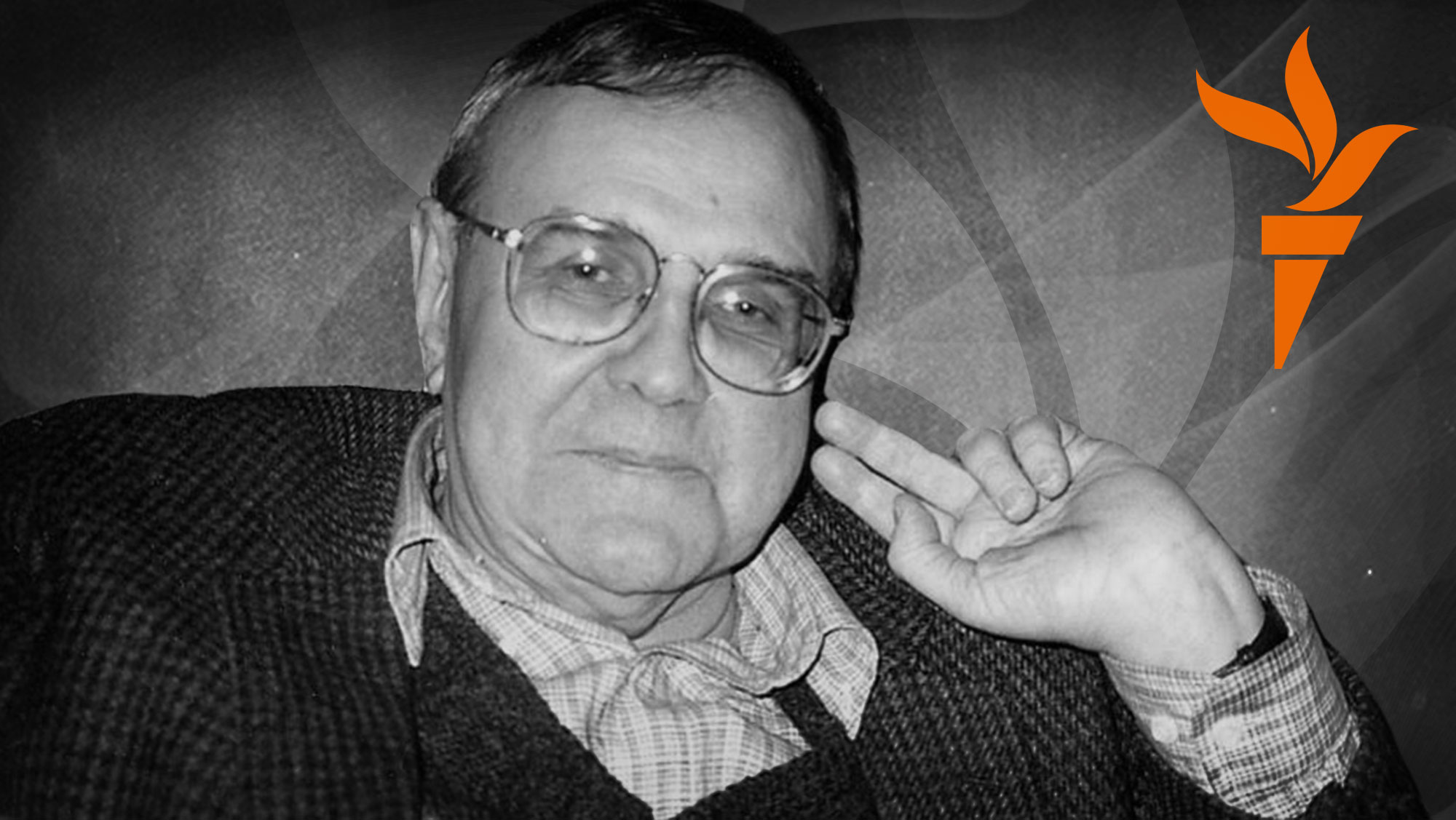
Boris Paramonov-New York writer and publicist
Opinions expressed under the heading "Law" may not reflect the point of view of the Radio Liberty editorial