
Translated material
Dialogue on Broadway
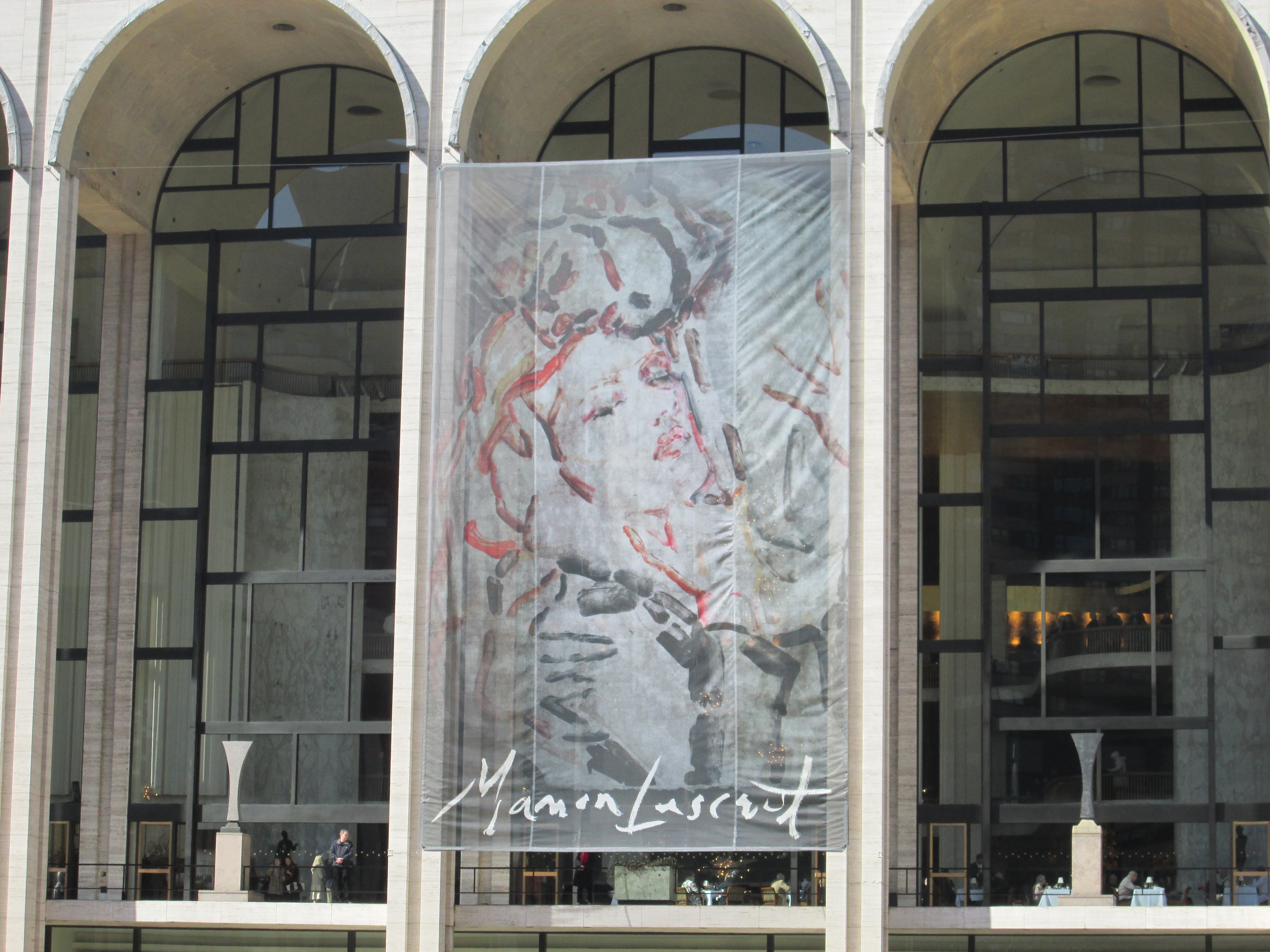
"Manon Lesko" in the metro. Shostakovich in the novel Barnes
Alexander Genis: Today Ach will open a “dialogue on Broadway”, which we and the musicologist Solomon Volkov are leading in the Broadway studio Radio Liberty.
Solomon, what is they talking about Broadway?
Solomon Volkov: Broadway is more lively discussing the news that cannot be called sensational, because it was still expected. Nevertheless, it occupies those people who are interested in music and opera, in particular, is the news that the main conductor of the metro opera James Livine leaves his post. This is the end of the whole era: he worked in this theater for 40 years, leading it for most of this period. And of course, we perceive all the coagulation of his activity with great sadness, because it was Livine that was the person who made from the metro the theater that we know today.
For me, an example of this will forever remain a memorable presentation of Wagner's tetralogy in met. The first performance was conducted by Livine, and the next conductor was next to him. The difference was huge - as if it were two different theater. So, of course, there is nothing joyful in this. Unfortunately, he suffers from Parkinson's disease, his gesticulation has already become obscure to orchestras and singers.
Alexander Genis: He said this at an open meeting of the entire orchestra, where his health was discussed. He spoke very touchingly about his love for the orchestra - the whole orchestra sobbed. He read fragments from Becket, explaining what art is for him and how important it is. He cannot quit a meter, so he does not leave - he becomes an honorary leader, which means that he will help with new performances, but the main thing is that he will continue to sometimes conduct. This, of course, is very important. This year, I was lucky to see how he conducted the Tannheiser - this is one of his main performances. Livine sat in a wheelchair, of course, an old, sick person.
Solomon Volkov: Old is like Dovlatov’s. Remember how the father objected: “What kind of old man is he? My age ". He is 72, in my opinion.
Alexander Genis: The fact is that he has long been seriously ill, he has problems with the spine, he has a lot of all kinds of diseases. But when he conducts, the orchestra grabs everything, they, in my opinion, have telepathic contact with Livine.
Solomon Volkov: What, in your opinion, was the central event in the metro this season?
Alexander Genis: It seems to me that this season the prime minister “Manon Lesko” played a very important role. In any case, when the theater hangs the poster of this particular opera right in front of its building, this suggests that they consider it important. This time they hung a cloth with Manon Lesko in front of the facade. This is an opera Puccini who is not very often put. What was especially pleasant to me, and to you, the fact that the soloist, the main performer of the role of Manon Lesko is a young singer, our countrywoman, Latvka Christine Oplelais, a young singer.
Solomon Volkov: Wife of Andris Nelsons, the Latvian conductor, who is now headed by the Boston Symphony Orchestra.

Alexander Genis: That is, this pair of Latvians captured America. Workshop is an extremely beautiful woman. I must say that in this performance there are many rather frank scenes, where she walks Neggle, showing her beauty as she can. The reviewer said that she looks like a young Tina Turner, only a blonde. Christine Werelis sings remarkably, she has a marvelous soprano.
She is not even from Riga, but from Resecne. You and I know what the resect is-this is a town in East Latvia, in Latgaly, he is famous for the fact that Tynyanov was born there, so “Tynyanov readings” are taking place in Reseskne. She grew up there, and now, look, sings at the metro.
The production itself was very bright due to its singing. In addition, in opera beauty is an infrequent case. The fact that a young beautiful woman plays a young beautiful woman is a pleasant surprise. But she also sings wonderful. However, the production itself caused me bewilderment. The action of the opera Puccini unfolds at the end of the 18th century, Puccini himself was engaged in a lot of this opera - the details were very important for him. But, of course, modern directing allows you to transfer the action anywhere, so they transferred the action to France occupied by the Germans in the 1940s. I can’t understand which in this movement. Because the Germans do not play any role in the opera - the plot does not use the occupation in any way. The heroes have enough their problems. Manon Lesko is an innocent girl who at the beginning of the opera gathers to the monastery, in the middle she becomes a kept in a rich man, and then dies in the arms of her genuine lover from thirst and torment. And where does she die? Heroes-lovers were sent to the desert. In the days of Puccini, they did not know the geography of America very well, so the heroes were transferred to the desert near the New Orleans. Although you will not find deserts there. But for some reason they decided that the new Orleans is far enough.
Solomon Volkov: quite deserted.
Alexander Genis: There are swamps there, it is quite difficult to die in New Orleans from thirst, even if you don’t drink rum. However, in this production in the last act, Manon Lesko sings in ruins that fell under the artillery shelling of the building, in France, during the war. It is not clear how they brought them there, but there they perform the last duet lying in an extremely uncomfortable position.
Nevertheless, the opera was extremely touching, it was accepted perfectly, and Christina Opolis became another Latvian star on the stage of the New York Theater. And I must say that this is not the first time this season. Recently, the title role in “Othello” was sang by Rigan Alexander Antonenko. Also Riga. What is happening with the Riga opera? In my time, Riga was rather famous for the ballet.
Solomon Volkov: No, not only, there was a very decent opera, however, touring have always been the main bait, especially from the Bolshoi Theater. I remember that my mother did not miss a single Onegin when a wonderful singer came from a large navigation, and took me there. The operas were at an excellent level, some performances with me remained forever, say, the Salome in the production of the Riga Opera Theater was one of the most powerful impressions.
Alexander Genis: That is, do you think that the opera traditions in Riga were strong enough to raise a new generation of singers?
Solomon Volkov: Another pre -war opera was very strong. Then there were beautiful opera conductors - Edgers Tons, for example, who headed the Latvian Opera and Ballet Theater. One of the most sensational productions of Tons was the “hail of Kitezh” by Rimsky-Korsakov. He did this when in Moscow they did not dare to put the “city of Kitezh” because of all this religious and mystical aura. And he did it at an excellent level. So no, the opera theater was very strong, perhaps, even in my performance, stronger than the ballet. But the ballet was also good. In general, it was a first -class theater, about which I have the best memories. I also recall that he was far from always complete - it was surprising, but, unfortunately, it was so. I don't know how it is now.
Alexander Genis: One way or another, now Wagner is played there, which was never shown in our time, although Wagner began just in Riga.
Solomon Volkov: than Riga and famous, the fact that Wagner lived there.
Alexander Genis: Not only by this, let's put it, but for sure the opera lovers. And now the traditions of the Latvian opera continue in New York. Here is an excerpt from the opera "Manon Lesko" in the production of the metro.
(Music)
Alexander Genis: What is on your book shelf, Solomon?
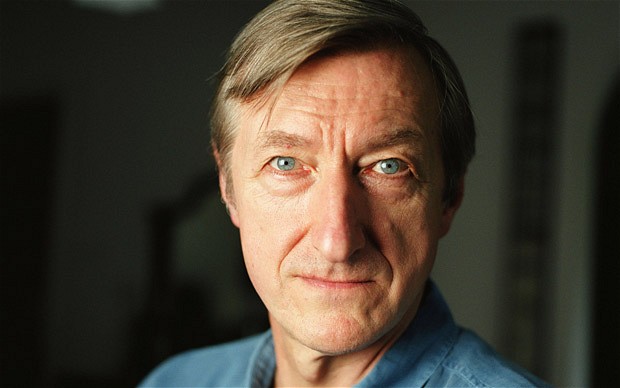
Solomon Volkov: Today I would like to talk about one extremely curious novel that the famous writer Julian Barnes published in England.
Alexander Genis: Apostle of postmodernism.
Solomon Volkov: He had an extremely popular work called Flaubert's Parrot, such a sensation on the Atlantic on this side, and in England this novel enjoyed a tremendous success, and in the United States. He is one of the leading modern English writers. The new novel is called the "noise of time." For those who are interested in Russian literature, this is a direct reference to the “noise of time” of Mandelstam, of course. And she is not random, this is exactly what Barnes had in view.
His novel is dedicated to Dmitry Shostakovich, which in itself is extremely curious. Because Shostakovich, it would seem, is a Russian composer, a famous, dramatic life that has passed in Russia. Why not appear Roman about Shostakovich in Russia, especially modern Russia, where there seems to be no longer forbidden topics? During the life of Shostakovich, it is clear that the novel could not appear about him, but after the death of Shostakovich and after the Soviet government disappeared, a wonderful novel could be written about Shostakovich.
Alexander Genis: In the West, they did so. This is not the first book, there is a book by the American prose writer William Volleman about Shostakovich.
Solomon Volkov: First there was a play that went around many scenes of the world, called “Master Class”, David Paunal, the English playwright was its author-it was 1983. I must say that the play, in my opinion, is very bad - this is a farce, which depicts in the farce form of the mockery that Shostakovich Zhdanov and the company were subjected to Shostakovich in 1948. Nevertheless, the play enjoyed great success. Then a book that you just mentioned appeared, William Volleman wrote a rather thick book in 2005.
Alexander Genis: This is a thick book.
Solomon Volkov: I have it, presented by the author, the “Europe-center” is called. It was presented for a simple reason: the author quite widely used the materials of Shostakovich memoirs there, I recorded and published by me.
Alexander Genis: This book was adopted very warmly. I remember that when she came out, and this is a serious big volume, they started talking about whether the Volleman will receive the Nobel Prize, whether this book is an application for such a prize.
Solomon Volkov: an unusual very writer, an unusual figure. After that, we entered into correspondence, exchanged judgments for a variety of topics - from Shostakovich to Solzhenitsyn and in the interval. He also writes on the strangest and most diverse topics, about Thai brothels, for example, a large study. I don’t know if he wrote something about it and whether he published, but he wrote to me that he went to the Kurds when there was not even a conversation about the Kurds in the international arena. Volleman appears in the most unexpected hot spots of the planet, for example, in Afghanistan, it entails there. Very unusual works appear from under his pen. Yes, today he can be one of the most mysterious and interesting figures of American literature. This is even some kind of strange genre, something between fixed and non-fiction. The novel about Shostakovich is, of course, fiction.
I must tell you that I have no complaints about the Volleman’s book, it was written wonderful on its own. I can say the same thing about Barnes’s book, which, in addition to his famous “Flaubert Parrot”, published a novel of the same kind based on a real event, namely, this was the court on Todor Zhi Zhivkov, the Bulgarian dictator. The book about Shostakovich, again, is that he writes in his entry to the book, is largely based on Shostakovich's memoirs. I will tell you why for the Volleman and Barnes, Shostakovich’s memoirs were so important: because the book, as you know, was translated into English and many other languages, but in this case the English language was important, it was a very good translation of Nina Bewis, it was generally a wonderful translator, as we know.
Alexander Genis: Our good friend, than I am always proud of.
Solomon Volkov: There, in the translation of Nina, Shostakovich’s living speech with a very strong dose of irony. The whole book is permeated with an ironic, specifically Petersburg style that was characteristic of Shostakovich-senior.
Alexander Genis: This is also in the music, especially in the first symphony.
Solomon Volkov: Interestingly, when we are talking about Shostakovich, of course, there is irony, grotesque, satire - this is very important.
Alexander Genis: The author who wrote the opera “Nose” cannot live without irony?
Solomon Volkov: But the first thing that comes to mind when you remember Shostakovich is a tragedy. I remember the reaction of my editor when the book of memoirs was preparing for the publication in New York, “Harper End Rowe” then it was called, now it was “Harper Collins”, she, she remember, came to the meeting after she read the translation, said: “My God, I never laughed like that. This is a very funny book. ” She did not expect this at all, she thought it would be tragic memoirs.
Alexander Genis: Naturally, this is what they expect from Russian memoirs.
Solomon Volkov: And this was a book in which there was a mass of ridiculous, because it was the style of Shostakovich's statements. And Barnes reproduces him quite close to the original in his novel. Its book is built as an internal monologue from a third person - this is such a rather unusual form that works very well with this predominance of irony.
There are three parts, three disasters in Shostakovich’s life, which Barnes seemed important, but they were such. This is an attack on Shostakovich in connection with the opera Lady Macbeth of the Mtsensk district in 1936, then a well -known resolution, where Shostakovich and all the most significant Russian composers of that time were convicted as formalists and as anti -people's authors - this is 1948. And finally, 1960, not so famous, as it were, the date in Shostakovich’s life, because not everyone remembers that that year Shostakovich joined the party. It was a forced step, a tragic for him. He, telling his friends to his friends, about how he was forced to enter there, sobbed. What is generally atypical for him.
Like any story connected with Shostakovich, or maybe it seems to me that I had been engaged in Shostakovich for many years, he knew this person, everything connected with him is incredibly difficult, it is impossible to find a clear explanation, you need to look at it from different angles. There can be many explanations and they can mutually exclusive each other, but can support each other, can coexist, that’s the matter. I think that this is typical, probably, for any major personality, for any major creator. In the case of Shostakovich, this is obvious.
In the book of Barnes Shostakovich is not at all heroic, it is depicted as a neurotic, which, of course, Shostakovich was, with such an acute neurotic tint. Example the first that comes to my mind, Shostakovich, for example, appeared on any train at least half an hour, he never was late, never at all, there was an exceptionally punctual person, and he was always nervous, which could be late. Or, for example, he finished the essay and the manuscript sent a scribbler. What do you think he did after that at night? He did not sleep and thought if he could restore the manuscript if suddenly her scribe loses. At night, he scrolled this music in his head again and again. This happened because he could not immediately get rid of her, to erase her with some kind of elastic band from his consciousness. This is also a sign of neurotic consciousness. Maybe all composers think so when they send their manuscript to the census.
Alexander Genis: Now they just make xeroxes.
Solomon Volkov: The Barnes book describes the women important in his life - mother, wife Nina. And also very complex stories of relationships. There are almost no friends in the novel, because there are fewer information about them. On the other hand, Barnes could pay more attention to Ivan Ivanovich Solletinsky, but for this it was necessary to study Solletinsky, to understand what kind of figure it was and study the huge layer of materials related to Solletin. But Barnes did not. So enemies and rivals. The enemy in the novel of Barnes is Tikhon Khrennikov, so it was large in life. The rival Prokofiev is also a very difficult story, because at some point these two composers were friends, they once diverged, they spoke about each other both positively and negatively, even publicly cursed, everything was.
All this is a wonderful topic for a work of art in Russian. What do we have? Mikhalkov’s play “Ilya Golovin”, written in the footsteps of the 1948 resolution, where a certain formalist-composer is a generalized depicted, it could be Shostakovich and Khachaturian, anyone, we understand how it all looked. I had a mentor in Leningrad named Bogdan Berezovsky, he was a composer, but also a wonderful critic, first of all, and generally an interesting figure. He wanted to write a novel where Shostakovich would be the acting face. I found out about this when, after the death of Bogdan Berezovsky, he took part in the disassembly of his archive, held the notes in his hands, but, you see, it didn’t reach that either. What is the reason for such a complete absence of Shostakovich in Russian art prose - I do not understand this. And Barnes, I think, can be congratulated on a great success.
Alexander Genis: Solomon, how do you feel about this genre? After all, this is a very peculiar genre - to recreate the personality of the great artist in an artistic work. Do you like such books? Indeed, for this, the author should become the same as his hero, he should not only understand the hero, but get into his skin.
Соломон Волков: Есть замечательный роман Верфеля о Верди, который я считаю образцовым в этом плане. Очень трудно писать о композиторах, гораздо сложнее, конечно, чем о писателе, потому что когда ты пишешь о писателе, то можешь цитировать его произведения. Но если ты пишешь о композиторе, ты можешь только воспроизводить музыку, ее звучание словами, что чрезвычайно затруднительно. What do you think?
Александр Генис: Я считаю, что обычно это довольно убогий жанр, я с ненавистью отношусь к писателям, а таких было очень много в моем детстве, которые писали: «Пушкин вышел на крыльцо, посмотрел на небо и задумался о свободе русского народа».
Соломон Волков: Ну а Пушкин Тынянова?
Александр Генис: У меня тоже к этой книге есть претензии, потому что Пушкина-поэта он не изобразил, он изобразил Пушкина-лицеиста.
Соломон Волков: А Грибоедов и Кюхля?
Александр Генис: Лучше, потому что Пушкин слишком большая фигура. Конечно, в любом случае Тынянов - хороший писатель. Но в принципе за это должны браться только очень смелые люди и только очень хорошие писатели. У меня есть образец, который, я считаю, гениально выполнен: «Лотта в Веймаре» Томаса Манна. Это книга, которую, кстати, Томас Манн написал в Америке, что тоже интересно. Он написал в ее в 1938 году в Принстоне, потому что сам он был отлучен от немецкой литературы. Вот тогда он и сказал, “немецкая литература - там, где я”. За океаном Манн пытался восстановить ту Германию, которую Гитлер убивал. Он хотел показать Германию, которую которую весь мир любит. И для этого он нашел художника, который был воплощением такой Германии — это Гете, конечно. Книга написана очень интересно, дело в том, что впервые Томас Манн написал целую главу в виде внутреннего монолога Гете.
Соломон Волков: То есть это то, что сделал Барнс в своем романе о Шостаковиче.
Александр Генис: Совершенно верно, но это было еще в 1938 году и сделано было настолько успешно, что многие поверили в то, что это настоящий Гете. Один американский генерал цитировал слова Гете...
Соломон Волков: ... из романа, как собственные слова Гете. Это как знаменитая история со Сталиным в «детях Арбата» Рыбакова. Рыбаков придумал высказывание Сталина о том, что есть человек - есть проблема, нет человека — нет проблемы, и это до сих пор цитируется как подлинное высказывание Сталина.
Александр Генис: У Томаса Манна показан процесс мыслей Гете. Это очень подробная огромная 7 глава, по-моему. Мы представляем себе, как именно мыслит гений. Это настолько достоверно для меня, что я верю каждому слову. Не я один, конечно, потому что многие немецкие писатели, например Стефан Цвейг, считали эту книгу лучшей у Томаса Манна. Представляете, какой у него канон: и «Волшебная гора», «Доктор Фаустус», кстати, где описан внутренний процесс мыслей композитора, но именно «Лотта в Веймаре» была более всего созвучна Томасу Манну. Я думаю, только по одной причине: он считал себя реинкарнацией Гете. Томас Манн думал, что он Гете сегодня, поэтому он все время прикидывал на себя, что бы он сделал, если бы был Гете.
Соломон Волков: Так всегда и происходит.
Александр Генис: Но для этого нужно быть такого же величия человеком.
Соломон Волков: Надо быть Томасом Манном.
Alexander Genis: Absolutely. Соломон, а как по-вашему, музыка Шостаковича отображена в романе, читатель может ее услышать?
Соломон Волков: Нет, в романе она почти не присутствует и по понятной причине: писать о музыке очень затруднительно. Описывать музыку, описывать ее эмоциональное воздействие, слова здесь становятся неадекватными. Анализ музыкальных произведений — всегда для меня очень сомнительная вещь. Я предпочитаю в своей работе, когда пишу о музыке, говорить языком документов: что по этому поводу происходило вокруг, что происходило в обществе, в политике, как реагировали на это люди, тогда все становится на свои места. А начинать рассказывать, что - в первой части, что - во второй, что в третьей — это очень затруднительно. Барнс, к его чести, такого не делает, концентрируясь, опять-таки справедливо, на политических аспектах в жизни Шостаковича. И конечно же, в этом смысле его привлекает фигура Сталина. Поэтому мы в заключение нашего разговора покажем фрагмент из 10 симфонии Шостаковича, фрагмент из второй части, который по словам Шостаковича из его мемуаров является музыкальным портретом Сталина.
(Music)