
Translated material
Samo -Catrain in the Agony stage
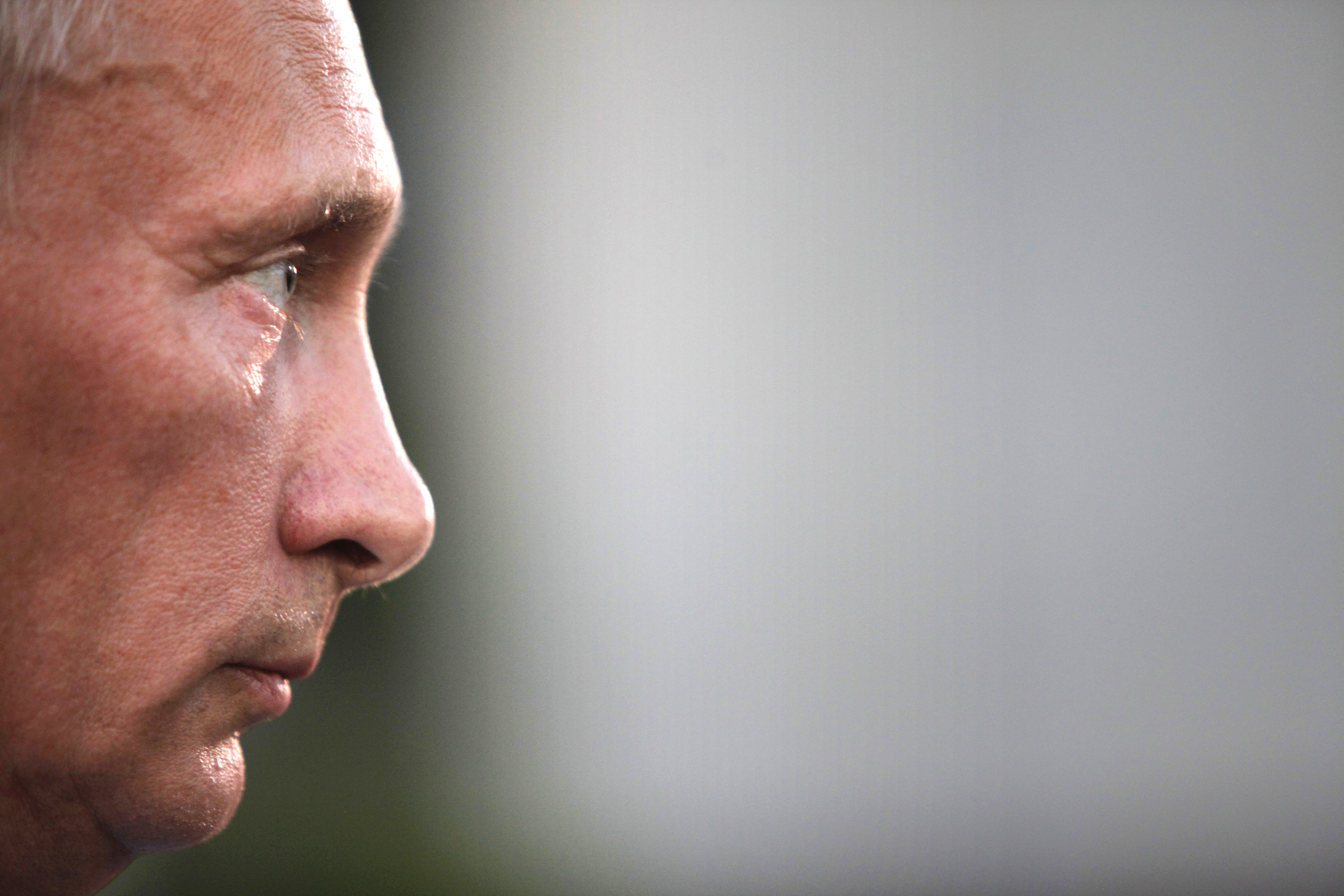
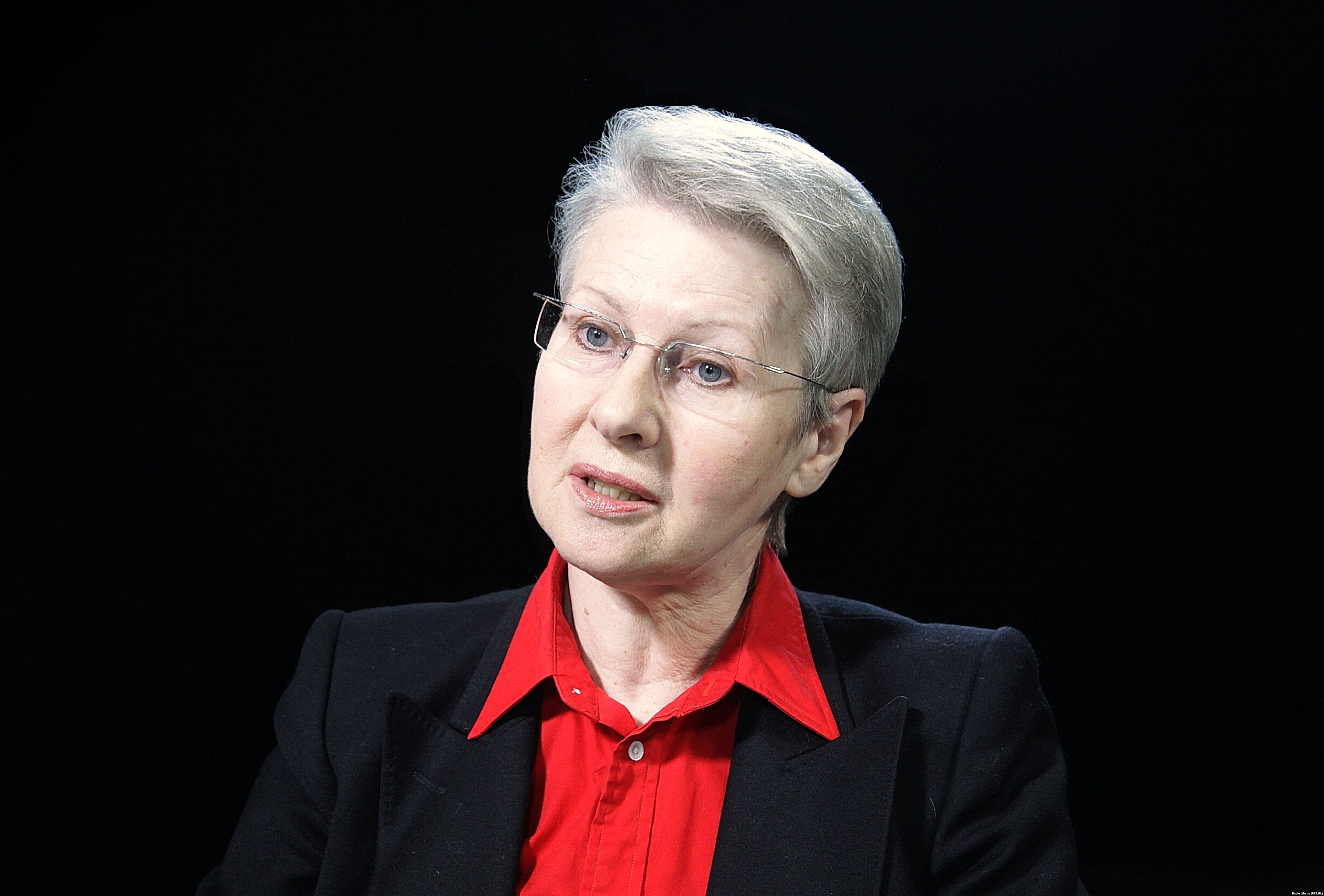
Political scientist Lilia Shevtsova - about the coming 2016 year for the Kremlin and personally Vladimir Putin
Radio Liberty continues the cycle of programs and interviews devoted to the main significant events and dates of the coming 2016. What are the general prospects of the current Russian government in the coming 2016? What factors within Russia and beyond the Kremlin work and which work against it? Which of them will intensify and which weaken? These questions are answered by the famous political scientist, expert of the research institute in Washington Lilia Shevtsova.
One of the external factors playing into the hands of Russian President Vladimir Putin is the extreme weakness of international institutions that are designed to work for stability and restraint of zealous players who have unilaterally change the rules of behavior of countries in the international arena, Lilia Shevtsova believes:
- It seems to me that it is possible to predict the main trajectory for the next year - the trajectory and world order, that is, the main concepts of the development of foreign policy, and the main trajectory of Russia's movement. Of course, it is impossible to determine events. It would be just a fortune -telling that can cause simply steep turns, or a reversal, collapses. But you can determine, at least, the movement of the train, although what will happen in the train itself is difficult to say, especially in the situation of today. And she is very remarkable. After all, today the balance in world development is actually destroyed. Stability is scattered. The previous status quo disappears. The previous rules of the game and the international management system are violated, I am talking about the UN and the Security Council with the right of veto, which block any necessary solutions. Both the WTO and all regional systems of cooperation and security, from ASEAN to the Eurasian Union - are all in a state of paralysis.
- As for Europe, its mechanisms for making collective decisions are in far from the best condition today, which is very alarming. After all, it was the Kremlin’s main efforts that the main efforts of the Kremlin are aimed at the split of pan -European institutions?
- The crisis of the current model of liberal democracy continues. And he affects the fact that the EU lost the drive, lost the mission. And in fact, who is replacing the EU today? Chancellor Angela Merkel. Involuntarily, not wanting that, she made a world superpower from Germany.
From the point of view of Lilia Shevtsova , and global trends in the ideological field are formed for the Putin team very successfully:
- A extremely alarming thing happens - the loss of the attractiveness of the very idea of liberal democracy. According to Frida House, somewhere from 2006-2007, the world democratic area has been reduced. And in return, attempts by non-liberal states are intensified (this is Russia, China, to some extent, Iran, which crawls out of the sanctions) fill the vacuum. Here is the international situation, the international background in which Russia will move on its train.
What prevents Russia from fully using the enemy’s weaknesses is structural flaws in its own system of power, according to Lilia Shevtsova . From, for example, that the West does not always behave fundamentally, the Kremlin made an erroneous conclusion that the West will behave opportunist in the face of any call. And he turned out to be wrong, as it was in the case of the annexation of Crimea and the intervention to the east of Ukraine:
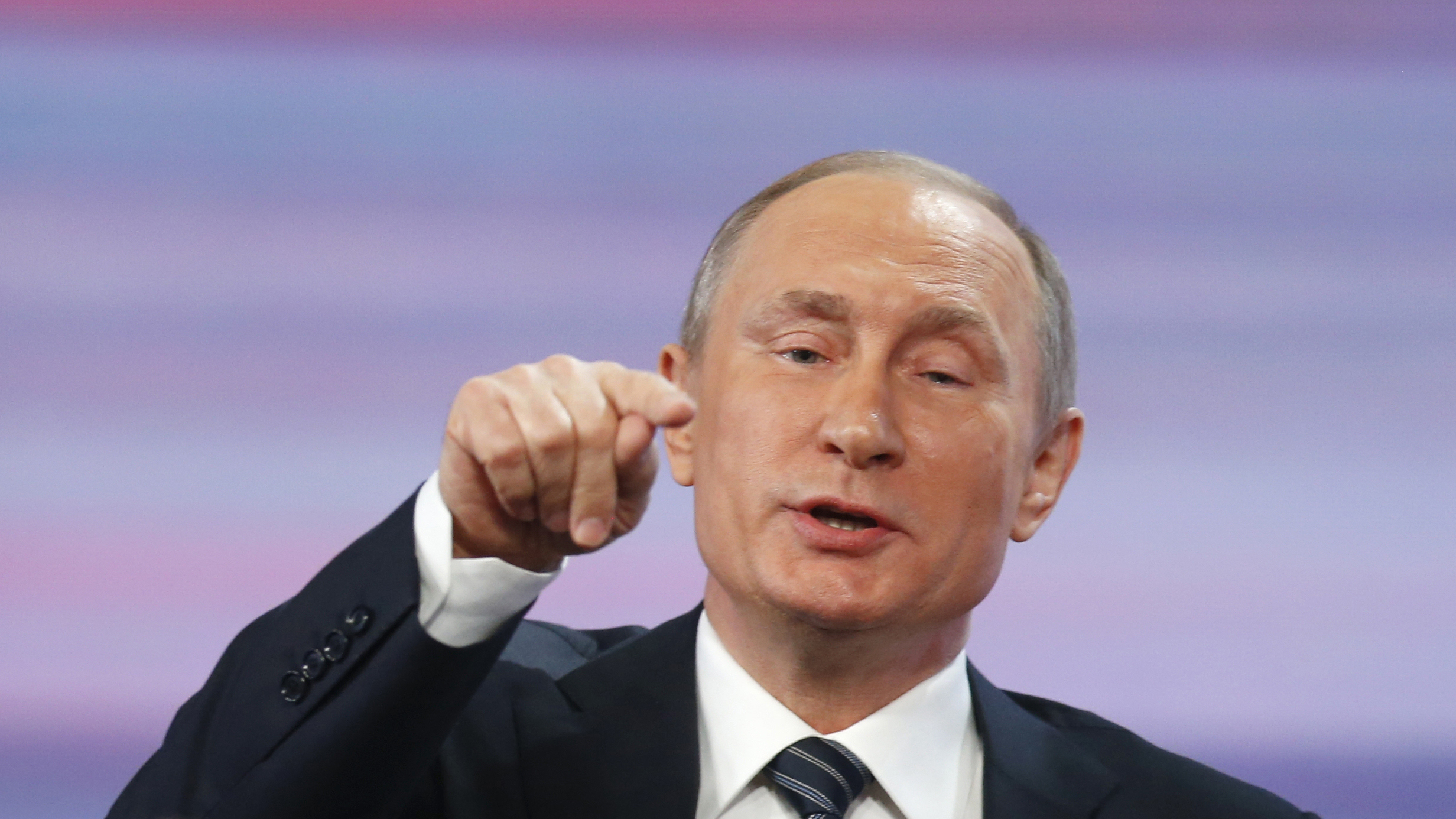
- If we look at our autocracy system, which has been updated over the past 20 years, this system, in principle, rejects many alternative assessments of the situation. And ultimately rejects the assessment of adequate! Recently, the Kremlin made a number of serious mistakes in assessing the situation, on the basis of which cardinal decisions were made there in 2014-2015. I still think that if the Kremlin had an adequate assessment of the world situation, the policy of leading Western players, then Putin would hardly have gone to the annexation of Crimea, Putin would hardly go to war in Ukraine. Because, obviously, in the Kremlin’s concept, the confidence was laid down that the leading Western leaders would swallow it in the same way as they swallowed the Russian-Georgian war, the dismemberment of Georgia. And here we approach one of the most important questions: to what extent does the Kremlin evaluate the strength, capabilities, and the potential of the West? Apparently, somewhere, probably, by 2011–2012, Putin and the ruling team in the Kremlin came to the conclusion, say, a kind of “spenglerrealism” that the Western era ended. And this conclusion was the basis of the updated concept of Russian foreign policy in 2013. And repeatedly, Sergei Lavrov said that the capabilities of the West have exhausted themselves, "our time has come." Obviously, 15 years of communication of Vladimir Putin with Western leaders, starting with Berlusconi, Shirak, Sarkozy, Schroeder, of course, Blair, then with Cameron and, finally, Obama, led him to one simple and unpretentious conclusion: “They are weaklings! They will eat what we offer them according to our menu! You can not reckon with them.”
To a certain extent, of course, Putin is right: the West is in a state of crisis
To a certain extent, of course, Putin is right: the West is in a state of crisis. Western leaders are unlikely to bring some significant contribution to the update of both international relations and the model of liberal democracy itself. But the Crisis is not the first time to comprehend the West! The West overcame its crises in the 30s of the last century, and in the 70s. And it turns out that the crisis may be the only real renewal mechanism and the western model of the social system. Apparently, the Kremlin overestimated the depth of the crisis, overestimated the degree of inferiority of the Western political world. They made a mistake! And the West was able to consolidate, by the way, unexpectedly for me, quickly enough over last year. The West is still within the framework of unity on the sanctions package against Russia, which should force Moscow to comply with the Minsk agreements.
At some point, the Kremlin realized that the frontal attempts to break through the West did not pass, and began to act inventively, however, as Lilia Shevtsova believes, tactical flexible approaches to the west in the diplomatic sphere will continue to be combined in Putin’s policy with an unhappy anti-Western military-patriotic propaganda. It seems that the mode is not able to build an ideological basis without this component. The Kremlin replaces the real challenges of socio-economic development of the country with pseudo-cars, which the external world allegedly presents it, and gains legitimacy, struggling with these imaginary threats. There is a certain logic in this. Autocratic modes are better adapted to the reflection of pseudo -shoots than real calls, especially if, along with the reflection of the pseudo -outs of the external, one can neutralize internal political opponents. True, each subsequent surge in the militaristic hysteria is shorter than the previous one. And the authorities for the sake of its heating all the time have to look for new enemies, the expert of the Brucking Institute continues:
-I think that somewhere in the middle of 2014 and it was already definitely a decision in the Kremlin’s fall in the Kremlin-to find any ways to get out of isolation, return to the negotiating table, to dialogue with the West. And obviously, Putin and the Kremlin team realized that if Russia wants to be a superpower, or even a regional power, if Russia wants to maintain the status, its significance and even weight in the same security council, it should urgently “leave the Leprosorius”, into which itself drove the war with Ukraine. And by the way, the Minsk agreements, "Minsk-2"-it was a formula, in fact, broken by Putin himself. It was a formula for finding a compromise with the West about Ukraine. The search for the path is the completion of the Russian adventure in Ukraine, however, on Russian conditions.
And Syria and the Syrian Gambit, as we now call the next adventure of the Kremlin - this time in the Middle East, pursued a very clearly triune task. Firstly, to break through the isolation of Russia and try to force the West and the world around us to forget about the "Ukrainian adventures." Secondly, to legitimize and reproduce the military-patriotic mobilization of power in Russia. Obviously, under this regime, the Kremlin will not be able to go beyond this legitimation, that is, to move from wartime, to return back in peacetime. Thirdly, this is an attempt to impose on the West, as well as the world of its vision of the world order, which consists in the requirements to recognize Russia's right to its own interpretation of the basic principles of international relations, that is, sovereignty, territorial integrity and other principles. This is the triune task of the Kremlin in Syria.
“Of course, I can be mistaken, but I don’t think that the West will compromise with Russia in Syria and Ukraine,” says Lilia Shevtsova . The expert of the Bruckings Institute also outlined issues that the Kremlin has to be resolved in 2016. It is no less important to formulate the problem correctly than to predict how successfully the Russian government will cope with it:
-2016 will be a very important year, which, firstly, will show to what extent the Russian system can find new methods of self-production, and to what extent the current political regime will be able to restore the confidence of the political class, very undermined, as well as the trust of society. Despite this completely amazing rating of support and trust, he speaks little about the real mood of society. And to what extent the West itself can find a balance in relations with Russia. I will try to decipher what I said now. If we are talking about the Russian system and the Russian regime, then there is absolutely all the evidence that the Russian autocracy last year has entered the new stage of its agony. The first open stage of agony was undoubtedly coincided with 1991. This is the year of the collapse of the Soviet Union. This is a unique event in world history! Imagine that the nuclear superpower, one of the poles of the world order, actually breaks up, like a clay statue, without any threats from the outside and without any threats within the country. In peacetime, such a breakdown is already evidence of the exhaustion of the system resources. And now, since 2014, there are all signs that this system is included in the new stage of agony. The stage of agony can be the second, third, fourth. And the process of agony itself can be quite long. By the way, agony and the Austro-Hungarian Empire were such, and the agony of the Ottoman Empire was quite long. But all the signs of self -display of this system are evident.
The system is trying to survive at the expense of "juices of public energy", demoralizing society
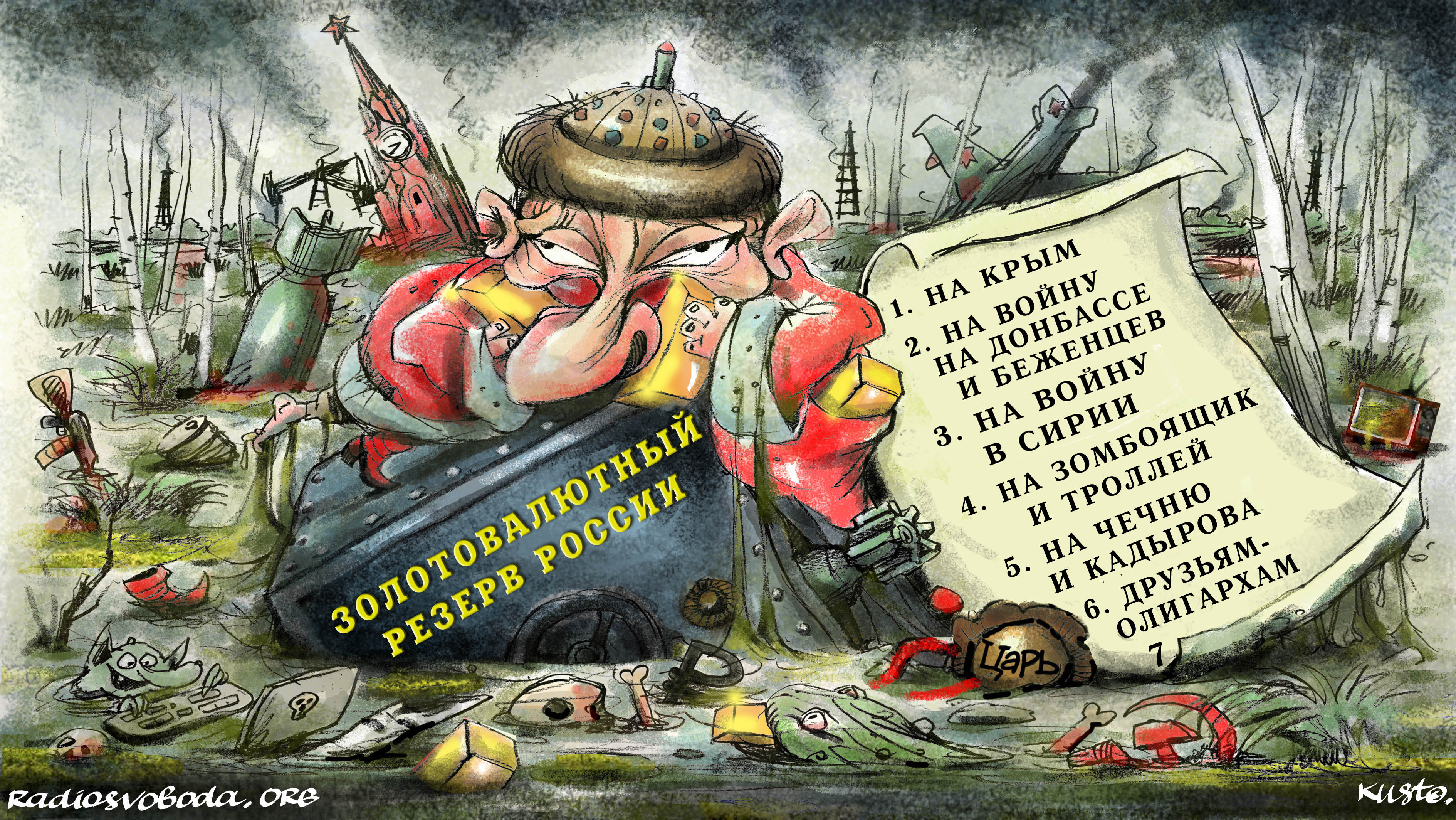
Firstly, this system is not developing. Any biological organism, socio-political, which is not developing, is already degrading. He rotates, he is in the stage of agony. Secondly, this system does not ensure the reproduction and strengthening of human capital. Moreover, she works against the interests of people. It forces society to compensate for errors, ineffectiveness, failures of the system itself. She tries to survive at the expense of the "juices of public energy", demoralizing and leading to the degradation of society. And finally, the most obvious, most striking example and confirmation of agony is the transition of the system, in peacetime, from peaceful modality, from relatively peaceful, calm development, to military-militaristic and patriotic legitimations. Well, there were no reasons for this! And this system, which cannot respond to internal challenges, that is, cannot ensure development and stability, cannot guarantee the interests of not only society, but the interests of even the political class of the RARTER. This system suddenly resorts to protection against mythical enemies. This system replaces internal real challenges, and there are many of them - economic, social, demographic, health, roads, regional budget, etc. - external challenges. "NATO escalation, American aggressiveness, Ukrainian national fascists." And now the Kremlin is looking for challenges in Syria, where, in fact, Russia has no direct, direct national, state interests. The government continues to emphasize the mechanism of artificial cultivation of fears - uncertainty in the future, the need to lean against the state in order to hide from threats, internal and external, which are imitation.
The Russian authorities have no factors that would force the population to be prepared for self -sacrifice
But how many factors begin to work to undermine Russian stability, to undermine the stability of this system! Of course, this is an oil factor that everyone is talking about. The Russian budget is still based on the figure of $ 50 per barrel. And if there is 35, and if 30? Then the budget flies to the damn mother, and with it, in fact, both investments and consumption. Any hopes for the growth of production. But besides this, other factors begin to work. The Russian authorities have no idea that, by the way, had, by the Soviet government, a positive, constructive idea that could mobilize society for a positive future, to aspiration to the future. The Russian authorities have no factors that would force the population to be prepared for self -sacrifice. This, by the way, is a very important factor that can support this system and this power. Only 16 percent of Russians, despite their support from the leader, are ready for certain hardships and self -sacrifice in the name of supporting the authorities. And besides this, there is simply a lack of financing of the economy, export industries, the inability to get loans abroad. This, by the way, is not just stagnation, it is a crisis of the Russian economy. And the militarization of consciousness does not save. Because temporary militarization, superficial, exists - support for Russia's actions in Syria, as supporting Russia's actions earlier in Ukraine - but it will be exhausted very quickly. Because inherently the Russians do not want war.
- Are there still factors weakening the modern Russian regime?
- There are two more factors that work against Putin. One is a Russian Rantier class, which lives in a globalized world, which is integrated into Western society through banks, children, through its cottages, through Londhinggrad in personal quality. This class of Rantier is the class that was not in the Soviet system. Under the Soviet system, the political class was ready to survive in the framework of isolation and within the “Iron Curtain”. The class that consists of Usmanov, of Alekperov, from the General Prosecutor of the Seagull, and all other representatives of the Russian bureaucratic elite, with bank deposits in Switzerland, is not ready to live in North Korea! They are not ready for self -sacrifice. They are not ready to close the borders. There was a situation when Putin, with his militaristic component, ceased to be a guarantor - this is very important! - The survival of its political class. Who is still thinking how much he is dissatisfied with the boss, but who is already dissatisfied. But who is still not ready to risk open manifestation of discontent.
The Praetorians never ruled Russia!
- And their boss is not yet ready to coolly shuffle the elite on the model of one of his great predecessor?
-If we talk about the mechanism with which Stalin and Mao Zedong survived at one time-at the expense of “purges”, I don’t exclude that at the time of despair Vladimir Vladimirovich will still go to this in order to abandon some victims of the indignant people who will begin to go out into the streets. Obviously, he dares to sacrifice some representatives of the third, second echelon. But he is unlikely to sacrifice the circle on which he relies, with which he is tied not only by transactions, but also by the principle of loyalty. For without this the leader remains naked and without cover.
But by the way, there is another factor - this is a repressive apparatus, Russian security forces, who, within the framework of various political science research, are considered as one of the supports of the current political regime, which, indeed, is. By the way, the Praetorians never ruled Russia! Civilians have always ruled Russia. Even under the Soviet regime, the KGB was only a guard PSA of the CPSU, which stood at the Kremlin gate, guarded the Kremlin gate. And now for the first time in Russian history, the security forces rule Russia. And this is affected by a certain logic of what is happening. The security forces really make a much greater emphasis on repressive methods, and they will do it in the near future. But at the same time they weaken the system. What happened historically in other civilizations and in other systems, when the security forces began to be traders when the Praetorians began to master their property! Why did Sparta die? Because the military cohort of the Spartans suddenly began to trade. Why did the Ottoman Empire bend? Because the Ottoman military suddenly felt a taste for property and lost their ability to protect the empire.
The same thing happens with us. The Investigative Committee, the Prosecutor General, security officials at all levels-from the region to a small town-they all were given a carte blanche for the acquisition of property. И в последнее десятилетие происходит огромный передел собственности, когда основным собственником оказывается силовой сегмент политической элиты, который объединяет в своих руках репрессивный ресурс, власть и собственность. И вот в этом качестве, объединив власть, собственность и репрессии, оказывается, они меньше способны и готовы защищать это государство. Они будут защищать только себя и свое инкорпорирование в западную цивилизацию – любым способом. Они будут защищать свою способность иметь счет в каком-нибудь Райффайзенбанке в Австрии, но не Путина и его личную власть. Это очень интересно – как это все будет проявляться на протяжении 2016 года.
В 2016 году, подытоживает Лилия Шевцова , мы увидим продолжение путинского эксперимента по отысканию новых методов укрепления режима, которые укладываются в сложную формулу: быть против Запада, внутри Запада и вместе с Западом одновременно. В системе есть еще достаточно резервов, включая финансовые, чтобы в 2016 году предотвратить коллапс здания власти, по всей длине которого, однако, уже пошли трещины, проявляющиеся то в протестах дальнобойщиков, то в глухом недовольстве класса рантье, т. е. групп, которые еще недавно были опорой режима. А еще Лилия Шевцова также очень надеется, что в наступающем году, на фоне углубляющегося экономического кризиса, россияне наконец начнут лучше отличать реальные угрозы от мнимых.