
Translated material
St. Petersburg shade
The new chapter of the memory of the writer, historian and translator, who finds unique words and angles to describe all his travels

How to get around the lock?
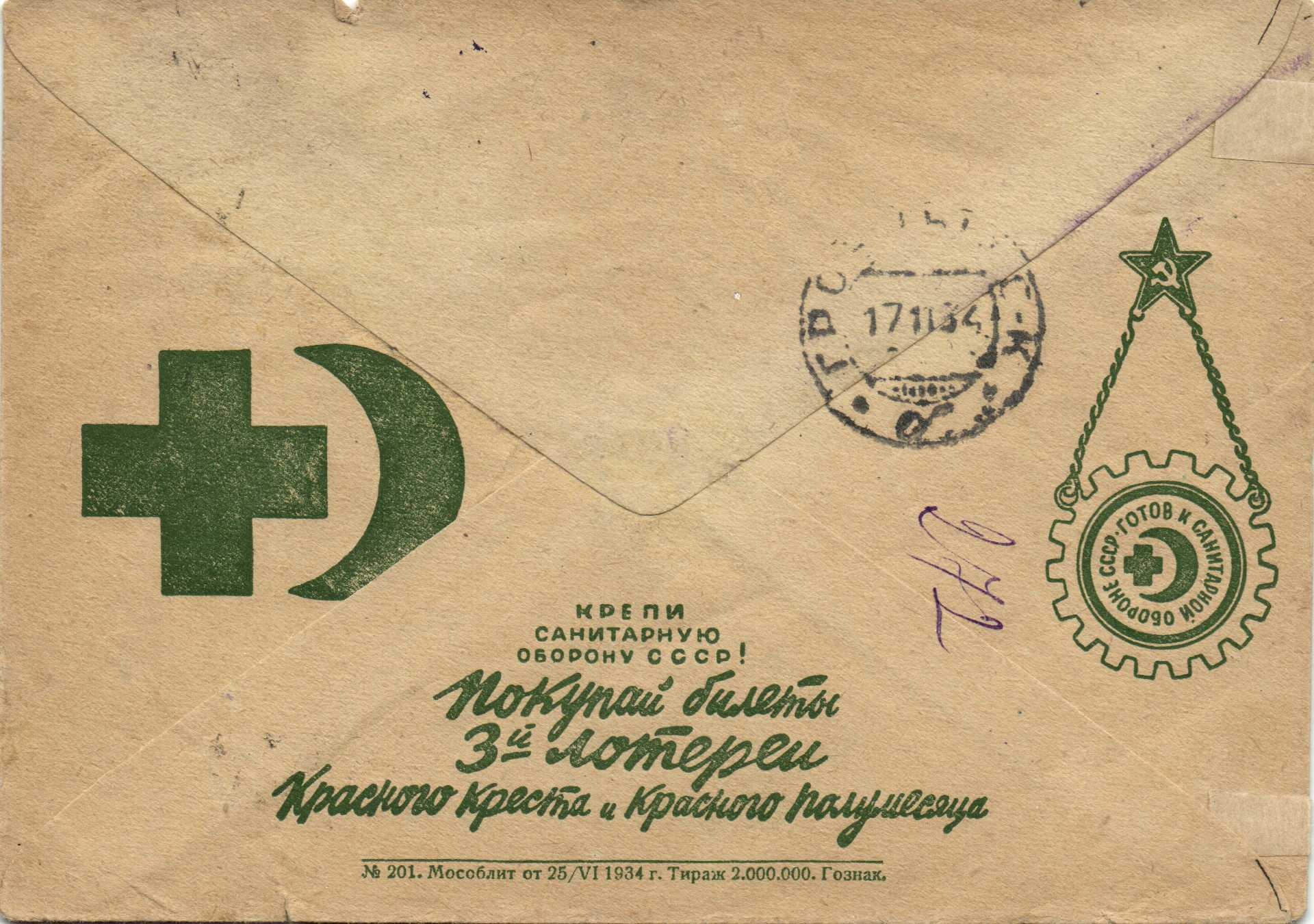
Read>Alexander Goryanin: This city always has a dive in history - both when you are in it, and when far from it. In the early 1980s, having bought a grenade encyclopedia, the missing and long-sought volume of the Encyclopedia, I found an empty envelope between the pages, apparently the bookmark, already without a brand and, judging by the stamps, "passed the mail" in the far of 1934, with direct and inverse addresses. Although I bought the book in Krasnoyarsk, the letter was from Leningrad to Leningrad, from the 2nd street of the village poor on Nakhimson Avenue. Both of these addresses became simply a challenge to my curiosity, and I got a delight into the Leningrad toponymy. Complex surveys, however, were not needed. Nakhimson Avenue turned out to be a former (and current) Vladimir Prospekt, while the 2nd street of the village poor was named Lesser Nobility, and in 1935 it became Michurinskaya, which is also to date.
But along the way, I stumbled upon a protruding riddle of the Leningrad era - namely, the return of all the main "old -regime" names of the city, announced on January 13, 1944. The blockade has not yet been removed, until the end of the war is still 15 months, and Lenin Avenue disappears in Leningrad, he becomes Piskarevsky! The avenue disappears on October 25 (and this, according to the old style, November 7, the day of the "Great October"), it again turns into Nevsky. One day with the mentioned Vladimir. By a decree of the Leningrad City Council!
On that day, the prospectus also replaced their low -consuming names: Sovetsky (again became Suvorovsky); Volodarsky Avenue (before and now foundry); Roshal Avenue (the name of Admiralteysky was returned to him); The Prospekt of the Proletarsky Victory woke up by the Big Avenue of Vasilievsky Island, and Karl Liebknecht Avenue - Big Avenue of the Petrograd side; Finally, Ironyakov Avenue (the same "sailor of Zheleznyak" that commanded the acceleration of the Constituent Assembly) again became the small avenue of the Vasilievsky Island.
Legal names returned not only to the avenues. The native name of Sadovaya again received the "Street July 3", a quarter century called in memory of the first (failed) attempts to seize power in the summer of 1917. The lovely Tauride street was relieved to bear the name of the Crimean Bolshevik Slutsky, Vvedenskaya shook the name of Rosa Luxembourg, and the palace embankment - the name of the embankment on January 9.
This debolshevization, if you call a spade a spade, affected the five main squares of the city: Palace, Marse Field, Isaac, Vladimir, Kazan (they wore names, respectively Uritsky, victims of the revolution, Vorovsky, Nakhimson, Plekhanov). The last three were returned, if anyone did not understand, their church names.
It was a clear political gesture, for that time mysterious. It is believed that Pochin came from the chief architect of the city Nikolai Bartholomeevich Baranov, who filed in October 1943, after a blockade fracture, a note with the relevant proposal of Zhdanov, the first secretary of the Leningrad city committee of the CPSU (B.). He supported, but, defending dangerous decisions (there are discussions on the network, unless they were composed of a post -fact), wisely “turned on” even in the circle of “his own”, I quote: I quote:
“Soviet avenue is an unsuccessful name, as if the rest of the anti -Soviet or not Soviet avenues”, “the area of the victims of the revolution is an unsuccessful name, it is unclear who is buried: the victims from the revolution or the victim of the revolution itself”, “in any district center ... there will certainly be Soviet, then Lenin, Stalin Avenue and others. So, in this regard, the specificity of Leningrad is erased”, “We have a named afternoon named afternoon named after. Lenin, a very bad street, is not suitable for Lenin Avenue, one of the worst streets is called Lenin Avenue. "
I could say: we will make her exemplary and thereby close the question, but no.
(I’ll add in brackets: already today I quoted it for two different interlocutors for the sake of interest and in both cases I heard approximately the following: “So Zhdanov probably offered to name some ceremonial Stalinskaya Street, didn’t I suggest, although this name was not there on the city’s map. And then it continued to be absent in the world-moreover, Zhdanov was gone in the world. Leningrad really appeared Stalin Avenue, but only six years lasted, being renamed Moscow Prospekt.
But I return to 1944. The draft decision was sent to Moscow, there were no objections. Even to the fact that two avenues were returned to the city named Bolshoi (inconvenience saw in this before the revolution).
The resolution of January 13, 1944 with its stunningly minimalist motivation: "The previous names are closely related to the history and characteristic features of the city and are firmly entered into the use of the population, which is why normal intracity ties provide" - and that’s it: it has become a quiet bomb that stunned many. The intelligentsia immediately remembered about the seeming dialogue of power with the Church, about the rehabilitation of a number of figures of the Russian past; Few believers climbed the wall, but climbed quietly. The expectations of the first and the fears of the second were justified only to a small extent - history hurries slowly. The city was waiting for a new wave of returning the names for almost half a century.
This story about the 34-year-old architect Baranov, about the rational father of the city of Zhdanov and the indifferent to the ideology of the Kremlin, causes light doubts, although it has long been adopted almost officially. Perhaps its other explanation. In the 90s, I touched on this topic with Professor Nikita Alekseevich Tolstoy. Then the now generally accepted version of the preparation of a fateful decision seems to have not yet been made public. I remember well the words of my interlocutor:
"You ask who in the city’s leadership could dare to raise such a question? There is no speech that this could come from Zhdanov. Stalin came up with himself. He considered it prudent to stroke the Leningraders for their suffering. He did not like them, but saw that some kind of reward was needed. He was not mistaken about their relationship, and not only the intelligentsia, and he was calmly and, and he was calmly and was in. Zhdanova to arrange this as a step towards the wishes of the inhabitants.
The final vignette. Nowadays, the decommunization of the St. Petersburg city names was crowned with a recent renaming of the dead end of the Komsomol (honestly, this is not an invention and not a joke!) To the street - who would you think? - Architect Baranov. History has its own humor.
The returned names were additionally shifted in the specifics of the Leningrad view of life
But I ran forward. The words of Nikita Alekseevich opened the other side of the question. Just think, a sigh of gratitude of hundreds of thousands of Leningraders addressed to her power so inexpensively and, of course, strengthened her, encouraging the inhabitants that she was on the path of correction! Today I am not so sure of this "strengthening". The names returned additionally shifted something in the specifics of the Leningrad view of life, and the vigilant Moscow eye soon saw this. The Kremlin once again saw: Leningraders, they are some (or many) others, even the war has slightly changed them. It is not known what to expect from them. Was so much kar accidentally collapsed specifically for the local intelligentsia and the leadership of the city in the first post -war years? Here are some particularly catchy ones: the liquidation of the Museum of the Leningrad blockade and the ruin of the Museum of Revolution, the actual defeat of philology at LSU and at the Institute of Russian Literature of the Academy of Sciences of the USSR, decisions on the magazines "Zvezda" and "Leningrad", more radical than in Moscow, the defeat of genetics, "Leningrad business" with 26 executed on the principle "Guess for which."
Speaking of genetics. Even the humanities, at least the outfold of our ear, heard about that war against the classical genetics that, with the approval of Stalin, was fed by the academician of the USSR Academy of Sciences, the academician of Vaskhnil, the laureate of the three Stalinist awards (all the first degree), the Hero of Socialist Labor, awarded 8 (!) Orders of Lenin, while the non -partisan (!) And the completely mysterious "nature of nature" Trofim Lysenko. During 1948-1950, hundreds of biologists lost their jobs, some were waiting for arrests, many - persecution, lowering, transfer to laboratory assistants to distant experimental stations.
But! Stalin was still alive when, in 1952, anti -Lusenkovsky articles appeared almost openly in the Leningrad Botanical Journal. A little earlier, in the fall of 1951, the present, the right hand of Lysenko, the head of the department of Darwinism LSU, was fired by the order of the rector Alexei Ilyushin (and the next rector, Alexander Alexandrov, was disobeying Khrushchev two years later, who ordered the presentation to restore the presentation).
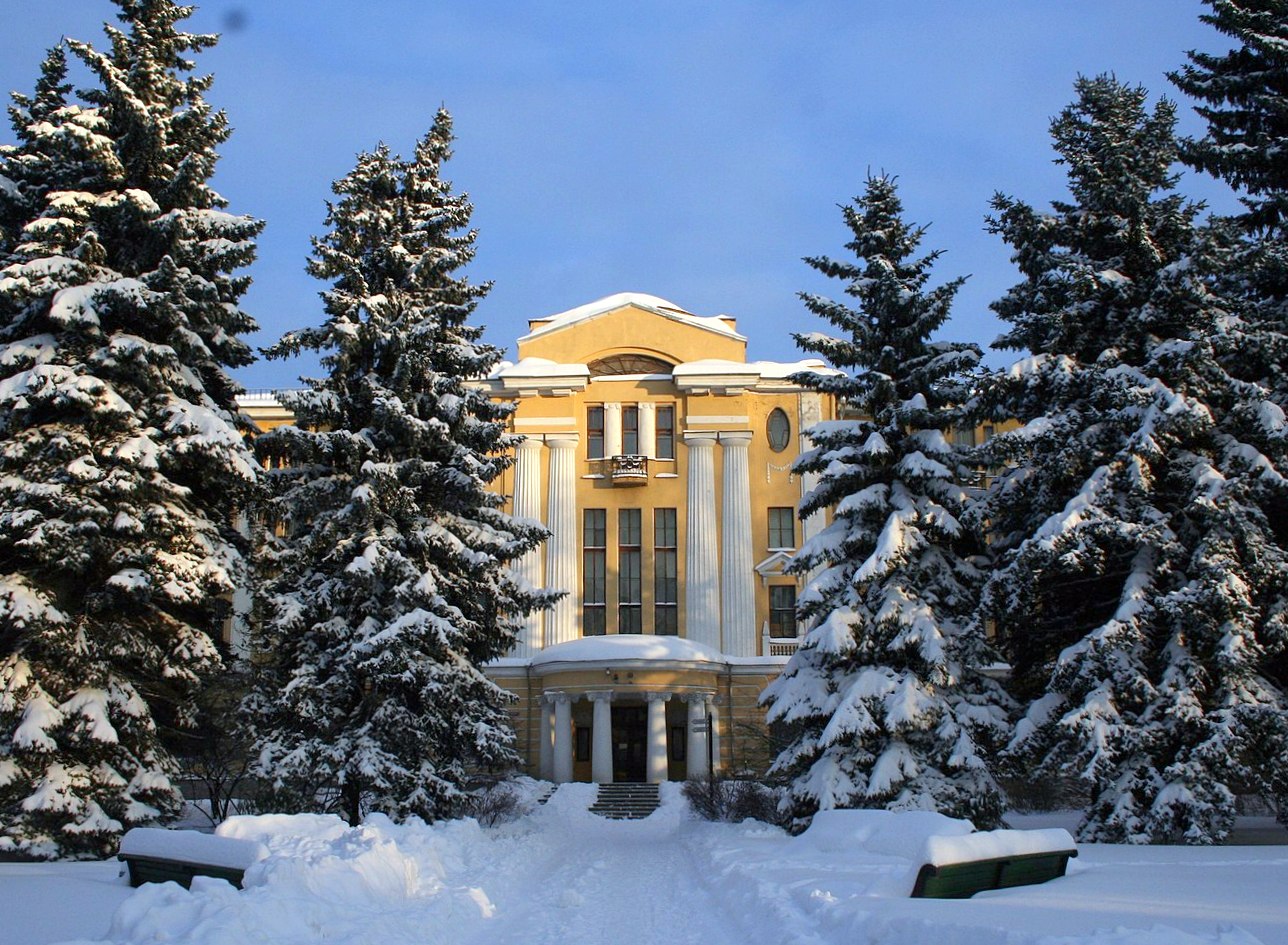
Employees of Bina (Botanical Institute of the USSR Academy of Sciences) prepared a “three hundred letter” against Lysenko. An old bina employee told me in detail. The undertaking was a success in many respects because the first to put his signature was put by the director of Bina Pavel Baranov (another Baranov!). Each fourth signature belonged to the academician or corresponding member of the USSR Academy of Sciences or the Union republics or one of the industry academies. It was the critical mass of star names that kept the furious Khrushchev from the steep measures against scientists, and the star of Lysenko, although not immediately, but went on decline.
There were many Prosteubeans of the Leningrad, unheard of freedom on the all -Union and even on the Moscow background. More than half a century ago, on January 4, 1966, on Leningrad TV (and, importantly, with a broadcast of 70 cities), the program "Literary Tuesday" was transferred about modern Russian (the transcript is available on the network), which caused ideological typhoon. The programs then went live, since there was no video in the USSR yet. Many passages in it were ahead of their time for almost a quarter century. Only during the years of perestroika were able to again sound statements like: "Who will answer us for the barbaric destruction in Moscow of the Sukharev Tower and the Cathedral of Christ the Savior?" Or: "In Soviet times, Vyatka, Tver, Perm, Nizhny Novgorod, Samara [respectively, I remind you: in Kirov, Kalinin, Molotov, Gorky, Kuibyshev] can only be explained by limitless stupidity."
At that time, the program was something like an explosion in Smolny ...
They remembered some big official who expressed a wish to replace with “new and beautiful” all the “church” street names. He was put up by a complete fool, offering then to go further and rename Nikita Theological, Robert Rozhdestvensky, Andrei Voznesensky and the writer Leo Uspensky present in the studio. In the midst of the program, the chairman of the GOSTELEDRODIO Nikolay Nikolaevich months called the editorial office, demanding to interrupt the display and explain it with a technical failure. But a miracle happened: they spat on the bell. The editor Irina Muravyova (immediately dismissed) recalled later: “At that time, the transfer was something like an explosion in Smolny ...” In the State Committee, a terrible sortie was disassembled full for two days, the party censor of the trigubs guessed something: “Look how they are cut with all of us! This is the revenge of Leningradko for Yegorychev’s performance, this All!" (Alas, I could not find out that the kindest comrade Yegorychev was combined there, which angered Leningraders.)
The months, who demanded to interrupt the transmission, later crashed with his career Vosi, lost his party outlet and was attached to a senior researcher at the famous INION, where I was listed as a freelance referent for some time. Two times I saw him in the chicken of INION, it was something like a club of freethinkers. I myself did not smoke, but in the smoking room and before her they were pushed, it used to be, and non -smokers. I don’t remember if I smoked months. He was at a pre -retirement age, but behaved deliberately cheerfully, spoke loudly. My friend Volodya Baghdasarov assured that Nikolai Nikolaevich was an interesting interlocutor, retold curious things heard from him, for some reason about China. But not about Smersh, not about Brezhnev, not about Andropov. “Join somehow,” said Volodya, but I rarely went to INION and the case did not turn up. And I didn’t have a burning interest in what a person with his career (and he would not have told). Of course, I then know about the 1966 television riot, I would probably ask him if Leningraders could be considered a separate subspecies of the "Soviet man".
It really seems to me. All my Leningrad friends were some others. Not saying: better than Moscow or Tashkent, but clearly others. I already recalled this microphone Volodya Gerasimov, recalled Alexander Shlepinov (though that he left Leningrad still young, at 37, it seems, years old - but there are no former Leningraders), I hope to talk about several, but for now I’ll talk about Sergey Shulce. In his warehouse, he was a humanitarium, after school he entered the eastern faculty, but it was in 1951 and ahead was loomed ahead for the end of his days (and then it seemed like that) to a village or to the city certainly half into his works of some kind of “anti-During” or some “step forward, two ago”. And also, Sergei said, he did not like the dean of the attendant. That is, he liked his name (Gerontius Valentinovich), but he himself was unbearable. I had to transfer to the geological, follow in the footsteps of my father.
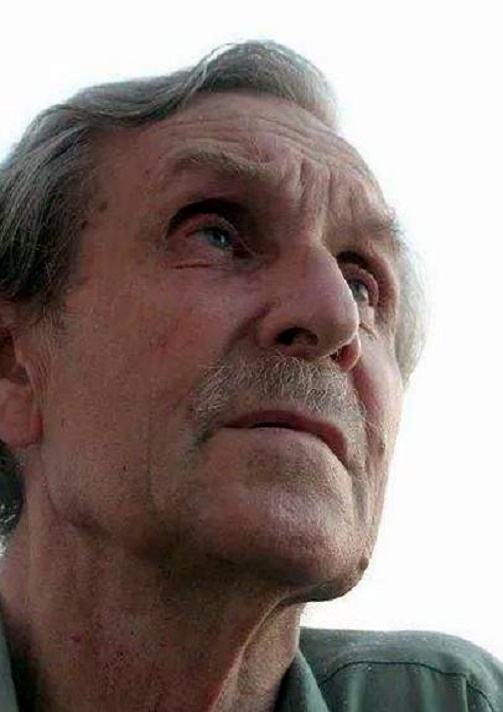
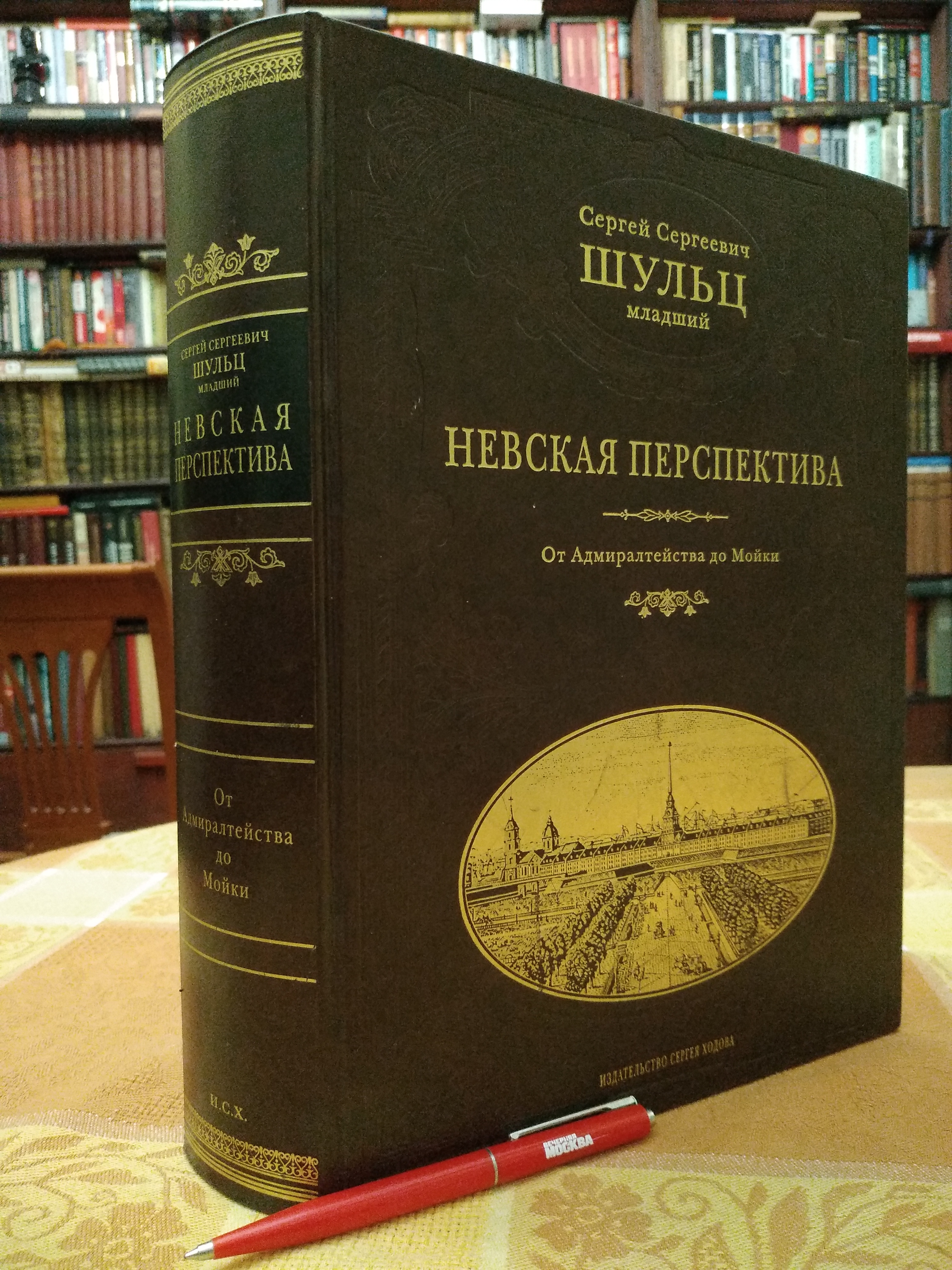
We met among the Kyzylkum Saxauls, and two or three literary names that flickered in the first conversation became acquired for 40 years. There were a lot of us on the shuttle, but it remains for me one of the most remarkable people in the world. Doctor of Geological and Mineralogical Sciences, he was also (among everything else) by the historian of St. Petersburg. Unsurpassed by meticulousness. Judge for yourself: his work is “Neva Perspective. From the Admiralty to Moika”, volume of a hefty format and weighing 3.5 kg - these are over 1,600 illustrations, an archival mile, these are 912 pages, of which 244 are occupied by the reference apparatus. According to the author, the second volume of the "Neva perspective", no less volume, was supposed to be dedicated to the segment of the avenue from Moika to Mikhailovskaya Street. I think that I am familiar, so to speak, with an oral fragment of the second volume. In the spring of 2004, Sergei conducted an impromptu tour with me around the Catholic Church of St. Catherine on Nevsky Prospekt (inside, forgot why, could not get). He spoke with complete phrases, explaining that only yesterday he completed this piece for the second volume of the "Neva Perspective". Alas, it didn’t reach the second volume, Sergey suddenly died of a rare heart disease almost immediately after the first release.
And one more sad memory of that day: we firmly agreed that next year he, as the supervisor of the Russian-French expedition on the Putoran plateau (this is east of Norilsk), will be able to arrange my participation in it, which would become the fulfillment of my crystal dream.
For obvious reasons, I will not try to talk about the works of Sergei in the field of metallicism of the earth's crust or geodynamics of the Ural-Tanshansky conjugation. But I’ll tell you about his genealogical studies of the roots of his own ancestors, he also studied this plot. On the maternal branch, he failed to advance further than the Yekaterinodar teacher from Popovichi with his wife from the same environment, but a lot of non -trivial was gaining a lot of non -trivial. In the family of his father was the Ukrainian hetman Pavel Polobotok, princes of Shcherbatov, senator and member of the State Council Pavel Schulz, Baku oil industry Alexander Ivanovich Benkendorf, numerous Shipovs, including Ivan Pavlovich Shipov, who controlled the State Bank of the Russian Empire, and no less numerous Kartsovs who gave the empire a number of generals, admirals and admirals and admiral diplomats.
Seryozha’s father and his complete namesake Sergey Sergeyevich Schulz Sr., in the spring of 1917, graduated (along with the future writer Sergei Kolbasiev, later pulled into the funnel of the Great Terror) of the Marine Cadet Corps. They were on the verge of release (which means they were already called midshipmen) when, after the February coup, Russian flags on the facade of the corps were replaced by pieces of red fabric. Four classmates considered this with shame and night, hanging from the window of the second floor, managed to tear one. All four were expelled for "monarchical moods."
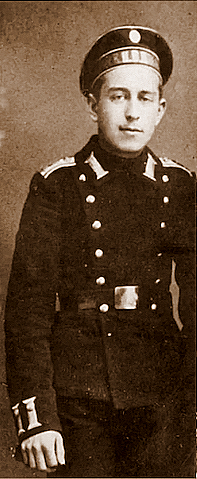
After that, Schulz Sr. transferred to the Elizabethgrad Cavalry School (Elizavetgrad-in Soviet times Zinovievsk, then Kirovo, then Kirovograd; now it is the Ukrainian city of Kropyvnitsky). But he did not happen to fight the Germans: as soon as he graduated from an “accelerated course”, the Brest world was concluded. Schulz participated in the anti -Bolshevik Yaroslavl uprising, then joined the army of Kolchak, fought in Siberia. In 1920-1921, after the defeat of the whites, he worked on the alloy of forests in the Yenisei, straightened the documents that he had carried out the entire civil war in a hydrographic expedition. In 1921, he returned to his family, entered the University of Petrograd and gave himself to geology until the end of days.
In one of our last meetings, I heard from Seryozha another case from his father’s life - about how he with a comrade, a peer and the same Petersburger, in September 1919, fell near Minusinsk in the south of the Yenisei province to the Bolsheviks. They were in a particularly hated red horse-eager uniform (it seems, so; I could forget something) with black shoulder straps. The word "captivity" then and in those conditions was almost a book. In the environment of the civil war, especially such fiercely as it was in Siberia and Altai, the state of the “prisoner of war” could last a maximum of a few hours. White, if retreating, then according to the charter, with a convoy: wounded, prisoners and sore (even typhoid) had a chance to survive. The Reds fought in small flying detachments and drag them with the "white", causing them to be fierce anger, feed them and protect them, they had nothing to do.
"Father and his comrade were brought to some kind of barn, similar to a warehouse of looted clothes and shoes. There, a man in a papaha and in a pince-nez-apparently commissar-announced to them that they, like enemies of honest stoopers, were sentenced to death, and made a sign with his hand in their heaps: who, they say? Two with the most brutal faces and led them to the ravine. necessity crossed, immediately behind the village, but deepened into it when the river flashed, people with the brutal faces untied the Petersburg barchuk, tore off the epaulettes and ordered only the heels sparkled after some time.
How retroactively I lack this episode!
(In 1997–2000, I was the author of the large program of the programs "The 1917 Revolution and the Civil War in Russia" on Radio Liberty. How do I retroactively lack this episode!)
I remember the treacherous from a young age that Petersburg is so enchanting me just because I am unfamiliar to other world capitals. What a relief to make sure that even after all the trials and devastation, even missing in the twentieth century at least two architectural eras, he calmly withstand comparison with the most beautiful cities of the world. He is different than they - and this is wonderful; He is no less beautiful, that’s the main thing. He is still poorer than his main colleagues in the globe, but this poverty is not forever. In many ways, it is unsurpassed, and above all, in the use of a river delta. There are many cities marked by the luxury of river waters, but there is no more perfect river species than the one that opens from the arrows of the Vasilievsky Island.
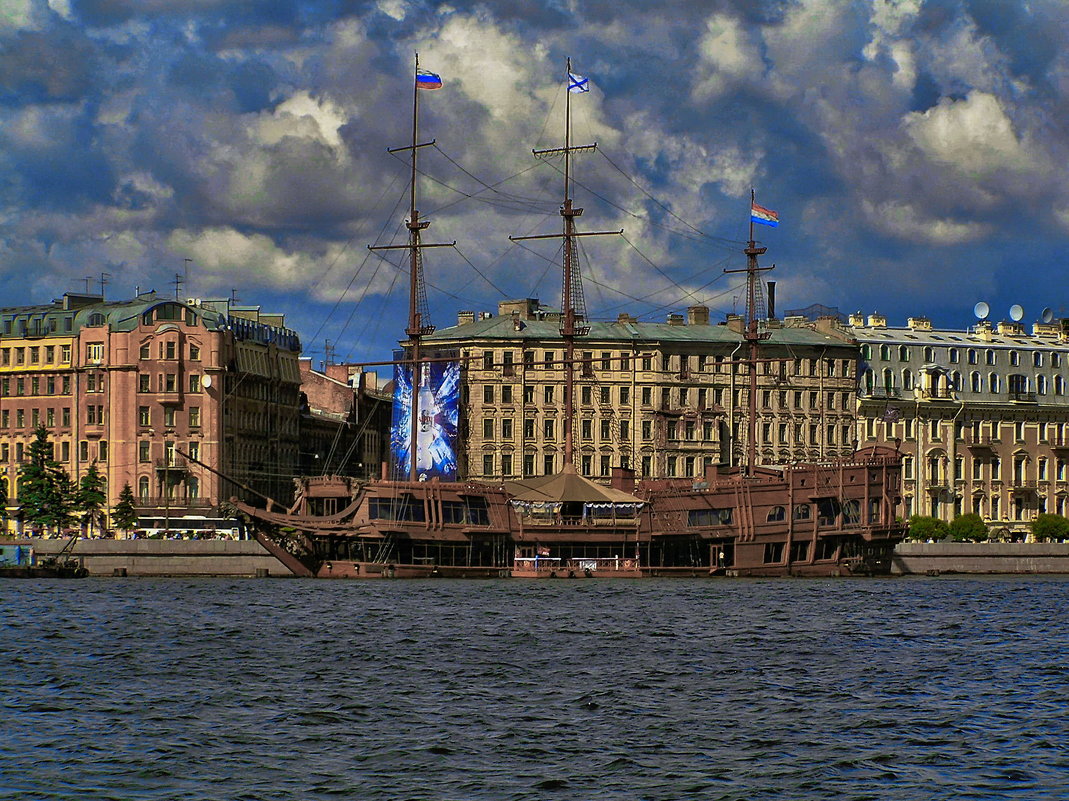
Other famous species with which I mentally compare it, especially if also a little on top, now such pictures have appeared, remind me of a furniture warehouse against its background. Of course, this is unfair, but I can’t do anything with myself. Whether the accident, or some kind of supersensible instinct, helped the founder of the empire to choose such an unmistakable place for the fortress and the palace, for the imperial in its appearance of the capital in the whole world. They say she was built in imitation. So, a certain example should resemble. And what is this sample, can you name? That's it.
How many people in the twentieth century left Petrograd/Leningrad in the hope of returning, but could never do it again? Million, two million? A person who does not know our story will shock such numbers: in large attractive cities around the world, people only come and are fixed at all costs to leave them only when relocated to a better world. The local case is special. First, after 1917, they fled from here, saving life. Then there were expulsions, at first, as if moderate. They were replaced by immodest. In December 1932, a passport system and the so -called "registration" were introduced in the cities of the USSR. The passport received every citizen of the country and was supposed to "register" him in the police. And there they could refuse in the residence permit: “You are a class alien element, the son of a priest, a mother’s nobleman, graduated from a gymnasium. So, you sympathize with the counter-revolution. Take your passport and get out with your family from Leningrad. Astrakhan is appointed to you” (or Vologda, Nizhny Tagil, Penza, Barnaul, Alma-Ata-I list Good options). The second shaft of expulsions was at the beginning of 1935, following the murder of Kirov. These two ramparts carried away from the city the most valuable population, at least a hundred thousand people, few were able to return. Plus, those who have fed in the days of great terror in the camps and then rotted on some "settlements".
But how many returned from those who went to the front in the 41st, survived, but forced to settled in other parts? Or were they sent to the evacuation, but their houses were bombed and disappeared from the face of the earth? They were deployed as "not wealthy housing." Is it possible to comprehend the grief of people who were unbearable in a new place, the rest of their lives dreamed of returning?
The sad confidence that they could no longer see their hometown, it seemed, it seems, already to emigrants of the first wave. This creative people pushed to a raised syllable:
"... a thousand will pass, it will not happen again,
It will never return.
There was one capital on Earth
Everything else is just cities "
(Georgy Adamovich)
Or a prose writer, Ilya Surguchev: “And again before the eyes of the capital of all capitals, St. Petersburg, the celebration of Russian genius and scope. Naberezhnye, the only in the world, blue fat Neva, sea iodine air, brilliant prospects, barbnce of streets, great-power leisureliness of life ...”. Of these fragments, you can make a whole anthology.
From a young age I can’t endure vigorously jumping in the morning, for sure it is familiar to many. If possible, I prefer a quarter of an hour of half -sleeping thoughts, a sweet to turn around the book of life. Several times I saw the Leningrad courtyard, not a well, but a rectangular one. Either the gallery, or a millionaire ... below a separate garage and a staircase in the basement. Summer, poplar fluff flies, a bicycle is leaning at the entrance, a postman smokes under the arch, a cat and a cat go to kiss a garage. Or not, this is the corner of the middle avenue and the cadet line, the dome of the Church of St. Catherine rises on the left. From a narrow window opposite (this is still not a street, but a deep courtyard), an elderly soul slides in a night shirt to the heels and, with difficulty waving rheumatic wings, hides behind the rowing of the roof.
Well, of course, this is a attic seventh floor, you can get here only along a black staircase not served by an elevator. Such a commemorative workshop of a familiar artist, there is an exit directly to the roof, to step exclusively on the ribs of the iron roof. Strange, his painting is cosmopolitan, is not affected by St. Petersburg plots, and at the same time he remained a St. Petersburg artist. Someone, perhaps, even finds out who we are talking about, but it doesn’t matter. It's about the artist of almost the same type described by Gogol:
"Shy, careless, loving quietly his art, drinking tea with two friends in a small room, modestly interpreting about his favorite object and completely negligible."
The artist in the city, "where everything is wet, smooth, even, pale, gray, foggy" and which is not and will not be better in the world.