
Translated material
Waiting for the terminator
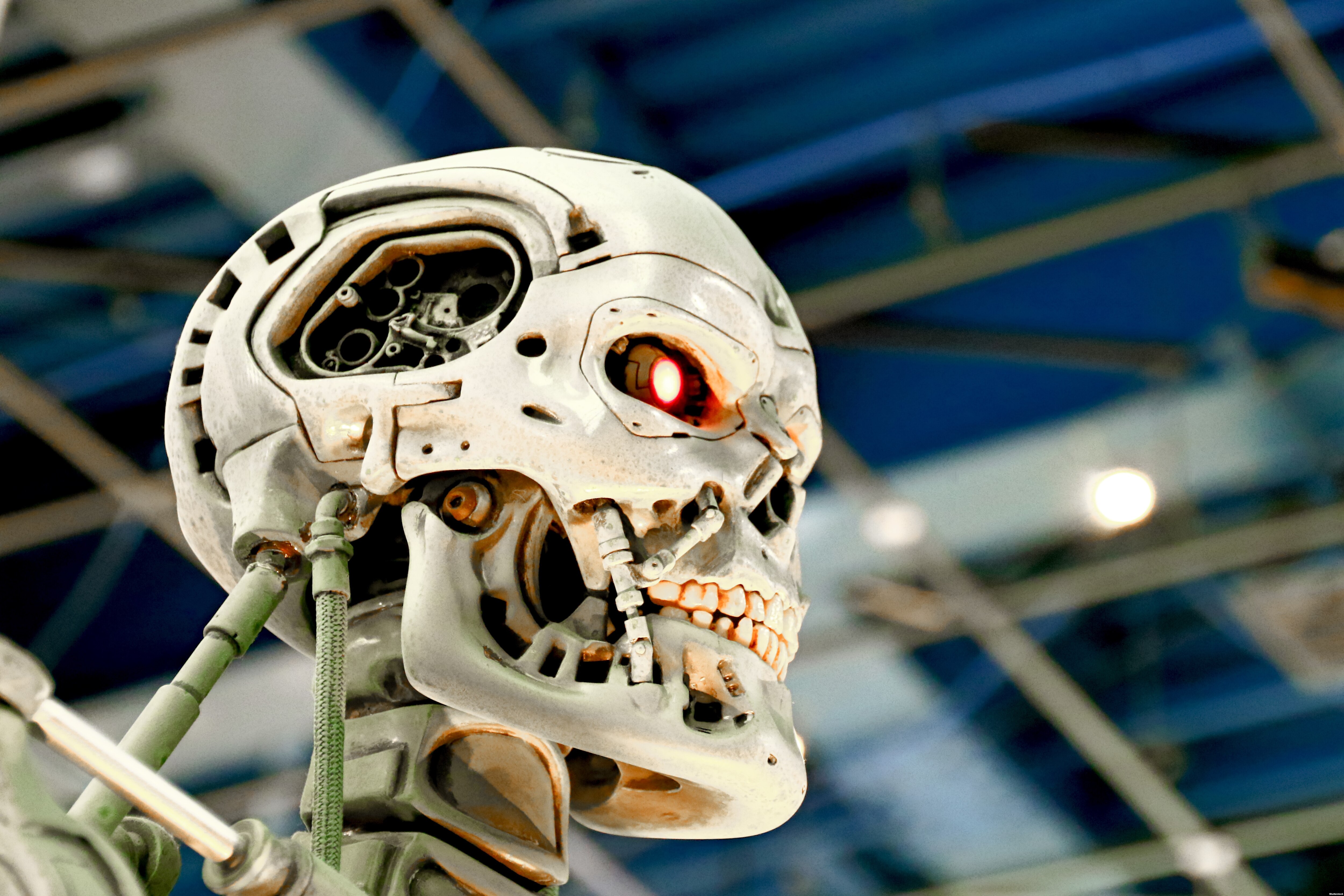
Do you prohibit autonomous weapons?
- Flying systems of autonomous weapons are increasingly widespread, in which the program or neural network decides to destroy the enemy.
- The weapon used today is not yet completely autonomous: the goal is always set by a person, and errors are most often the result of human actions.
- Artificial intelligence and human intelligence are quite different and act differently in difficult situations.
- The development of artificial intelligence and systems of autonomous weapons again returns humanity to humanitarian, moral problems.
Sergey Medvedev: I had to do a small operation to reconstruct the shoulder, now it is stuffed with titanium. And this leads me to the topic that we will discuss today-the cyborgization of a person, a soldier-boiler, autonomous weapons. More and more experts are thinking about these things. In particular, the UN Commission on Autonomous Weapons systems recently finished in Geneva. Details in the plot of our correspondent Svetlana Osipova .
Svetlana Osipova: Automation is becoming part of everyday life. We are accustomed to the fact that a lot for a person is performing artificial intelligence. Soon, scientists promise a large-scale introduction of autonomous weapons, the so-called killer robots. Such systems will without human intervention determine the purpose and time of attack, as well as decide on its implementation. 26 countries are opposed to the development of such weapons, but a number of states, including Russia, the USA and the UK, support the introduction of a new weapon system. It is still unclear what the principle of operation of such a system will be built on and what are the risks of introducing new technologies. Experts continue to argue whether the transfer of control over weapons to the robot is acceptable.
Sergey Medvedev: Fantasies of the films "Terminator", "Robocop" or Shekley's story "Bird Strande", in fact, are already being implemented. Our guests were called to talk about this: this is Peter Levich , the founder of Future Foundation , and Alexander Neklas , the head of the Intelos group , the head of the North-South Group IAF RAS.
Maybe the systems of autonomous weapons are ancient, like all methods of murder? After all, if you recall the ancient traps, suspended axes, loops - this is also a kind of autonomous weapon.
Alexander Neklas: I would remember Golem . Here is really a separate intelligence, separate solutions from a moment and frightening prospects, when such a creature comes out of human management.
For me, the problem of lethal robotics, that is, such an object that becomes a technical, but subject, is a kind of Koshcheev needle, which is located in several shells at once. Here, the shells are a problem on the problem, and the needle itself is the compass arrow: what is happening in the world now. 80–90s-years of globalization, transformation. The word "transformation" remains, and "globalization" gradually "yellow", some new concept of the world appears. It is realized literally in the last year, in recent months. We see quite serious changes in what seemed to continue for some time.
Fantasies of the films "Terminator", "Robocop" or Shekley's story "Bird Strande" are already being implemented
Sergey Medvedev: In the sense - renationalization, protectionism, the emergence of new boundaries, barriers?
Alexander Neklas: I would remember fairy tales. The mythology of the fairy tale encodes the exact images of the situation, which, in a sense, for all times. If we talk about the war, at least, from childhood, the image is the famous bipolar world war. In fairy tales - a war of birds and animals. So now this archetype is clearly blurring. We have no longer a war of birds and animals, they are preserved, but these are amphibians, and insect roles, and golem-shaped creatures with artificial intelligence. That is, some are associated with others, and a rather difficult situation arises, which requires a new methodology to work with it.
Sergey Medvedev: If you look at the evolution of weapons, then it more and more distant the moment of murder from the action of a person. Maybe the last time in the Second World War people had to go on a bayonet attack. But now the enemy is farther and farther from you. You press the trigger, and 50 meters, 500 meters, and maybe a affected person falls in 5 thousand kilometers.
Peter Levich: In military affairs, it seems that there is some problem. Human creatures, so warm, with consciousness, with a soul, do not really like to kill other people. There are statistics about the percentage of bullets released: the commander gives an order, and you need to release bullets, but you shoot somewhere ...
Sergey Medvedev: In the First World War, almost 90% of people shot over the enemy heads.
Petr Levich: You can recall a beautiful humanistic episode with Christmas, when it was necessary to separate the soldiers of two armies playing football, who exchanged addresses in order to visit each other after the war. The officers had to say: we will now shoot all over the crowd if you do not start fighting. It is clear that for those for whom the war is a way of earning or meaning, this problem needs to be solved somehow: for example, really separating a person pressing the button on the drone, and the one whom he will kill.
Sergey Medvedev: This is just a problem, because it more and more removes the moral responsibility from the person who kills, from the soldier. All this is given to autonomous anonymous programs. Some kind of evil genius-the programmer writes the program, and no one even takes responsibility for the fact that thousands of people were killed somewhere.
Peter Levich: The problem is wider. When we talk about robots, we immediately imagine a terminator, autonomous helicopters, drones. But now most of the robots are inconspicuous robots, programs, algorithms, artificial intelligence. Here you can recall the infamous case in Pakistan, when the American special services created an algorithm that, according to the profile of telephone subscribers, calculates terrorists. Drones flew out and destroyed them, but this is not so important, the target groups of special forces could leave. It is important that it was determined who is the terrorist, by the profile: how he moves, if the SIM card has changed, this is suspicious if you often turn off the phone-too. There was an official trial inside the CIA, it turned out that this program was given to study on some profiles of terrorists and law-abiding people. But the problem is that there are few terrorists, especially with well -known profiles of telephone negotiations, and it was terribly inaccurate, from two and a half to four thousand people were killed during the operation of this program.
Or, for example, what is happening in China: this system of social ratings. There, formally, no one is killed there, but there the system is also trained on the Big Date, and some actions may well be aimed at destroying human life. These are the same autonomous robots. What scares me in this? One of the definitions that is close to me is a person as a certain rather rational transcendental essence, which by its nature is appropriate to make mistakes, be irrational, act according to emotions. In this sense, when we take a living system of people and try to moderate it with the help of killer robots or social ratings, moderate with artificial intelligence, algorithm, a dissonance is created, disproportionate with this liveliness. The modifying system does not contain the right to error, because it is an algorithm.
Sergey Medvedev: Is it possible to manage biological social systems using artificial intelligence? Is it possible to trust the fate of the human body, the social organism, to trust artificial intelligence, technical instance?
Alexander Neklas: war is too difficult to trust his military. In the current situation, many new aspects arise. Firstly, the ratio of "war and peace": what is war, what is the world? Now it is becoming an uncertain concept. We had the concept of "hybrid war"; It seems to me that now it is more relevant to talk about the hybrid world. The second is military operations (it is not clear, the military they are not military, half -willed, quarterly flowing into computer wars. A new category has arisen, a new phenomenon that still has no clear definition.
The second problem is that not only the military cannot be completely trusted - in fact, it never trusted, politicians led, but politicians can not cope. There was a problem associated with the transformation in which humanity is now. Three factors can be distinguished - this is the multi -factority of the new world, a huge number of difficult -predicable subjects, which are not clear who. The second is mobility. Not only are they different subjects, they are still in different combinations in this transformation kaleidoscope. And the third - they change their essence, shell. How to deal with military, politics and so on? That is, the problem of the autonomous system is not just that it solves humanitarian issues (a person-operator-yes, this is present), but that human intelligence does not cope with multi-factority, mobility not only of military problems, but all the problems that arise in the modern world. Therefore, we are forced to proceed to cooperation with artificial intelligence in various forms.
Sergey Medvedev: Relatively speaking, the complexity of the world is so increasing that the complexity of our brain is already lacking.
In the world, people with unique abilities, competencies and intellect play an increasingly important role
Alexander Nekless: Now the following problem arises. Miner robots are such an image with all its technicality anthropomorphone. We perceive artificial intelligence as some form of advancement to what we call human intelligence. In fact, things are wrong. Artificial intelligence differs from human intelligence, and this difference - who says, is overcoming, who speaks is insurmountable - but even those who say that it is overcoming can not answer a number of fundamental questions. In the near future, of course, it is insurmountable. But this other intelligence has its own advantages and its disadvantages, like a human one. Human intelligence cannot cope with multi -factority, mobility. And artificial intelligence is really able to master these large information arrays in more and faster mode. So, multi -factor, performance. What does he not have? I would say that, among other things, philosophical issues arise here. The very concept of intelligence is now a very important concept, because we are moving from the industrial world to the world, in which geoculture, geo -anthropology, persons, people with unique abilities and competencies, and unique intelligence plays an increasing role. Intelligence is not exhausted by IQ.
Sergey Medvedev: Are there any contradictions here? On the one hand, you say that the world is so complicated that it is no longer covered by the human mind, and we need mechanical crutches to make decisions in the complex world. And on the other hand, you say that we are moving into a new humanitarian post -industrial phase, where human consciousness plays a special role.
Alexander Neklas: I would say so, we enter the world where corridors are without walls. That is, by inertia, we still perceive the industrial world, divided into disciplines, into institutions, and it actually crumbles. Now they are talking about the non -reproductive revolution. This is not the most convenient word, because the previous regulations are scattered. Now creative thinking is solved by the problems that have just arisen, competence blocked the qualifications. A person as a source of creativity solves these problems. Artificial intelligence as a neural network decides something to some extent, but not at all to the extent that human intelligence.
Sergey Medvedev: Ruslan Leviev , the head of Conflict Intelligence Team , discusses about autonomous weapons.
Ruslan Leviev: from the experience that we observe, in the war in Ukraine, in the Donbass, in the Central African Republic, where, among other things, high -precision weapons, self -wagging missiles and similar things are used, we still see that most often the mistake is from the person who controls these weapons. Such a weapon is still not completely autonomous, it does not decide to attack. The goal is always set by a person. As I remember now, the story shown on the Russia-24 television channel in Solovyov’s program: a report on how our special operations forces work in Syria. There was a frame there: the rocket is led to an SUV, in which men of age, clearly suitable for militants, go. The sunbathing voice comments: we see the goal, terrorists go in it. Then the rocket flies into this moving jeep and clearly falls into it, it explodes. With a careful examination of video frames, we noticed that, judging by the things that scattered from an exploding object, these were peaceful civilian people who drove their things, evacuating from the city. Here, please: the high -precision weapon that was in the hands of people made a mistake.
The more complicated the system, the potentially more vulnerability in it. We perfectly remember the case a few years ago, when the military only began to make up the American drones with missiles with which they destroyed terrorists in other countries. There were successful examples when various military from the Arab countries using a fake signals of GPS satellites intercepted the control of these drones and planted them themselves. Accordingly, imagine that such a very powerful, very complex system will be able to intercept your enemy and direct against you. The final decision for many decades will be made by a person, respectively, most of the fault will lie on him.
Sergey Medvedev: Last year, Stanislav Petrov died, a man who saved the world. This is a Soviet officer who, having received all the signals that an American nuclear attack is happening, still decided not to launch rockets on his responsibility. In fact, he prevented the Third World War. Here is a good example of the fact that you cannot entrust the final decision of the automation.
Alexander Neklas: it is interesting that autonomous weapons can sometimes be more humane. There was an extremely tragic episode when the American destroyer shot down the Iranian passenger liner. In just a few seconds, the automatic system of this destroyer determined that the plane was civilian, but the decision was already practically made by man. When this situation was versed, the conclusion was that if this process were automatic, then it would be blocked, the rocket would not be launched.
In general, artificial intelligence and human intelligence sometimes act differently from the point of view of losses. Some time ago, an experiment was conducted that showed that a person acts irrationally, but on the basis of other levels of rationality. The cart broke, she could follow the railway track, and five people turned out to be one path, and one in the other. Most people who took part in the experiment made a choice in favor of reducing the number of victims. In some situations, the solution of the autonomous system is free from these reasoning. Most often we perceive this as a minus.
Sergey Medvedev: We had talks in the studio about whether artificial intelligence should be endowed with ethics and which one. There is an ethics of Kant, which speaks of the primaryness of the moral choice of human life, there is a utilitarian ethics that believes that one person will die better than three.
Peter Levich: There is some kind of perniciousness in the very conversation about it. The question of whether we can use robots to kill people, shifts the focus from whether it is possible to kill people at all. We do not discuss, do we need to fight, we say: is it possible to use robots for this? It looks like a speculation for distraction from the main question. Actually, you can’t kill people.
There are, of course, ethical examples, traps. Under the auspices of the fight against terrorism, nuts are twisted. This is a dispute unanswered. The question of what position we adhere to. It is difficult for me to build a logical sequence of arguments about combat robots. The first of these arguments will be that war is maybe not good, but inevitably, let's take it for a fact and will think how to do it. I don't think this is so. It seems to me that you need to direct more strength and opportunities to agree, reduce the facts of war.
Alexander Neklas: whether we will solve this humanitarian problem in the disputes or otherwise, it will inevitably be created and inevitably used by both "gray" and "black" way.
The Islamic state prohibited in Russia, which is now in a temporary retreat, has opened a new phenomenology of action to us - not the same underground activity, although this is preserved, but the possibility of quite impressive forms of conducting new practice, which you can no longer call in one word "military". Зомбированный человек – это тоже автономный робот-убийца. Возникает совершенно новая ситуация, где обсуждение конвенции – важный процесс, но он останется на поверхности и не решит эту проблему. Нам нужно понимать сущность проблемы: что происходит – смешение гражданского с военным, смешение государств как субъектов действия с какими-то новыми политическими образованиями…
Сергей Медведев: Еще смешение биологического с искусственным, механическим.
В связи с темой автономного оружия вспоминается одна из серий пророческого сериала "Черное зеркало" под названием "На линии огня". В будущем сделаны такие солдаты, которым в мозг имплантируется интерфейс, изменяющий им оптику. Вместо своего потенциального противника, малоприятных людей, они видят тараканов. Это тоже, видимо, надо регламентировать – изменение человеческого сознания, зомбирование человека. Те же самые берсерки – это то же автономное оружие, люди объевшиеся грибов, опившиеся каких-то опиатов, наркотических веществ и после этого идущие убивать. Это тоже чудовище Франкенштейна, Голем – автономное оружие.
Мы живем в ситуации усложнения мира, усложнения всех видов деятельности: финансовой, экономической, политической, военной
Александр Неклесса: Киборгизация – это не просто механические руки и ноги, это, в том числе, химия. И не в будущем, а уже сейчас применяются и электронные, и химические стимуляторы.
Сергей Медведев: Это новая антропология. Как нам это регламентировать, должно ли это вообще поддаваться регламентации? Что, ограничивать вмешательство технологий в человеческое тело, чтобы не получить универсального солдата-убийцу?
Петр Левич: Ответ тот же: не получить универсального солдата-убийцу нужно не потому, что он киборгизирован, а потому, что он солдат-убийца.
Сергей Медведев: Вообще не должно быть солдат-убийц?
Петр Левич: Я не считаю, что нужно ограничивать развитие технологий. Каждый человек должен сам решать, какое количество технологий ему хочется в себя внедрить. Здесь важна свобода и, конечно же, добровольность, сохранение ценности чего-то человеческого.
Мне очень близко то, о чем мы говорили: про барьер сложности, к которому подходит мир. Действительно, мы не можем с ним справиться старыми методами, но это не только старые методы ведения войны, но и старые методы управления системами, которые мы создаем, внедряем в себя и так далее. Кажется, что старые элиты, спецслужбы – это что-то сложное, непонятное, мы не можем это контролировать, как невозможно запретить Телеграм. То есть это борьба со сложностью путем брутального упрощения. Второй способ, который используют новые элиты типа Цукерберга или Маска, – это борьба со сложностью с помощью работы с этой сложностью, с помощью искусственных интеллектов, блокчейн-систем и так далее.
Сергей Медведев: Наверное, третьи сценарием может быть гуманизация сложности.
Петр Левич: Наверное, это какой-то сценарий про поиск методов работы с этой сложностью. Такие способы сейчас появляются в различных экопоселениях, они включают в себя возвращение в давно вытесненные из цивилизации практики традиционной культуры, шаманские практики. Но если посмотреть в сторону, то это могут быть практики групповой работы, одно племя может договориться с другим без роботов-убийц.
Сергей Медведев: Может быть, наоборот, стоит все это развивать, и в будущем мы придем к такой ситуации, когда роботы будут биться с роботами, и можно будет обойтись вообще без человеческих потерь? Сейчас есть битвы роботов на ринге, сражаются автономные машинки. Может быть, в будущем ракеты и противоракеты будут нацелены друг на друга.
Александр Неклесса: Это уже происходит. Автономные системы – это боты, они уже взаимодействуют. В виртуальном мире, в киберпространстве происходят очень интересные процессы взаимодействия и борьбы. Простой пример – острые ситуации во время всякого рода финансовых операций, когда управление происходит практически в автономном режиме. Человек-оператор не может управлять этим процессом в силу скорости изменений, и есть какие-то отдельные эпизоды, когда они сами торгуют, заключают сделки, конкурируют. Но здесь проблема шире, чем военная, она связана с новым статусом мира, в котором мы переходим к необходимости вести себя по-другому.
Мы живем в ситуации усложнения мира, усложнения всех видов деятельности: финансовой, экономической, политической, военной, – и это сопровождается перманентной методологической революцией. В этом контексте можно говорить не только о шаманах или о чем-то подобном, но и о рациональном процессе, который начался после Второй мировой войны. Возникла проблема – как управлять сложными процессами. Сначала была создана новая методология управления масштабными операциями. Она перешла в системный анализ, а дальше выяснилось, что системный анализ подходит к многофакторности, но не подходит к подвижности. Поэтому возникла системная динамика.
Сергей Медведев: А сейчас у нас квантовый компьютер, который еще сложнее просчитает.
Александр Неклесса: Сейчас закладываются очень интересные методологические рисунки, которые как раз идут в русле этой ситуации. Да, притормозить этот процесс в какой-то степени можно, а остановить нельзя. Поэтому методология – как жить в этом новом мире без коридоров, в котором сосуществуют – не только конкурируют или воюют, но и находятся в партнерских отношениях.
Сергей Медведев: Я не случайно вспомнил квантовый компьютер, потому что квантовый мир – это мир не коридоров, а пересекающихся тропок, когда из каждой ситуации есть не коридор, а расходящийся веер решений и участников. Как нам быть с этой новой сложностью, с этим роем дронов, с автономным оружием, с робокопами, с универсальными солдатами, с людьми, которым в будущем будут перепрошивать мозги, вставлять какие-то чипы? Запрещать, регулировать – то, что делают эксперты ООН, которые собирались в Женеве и выработали десять принципов регламентации автономного оружия?
Петр Левич: С чьей позиции задан вопрос – "что нам с этим делать"? Есть позиция глав стран, которые сидят в ООН. Тогда это достаточно ироничный вопрос, потому что они сами же и создают эти дроны. Если же это относится к нам, то мы вроде как и не создаем.
Сергей Медведев: Условно говоря, гражданское общество может информационным путем воздействовать на правительства, на представителей в международных организациях. Гражданское общество добилось Конвенции о запрете противопехотных мин. Несколько лет назад была дискуссия, сравнивали автономное оружие с ядерным. Мы же пришли к идее ограничения и постепенного уничтожения ядерного оружия, хотя, казалось бы, вот фронтир цивилизации…
Петр Левич: Думаю, имеет смысл показывать людям другой путь своим примером. Выстраивать сообщества, которые проектируют тот образ будущего, который я хочу видеть, где нет военных дронов, где проявляется тот самый третий сценарий решения барьера сложности через какое-то человеческое взаимодействие, гуманизм, красоту, теплоту, а не дегумунизацию искусственными интеллектами.
Сергей Медведев: Запрет противопехотных мин – это же сделали помимо ООН. Гражданская инициатива, которая начиналась в Канаде, привела к глобальной конвенции о запрете противопехотных мин.
Развитие искусственного интеллекта и систем автономного оружия все равно, так или иначе, возвращает нас к гуманитарным, нравственным проблемам.