
Translated material
Dialogue on Broadway
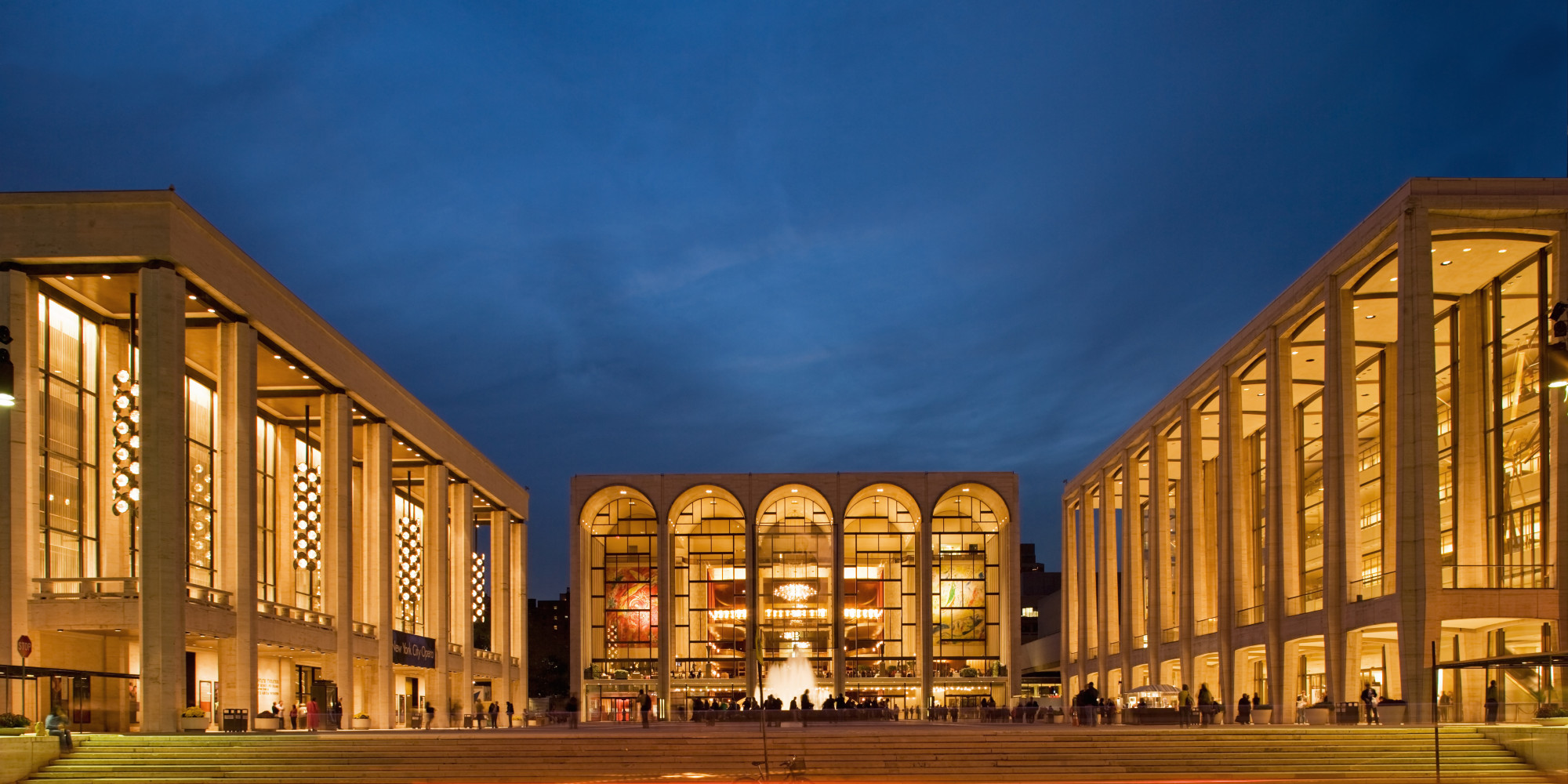
How to reduce the opera. Harrison Keilor: Poetics of Radio. Tariverdiev at the Bolshoi Theater
Alexander Genis: On the air - a dialogue on Broadway, which we and the musicologist and cultural historian Solomon Volkov are leading in the Broadway studio Radio Liberty.
Solomon, what is they talking about Broadway?
Solomon Volkov: In Broadway, professionals discuss the prospects of the new musical season, which will begin in the fall. One of these conversations is an eternal conversation on how to return the audience and listeners to the opera.
Alexander Genis: Recently, we have already discussed this issue, then a lot of proposals were made. Most of all I liked the idea of selling beer in the buffet, maybe there is something in it. But today I want to discuss an article that was recently at New York Times, which said a simple and very controversial idea: to reduce the opera. The operas, the defender of this proposal says, is too long, the modern viewer does not withstand such stress, and therefore, what will happen if you take classic operas and aft them so that they fit two hours with one intermission. Some consider this sacrilege, others consider it a reasonable measure. And you?
Solomon Volkov: I do not belong with some crazy anger towards such an idea, for I do not attribute myself to the camp of such stubborn Old Believers, who believe that the will of the composer is sacred and the composition of the opera should appear only in the form in which the composer is written. Longings, of course, are composers even the most talented and ingenious. Why not reduce, not redo it, not to turn flooding? There is nothing shameful in this. Another thing is that this was opposed by the tendency in the twentieth century, which gained strength in the second half of the twentieth century. There is the concept of “Urtecst”, that is, a genuine author's will, there was a tendency to dig out the original more complete options from the archives. Indeed, often the works of even the most famous composers were already reduced during their lifetime.
Alexander Genis: Among such supporters of the historical original were very famous conductors - Claudio Abbado, Ricardo Muti, it was they who put operas in historically full versions.
Solomon Volkov: I understand their idea, always greeted it. Because the operas of Verdi and Rossini’s operas restored both. Of course, I want to take a look: how did the author think an opus? Often traditional huge bills distort the essence of the work.
For me, in this sense, personal experience was the production of Ruslan and Lyudmila in Moscow in the Bolshoi Theater when I lived there. Ruslan and Lyudmila have traditionally been reduced, because too long the opera, it has already been reduced since the first performance. It was sent to her in pre -revolutionary Russia in the form of punishment of soldiers to listen - for its length is unbearable. Boris Alexandrovich Pokrovsky, about whom I do not tire of repeating that he was the greatest opera conductor of the twentieth century, restored all the bills and, you know, the performance was in one breath. I walked many times, listened to this performance, swallowed instantly, did not have time to come to my senses. Because it was all saturated with directorial thoughts, directorial ideas - it was a fascinating performance. How do you like this idea?
Alexander Genis: It all depends on the director, it all depends on a specific performance, on a specific setting. Here is the best example, probably not even an opera, but a drama theater. What is the most famous play of all times and peoples? Of course, Hamlet. But Hamlet is the longest play by Shakespeare, it is almost twice as long as Shakespeare's average play, so it is constantly being reduced. Moreover, they are reduced in different ways, but very much, it happens that on 300 lines, it happens by 600 lines. Such an individual approach to each performance is already correct because this is what Shakespeare himself did. I just read the magnificent biography of Shakespeare Peter Akraida. I know him a little, he is such an English villager, an English soil, who dug up to everything interesting that is in English culture. And so in this book he excavated the smallest details of the productions of the Shakespearean time, he told how Shakespeare himself participated in the productions and what were his theatrical principles and techniques. It turns out that Shakespeare adapted each play to a specific production, moreover, to specific viewers. If aristocrats or even Elizabeth itself were sitting in the hall, then some special pieces were inserted into the performance or on the contrary were cleaned. As you know, when Elizabeth watched “Henry of the fourth”, she said: “Show me Falstaf in love.” And Shakespeare immediately wrote “Windsor Kumushki”. That is, the correct attitude to the theater text requires it to adapt it to the present life so that the play lives, and everything else does not matter.
But I have another question for you. I myself do not find that the opera is too long, and certainly I am against reducing the enthracles, because the enthracles are part of the opera. It is in the intermission that we discuss it. It's like dreams: first we watch dreams, and then we interpret them. If you do not discuss, then there was no sleep. Therefore, intermission is a necessary thing, and I am ready to spend money on champagne, because the opera is a holiday. But there are operas unbearably long, and this, of course, is Wagner's operas. For example, the Nuremberg Meistersingers go for six hours. I must honestly tell you that this is a boring six hours. But how to encroach on Wagner?
Solomon Volkov: They encroach on Wagner, nevertheless. Now in San Francisco they even encroached on Carmen, which, by exciting with Wagner operas, can not be compared, it instantly flies, nevertheless, and she managed to reduce it by half an hour.
Alexander Genis: They removed the recitables - where there are no music, conversational pieces.
Solomon Volkov: There are other interesting innovations, there Toreador Hoza appears naked and so on. But, you know, I will have only one consideration about her in relation to the opera, if we talk about her now: I am not against abbreviations, but categorically against additives, additions. Meanwhile, I encounter more and more often with the fact that the directors invest, add some actions to the opera, which, oh God, take place outside of music. The orchestra is silent, the singers do not sing, and something happens on the stage. We are in the opera, gentlemen, we are not in the dramatic theater! This, in my opinion, is the absolutely outrageous phenomenon that I recently encountered, unfortunately the greatest, in the production of the “peak lady” of Tchaikovsky in Amsterdam. Our beloved Rigaine conducted with you, and mine is also a classmate in Leningrad Maris Jansons. The musical part is excellent, amazing, “peak lady” is Jansons' music, he leads it perfectly. But the opera, even before the overture, begins with a love scene between Tchaikovsky and the character, which later turns out to be Herman. The frankness of this scene, which shocked many, does not shock me in itself, although it does not seem completely appropriate to me in this case.
Alexander Genis: To put it mildly.
Solomon Volkov: But what was outraged by that this whole scene goes without music. Moreover, Herman, his role is played by the Russian-speaking singer, turning to Tchaikovsky, pronounces some phrases that did not mean either the fashion, the librettist of the “peak lady”, or Peter Ilyich.
Alexander Genis: neither Alexander Sergeevich.
Solomon Volkov: In general, no one. It leaves, as they say in such cases, under the knock of its own hooves from the stage. When everything is silent on the stage and only the clatter of the boots is heard, this should obviously replace us with music - this is outraged by me. Of course, the production itself is withstanding in the genre, which in itself is called not entirely harmonious, but, in my opinion, very accurately-a “rebel”, that is, a directorial opera. There, Peter Ilyich himself was bred as the actor, and not one, there are more than a dozen, they suddenly fall into the stage, distracting wildly from music, from the development of musical tissue. Tchaikovsky himself, in a poorly torn beard and a suit of gray mouse color, rushes all the time on the stage, then playing this music on the piano, then the process of essay is depicted, then it conducts what is happening. All this bustle extremely interferes with the natural course of the brilliant opera.
Alexander Genis: That is, if I understood you correctly, you are not against being reduced, you are against adding something. Here, perhaps, I completely agree with you: the new is not at any cost.
Solomon Volkov: This is how the entry to the opera “Peak Lady” sounds to the execution, which subjected this entry in the production in Amsterdam.
(Music)
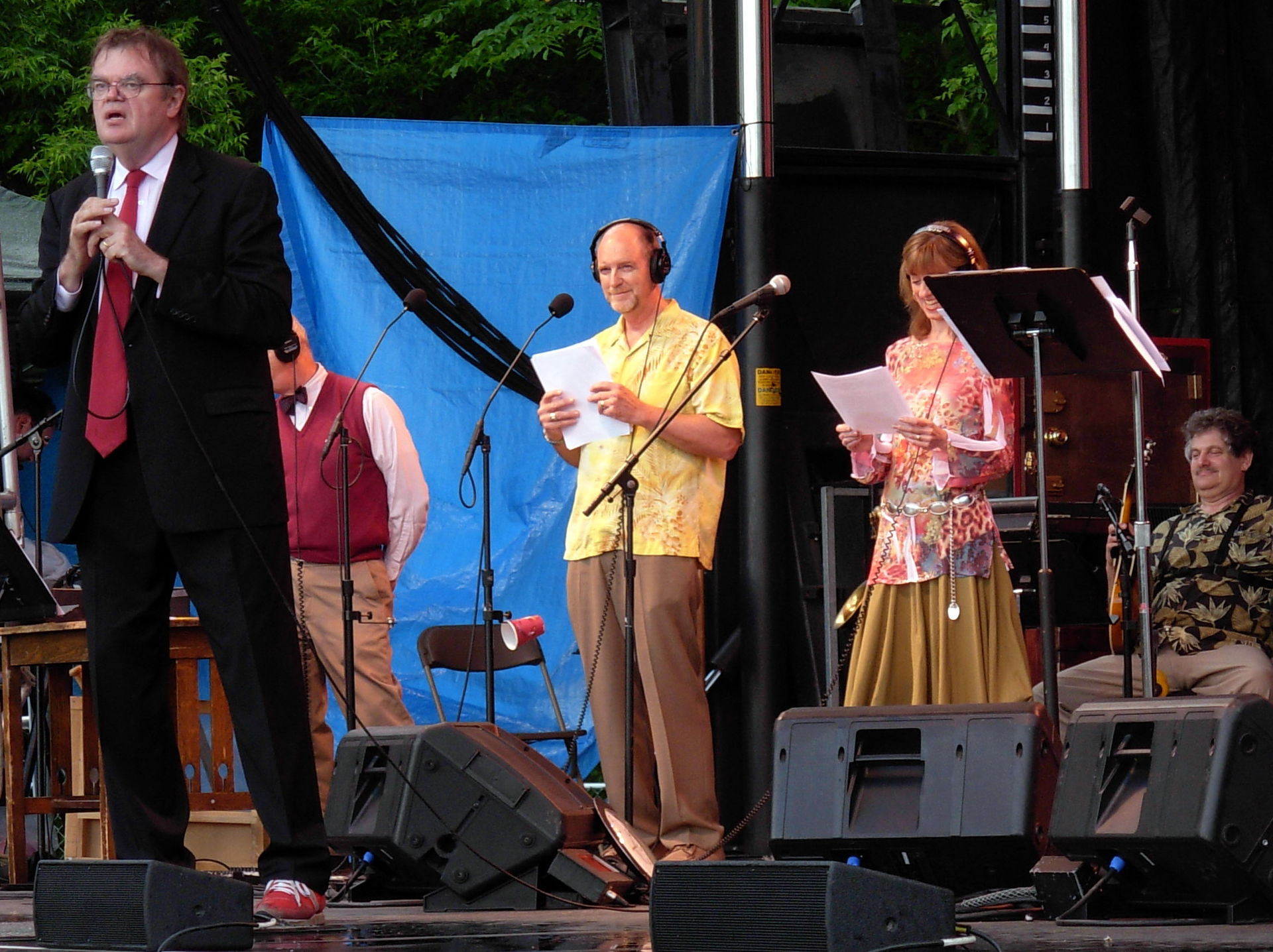
Alexander Genis: This summer there was an event that affected so many Americans, millions of people-the radio program of Harrison Keilor ended, which can be called the “satellite of the prairie” in Russian. It is difficult to explain America's love for this radio program. Maybe in order to do this, I will give the words of President Obama, who, having learned that the transfer after 40 years of his life ends, said that he was most regretting that, becoming the president, he stopped driving a car, which means he stopped listening to the radio in the car, which means he stopped listening to this transmission. She went on Saturdays at 5-6 pm, just when people return from picnics and include a receiver in the car, listening to a completely unusual radio broadcast, which I really love, but to explain what her charm is impossible. Harrison Keylor is a strange man, he came up with a biography, he came up with a town in which he allegedly lived.
Solomon Volkov: Lake, which does not exist, is a vodagon. Even I know, although I do not drive the car, the name of this lake.
Alexander Genis: He says that in translation from the language of the Indians who lived in these parts, this means "the place where I am waiting for you in the rain." It turned out that there are no Indians, there is no such language, and this word does not mean anything like that, he invented it all. Moreover, in this program all the time there is an advertisement for some cookies, some biscuits, then it turns out that there is no such advertisement-it parodies the advertisement of the 1950s. But all this together creates an unusually charming image of the Middle West. I would say that this is an American dream of little provincial America, a sort of one -story America in its best performance. She is full of irony, full of good humor.
Solomon Volkov: She is sad quite often.
Alexander Genis: She is somewhat melancholy, and very musical. There are a lot of musical numbers. The best idea of this radio broadcast gives the amazing film by Robert Oltman 2006, which is called the "satellite of the prairie." In the Russian rental, this film "Companions" was called. I urge all our listeners to watch this wonderful film, I myself watched it three times. As it turned out, this is the last film of Oltman. It seems to me that he, knowing that he was seriously ill, arranged a farewell to his spectators. That is why the program closes in the film, but in fact it continued before this summer.
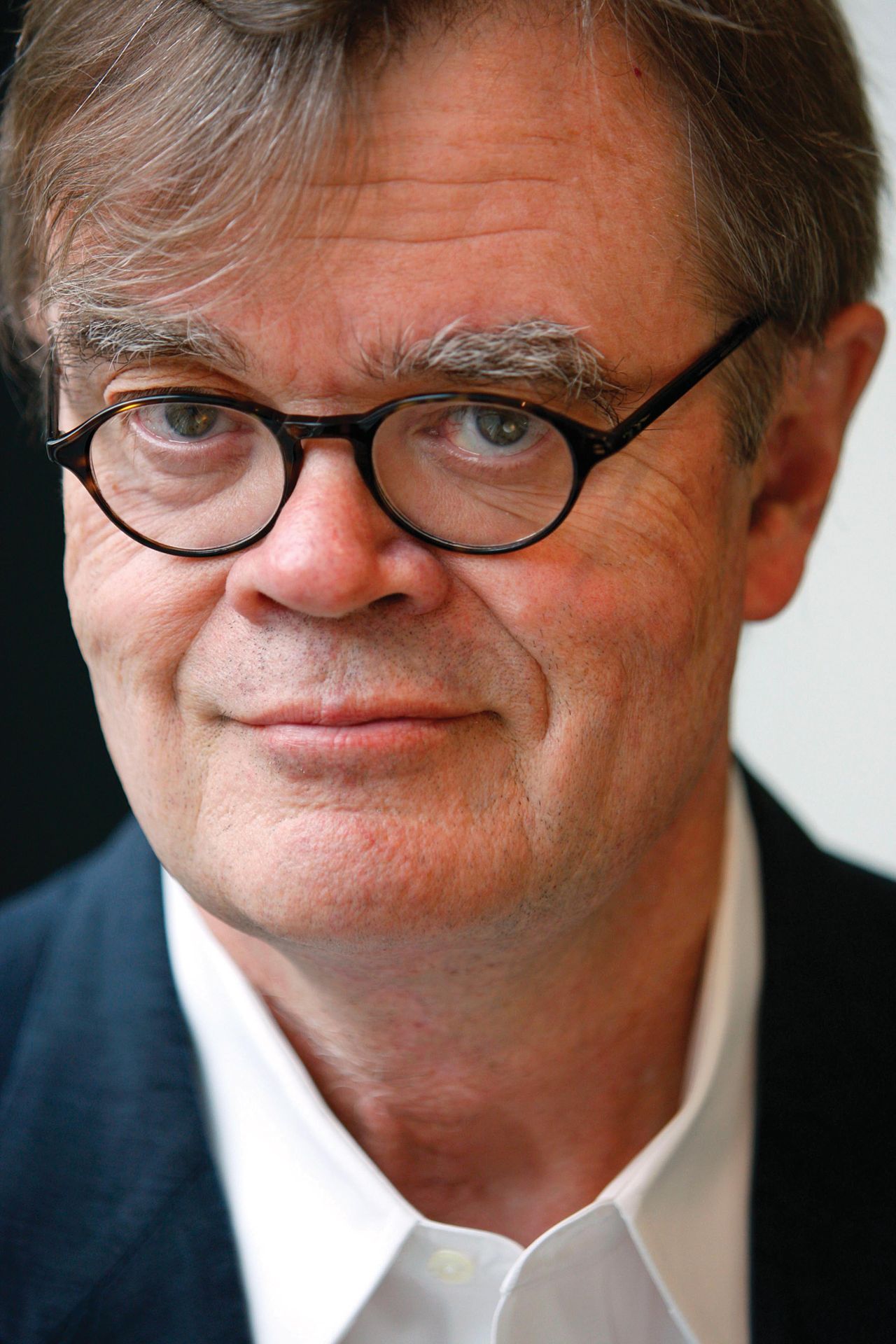
Solomon Volkov: She will continue, Harrison Keylor himself just leaves. He is 73 years old, he has all sorts of other sentences, he wants to write a script, a book, he will lead a column at Washington Post. And he transfers the transfer to the young Banjist, a Banjo performer named Chris Till. Let's see how he will do it because Harrison Keilor won a huge audience. She is not at the peak now, it was almost five million, now three and a half million. But you know, three and a half million audience in one person ...
Alexander Genis: You said that the program would last, but it’s not so easy to replace like Raikina.
Solomon Volkov: This will be a big question.
Alexander Genis: I thought a lot about what was the reason for this success. Why does such a program exist only on the radio? Harrison Keylor himself said that the durability of the radio programs is the same as that of the sand castle: it exists only during the hearing. Which is not entirely true, because his programs can be heard endlessly.
But there is a question that goes beyond the limits of one program. We have been working on the radio for so many years that we cannot help but think about the nature of the radio -fire. They often forget about the radio, because the radio is like air, you don’t notice it, it is everywhere, on the air. It would seem that there is a TV, the Internet, and the radio is still vividly and feels great. Until now, we get 60% of all news on the radio, but we do not know about it, because we ourselves do not notice how we know this.
But what are the big author's programs good? It seems to me that this is a conversation for rent, and a radio -staff is a rental. Radio is a whisper from the sky. A voice that is only talking to you and it seems that this person is very close, at the same time he is nowhere like an angel.
It seems to me that the radio will never die precisely because it has such an intimate manner of communication that no other media is unable to propose.
Solomon Volkov: How do you compare radio and television in this sense? Television has the same effect or there, on the contrary, is that you see this person disrupts the effect of intimacy?
Alexander Genis: Maklyuen gave a brilliant definition: television is a cold media, and the radio is hot. He said that if television were invented before the radio, there would be neither Hitler nor Lenin. Because on television you can’t say that, as Hitler and Lenin said, you can’t chop the air, you can’t scream, you cannot portray hysterical emotions. Television exaggerates any gesture, any facial expressions. Therefore, experienced politicians, if this is not Trump, of course, act on television with a sedentary face. No strong emotions, because the smirk becomes a grimace, which carries the face on the screen. This is why television will never be such an intimate genre as radio. Television for another, it is not intended for warm communication. Radio replaces friends, and television scares them away.
(Music)
Alexander Genis: And now the new episode from our cycle dedicated to the anniversary is the 140th anniversary of the Bolshoi Theater.
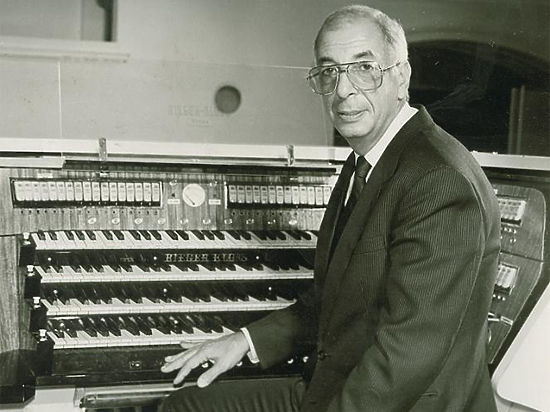
Solomon Volkov: I propose today to talk not about the Bolshoi Theater, although it will be discussed about it too, but about a significant event that took place not so long ago on the new scene of the Bolshoi Theater. It was a concert dedicated to the 85th anniversary of the birth of Michael Tariverdiev, a wonderful composer whom I love very much because he created my style in vocal music and in the opera, it was music for me, I very personally perceived this music.
I well remember the first impressions of Tariverdiev’s music, I remember his cycle to the words of Bella Akhmadulina. It was an ideal coincidence of poems, their musical design and manners of the performance, and the vocalists, there were cases when the Tariverdiev himself performed. By the way, he remarkably performed his works. And in the opera genre, also the targets performed a pioneer for me. Then, when it seemed to me that there was no modern opera and could not be by definition, the opera opera was called, called "Who are you?" - It was 1966, it was written based on Aksenov’s novel, “It's time, my friend, time.”
Alexander Genis: Here, it's time to remember this book with a kind word, because she made a huge impression on me at one time.
Solomon Volkov: On me too.
Alexander Genis: It was 1964, I studied in the 4th grade, it is at this age that you read books that determine your tastes, then everything is superimposed on this. I had such a happy case in my life. Once I was sitting in Philadelphia, visiting someone in the kitchen, Aksyonov was sitting to my left, and Gladilin was sitting to the right of me. I said to Aksenov:
- In 1964, in the magazine “Young Guard”, Aksenov’s novel “It's time, my friend, time” was printed, which, having read it in the 4th grade, considered it the best book of all time and peoples.
Gladilin in comic despication closed his eyes with his hands. But I turned to Gladilin and said:
- In 1965, when I studied in the 5th grade, Roman Gladilin “The History of one Company” was printed, which I considered the best of all time and peoples.
Then Aksenov closed his eyes with his hands. We then remarkably drank with them for these old and kind books.
How many people are left who remember where these works were printed for the first time? But in fact, I am still sure that these books are solidly and well written. The characters who created one and the other writer, they are as bright as Hemingway, who, of course, then imitated, or at the remark, only it was Soviet Heminguay and Soviet remarks. Unlike Soviet jeans, there was nothing vulgar in them, they corresponded to their time and did not teach anything bad. I still think that it was a wonderful youth prose. Aksenov called her “jeans”.
Solomon Volkov: I am very glad that you are taking such a non -snobish position. Now it is fashionable for the works of that time, that era to score and blame the sixties of all mortal sins. It is customary to neglect those works that you are talking about with a completely fair and justified approval. I also continue to admire this prose, not only because these are our nostalgic memories, and this is really very strong professional, still fresh literature.
As for the opera of Tariverdiev “Who are you?” Written based on Aksenov, I was incredibly lucky. Я видел тот премьерный спектакль, не самый первый, но один из спектаклей, когда эта опера была поставлена. Ее поставил Борис Покровский, о котором я всегда говорю, как о величайшем оперном режиссере ХХ века, он сделал это в ГИТИСе, где преподавал, со студентами выпускного курса. Это был зародыш будущего знаменитого Театра камерной оперы Бориса Покровского, который тесно сотрудничал с Таривердиевым. Они поставили его оперу «Граф Калиостро», которая шла, по-моему, 15 лет и стала одним из хитов театра Покровского, театр с ней объездил многие страны. Я был на этом спектакле, и никогда не забуду этого впечатления. Я думал: вот она — современная опера, вот такую оперу я хочу слушать, она мне интересна, она меня увлекает. Я был необычайно взволнован.
Таривердиев это тогда прокламировал как так называемое “третье направление”. Это, конечно, была идея американская - нечто между поп-музыкой, попсой и так называемой академической музыкой. Идея была замечательная. Он считал, что это и есть тот путь, на котором должны создаваться новые советские оперы. Я сделал с ним на эту тему интервью для «Комсомольской правды» в 1969 году. Я пришел к нему домой, сейчас уже не помню, кто устроил эту встречу, меня все тогда поразило: и личность Таривердиева, и его квартира. Таривердиев говорил со мной с большим увлечением, с заинтересованностью. Я сделал это интервью, его напечатала «Комсомолка», и там произошли большие неприятности для тогдашнего заведующего отделом культуры Оли Кучкиной. По-моему, ее чуть ли не собирались гнать с работы, потому что Тихон Хренников поднял большую бучу. Он сказал, что Таривердиев призывает к тому, чтобы вести советскую оперу по неправильному пути. То есть это было возведено почти в ранг государственного преступления. А он всего лишь навсего доказывал перспективность такого жанра.
Александр Генис: Вы знаете, мне кажется, он доказал его не на словах, а на деле, своей музыкой. Мне кажется, что Таривердиев положил на музыку 1960-е и 1970-е годы. Это та музыка, которая выражала, я бы сказал, тихий интеллигентный протест. Это была музыка не антисоветская, как, например, песни бардов, Галича или Высоцкого — это была музыка внесоветская.
Соломон Волков: Именно так, я с вами совершенно согласен.
Александр Генис: Это была музыка квартирная, это была музыка для домашнего общения - как «Голубой огонек». Это делало музыку доступной и в то же время свежей, она объединяла людей, она делала их мягче. По-моему, это не так мало.
Соломон Волков: Гала-концерт, посвященный Таривердиеву прошел на одной из сцен Большого театра. Всем вовлеченным в это дело людям было удобно забыть о том, что отношения Таривердиева с Большим театром складывались далеко не идилличным образом. Во-первых, никогда ни одной оперы Таривердиева на сцене Большого театра не появилось. Но более того, он написал балет «Девушка и Смерть» по мотивам Горького в 1986 году, когда к нему обратилась балетмейстер Вера Бокодора (она была французский хореограф) с предложением написать такой балет. Он написал, балет был принят в Большом театре, но его сняли буквально за день до премьеры, не показали премьеру.
Alexander Genis: Why?
Соломон Волков: Это вечная история. Постановка эта оказалась яблоком раздора между двумя фракциями могущественными. С одной стороны был Юрий, который покровительствовал Вере Бокодоре и продвигал этот балет, а с другой стороны была группа, во главе которой стояли Плисецкая и Владимир Васильев, которые были в оппозиции Григоровичу, соответственно, все, что с той стороны шло, отвергалось на корню.
Александр Генис: Короче говоря, «Театральный роман» Булгакова продолжается.
Соломон Волков: В полном объеме. Балет зарубили, балет пал жертвой столкновения этих двух фракций внутри Большого театра. Это была колоссальная травма для Таривердиева, он никогда об этом не забыл. Но сейчас в Большом наконец-то прозвучала музыка Таривердиева, отрывки и из «Графа Калиостро», и из оперы «Кто ты?», и другие опусы. Например, «Женитьба Фигаренко», его постперестроечная фарсовая опера по мотивам «Женитьбы Фигаро»: Фигаренко в России устраивает свою частную парикмахерскую. Там так же прозвучала его музыка из кино-оперы «Король-олень».
Александр Генис: О, один из моих любимых фильмов, это по мотивам Карло Гоцци.
Соломон Волков: Я хочу сейчас показать фрагмент из этой замечательной музыки Таривердиева. «Король-олень».
(Music)