Translated material
Samizdat in the province
Podkast " Babylon Moscow ", from the archival series "Far from Moscow", 2003.
In the program - the intelligentsia of the country: journalists, philosophers, human rights activists, engineers, translators, musicians. Listeners of Voices and forbidden bards, readers of the Lenin library and religious samizdat. Fans of Tsvetaeva, Gumilyov, Bulgakov, Nabokov and Mandelstam. Solzhenitsyn and Shalamov on photocopies. How did Samizdat prepare a "perestroika" Russia? The voices of manufacturers, keepers, distributors and readers of Samizdat are recorded by Radio Liberty correspondents. The idea of the program is Sergey Khazov, Samara.
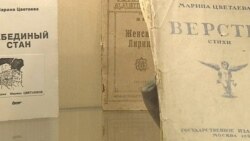
Yuri Linnik, Doctor of Philosophy, Petrozavodsk: being still a student, I copied the forbidden Gumilyov. I copied Brodsky, I followed the fate of Solzhenitsyn. I was worried about the fate of the Russian spiritual underground. What went into emigration was published there. And the people who stayed here in Russia are their fate. I was attracted to the 20th, turning point. I tracked at people whose youth came at this time and who survived until the days when I began to think.
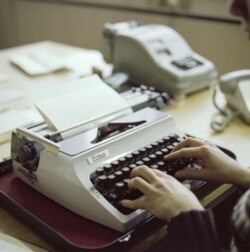
Copying was made on a typewriter right in the editorial offices of Soviet newspapers. Both in the Lenin Library and in the Public Library in St. Petersburg in the photocopying departments there were smart and kind people who accepted our orders for literature, which was actually impossible to copy. And they copied it for us, and we paid for her the same money that was supposed to be according to the price list, there was such an oversight. I have photocopies of books of a completely anti -Soviet nature received absolutely legally through this channel.
Vladimir Paremsky, a member of the NTS, has a brochure "On the molecular type of underground organization." Its essence is this: these molecules, these links are isolated from each other, the chain is built so that it moves information with a minimum of risk for those who carry out this work.
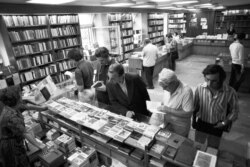
I could get a package, a book from a person completely unfamiliar. Here they say to me: "Yura, come to the Akademknig store on Gorky, a girl will meet you and give you a bag." I came, took a bag, and I never saw this girl again. There could be Nabokov in this bag, there could be the magazine "Imka-Press", "Bulletin of the RCD", anything.
This system was as if flooded, invisible. She worked reliably, and the failures were rare.
Pavel Galochkin, journalist, Cheboksary: there was such a poet Nikolai Glazkov. So Glazkov in the late 40s gathered all his poems, printed them on a typewriter, intertwined and put them on the publishing house: "He published himself." Glazkov is considered the founder of Samizdat and the author of the word "samizdat".
In Cheboksary, he was not very common, a narrow circle of people was interested. We can say that my brother Yura was the only one in those years. The whole audience, interested in this, was spinning around him. Then he brutally paid for this, he was tried under article 193, there was a demonstration process for the anniversary of this article: in 1961, he was introduced to the Criminal Code, and he was judged in 1985. We then, for the first time, somewhere in the mid-70s, read "Dr. Zhivago", Solzhenitsyn "Archipelago Gulag". Yura loved to listen to the "enemy voices", and he listened to Solzhenitsyn "in the first circle", recorded the head of "Buddha's Smile", he rewritten it, reprinted, and she went in the hands.
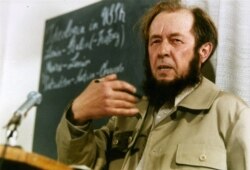
Andrei Berman, Priest, Cheboksary: the tradition of church samizdat is ancient in our country, ancient. I recently brought me three notebooks, rewritten somewhere about one at the end of the 18th century, the rest-in the 19th century, Old Believer notebooks. There were exotic things printed on a typewriter with reference to some foreign publication that a certain center was built in Brussels, where the Beast computer is placed, which will put the numbers to everyone. Perhaps that is why, when the maintenance of TIN and new passports began, some problems arose.
One of the important sources of information from the church, religious life in the Soviet regime was the transfer of Radio Liberty, the Voices of America, the BBC, they transferred church services there. After all, it was impossible to get to the church on Easter - they turned on the radio and listened to how they were in Easter service.
Tatyana Kotlyar, human rights activist, Obninsk: all my hatred of the Soviet regime began in early youth precisely with the fact that some reptiles are trying to forbid me to read books. Of course, I could not allow such violence over my personality and I spent a significant part of my efforts on the free spread of prohibited literature. You won’t write on the fence that "you can read the forbidden anti-Soviet literature, then come in." I just gave my friends books to read, everyone who wanted.
Anton Neverovsky, human rights activist, Obninsk: the search continued somewhere until night. They gritted everything, collected a bag of two or three papers, collected any paper on which at least something was written. They went through all the books, selected everything that has any notes. As I was told: "If there are your notes here, this is already considered the book of the wrong author, but yours." Well, of course, I liked that Lenin’s works, the CPSU program is already my authorship. The next morning they ordered to come for an interrogation. Basically, I was charged with the then 104-Prime, "the manufacture and distribution of slanderous materials."
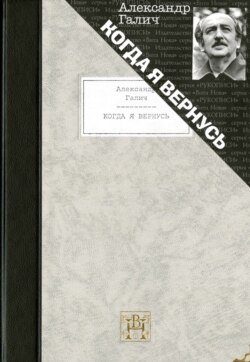
Mikhail Avdeev, poet, Samara: I was an employee with Anatoly Alexandrovich Cherkasov. He lives in America now. Tolya Cherkasov was published by the magazine "Samara". I interviewed the veterans of the Denikinsky movement. I loved Okudzhava, loved the old intelligentsia. Alexander Arkadievich Galich - I cried when Alexander Arkadievich told these things: "At the Galich microphone."
Valery Pavlyukevich, political scientist, Samara: the magazine "Samara" was printed outside Kuibyshev, in particular, in the Lithuanian SSR then. They tried to carry conspiratorially, not to glow. Just transported in a bag. It was at that time anti -Soviet literature, and appropriate sanctions. That is, such a person would already be on the hook of the competent organs. It was necessary to have interest in this, and it was necessary to take risks.
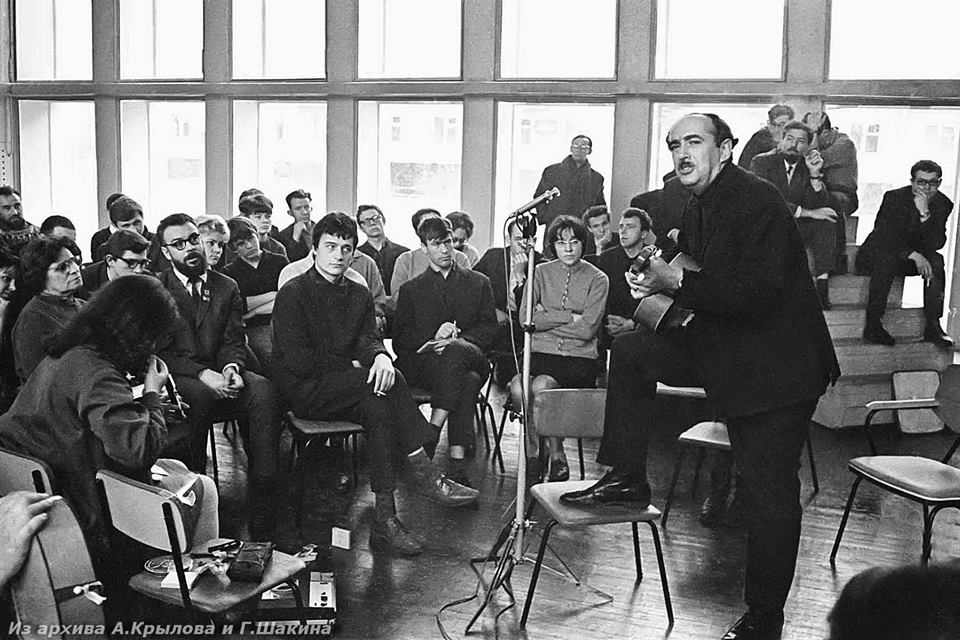
In Samara, in the 60-70s, the entries of Vladimir Semenovich Vysotsky were a common form of “tape samizdat”. The fate of these records is quite dramatic, because after the first visit of Vladimir Semenovich, the recordings of his performances were seized by KGB officers.
The place was in Samara, the so -called Pushkin Coverer for the drama theater, or in the outfinarium "Fluff". Someone said so softly: "Fluff." And someone said the "gun". There were gathered dissident students.
Alexander Baryshev, television journalist, Samara: Bulgakov’s “dog’s heart” brought me, I remember, laughed wildly. It became sad and insulting that such literature, such a book can circulate only in an informal form. I just took the evil, I think: what kind of life is it, what kind of country it is, what kind of things are it in general that normal funny things - but you can only laugh into your fist.
Evgeny Molievich, professor of Samara University: Freud discovery, for example. Freud is not Shalamov, did not sit. But since it was considered underground literature - they removed from work, excluded from graduate school.
Anatoly Katz, Professor of the Conservatory, Saratov: We reprinted in four hands with the deceased Yuri Leonardovich Boldyrev Roman Solzhenitsyn "Cancer Corps". I published in one instance the almanac, which was called the "evening of memories." These are reprints from from somewhere in the hands of Irina Odoevtseva, the memoirs of Olga Ivinskaya. These are the stories of Varlam Shalamov camps who went in manuscripts. These are Galich songs. I sat in the bathroom at night, turned on the tape recorder, listened to the text, reprinted it on a typewriter - and made up the Tom of the Songs of Galich, which was called "Songs heard in five steps", intertwined. One of my friends took this volume from me and went to Moscow to see Galich. And he found him in Bolshevo, in the House of Writers' Creativity, and upon arrival he told me that he was worn all over Bolshev and said: "That's how they publish me." He made a touching autograph, but, unfortunately, he was not preserved, all this was seized from me during a search.
Svetlana Kekova, poet: Vladimir Erl, he is known as a researcher, publisher of the creativity of Oberiuts and Samizdat magazines, in particular, "Clock", "Obvodny Canal", St. Petersburg. He came to Saratov, brought samizdat magazines, in which there were not only the authors who wrote at this time, but also the publications of poems, memoirs of the Silver Age. A colossal accelerator of development, and not only professional, poetic, prose, but also human first. Those searches that were in literature, both in philosophy and in the art of the beginning of the century, made it possible to feel completely different air, the air of another world. And this is what allowed you to stay in that life.
Boris Petelin, teacher, Lipetsk: I had to get the autobiography of Yevtushenko, I gave it to the graduate, and that to my friend - and grabbed it, the KGB. Officially refused to print Yevtushenko’s autobiography in our press, it was printed in the West, in Germany. Such a technique is a kagabenchy: "Who gave you to read this autobiography, which is not printed in the Soviet Union?" This woman, a friend, answered: "I can't say." And in the end, they took her at night for interrogation. The girls came running to me: "What to do, Boris Nikolaevich?" It was in 1959–61, in these years. In Moscow, on Pushkinskaya, these biographies were sold from the floor. I said: "You say this: was in Moscow, I bought an autobiography of Yevtushenko from the Pushkin shop." And this woman tells me: "When they called me and began to ask:" Where did you get? Who gave you? We know who gave you. This is Petelin, yes? " -" I was in Moscow and bought from the Pushkin shop. "The investigator as a sunbathing:" I taught, bastard, you are! "
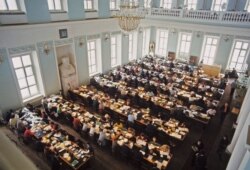
Sergey Khomutov, journalist, Orenburg: I made about 20 copies from the book of the 1952 Paris publication. Moreover, there was a fairly angry anti -Soviet article by Nikolai Otsup. Later, in the FSB, I asked: "And if they found out that I had done such copies of such copies, I knocked them out to my friends, what would they do with me?" To which they - already during the period of accomplished reforms - laughed and said that there would be a task.
Closer to the 90s, several samizdat magazines appeared. A group of young people, which included architects, students or young people who had just graduated from institutes, published a literary journal Citizen Kommersant in 1087–88.

Oleg Krivenko, editor of the magazine "Citizen Kommersant", Orenburg : the political moment was denied. Although the first issue of the "citizen" ended the "anthem of the citizen", and there was such a phrase: "Let the whole plan burn with a blue flame, we will wave a red banner." But it was just a joke.
Oleg Olgin "Ugh" once a year issued a literary and musical magazine. He then with the glory of Butusov and the Nautilus, and with the "tea", which no one had yet known, went to St. Petersburg. And the report was about this trip to St. Petersburg, when the Nautilus spoke there, the Chayf spoke and the masters were sitting from the St. Petersburg rock club, about which only experts would say something about. Now it’s interesting to read it: where are they - and where is the Nautilus now:
Sergey Mingazov, journalist, Khabarovsk: we made a number of publications, including the Magazine magazine, which included in the Annals of the informal samizdat. On this occasion, special party bureau was held. You were called to the reception of the rector, where some Kagabashnik, which seems to be another curator, was sitting, and told all sorts of dirty tricks about your friends. Each time the stands were shot and the creators of this newspaper returned home, they were taken to the police, received a fine for unauthorized rallies, because practice did not imply any street and public expression of opinions. The numbers were quite stalking in relation to the Soviet regime, the Communist Party.
It was a life then. To imagine Muhosransk our times of 1985, 1987, 1988: nothing happens, and then suddenly rallies begin to conduct rallies somewhere in Pushkin squares. Then it all slowly finishes to Khabarovsk, and fermentation begins here. The audience, which came to Samizdat, in informal movements, was completely different. There were also geologists with experience, and generally pushed people on some ideas, there were just teachers of political science, students. Such a mishmash took place there, and a new Russia was born in this.
Alexander Sidorov, journalist, Rostov: I ran into Samizdat, already at the university, it was 1973. There was such a group, they decided to make a samizdat manuscript magazine literary and artistic, called "Bloody Mary." That is, there should have been a cocktail of everything: I had a story there, someone had poetry, and so on. The first number was released in several copies under the carpet. It suddenly turned out that this almost harmless magazine caused a storm of horror in the rector of the Rostov State University. Immediately began to cause an initiative group, some waves went bad. And we only later learned that, it turns out, before us, in 1972, the students of the journalism department began to release the magazine, he was apparently politicized. There was a high -profile case, and several students who participated in this were simply kicked out of the university. And then suddenly the next year, from nothing, again, again the same. They did not even understand, but there was horror in their eyes: some kind of free-thinking nursery that it is? They forbade us to further release the magazine.
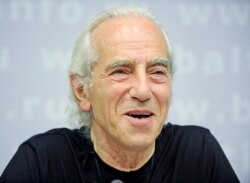
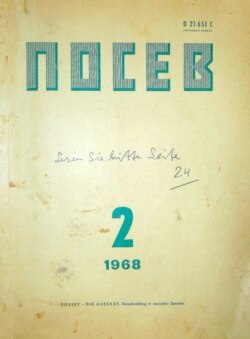
Vladimir Kobyakin, journalist, Rostov: I and a few more friends began to record the Rock-Posev programs on a huge bobin tape recorder.
Five kopecks per format sheet of writing paper, we propagated this on a huge one ... It’s not even turning the tongue to name the tongue, it reminded the installation for launching spaceships. After that, the sheets were conscientiously recounted, dumped, intertwined and heard to friends. And for some time they walked around the city.
One or two copies of this Samizdat publication I left myself. And then, when there were “Sevavo -Overalls” in Rostov, at first Leonid Vladimirovich Vladimirov, and then Seva himself came, I showed them these things that we received, wiping through the “jammers”. For authors, this caused a state bordering on tenderness. And Seva is a business man, he, in addition, wrote without false modesty that over time this little thing will cost thousands of dollars.
Subscribe to " Babylon Moscow " on the Radio Liberty website
Listen to us on Apple Podcasts Google Podcasts Yandex Music