
Translated material
Prayer
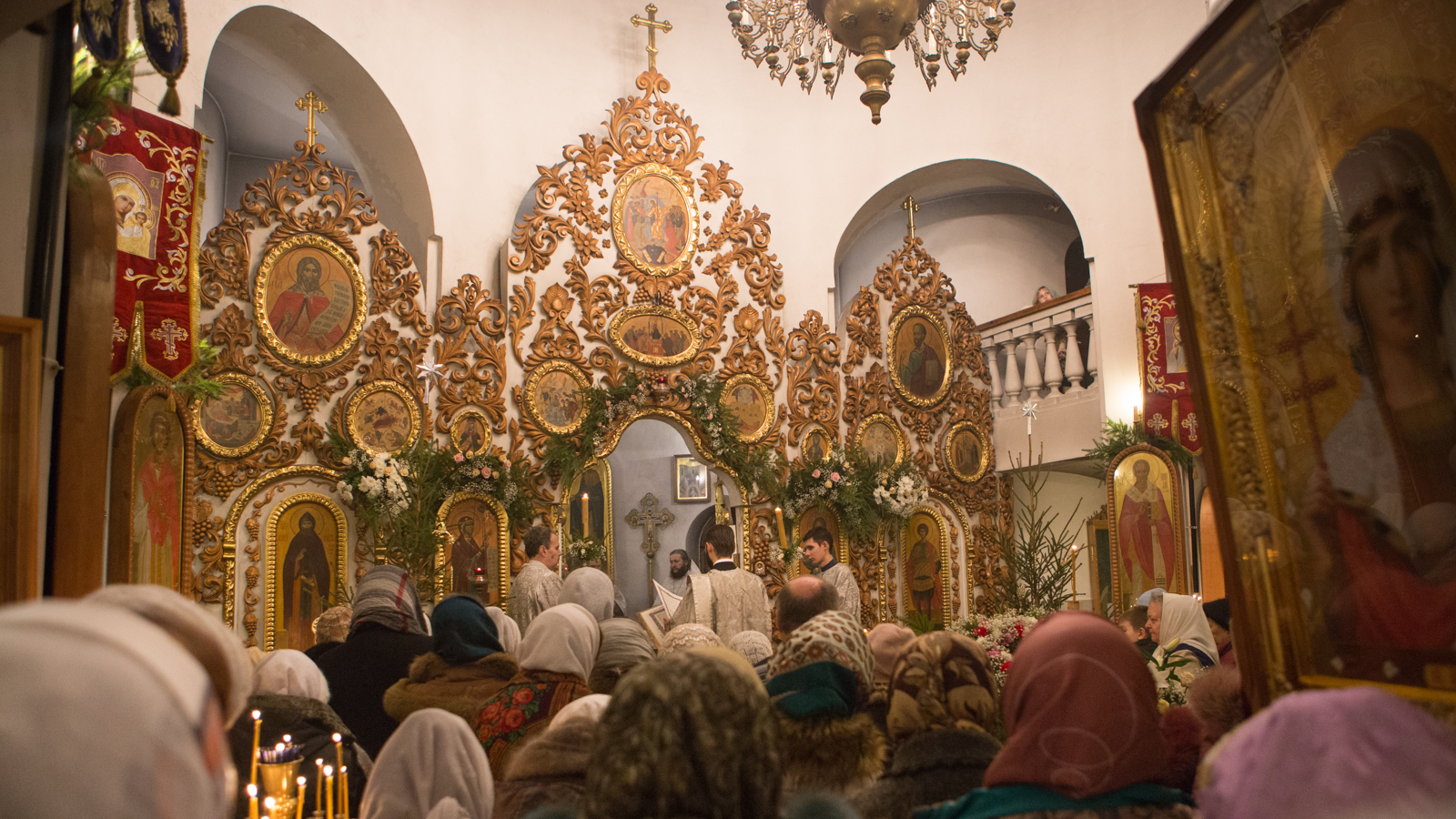
Why did Patriarch Kirill refused to pray with Pope?
Yakov Krotov: This release of the program is dedicated to prayer, and also not to prayer. Is it possible to pray, and in what situations one should not pray, if any? The nearest reason for the program is the meeting of the Pope and the Patriarch of Moscow. Before this meeting, the patriarch’s secretariat officially announced that the Patriarch would not pray with Pope.
Our guest is three Orthodox people - Father John Sviridov ; Orthodox and composer Vladimir Kovaldzhi and by phone - father Mikhail Ardov .
Father Michael is a priest of the Russian Orthodox Autonomous Church , rector of the temple of the holy royal martyrs in the Golovinsky cemetery. The remaining participants are canonical (thousands of apologies are in the best sense of the word).
Many believers who are not very well versed in the intricacies of church life have a question: why not pray?
The first question: why is a statement suddenly made that the patriarch would not pray with Pope, why was it to emphasize? The secular public did not pay attention, but I think that many believers who are not very well versed in the intricacies of church life have the question: why not pray?
John Sviridov: I worked with the current Patriarch, with his predecessor, and with his predecessor. He prayed not only with Catholics. He is a member of the Central Committee of the World Council of Churches. Maybe for you this is a surprise, but for many this is doubly surprise. He repeatedly prayed with Protestants, since the Catholic Church in the World Council of Churches is not a member, but a corporate participant, moreover, a participant in only one of the programs is “Faith and Church structure”, they do not participate in other Catholics, since they have their own concept of vision of the world.
And today's situation is incomprehensible to me, because it is illogical. And at the same time, it is logical, since now from the Patriarch of Moscow and All Russia Vladimir Gundyaev are waiting for a completely different approach to ecumenical problems. Ecumenism falls apart here. I studied at an ecumenical school, so - I am a graduate ecumenist. (laughs)
Mikhail Ardov: We are truly Orthodox, and Orthodox canons are categorically forbidden to pray with heretics, which, from our point of view, are Catholics. And in the Patriarchate there are quite a few priests who profess it. So this is some concession to the conservatives in the Patriarchate.
John Sviridov: What canons do you mean? There are no such canons!
We are truly Orthodox, and Orthodox canons are categorically forbidden to pray with heretics, which, from our point of view, are Catholics
Mikhail Ardov: Canon excludes the prayer of man from the church with the heretic. Now I do not want to take the book of Rules, but I can quote.
Yakov Krotov: Canons, which forbid to pray with heretics, forbid even household communication with them, still exist. Hence the Old Believer tradition - to break the dishes, from which a person was eaten like you and me.
John Sviridov: But there is no canon about the fact that Catholics are heretics. We confess the symbol of faith in which there is no concept of a heretic. In addition, the Catholic Church is not heretical.
Yakov Krotov: But this is a question to Father Mikhail. Why are Catholics heretics?
Mikhail Ardov: It is necessary to turn to the history of the church, to the great schism. They accepted a certain number of completely unacceptable dogmas.
John Sviridov: This question has been clarified for 50 years, since 1964, maybe even longer.
Yakov Krotov: Actually, Vladimir Solovyov wrote about him.
John Sviridov: Vladimir Solovyov wrote about something completely different - about the relationship of the Roman Church and the Orthodox Church. But the issue of the significance of Filiokve has been discussed over the past 50 years with very serious theologians, which came to the conclusion that Filior is a private theological opinion that arose in Spain, this is a local tradition. Everything, the dogmatic question was removed!
Yakov Krotov: Dogmatic is removed, but in real life it is.
John Sviridov: In real life, the structure of the church is completely different.
Yakov Krotov: Then I will obscure the same canons. The 45th Apostolic rule: "Bishop, presbyter or deacon, with heretics prayed tokmo, may it be excommunicated."
But Catholics are not heretics!
John Sviridov: But Catholics are not heretics!
Yakov Krotov: "The bishop or presbyter who accepted the baptism, or the victim of the lines, we command, we command, which the consent of Christ with Velial ." That is - what kind of harmony can Christ with Satan have?
John Sviridov: If you are a historian, then you understand that the message that you quoted is not a document related to genuine.
Yakov Krotov: How to say ... I read these rules from the textbook of the Moscow Theological Academy, the author is Archpriest Vladislav Tsypin.
John Sviridov: Archpriest Vladislav Tsypin is a well -known odious person. We at the Academy were critical of this document.
Yakov Krotov: But it is important that dozens, and maybe hundreds of thousands of Orthodox in Russia (and not only in Russia) consider this rule genuine, it is quoted in the decisions of various local Orthodox churches. It is included in the Orthodox tradition. And while we argue whether it is genuine or not, people do not pray with Catholics. Therefore, I still ask Vladimir Vladimirovich to say what, from his point of view, is the logic of the ban on praying with the heretic?
Vladimir Kovalji: First of all, people have a question: what does it mean - “do not pray”? I went once to the uninitrogen temple in Moscow. I will explain that co -religionists are a kind of union within the Moscow Patriarchate, they serve as an old rite, but they are part of the Russian Orthodox Church, the Moscow Patriarchate. I went into this temple, I just stand, and I look, the Old Believers are not annoying, but since there are three and a half people (this is a small community), then everything will mow at me, especially the Dyuzha guards. Finally, they can’t stand it, come up to me and begin to ask who I am. I tell you that Orthodox, the Russian Orthodox Church, and he says: "Okay, stand, just do not pray."
This is a completely wonderful phrase! It seems absurd and causes laughter from anyone to whom I tell this. But we must understand what he had in mind. There are words that have close, but different meanings.
I tell that Orthodox, Russian Orthodox Church, and he says: "Okay, stand, just do not pray"
A striking example is the word "post". For example, on Saturday, according to canons, it is forbidden to fast, it's just like heresy. And when a person of an ignorant reads such a canon, he thinks: I don’t understand, the priests say - to take communion on Sunday and be sure to fast at least the day before, so I will go on Saturdays - that's all, I am a heretic. But in the famous book of Alexander Shmeman "The Great Lent", he popularly explains that there is an ascetic, long post, and the post is perfect, eucharistic. Saturday is a sacred day, so even on the great post Saturday and Sunday - liturgical days, and perfect post is prohibited. All Saturday you can’t eat anything from dawn to dawn. And just ascetic post - do not eat meat and read canons, prepare for the sacrament - please.
And the same thing happens with prayer. When we talk about personal prayer as a conversation with God, this is one, and when we are talking about the prayer of public, liturgical, here is a completely different matter. It is also a confession and a certain joint declaration, so there is a certain canonical formalism in the church. It is clearly manifested in the question of the priesthood, for example. If we figure out who is worthy to perform the liturgy, then I think that absolutely everything is unworthy. If we choose only the most worthy, we will begin to fight with each other, then I will assume that Vasya is worthy, and he will assume that Petya is worthy. Therefore, the church adheres to such canonical formalism: it is properly ordained, which means that he is a priest, his sacraments are valid. At the same time, he himself can be an alcoholic, anyone.
That's the same with prayer. When a joint liturgical prayer is meant, it goes not just as a prayer in the personal sense, but as a general confession and a general evidence that we are together as a church. And in this sense, the Church prohibits self -united church with those with whom we formally are not a single church. And here it doesn’t matter whether Catholics are heretics or not, they are another church. After all, there is a split, this is a fact.
John Sviridov: The split is worse than heresy.
When we are talking about personal prayer as a conversation with God, this is one, and when we are talking about the prayer of public, liturgical, here is a completely different matter
Vladimir Kovalji: While there is a formal split, demonstrations of complete church unity do not happen, because it simply contradicts logic. That is, it is not spiritual, not a mystical, but a formal question.
John Sviridov: The most serious question is the resolution of prayer for an unbeliever, when a private, not church prayer is allowed, outside the submission of church notes, which are also a rudiment of some special type of Orthodoxy. An unbeliever is not a heretic, not a split, this is more, an unbeliever is a lack of church unity. But prayer is allowed for it in private.
Yakov Krotov: This means that when in the Cathedral of Christ the Savior, say, they prayed for those who died in terrorist attacks, during explosions in Paris or explosions on an airplane, or for the Armenians who died in an earthquake, is this violation of the norm?
Vladimir Kovalji: In general, yes.
Yakov Krotov: And how critical then to pray with the Catholic? Here the cardinal will come to you - you can read with him “Our Father”, or is it also not worth it?
You can pray for any person
Mikhail Ardov: I will not read with him "Our Father." In the temple, I am for unbelievers, for heretics, of course, I never pray, but in private prayer at home I have a list where these unbaptized ones. Catholics, of course, are not there. You can pray for any person. Here he is unbaptized, suicide, how to pray for him? And I say: you can personally pray, and when you submit a note to the church, write it of baptized relatives and all the vains, and thus you indirectly pray for it. There is a way out of any situation.
Yakov Krotov: Father Michael, are you not a secret Jesuit? The method of Jesuit ... But the petition, the prayer of the great penance, but the peaceful penance for floating, traveling, nothing, suffering, prisoners (I personally add - prisoners) ... Do you pray only for those who float and believes, and for unbelievers?
Mikhail Ardov: I pray in this case for everyone, but the Lord knows that he can have mercy on anyone, call on and so on. I pray without making differences.
Yakov Krotov: Suppose a pope will come to your temple, get up and begin to pray. Will you send the guard to tell him to stop?
Mikhail Ardov: No. But, if he goes to this communist island of Cuba, then he will not come to my temple. They chose a very funny place. Of course, I understand why. If they met somewhere in Europe or even in America on the territory of some kind of temple, it would turn out that one of them came to bow to someone. And so they chose such an exotic place about which I said that they prefer three -dimensional space to two -dimensional - they are not found on the square, but on Cuba. (laugh) It would be more exotic if they met in Pyongyang, Kim Jong -un, it would have been just a comic meeting.
Yakov Krotov: And yet, in the Gospel it is said: “Where are yours or three gather in my name, there I am among them, and pray ...” There is a difference, they will gather in the church, in the Cathedral of Christ the Savior or the airport?
An unbeliever is not a heretic, not a split, it is more, an unbeliever is a lack of church unity
John Sviridov: You do not understand one thing - fears, no matter what happens. Now preparations are underway at the All -Orthodox Meeting, which leads to the All -Orthodox Council. All pressing issues are excluded that could divide believers, including the transition to a new style and into Russian.
Yakov Krotov: Indeed, two or three are the church?
Vladimir Kovalji: That is why these canons exist, because "where two will gather in my name, - says Christ," there I am in the midst of them. " If I, say, gathered together with a respected Muslim and I want to pray ...
John Sviridov: If we open the magazines of the Moscow Patriarchate after 1964, then there are so many prayers with heretics that all members of the Synod conducted ... and this is recorded in the photographs.
Yakov Krotov: Well, that means they corrected!
John Sviridov: No, they failed.
Yakov Krotov: They brought repentance.
John Sviridov: No, there was no public repentance.
Yakov Krotov: Well, why public? Private. I well remember the last explosion of ecumenism-1997, a conference in the Austrian city of Graz, after which it was announced that the Moscow Patriarchate also takes the position of the observer, distances from the World Council of Churches, and, in my opinion, Metropolitan Kirill, the future current patriarch, did not pray.
But I ask once again: but, let's say, Armenian, a member of the Armenian Church, the main one, that is, the one that is considered heretical ... Father Mikhail Ardov, will you pray with the Armenian?
You pray in this corner, and I will pray in this!
Mikhail Ardov: I will not. As for the 60s, that is, the documents-when they removed Nikolai Krutitsky and set Nicodemus to head the foreign department, there was a task from the Council for Religious Affairs-to strengthen the attack. They were sent to the monstrous second Vatican Council, which made monstrous decisions, led to an Old Believer split when Cardinal Lefevere and his supporters moved away from the pope - accordingly, all this was done according to the indication from the Central Committee and the KGB. What to talk about here?
Yakov Krotov: But the Armenian will say: "Let's pray in the name of Jesus Christ, our Lord."
Mikhail Ardov: You pray in this corner, and I will pray in this!
Yakov Krotov: Why? After all, the name is one.
Mikhail Ardov: Because they are monophysites , heretics, I will not pray with them. The existence of such old -style jurisdictions as ours and Greek ... We will never pray with them, because it is forbidden to canons! Let them pray, I do not judge them ...
Yakov Krotov: How to combine this with the words of the Savior that I quoted - "two or three in my name"? Not in the name of dogma ...
We will never pray with them, because it is forbidden to canons!
Mikhail Ardov: Read what the Savior is said in the Gospel, and what is said by the Apostle Paul, how to relate to heretics. "If he does not listen to the church, you will be like pagans." This concept is still in the New Testament.
John Sviridov: Father Mikhail, with the deepest respect for you, I have to say that over the past 150 years, the question of monophysis has been revealed in a certain way. And this question becomes the cornerstone that we do not understand each other. The fact is that the texts that came to Armenia and the Copts came late, they could not attend the Chalcedon Cathedral . And the translations were so monstrous! Sevir Antioch , who is the holy of the Armenian Church and the Holy Orthodox Church at the same time, confirms this trend, and this trend in no way interferes with the relations of two churches. So these are the Dokhalkidon churches, the ancient Orthodox churches, for which two Orthodox people advocate today, one of them is the Roman pope, and the other is the Patriarch of Moscow and All Rus' Cyril.
Mikhail Ardov: Let these heretics - both Cyril and the Patriarch - pray for anyone! We do not recognize them. Even at least because of the new style that was cursed at the Council of Constantinople, when he had just appeared. I will never pray with the overalls either. That's all.
Yakov Krotov: Father Mikhail, for example, your elderly parishioner, 80 years old, maybe not very competent, not understanding the dogmas, in calendar styles, she goes to you because she is good to pray there, and I think that this is the right criterion. And, let's say, we will put her as in the exam, and we will ask what she thinks about the relations of the hypostases in Christ, what she thinks about the calendar, and suddenly it turns out that she, in general, is not against the new calendar, that she may reject the letter of the lion of the Great 449th year. And then, what, as a pagan and an weaving, put it out of the temple?
Yes, let these heretics - both Cyril and Patriarch - pray for anyone! We do not recognize them
Mikhail Ardov: I do not have such such, 80-year-olds, but we quite often talk about all our disagreements with world Orthodoxy, with this future of their heretical Council, and so on. In the world there are a certain number of people like us, and we never recognize the new style. And the Patriarchate has almost all foreign parishes - newcomers, and they approve of it.
Vladimir Kovalji: I will not dispute the words of the father of Michael, he has his own truth, I have his own. Here there is a healthy or unhealthy, but still quite explained canonical formalism. It doesn’t matter that, suppose, we already understood: the Armenians are not monophysites at all, we have no confession with them ...
Yakov Krotov: But some heretics probably exist! Here comes the heretic ...
Vladimir Kovalji: Healthy formalism lies in the fact that joint prayer is a declaration of complete unity, but there really is not complete unity, because the churches are still in different jurisdictions, they do not recognize each other, and that’s all.
Yakov Krotov: And prayer, what, from this ceases to be a prayer?
Владимир Ковальджи: Мы говорим о разных видах молитвы. Это как пост – две разных молитвы. Молитва в ключевом понимании – это личный разговор с Богом, богообщение, а молитва совместная, богослужебная, находится в очень формальных рамках, и это совсем другое.
Яков Кротов: "Отче наш", который я читаю в квартире, и "Отче наш" в церкви – это разные молитвы?
Совместная молитва является декларацией полного единства, а полного единства на самом деле нет, потому что церкви в разных юрисдикциях, друг друга не признают
Владимир Ковальджи: Мне кажется, что уважаемый отец Михаил только что немножко спутал эти понятия. Он говорил, «разойдемся по разным углам». Если дома, если не в литургической обстановке, то эти формальности, конечно, несущественны, и можно с любым христианином читать молитву "Отче наш". В канонах имеется в виду только богослужебная, формальная сторона, которая подчеркивает единство, именно административное, каноническое единство, а не мистическая, духовная и прочие размытые категории.
Яков Кротов: Хорошо, но вот существует традиционная практика Всемирного совета церквей, и не только его, у католиков каждый год в феврале – неделя молитв о христианском единстве, и туда регулярно ходят высокие лица из Московской патриархии. Так все-таки на этих встречах они, значит, не молятся, а только присутствуют при чужой молитве?
Владимир Ковальджи: И молятся тоже. Литургическое сослужение представителей двух административно разных, не признающих друг друга юрисдикций – это как бы нонсенс, и это не практикуется. А встать вместе и прочитать молитву "Отче наш" – да, конечно, может Патриарх с Папой, и в этом нет ничего канонически страшного.
Яков Кротов: Отец Михаил, как насчет "Отче наш" не в рамках литургии?
Михаил Ардов: Я бы сделал так. Пускай бы он читал, а я бы стоял рядом. Но вместе публично молиться я бы не стал ни с кем. Why? Вы поймите, это совершенно не актуальная тема! Сейчас христиан в мире очень мало, и у нас есть общие интересы. Мы должны заниматься вместе благотворительностью, помощью гонимым христианам и так далее.
Я вам расскажу такую историю. В 2000-х годах я служил на приходе в английском городе Гилфорде. Дочка одного из моих прихожан замужем за католиком, более того, лефевристом , у них много детей. И однажды меня повезли на самый восточный берег Англии, где стоял небольшой лефеврийский монастырь. Меня привезли на латинскую мессу, которую запретили еще на Втором Ватиканском соборе. И я там присутствовал.
Сейчас христиан в мире очень мало, и у нас есть общие интересы. Мы должны заниматься вместе благотворительностью, помощью гонимым христианам и так далее
Там было немного людей, и это было так трогательно, и храм – это такой маленький домик. А там стояли строительные вагончики, и маленький вагончик был разделен на две части – это были кельи 3-5 монахов. Служил священник лет сорока, и после службы мы с ним побеседовали. Я ему сказал: "Я представляю такую часть православия, которая подобна вам, лефевристам, в Католической церкви. Мы не признаем модернизма и все такое". Мы поговорили, и он сказал: "Ну, а что нам делать?" На это я ответил: "Каждому - придерживаться своей традиции, а судить нас будет сам Господь Бог".
А еще у меня была знакомая американка, профессор-славист. Она родилась в католической семье. И она работала в штате Огайо, в университетском городке. Она пошла в местный католический храм, но молиться там не могла, потому что там нечесаные молодые люди с гитарами во время мессы что-то такое пели. В результате она пошла в англиканский храм, где все еще было прилично. Таким образом, она как бы перешла к англиканам. Вот что происходит в мире! Какие там Папа с Патриархом, Боже мой!
Яков Кротов: То есть православная жена с католиком-мужем "Отче наш" читать за едой не должна?
Михаил Ардов: Вопрос о совместной молитве должен решать их приходской священник. Думаю, в принципе, могут. Это же такая молитва… Один пускай прочтет, а другой как бы…
Иоанн Свиридов: Молитва нужна всем верующим людям, которые не относятся к типу подражания чужой вере, но относятся к вере как к богословскому термину, как к символу веры. Символ веры предполагает наличие молитвы между христианами, которые в силу обстоятельств, жизненной судьбы развалились между собой. Я имею в виду, конечно, самых близких между собой – католиков и православных. Нет более близкой Церкви в мире, потому что та и другая Церковь относятся к уникальной позиции, основной смысл которой – традиция вероисповедания. Я воспринимаю Католическую церковь как родную себе и критикую ее больше, чем кто-либо другой.
Яков Кротов: Еще раз, вот обед, жена – православная, муж – католик, и зачем им читать совместно "Отче наш"? И вообще, зачем тогда молиться?
Символ веры предполагает наличие молитвы между христианами, которые в силу обстоятельств, жизненной судьбы развалились между собой
Иоанн Свиридов: Можно избрать любой способ молитвы. «Мы благодарим тебя за то, что ты подал нам эту еду на сегодняшний день.»
Яков Кротов: А зачем вообще тогда читать "Отче наш"? Если "Отче наш" - такая молитва, что ее можно читать стадионом, тогда ее можно читать и в одиночку. А если я ее не могу прочесть с женой, которая… ну, вдруг она перейдет в католичество? Тогда зачем я ее и в одиночку буду читать?
Владимир Ковальджи: Я не могу ответить на этот вопрос, потому что не считаю, что существуют два христианина, которые не могут вместе прочитать "Отче наш" .
Яков Кротов: Отец Михаил тоже так считает, только, с его точки зрения, католики – не христиане! А христиане могут читать друг с другом молитву "Отче наш".
Владимир Ковальджи: У меня был один товарищ, чтец в храме, где я был регентом, а потом он перешел в одну из альтернативных православных юрисдикций. После этого мы как-то встретились на улице, и он говорит: "Надо к вам как-нибудь зайти, мне нравится, как ты поешь. Я на всенощную как-нибудь зайду, на литургию мне заходить нельзя…" То есть их учили, что на литургию в еретическую Московскую патриархию нельзя ходить, даже присутствие на ней уже есть соучастие в богослужении. Если отец Михаил Ардов присутствовал во время лефеврийского католического богослужения, то он уже сам себе противоречит. Он не имел права там присутствовать!
Яков Кротов: Я тоже читал Новый Завет. Там сказано: "молитесь непрестанно". Как можно, непрестанно молясь, при этом с кем-то не молиться? Если вы непрестанно молитесь, а рядом идет католик или протестант и тоже непрестанно молится, вы будете молиться вместе?
Я не считаю, что существуют два христианина, которые не могут вместе прочитать "Отче наш"
Владимир Ковальджи: Речь идет только о демонстративной совместной богослужебной молитве. И, прежде всего, имеются в виду священнослужители, а не миряне. Есть известное словосочетание – "каноническое общение". Это не чай пить и рассказывать анекдоты, а это именно сослужить. Только эта узкая область!
Иоанн Свиридов: Я в свое время не только участвовал, но и был автором молитвы за христианское единство, где участвовали представители и Армянской церкви, и Римской Католической церкви… И я не сожалею об этом.
Михаил Ардов: С благословения нашего начальства от лица православия мы провозглашаем анафемы всем еретикам и молился за то, чтобы Господь их просветил и привел к Церкви. That's all.
Яков Кротов: Где-то (не уверен, что в Библии) было слово "милосердие". В переводе на светский язык это звучит как "презумпция невиновности". Ведь можно с лупой смотреть, точно ли человек выразился – "Дух Святой исходит от сына" или "через сына". А можно отложить лупу куда-нибудь в дальний ящик и принять человека, не вдаваясь в детали.
Михаил Ардов: Но поскольку это принято на Первом Вселенском соборе, нет такой власти, которая могла бы вставить это. Это действительно ересь!
Иоанн Свиридов: Это был Второй вселенский собор.
Соборы ведь не отменяли милосердия как основного направления христианской жизни
Яков Кротов: Соборы приняли многие каноны. Один канон, например, запрещает лечиться у врача-еврея. Но соборы ведь не отменяли милосердия как основного направления христианской жизни. Может быть, закопать эти богословские разногласия и не вникать в них? 99 армян из 100 наверняка не знают, в чем своеобразие армянской теологии, ну так и пусть не знают. Как вам такой пасторский подход?
Михаил Ардов: Безусловно, не знают, но поскольку это имеет национальный характер, то они от этого не отойдут.
Яков Кротов: А вот умирает армянин – прийти и причастить? Или вы, не приведи Господи, будете умирать где-нибудь в Армении, и кругом ни одного православного. Придет к вам помолиться хотя бы армянский католикос - вы что, ему скажете: "Ты молись…"
Михаил Ардов: Не буду ни в коем случае! Он не находится в Православной церкви, а я - православный.
Яков Кротов: Зато он находится в вашей больничной палате. Разве это не более существенно?
Михаил Ардов: Нет, это не более существенно в данном случае. Я думаю, что Господь простит и поймет. Ну, не было там православного священника…
Яков Кротов: А если католикос умирает и позовет вас, вы тоже откажетесь?
Михаил Ардов: Я пойду, поговорю с ним, но причащать его не буду, конечно!
Все-таки Отче - не «мой», а «наш»
Яков Кротов: Пап и патриархов мало, а простые-то люди в беде, в несчастье, в больнице, и объединить молитву… Все-таки Отче - не «мой», а «наш».
Владимир Ковальджи: Совсем недавно в ГУЛАГе так и было: и протестанты, и православные, и католики в лагере, в тюрьме молились вместе.
Яков Кротов: Отец Михаил, "Отче наш" по нужде в концлагере?..
В отчаянной ситуации Господь сам разберется с этой молитвой!
Михаил Ардов: В отчаянной ситуации Господь сам разберется с этой молитвой! Но имеется в виду церковная молитва, имеется в виду нормальное существование, и тогда надо, с моей точки зрения, уклоняться от еретиков. That's all. А в таких условиях, как концлагерь - о чем там говорить? Более того, я не могу осудить своего друга Михаила Борисовича Мейлаха : он православный, но он сидел в лагере вместе с каким-то католическим священником, который добывал там немножко вина и хлеба и совершал католическую мессу, и Михаил Борисович причащался с ним. Но это экстремальные условия. А в нормальной жизни надо, как в Священном Писании…
Яков Кротов: Напомню слова Владимира Буковского , когда его выслали из России в обмен на Луиса Корвалана . Он выходит из самолета, и западные журналисты его спрашивают: "Сколько заключенных в СССР?". Буковский отвечает: «340 миллионов человек». Прошло 40 лет – изменилась ли ситуация?
Владимир Ковальджи: Количество заключенных изменилось.
Яков Кротов: А актуальны ли слова пророка Ветхого Завета о том, что Спаситель приходит к заключенным, сидящим в тюремном мраке? Это экстремальная или нормальная ситуация? Молиться ли с тем, с кем вроде бы нельзя молиться, но в крайнем случае можно? Вот определить край - я думаю, это нравственный, духовный долг любого верующего христианина.
-
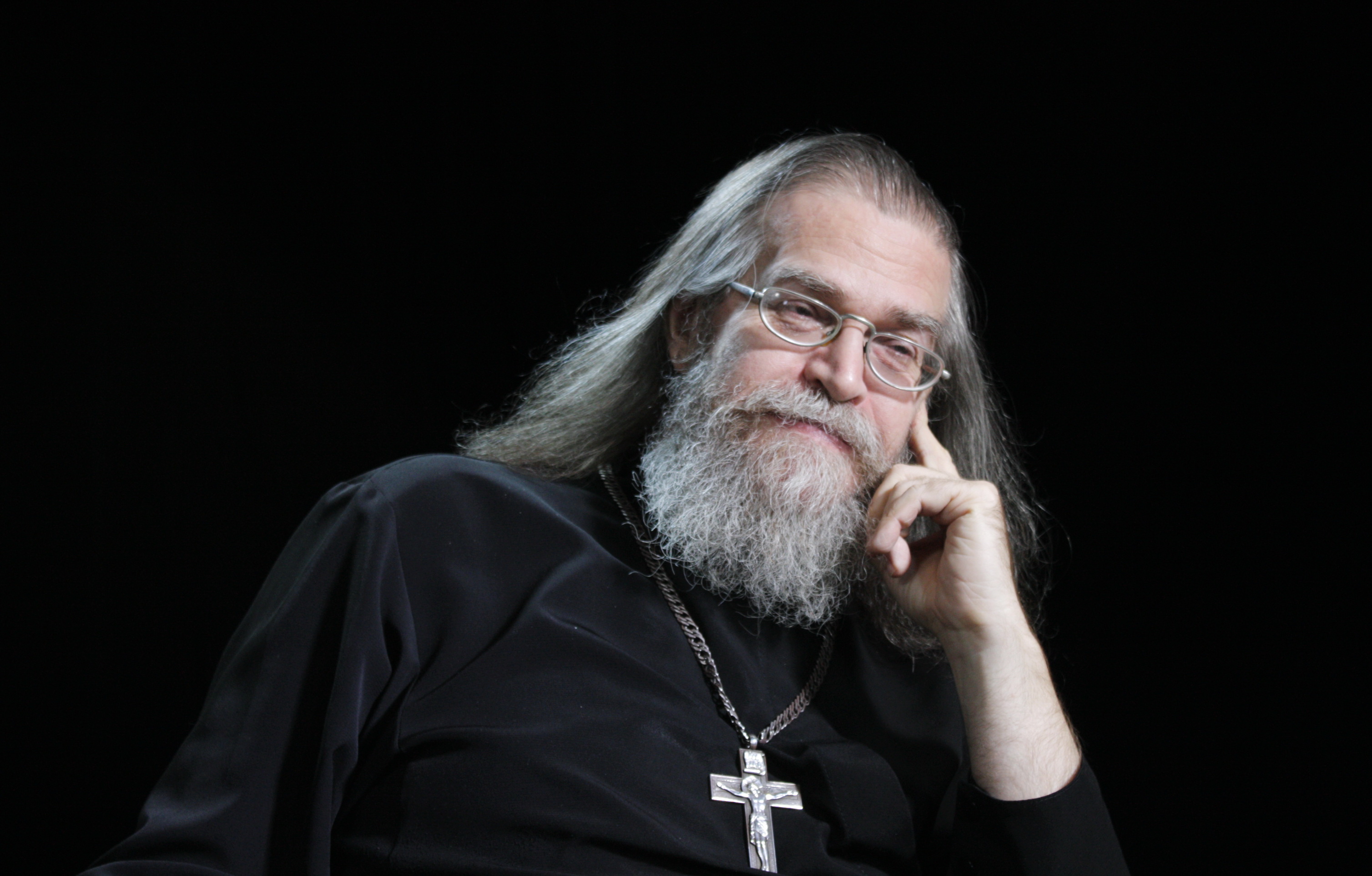

Yakov Krotov
Historian and priest, leading Radio Freedom Radio "Between Vera and Belief"
ykrotov@yahoo.com