
Translated material
To the liturgy - is we building?
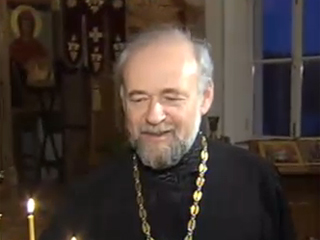
The Institute of Military Capellans exists in most large military powers, with the exception of North Korea, China and Russia. The clergy is present in the armies of all NATO countries and receives an officer salary. The prospects for the return of this institute to the Russian army on the air of the RS are analyzed by the St. Petersburg priest Archpriest Alexander Stepanov.
- How much is the Russian Orthodox Church organizationally ready for its new mission?
- There is a synodal department for interaction with the armed forces, with law enforcement agencies - it unites all this. Chairman - Archpriest Dmitry Smirnov in Moscow. In all large dioceses, in any case, in our St. Petersburg, there are departments for interaction with the armed forces. Accordingly, they will probably form a corps of these military chaplains. Today, such a decision is fundamentally made. But how will these mechanisms work, will priests be listed as employees in the army-the receipt of salaries from the military unit is provided, but will they serve in some other parishes not related to military units? For me, the question is not very clear, and, in my opinion, it is still open to everyone.
- Can you voluntarily go to a military priest?
- Quite. But I think that there will not be too many who want to go to serve in such a system. Still, this is a very specific, closed form of service, you are quite harshly “attributed” to a certain flock. Military towns, military units - they are often closed. It can be a temple in a military town where the families of military personnel live - then, of course, easier. And if in the territory of the unit, beyond the passage - respectively, the parish will be formed quite peculiar, only from military personnel, soldiers.
- This is a complex category of flocks, in your opinion?
It seems to me that in the conditions of the army this can be a little more "forced" flock

-There will be about the same in the military unit of practicing believers as in any other place-5-7 percent. It is understood that in the army it will be some kind of organized order: everyone will be built, they will be chopped down, we will be leading to the liturgy. I exaggerate, but, in general, some element of such an external coercion - or not coercion, but there will be something like that. This, it seems to me, will mainly create certain problems to the priest. When we just serve in the city, those who really feel the need come. Another question is what they know, understand how conscious their faith is - but in any case no one forced them to come, they come with a priori openness. It seems to me that in the conditions of the army this can a little more "forced" flock.
-The Ministry of Defense gives other figures: according to some polls, almost 80 or 85 percent of military personnel consider themselves believers ...
-Indeed, we probably have not 80 percent baptized-we have a significant number of Muslims-but a lot, I don’t know, 70, 60 percent of baptized people. Muslims believe in God, and all the others too. But just to believe that there is something above me is not at all the same as being a practicing Christian: to be regular in the temple, to confess, to participate in the sacraments, to pray, and so on. I called the share of those who really practice church life. This is probably 5-7 percent of the population today.
-For people who are potentially in more danger than everyone else who deal with weapons, who should defend their homeland with weapons in their hands, who, in general, should kill-for this they are given, including weapons-what should be the sermon?
- The sermon should always be a Christian preaching. Here, a feature will probably be that people who are in real danger are much more prone to religious experience. There is such a famous aphorism that "there are no unbelievers in the war." Where real military operations take place-but this is still a very insignificant part of our army-I think the demand for the military clergy will be significantly higher. How will we be adequate to those needs of people? The sermon will always be the same. There will always be a sermon about Christ, about His godmother, about death, about our salvation, about eternal life - what Christ preached, the apostles. She, in fact, does not change, and she is not situational.
- You will not forgive the sin of "kill"?
- There is no such sin that cannot be forgiven if a person is repented by himself. Murder is an unconditional sin, under any circumstances. Even when we protect our lives, when we protect loved ones, this is still a sin. In front of us, unfortunately, in this fallen world, life does not put the problem of choosing between good and evil, not between sin and righteousness, but, most often, between great sin and less sin. Indeed, there are many situations where in order to minimize sin, you have to kill. Say, protecting the civilian population, protecting their mothers, wives, children, and so on, a person goes to war and kills. But if he does not do this, then he leaves to the mercy of the fate of other people who are not able to protect themselves. This is a certain justification for the war. But still ontologically, the church never says that murder in war is righteousness. This is, of course, a sin.
- In general, do you personally support the idea of introducing military priests in the army?
“It's hard for me to say now.” I think it will probably not be so bad. Indeed, a lot is happening in the army. I do not even mean military conflicts - just this army is in a fairly unfolded state in peacetime. You can have some hopes that the priest’s presence will a little healing the situation a little, a little to improve the moral, moral climate. Maybe this is so. But I'm not sure that priests will be able to successfully cope with this in all cases.
-

Andrey Shary
I.O. Regional Director of Radio Free Europe/Radio Liberty for Russian -Sound Content
Andrey Shary on Facebook
Sharya@rferl.org