
Translated material
James Baldwin on the screen
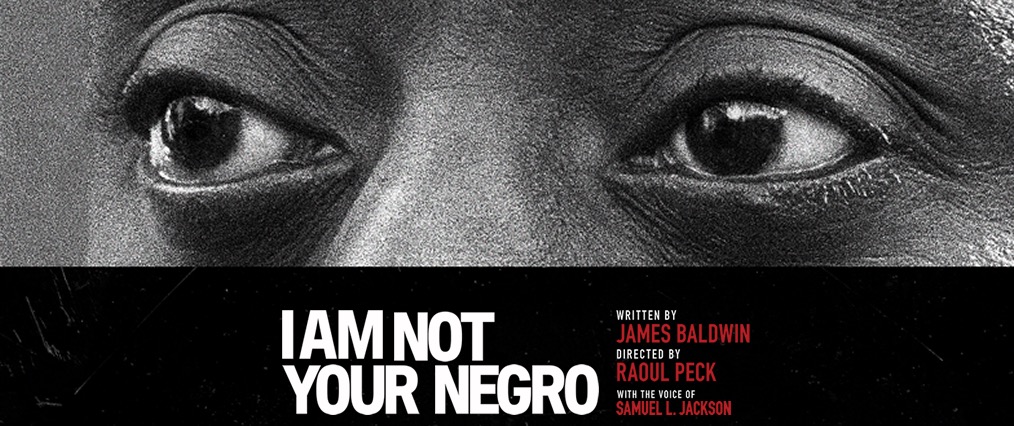
Alexander Genis: When the film critics of Ny Times decided to summarize very premature results and offered readers a list of the best films of the 21st century in their opinion, there was a picture that the host of our film vision Andrei Zagdansky was also about.
Andrei Zagdansky: "I am not your Negro" - the film of the American director of the Hatyr origin of Raul Pek - a picture that, as I risk predicting, will remain in the history of documentary cinema. This is a special movie. The film belongs to a rare and very difficult genre - a dog -item of essay, as, say, the famous film “Without the Sun” of Chris Marker. The director, in fact, made a film in collaboration with a big writer, who is no longer alive - James Baldwin. Baldwin died in France in 1987 and shortly before his death was going to write a book about the attitude of the whites and blacks in America. He wrote about 30 pages, did not finish the book and died. The notes remained and there were letters to the publisher. Many videos of Baldwin’s television performances in the 1960s are still left. Thus, in the picture there is not a single word that would not belong to the author himself - James Balduin, including fragments of the unfinished manuscript, which is read by Samuel L. Jackson, the famous black actor who starred in many wonderful films.
Alexander Genis: He is especially famous in Tarantino's films, of course.
Andrei Zadansky: It is especially important - in his last “disgusting eight”. There is James Baldwin himself on the screen. During his lifetime, he wrote a lot and talked a lot about America's racial problems. As the famous Tony Morrison said about him: he created the language in which we are talking about racial problems.
Alexander Genis: It is probably necessary to remind our listeners that James Baldwin is still famous for not this. James Baldwin is the largest American poet and prose writer. He even appeared on the postage brand. To introduce it exclusively in the form of a fighter for the rights of the black population of America is not entirely accurate. This is not to say that this was his main task in life, nothing like that.
He was a major poet, and his novel, which glorified him, was especially famous for the novel “Giovanni's Room”, in which there is not a single black character at all. This is a novel about the life of a young American in Paris, who falls in love with a girl, but does not know his sexual orientation and cannot understand what to do. This book is unusually bright, which glorified it. For a very long time in Russia, it was not printed due to a homosexual topic. In the end, she came out thanks to the efforts of Alexander Shatalov, whom I know well, in the publishing house "Verb." And her translator was Gennady Shmakov, whom I also knew well. He was a man of rare erudition, a big expert on ballet, a close friend of Brodsky, about whom he wrote a lot, and a wonderful translator.
In order to understand who Baldwin is, you need to read this book. Most of all, it reminds me of the literature of the Betniks, because it belonged to the same generation. I will read the beginning - the first paragraph in order to make it clear what style Baldwin created: “But, unfortunately, people are not allowed to choose these Verigs for themselves. (We are talking about marriage, by the way - AG). Lovers and friends also do not choose, like parents, life itself gives us and herself selects them from us. It is very difficult to say yes “yes” in time.
This phrase “Say life“ yes ”has become very famous, it entered the American vocabulary, as a life -affirming thesis. Baldwin lived a very difficult, very dangerous life, he drank a lot, but he remained in American literature forever. This must be remembered before talking about his merits as a fighter for human rights.
Andrei Zadansky: In this case, I do not insist that this is his main role. Most likely he simply returned to this racial confrontation at the end of his life. He was friends with very many famous figures of Black America, he was friends with Martin Luther King, he was friends with Malcolm Iks. But one and the other did not consider him a person who belongs to the movement - this is a very important and interesting detail.
Alexander Genis: This reminds me of the situation “Pushkin and the Decembrists”.
Andrey Zadansky: Something like that. But at the end of his life, Baldwin wants to figure out and dot I in this fundamental issue - the confrontation of white and black America. The film begins with the phrase of Baldwin: “I am not a racist,” James Baldwin says about himself, “or, in any case, I think about myself.” This is an extremely important addition that actually turns an ordinary phrase into an acute philosophical statement - "so I think." Because the author immediately makes it clear that we are not able to analyze, re -reflect our darkest sides. And racism, undoubtedly, is the dark side that is to one degree or another in each of us.
Alexander Genis: And not only the whites, but also in blacks. After all, James Baldwin had a very strange relationship with his father, or rather, with a stepfather. He was afraid and generally hated the whites. When James Baldwin was a boy, one day a Belaya teacher came to their home to lead the boy to the theater.
Andrei Zadansky: Which had a fundamental influence in the life of the boy.
Alexander Genis: But the father wanted to drive her out of the house, because there was nothing to do with the white black boy.
Andrei Zadansky: So, returning to the initial phrase: "So, in any case, I think of myself." Baldwin immediately sets a different level of exposure in its discussions about racial problems. A few months ago, when Trump’s supporters could still be seriously talking, one of his supporters said, more precisely, wrote: “There is no racism in Trump.” I laughed. Here you can’t vouch for yourself, but how can this be said about a person whom you personally did not know. Absolute phrase.
Baldwin has a completely special intonation. Remember, we recently talked about the film “Moonlight”, where the main character is a boy, silent, vulnerable, embarrassed, tormented with his, as he guesses, homosexuality. Imagine, an unexpected turn: this boy grew up and became a poet, he became a writer, he speaks with force and intensity, which are adequate to his childish timidity, his childish vulnerability, his childhood fear. He overcame this, he learned to speak. This is very similar to Baldwin, which was also homosexual, and in the 1960s, American society was much less tolerant of this weakness.
Alexander Genis: Not only American is an universal phenomenon. It is now we have become liberals, then it was sometimes illegal.
Andrei Zagdansky: Baldwin no coincidence went to live in France, which was more tolerant in this matter. This brittle fragile voice of the teenager, so say, says a teenager cured of stuttering in the film “Mirror”, infects the whole picture and determines the essence of the film. Samuel Jackson reads and reads remarkably, his voice is accompanied by an extensive chronic material of the 1960s, here is the murder of X, Martin Luther King, a fight in villages, much more bitter and terrible in the history of racial conflict. But it is the intonation of Baldwin that dominates the film.
“I cannot be a pessimist,” says Baldwin, “because I am alive.”
And this phrase will resonate for a long time in your ears. She was uttered very slowly with such strange logical intonations not of an actor, but a person who only now thought and only now said: you are present at the birth of simple poetic thought.
Alexander Genis: The phrase, of course, is eternal: dum spiro spero, "while I breathe, I hope."
Andrei Zagdansky: “I can say,” Baldwin continues, “that the future of blacks in this country is exactly the same bright and bright or exactly the same dark as the future of this country. This is the problem of black, but it is a problem and white. И белые люди должны ответить себе в своем сердце, почему им нужен ниггер. Я не ниггер, - говорит он, - я человек. Но если вы думаете, что я ниггер, значит это вам необходимо». And with this phrase you will leave the film.
Alexander Genis: The fact is that you need to be aware of how scary it sounds from the screen today. This is a very insulting word that is not printed in newspapers.
Andrei Zadansky: Most importantly, he claims that if you say that, then you need it. And this is a fundamental definition of racism, this is a definition of fascism, if you like. If you think that I am below you, if you think that my life is less than yours, then you need it. And this is a fundamental statement of Baldwin.
Alexander Genis: It reminds me of the famous words of the southerly Faulkner, who knew something about racial relations. He talked about the poor poor white farmers of the south: let me be drunk, let my wife leave me, let the children be afraid of me, let me have no work, let me be a poverty, but I'm white, and they are black. This is the basis of racism. This was said by Faulkner, who understood what a civil war was, understood what black and white America was.
Andrei Zagdansky: This film makes a very strong impression, I return again to Baldwin's voice, because he has a unique author’s, writer, personal, suffered intonation, which determines the tonality of the film. As a matter of fact, I did not see the film, but heard and touched the world of the author, which is so naked and so fundamentally speaks of these things. He came up with the language in which we are talking about racial problems. I watched the film in the cinema, then, when I went out, I saw an impromptu red corner in the lobby, as we would say at one time, where the audience was invited to pin our postcard or my sheet with the opinion about the film.
Alexander Genis: So they collected comments immediately after the exit?
Andrei Zadansky: I was surprised to see that this film was most reviews, most of all papers were pinned to this film. I came closer, and each assessed the "five plus."
Alexander Genis: I would say that you are not mistaken in our tolerance, the fact is that, firstly, only those who definitely do not consider themselves racists went to this film. Secondly, only those who do not consider themselves racists and left these pieces of paper, the rest were silent, or stayed at home.
Andrey Zadansky: You are right. Nevertheless, this is the manifestation of my attitude. I photographed one of them and I want to translate: “James Baldwin is my hero in his purity, wisdom, eloquence and honesty. His film remarkably conveys this strong message to the world. ” Five plus.
Alexander Genis: James Baldwin was a man of his era, this is the 1960s, years of the intense struggle for the rights of national minorities in America, this is a very sharp battle that we did not find. Gradually, they subsided and seemed to have gone from the surface of American life after the President of the Afro-American was sitting in the White House for 8 years. How does this film sound in today's America?
Andrei Zadansky: Indeed, eight years ago it seemed to us that the racial confrontation disappeared.
Alexander Genis: If Belaya America voted for the Black President, then what can be racism - so I reasoned eight years ago. And I was mistaken.
Andrei Zadansky: We were both mistaken, I thought so too. Now we perfectly understand that for eight years, these underlying dark forces that have been present in each extent to some extent have been released. Therefore, the picture seems to be about history, because we are talking about the 1960s-the very beginning of the 1970s, but it has new relevance today.