
Translated material
The myth of Elvis Presley
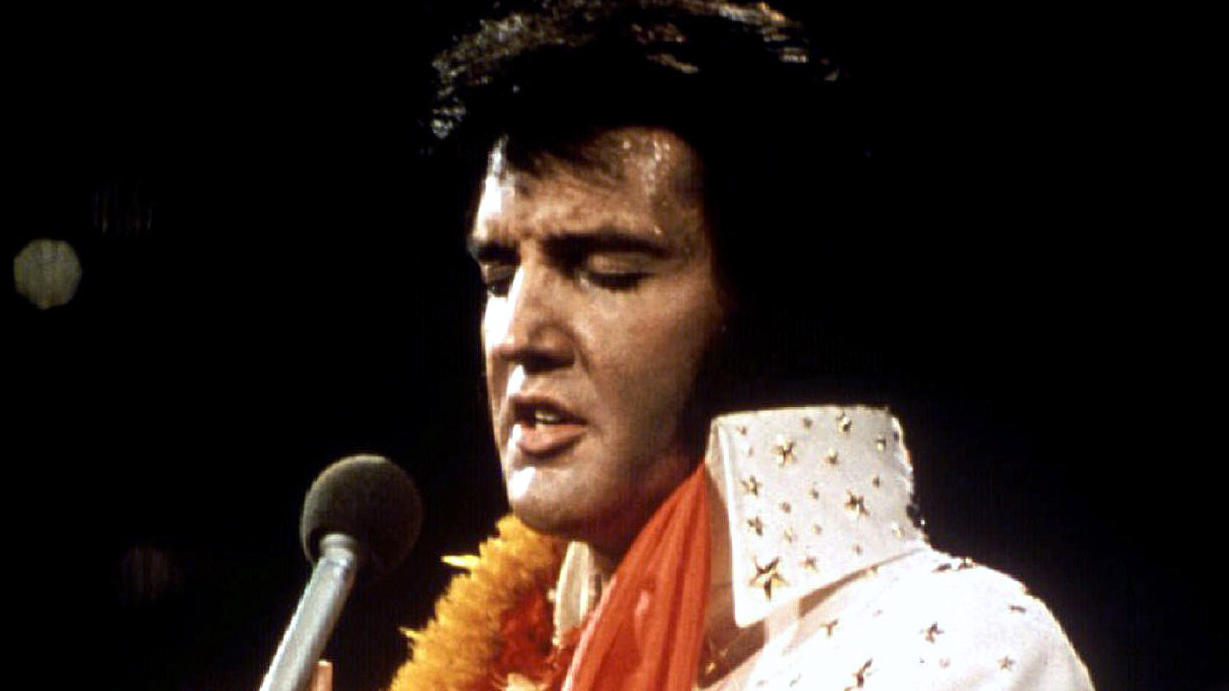
Alexander Genis: In today's issue, the host of this section, Marina Efimova, will tell about the myth of Eliva Presley-due to the forty anniversary of the death of the first rock star.
Marina Efimova: The 40th anniversary of the death of the American singer Elvis Presley, who in the 1950s and 70s was an idol of pop music lovers, the rich and the owner of the legendary estate of Graisland. He died young, but even 40 years after his untimely death, Presley remains one of the most popular American singers and, as the biographer writes, “one of the four richest deceased celebrities in America” (only singer Michael Jackson and cartoonist Charles Schulz). Presley's songs are still sold in huge quantities, his Graisland is still visited by fans from around the world, and thousands of audiences are gathering concerts dedicated to him. During the lifetime, the idol of millions of pop music lovers, Elvis Presley after death became a legend, even a myth. Amazing reviews are given by American publicist Yon Micham in the article "Elvis in the heart of America", published in Ny Review of Books:
Announcer: “Leonard Burnstein, the famous American composer, the author of Westsaid History and the long-term conductor NY of the Symphony Orchestra, once said to the Taima correspondent:“ Elvis Pralesley-the greatest cultural force in the 20th century. ”“ And Picasso? ”The journalist asked.“ No. Elvis. - insisted by Bernstein. - He gave the whole rhythm. He changed not only music, but his tongue, fashion, inspired the social revolution. The sixties began with him. "
John Lennon, one of the founders of the legendary British group, Bitles - said: "There was nothing before Presley!" (At the same time, we recall that Elvis Presley hated Beatles and once brought to them to President Nixon, saying that the group “destroys American values”).
The famous Bard Bob Dylan said: "Listen to Presley for the first time - how to break out of prison."
Tim McGrow's music star Tim McGrow determined the effect made by Elvis Presley to his generation: "The shock was like an earthquake. He changed not only music, but social norms. We saw each other with new eyes."
Marina Efimova: We add that it was Prolesley who began the fashion, which later received the name "reality show", that is, the publication of his professional and personal life, including life in the pompous interiors of the Graisland estate. He was the first to inspire fans and fans for an imaginary life, if not together, then next to him. “To Princess Diana,” writes Micham, “to Michael Jackson, to Trump, was Elvis Presley.”
All experts and authorities describe the phenomenon of Elvis Presley as the beginning of something new-both in music and in society, but we note that at the same time it was the last chord of an entire era, mixed by whirlwinds of the 60s. Isn't that the secret of cosmic take -off and bitter fading of the singer. We read in the article "Elvis in the heart of America":
“The legend of Presley is so mysterious durable to a large extent because it reflects the dynamics of the entire American culture of its time (and even the time of the next generation). His path is a fantastic take -off and slow, sad sliding down, into the hopelessness of stress, drugs and obesity; immersion in the apparent saving of total conservatism (with the theories of a communist conspiracy and destructive conspiracy and destructive conspiracy and destructive conspiracy counter-cultures); in fundamental problems: races, mass culture, sexuality, control of weapons, in the problem of the growing resentment of American workers-the class from which he himself came out. Get down in the feverish decade of the 70s in 1977. "
Marina Efimova: Elvis Presley grew up in the musical city of Memphis, standing on the watershed of two musical cultures, between Nashville (Tennessee)-the capital of the "white" music of the country and the Delta Mississippi, "in the biographer, the melodies of the African-American blues. There was another specificity of childhood:
Announcer: “Elvis was (together with his mother) a member of the Assembly of the Lord - denomination, who focused on personal religious experience. Music and singing were the main components of the church service, inspired by religious ecstasy. It was an exalted, emotional, public form of faith. Each parishioner was Show Man - even before his congregation.”
Marina Efimova: All this musical (and plastic) diversity of the south entered the flesh and blood of Elvis, drain into one, natural form of execution of elements that seemed completely incompatible for him. After two studio records made in Memphis with a perspicacious musical producer Sam Phillips, the young Elvis hit the concert stage of the overtone of the park in Memphis. The historian of the American South Joule Williamson described this first performance by Presley:
Диктор: "Элвис выбрал две песни: That's All Right – блюз, написанный музыкантом афроамериканцем Артуром КрАдапом; и "Голубую луну Кентукки", написанную Биллом Монро, белым музыкантом направления "Bluegrass". И обе песни Элвис сделал своими – абсолютно и бесспорно. Используя Богом данный голос – богатый и гибкий (from the baritone to Tenor), he gave these songs a new turn - both the sound and emotional song. Women's half ".
Marina Efimova: His performance was often sexy to vulgarity, and this insulted some, mixed others. He received the nickname "Elvis-Pelvis"-for believing hips. The FBI agent indignantly reported that his performance is "sexual satisfaction right on the stage." But the bad taste did not prevent the young singer from being sincerely tender, sincerely religious and musically flawless. The producer Fillips, who had opened Presley, understood that "a white singer who would be able to adapt the music of the south, the music of African Americans and Hill Billis, without copying it, but transforming it into his own way," will be able to infect millions of white Americans with it. Elvis Presley became them. Micham writes:
“ONECTION: “ One part of the audience succumbed to his sexy, others could not resist his fulfillment of psalms, the third legs themselves dancing with the sounds of his “prison rock” or the song “Blue suede shoes.” Fourth infected him with sentimental, but sincere patriotism (everyone honestly served in the army). And the southerners were familiar with the southerners of listening to the army. With the same pleasure, both the “Kabatsky” songs, when Presley began to act in the cinema, the comedian of Jackie Glizon called him “Marlon Brando with a guitar”. Men wanted to be him. "
Marina Efimova: The historian David Halbertam in the book “The Pentecks” interestingly determined the secret of the success of Presley: “A considerable effect,” he wrote, “made the singer’s appearance-a sultry, a little incomprehensible, rebellious without leaving the house. Presley was excellent as an idol of the 50s, because his riot was safe.”
I can’t help but say why I love Elvis Presley: for his love songs. They are very different: in some, for example, it's Now or Never ("now or never") a sweet Italian temptation sounds; In others - sincere, almost helpless tenderness - Love Me Tender, Love Me True and, of course, in his masterpiece Are You Luneesome Tonight? Do you Miss Me Tonight? (By the way, here it was not without the invasion of bad taste. In the middle of the song, he begins to speak with a sensitive recitative, and you tolerate and mentally ask: for the sake of God, binge, finally). There are lovely songs with a mixture of timbres and rhythms - Donat Be Cruel ("Don’t be cruel"), or with intermittent roulars (as if he lacking breath) in the "Hotel of Broken Hearts". ("Vocal Sail" called him someone). When I listen to Presley, I repeat to myself: "King! And, however, the king." After all, this title was not given fans, but musicians, and they do not appropriate the titles in vain. In the charm of his voice there is a mystery that even critics could not explain. We read on Wikipedia:
Announcer: “There are voices stronger,” the critic Dave Marsh wrote, “but in his voice there is something that other singers are looking for all their lives. Heartly warmth, maybe ... Sometimes his song is a pure, naked languor.”
Marina Efimova: Why did Elvis Presley die at 42 at the peak of fame? The medical reason is the arrest of the heart from an overdose of opium drugs (his doctor prescribed him only 8805 tablets). But stress and depression - after all, only consequences. Many believe that he could not stand the test of glory (someone, paraphrasing the well-known saying, wrote: "Absolute glory corrupt absolutely"). Other biographers provide the details of Presley’s political activity, rather confused, but passionate. Once he even met with President Nixon and presented him with a plan for the struggle against communist propaganda and the rebellious spirit of youth. At the same time, he was a passionate supporter of racial equality. No articulated propaganda did more than his sad song "in the ghetto". Micham writes in the article "Elvis in the heart of America":
Announcer: "Like most Americans from the time of the Vietnamese War and Watergate, he rushed between patriotism and internationalism, between nostalgia for Old America and shame for its imperfection. His painful contradictions were a reflection of conflicts that torn the whole country. And he could not withstand them."
Marina Efimova: After the death of Presley, for many fans became a quasilander figure - a redeemer. Psychologist Richard Maddox told the biographer of Presley: “Among his fans there is a faith that it was his role - the role of a sinner who took the guilt of the whole generation. This is his difference from other celebrities. The whole world loves and remembers the singer Frank Sinatra, but the crowds do not make pilgrimage to Hoboken, and at Graisland.”
In a word, Elvis Presley remains a mystery. And not only musical.