
Translated material
Judge "Holy of the Pope"
Probably, judicial practice prompted him to this. Despite the clarification of the Plenum of the Supreme Court that a slight violation of the regime convicts during the serving of the sentence cannot influence his parole, everything is just the opposite.
Not even those who had no penalties are provided. I consider such a proposal to the Ministry of Justice as absolutely true and logical. Introducing the increase in the sentences of punishment for (especially serious) crimes, the legislator simultaneously prescribed the deadlines for UDO from the punishment and granted the right to apply to the court of UDO directly the convicted person. According to the logic of the law, indeed, the court should be approached quite formally to the decision on parole.
I checked the verdict when the benefits (UDO) should be provided in accordance with the severity of the crime, where he would live and work conditionally freed, and make court decisions on UDO.
The fact that the court is not guided by the law, I do not judge abstractly, but on an actual basis, for the last two years certainly. If the Ministry of Justice’s bill is passing on the UDO, then the court will have less opportunity to make its amazing decisions with refusal to UDO.
In this regard, I can’t help but share my thoughts on how to make the judicial practice (court) approach the state that is prescribed by the Constitution of the Russian Federation and federal laws. I am talking about the fact that our court should be competitive and it is not a criminal prosecution body, as a party in the process.
In simple language, there are two arguing sides: the accusation and defense, and the court,
Having weighed the arguments of the parties, it makes his decision on the subject of the dispute. According to simple logic, it follows if the parties do not argue, and this does not contradict the law, the court makes a decision that coincides with what the parties argue about. You say it is obvious. If there is no dispute, then the court has no work. But no, in practice - a lot of reverse examples.Our court should be competitive and it is not a party in the process

I do not cease to be surprised at the next fact that is very common. In the Code of Criminal Procedure in Art. 246 (the participation of the prosecutor) clearly prescribes the powers of the prosecutor, whose role is played by one or more prosecutors. Clause 5 of the articles, in particular, says:
"The state prosecutor submits evidence and participates in their investigation, sets out its opinion on the merits of the prosecution, as well as on other issues arising during the trial, shows the court proposals on the application of the criminal law and imposing a punishment."
It would seem that it is written more clear. What do we have in practice? I met as many cases when the prosecutor requests one period, and the judge gives more (!). The judge turns out to be "holy pope." A typical example: defendant Sh. Is accused under Art. 111, part 4, the prosecutor requests a sentence of 5 years 6 months (at least 5 years under the article), the defense, of course, asks to take into account that there were unlawful actions of the victim and limit himself to a punishment that was not related to deprivation of liberty, the relatives of the victim have no complaints to the defendant (the victim himself died due to untimely medical care, the ambulance arrived 6 hours after 6 hours after "call").
Guess from 3 times, how long did the judge appoint? You can fight about the laying - you will not guess. 9 years of strict regime. Obviously, the judge went beyond the charges, because The sentence of the punishment requested by the prosecutor is part of the prosecution, as well as the criminal legal qualification of the act.
Due to the fact that the law does not clearly say that the term of punishment cannot go beyond the limits of the period requested by the prosecutors, the judicial "creativity" begins. Obviously, in this case, when the court makes a decision beyond the scope of the parties, it ceases to be competitive, becomes a party in the process (de facto) and again de facto becomes the criminal prosecution body. In the case of Sh. The judge sentenced, even exceeding the minimum under article 105 h. 1 (6 years), i.e., in fact, he re -qualified the act to a heavier article.
The second vivid case: the convict K. filed an application with the court, the colony administration supportso, and the judge refuses. There is no dispute between the parties. What is guided by the judge when making such a decision?
And, finally, the case from judicial practice with the convict F. The defense asks to announce the document completely before the jury, the charges (prosecutors) do not mind, and the judge refuses. How is this possible with an adversarial process, and even in court with jurors? The judge, perhaps, is clear, as in the popular phrase “everything is clear to the court,” but the jury, and not a presiding judge, must judge.
In a television show - a fairy tale, it seems, “federal judge”, in a random plot that caught my eye, a gray -haired elderly judge in a black mantle, cringed with a wooden hammer on the table and declares “14 years of strict regime” throughout the country. And this is at a time when the prosecutor requested 12 years.
Since the elderly judge is a pupil of the Soviet judicial school, which was at that time inquisition, i.e. The court himself investigated everything and he himself found out the truth, was certainly a criminal body
Senior Judge is a pupil of the Soviet judicial school, which was an inquisitionPursuit and fought crime, along with the prosecutor’s office, so because of the age of the judge this can be understood, but this is nothing more than a relapse of the last judicial system.
If this judge always judges so, then this may be the basis for the termination of his authority. The placement of judicial processes on the Internet will put the work of judges under public control and simplify the collection of actual materials about the quality of the work of each particular judge. Further through the judicial qualification commission, the issue of further work of the judge can be fairly and reasonably resolved.
So, I propose to specialists, in particular, to Pavel Krashenennikov - the chairman of the State Duma Committee on Civil, Arbitration and Procedural Legislation, in the relevant articles of the Code of Criminal Procedure of the Russian Federation to make appropriate changes that establish the limits of the court decision in relation to the positions of the parties in the process, for example, this was done in case of the prosecutor’s support of the prosecution.
The judge in this case, regardless of his own position and conviction of the rightness of such a decision, is obliged to decide
Bringing to the point of absurdity: the prosecutor requests 1 day, and the judge appoints 3.5 yearsAvoidable sentence. So, if in this case the judge cannot go beyond the punishment of the accused even on 1 (!) Day ("0" and in Africa "0"), then why is the judge so free in a longer sentence than the prosecutor when he requests not "0", but, say, 5 years?
Bringing to the point of absurdity, it is logical to present the situation where the prosecutor requests 1 day, and the judge appoints 3.5 years of strict regime. What to do if quite obvious things require a completely direct indication in the law! And you need to make this indication.
***
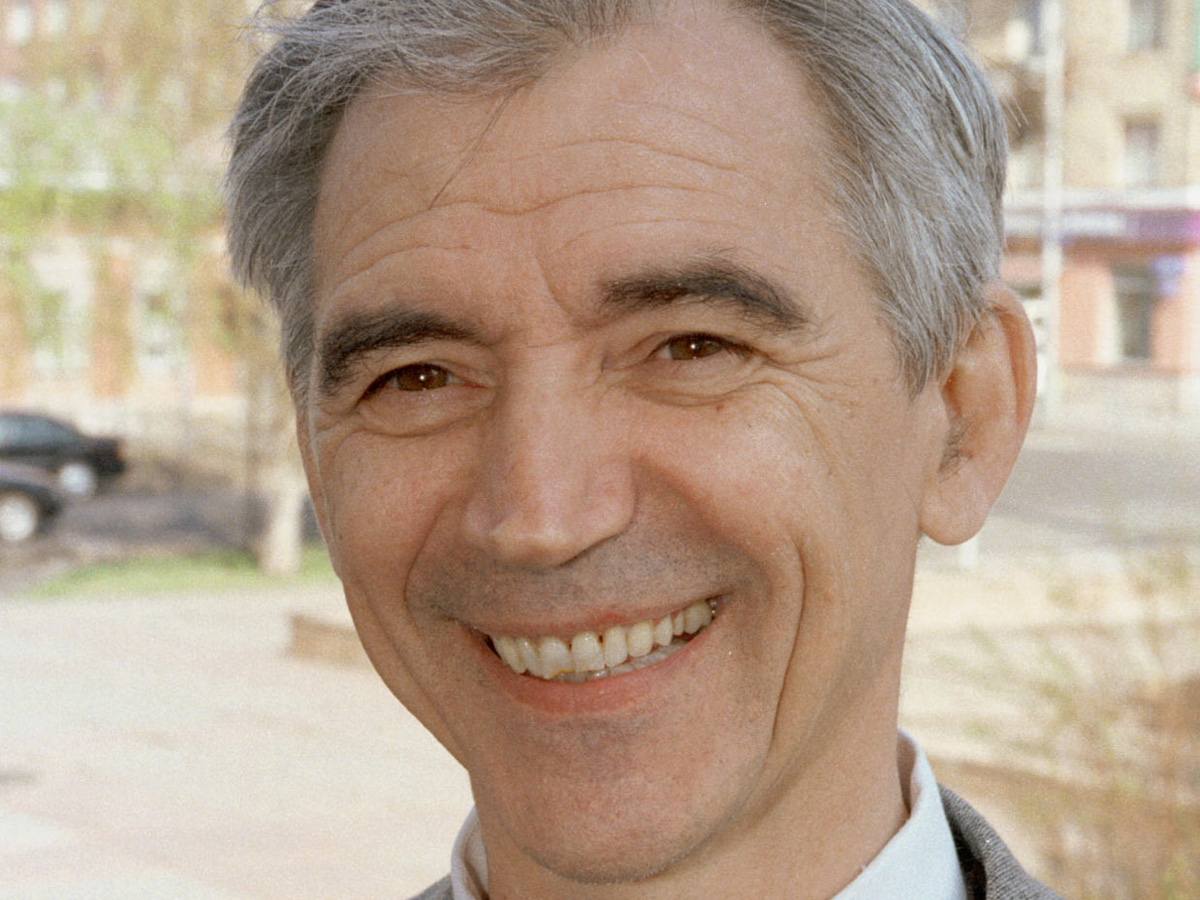
Valentin Danilov is a scientist, physicist, former director of the thermophysical center in Krasnoyarsk. In 2001, he was arrested on suspicion of disclosing GOSTaina, for which he was sentenced in 2004 to 14 years in a maximum security colony. Danilov’s case was one of the most high -profile processes over scientists and, as human rights activists believe, with serious violations of the procedural Code. Famous Russian academicians, including the Nobel laureate, Vitaly Ginzburg called for the justification of Valentin Danilov. At the request of Radio Liberty, Valentin Danilov agreed to conduct a blog on Radio Liberty. A RS correspondent is associated with a scientist by mail.