
Translated material
The park of the Soviet period
What does Dau talk about?
- The megaproject of Ilya Khrzhanovsky “Dau”, shown at the beginning of the year in Paris, became one of the main art events of recent times.
- 700 hours the video was shot for three years in a gigantic reconstruction of the Soviet city, hundreds of actors and statists lived in the pavilion for years.
- “Dau” is an innovative movie in which you can find many meanings, one of which: how to be internally free in the conditions of lack of freedom.
Sergey Medvedev: Today I want to perform in the traditional Soviet genre - "Pasternaka has not read, but I want to speak out." I have not seen the film "Dau", but at least I want to listen to the people who saw him. 700 hours video shot for three years mounted in several films, a giant total installation in Paris to watch this film ... All this filled media, screens and rumors. What is it - a hype around the fashionable director for the money of an oligarch or a new type of art, Gesamtkunstwerk of the 21st century?
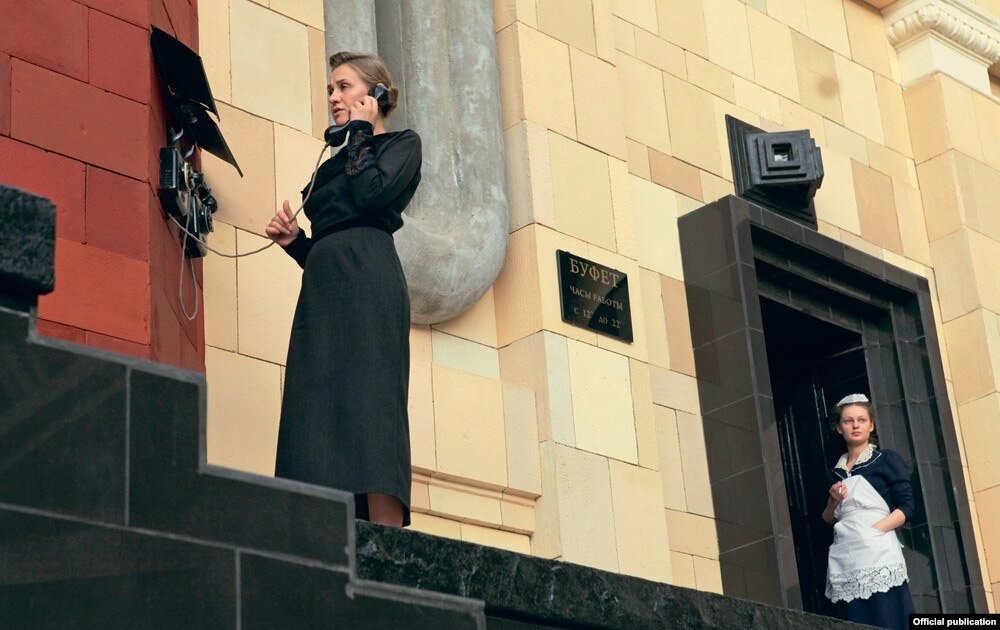
Correspondent: Ten years ago, Ilya Khrzhanovsky decided to make a biographical film about outstanding physics, Nobel laureate Lev Landau. Several years of filming changed the idea and turned it into an unexpected project, which is already distinctly related to the life of a famous physicist. The 700-hour project of Ilya Khrzhanovsky is called the largest artistic utopia of the 21st century. This is at the same time a feature film, and documentary, and the reality of the show on the set, in the so -called "Institute", - a huge sizes of the scenery built on the site of the Kharkov Dynamo basin on the model of the capital's institution of physical problems, where Landau worked under the leadership of Peter Kapitsa. Famous guests, artists, actors who accepted the conditions of the experiment changed clothes and remained there to live there, plunging into the Soviet life at the aim of dozens of television cameras. The film includes very cruel non -ostal intimate scenes uncensored.
This project was originally conceived to blur the boundaries between art and reality - one of the key topics of contemporary art. The world premiere of the DAU project took place in Paris - in the theaters of "Chatele" and "de la Vill". It was a show with installations, films, performances that reproduced Soviet life in detail. It was not easy to get to the show. For the audience, no tickets are provided, but visas: for six hours, for a day or unlimited action. Everyone himself chooses how many hours or days he is ready to plunge into the world created by Ilya Khrzhanovsky.
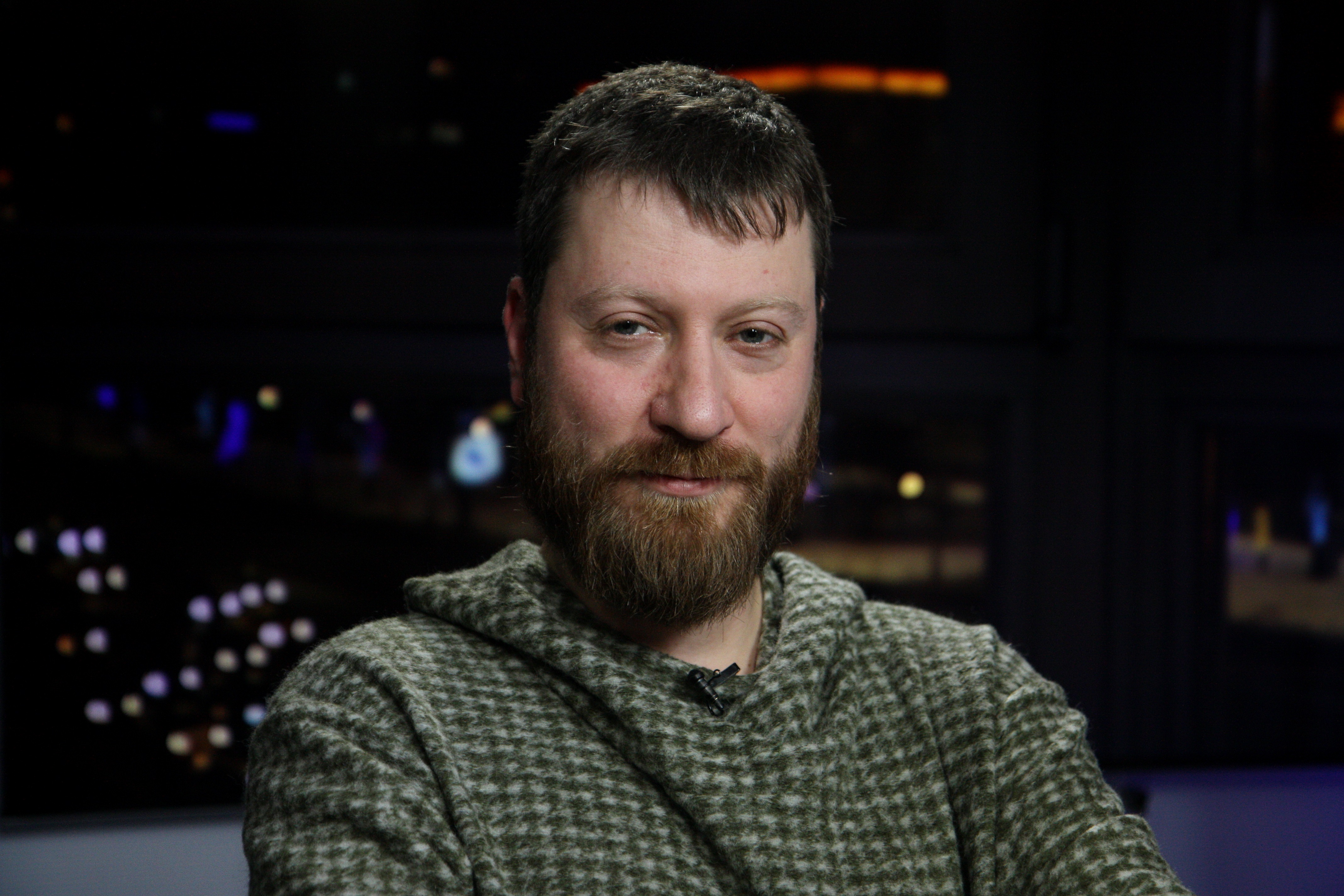
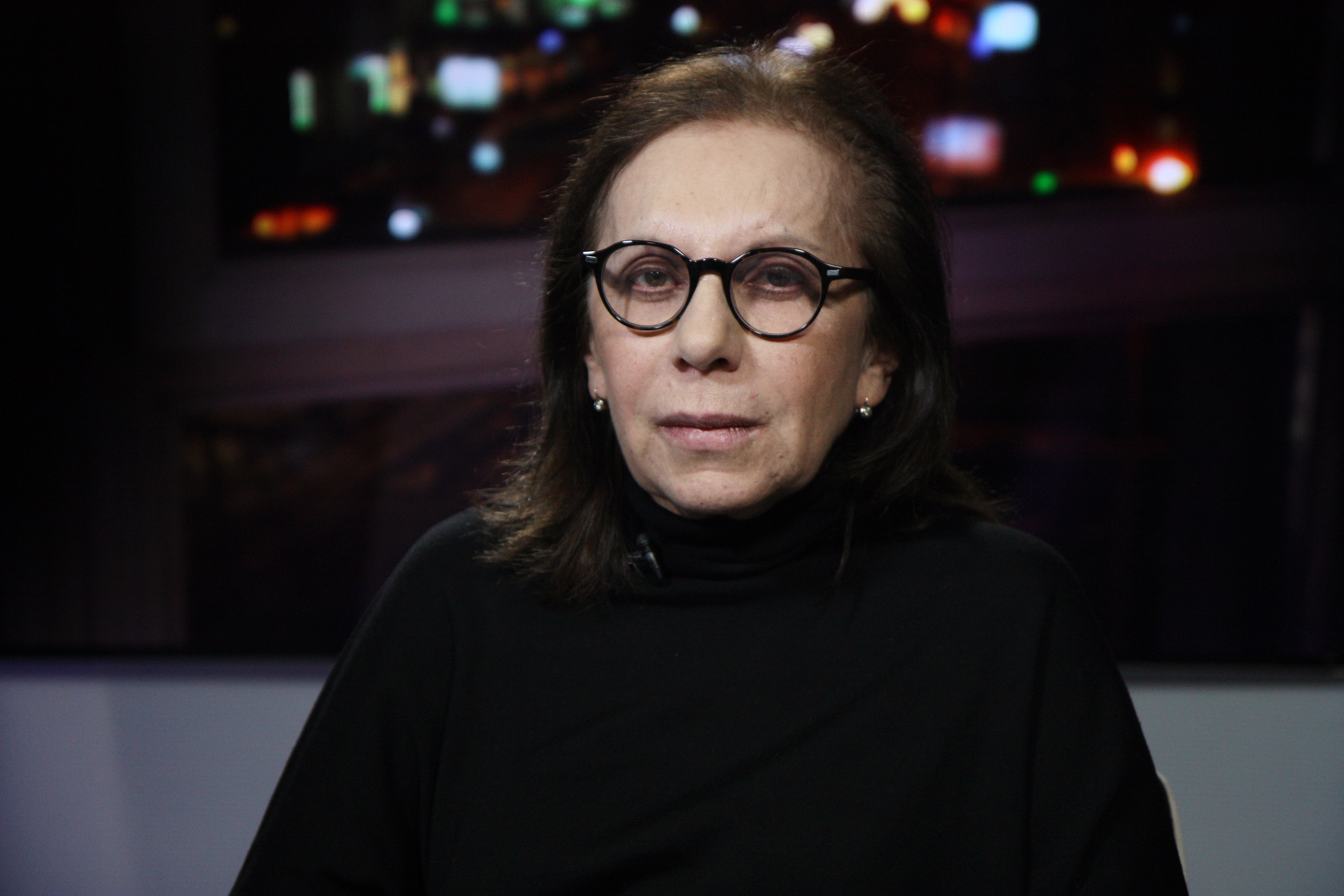
Sergey Medvedev: In our studio, Konstantin Milchin , editor -in -chief of the Gorky. Media portal , and Zara Abdullaev , Kinocritic, deputy chief editor of the magazine "The Art of Cinema" .
Can you determine the genre of all this?
Zara Abdullaeva: This is an inter -armed genre. Everyone believes that this is not a film, and this is fine! This is something new - therefore not a film. But I claim that this is a film, just different. And this is no reality show. The operator and other people were not shy at all (there is one professional actress, and the other unprofessional ones). They are so accustomed to the camera that this reality show cannot be called, that is, peeping. No peeping, everything is as it is! And this is one of the paradoxes of this picture.
Sergey Medvedev: They lived, as if there was no this camera?
Zara Abdullaeva: Yes! We wrote questions to the operator for the "art of cinema", and he replied: "Yes, as if it had not been." There were also people who could not stand this special situation.
Sergey Medvedev: It would be difficult for me to agree to this: to completely turn off my life for three years, to actually go to the monastery.
Everyone believes that this is not a film, and this is fine! This is something new - therefore not a movie
Zara Abdullaeva: There were those people who not only withstand, but, probably, for something they needed it. Some physicists, lyrics and other very real characters found wives there.
Sergey Medvedev: There, in my opinion, 14 children were born as part of the project.
Zara Abdullaeva: Yes, there was a full life there.
Sergey Medvedev: Konstantin, what is this an experiment?
Konstantin Milchin: There is a word that means nothing, but explains everything - "project". But each of the films included in this project is very cool and talented. This is a cool movie.
Sergey Medvedev: And if you show people one of these films, and they will not know that there was Kharkov, that there was an “institute”, that Krentzis played, that Castelculi came, that the whole city was annoyed ... just show a movie as a movie - it can withstand this test?
Konstantin Milchin: 20-30 percent of Russians (these are Parisian Russians), most likely, they understood very little. In a monotonous voice, a rather axial translation in English, in German ... I can hardly imagine what a person can understand there. The Russians, and the French had a different manner of looking. We came and watched every film from beginning to end, perceiving it as a movie. And at some point you understand that only Russians are sitting in the hall. And the French came, watched for about 15-20 minutes and left: for them it was rather a video art that did not require a complete viewing of the entire video.
Sergey Medvedev: Have you expected the plot, narrative?
Zara Abdullaeva: There is a narrative.
Sergey Medvedev: What kept you to the end?
Konstantin Milchin: I knew quite little about the project, I thought that it was rather the format of some short videos, video installations. Since I am a book critic, the plot, story is always important to me. And in every film I saw this story. Of course, I was impressed in many ways with the help of a quasi -cinema (this was shot according to some rules as a documentary than a feature movie) every time a consistent, very strong plot is built.
Sergey Medvedev: From himself, from the inside, from the visuality that is created in the framework of this space? Or is it a plot conceived by Khrzhanovsky, directors?
Konstantin Milchin: I think this is a plot, to some extent conceived by Khrzhanovsky. And from this, of course, it becomes completely terrible, because people are dehumanized to the level of some animals: as in the zoo they put in a cage of monkeys of different breeds, and they begin to mate ... and some new, strange and terrible art is born from the nightmares of this idea.
Sergey Medvedev: How is this then different from the show "behind the glass"? The same thing-people come, and at some point they stop noticing the cameras on the project.
Zara Abdullaeva: No, this is another. The paradox of this project lies in the fact that terrible with the beautiful is combined there in whimsical combinations.
Of course, all 13 films are perfectly mounted. There are plots, there are their heroes. They are through, but each is given a separate story, so you can perceive each film quite calmly. But Khrzhanovsky also made a 14th film in which all heroes exist in perpendicular installation. And now I liked the digest of 13 films much less, because it is very understandable. If a person did not watch separate films, but watched the 14th film, then he will supposedly be clear to him. But I am scary, because the innovation and strangeness of each of these films ... Each film is not a normal product, it is something else: all the time it violates the boundaries of your usual cultural or cultivated perception.
And the 14th film ... who does not have time, he can only watch him. I saw him and was upset because others said: "Oh, well, okay, then you can not look at the other 13." This can already be rolled at festivals, it is a completely intelligible and normal sight. But I am against such a concession to the audience, because in other cases you are in a completely new space for yourself. Before that, I also have not read anything and are not interested in the backdrop: it only interferes ...
Sergey Medvedev: But it seems to me that this is what was mainly discussed - ethics of filming the film: but they took out people from life, but they killed a pig, but Tesac ...
Zara Abdullaeva: Yes, they didn’t seem to be killed, but even if they were killed ...
Konstantin Milchin: quite a few pigs are killed daily, and no one remembers them.
Zara Abdullaeva: Not to mention people.
Sergey Medvedev: I am interested in the context - how important is it? Why were all these supports needed? They wanted to build a bridge in Paris between two theaters ...
Zara Abdullaeva: To make it more convenient.
Sergey Medvedev: They wanted to arrange a premiere in Berlin, make a layout of walls, destroy the layout of the wall ... Is that all?
Konstantin Milchin: This is a PR that they do very high quality. This is a way to declare yourself, but at the same time very organically fit into the essence of the project.
Zara Abdullaeva: PR, by the way, is terrible.
Sergey Medvedev: Maybe this was generally created by the Soviet period?
Konstantin Milchin: Of course!
Sergey Medvedev: Is this such an ethnic, ethnography? Here in Berlin, in London, foreigners will go to this Disneyland ...
Konstantin Milchin: Of course. But in any quality project, you can find something of your own for yourself. When we come to any movie in the movie, we often watch it from beginning to end, and still everyone will have their own viewing, based on his state of mind, intellectual and emotional background. And here you can watch each movie in a certain order. You can first visit this or that installation, but you can not visit it, you can drink or not drink wine. And the number of possible interpretations thanks to viewing methods is much larger. In this sense, this is, as it were, Superkino, a new version of cinema, because it can be perceived in different ways: there are much more of them than that of a regular film.
Zara Abdullaeva: This is not PR. This is the only way for a man of non-Soviet and not post-Soviet, there is no other way ... And all this was done completely at some super-level, all this was attracted and was not quite wonderful. One foreigner asked me: "Can a foreigner understand this?" I instantly replied reflexively: "No!" For this, herring and aluminum bowls are needed, which seemed cheap and incorrect to me. But, apparently, this surroundings ... Disneyland in an unequal sense, and in the genre, apparently, it was necessary. But even if it annoyed you, then after watching several films you just stop paying attention to it - well, and let it be. Maybe they were afraid to put into this cinematic universe a perfect new art.
Sergey Medvedev: But maybe this is the failure of the movie - the fact that they have not reached this with purely cinematic agents?
Zara Abdullaeva: No, not a failure. I trust the spontaneous viewer more than a person who is already ready to evaluate this movie with his cultural stereotypes. The people who watched the film are very different, and they all instantly grouped and responded, as if it were something familiar. This is the paradox of perception!
This is Suprokino, a new version of cinema, because it can be perceived in different ways
Konstantin Milchin: I will allow myself to disagree with my respected interlocutor. We are not used to the fact that the author’s cinema, arthouse, can promote himself, using, in fact, marketing technologies. And here it happened, and, in my opinion, this is fine! We live in a world where conditionally high and conditionally low art has long been intersect and are interchangeable with techniques and other things.
Zara Abdullaeva: This is not high and not low - and this is the paradox of this project. Everything is tall and everything is low there. In addition, it was a necessity, not PR, otherwise a person simply would not have entered there.
Sergey Medvedev: In fact, it doesn’t even matter if this movie has spectators. This is a story that took place inside itself - roughly speaking, a crazy experiment with the oligarch's money. They lived it, they removed it, they destroyed it - and that’s it. And we just propose: if you want - look.
Zara Abdullaeva: If it is removed, then this is for the viewer, and how many of these spectators will be - time will tell. This is done and shown. And then it all depends on the form of the show. This is not a festival cinema, because all three priority festivals of class "A" are mainly shown to us by the mainstream: this is connected with the market, this has very little relation to art. And this project is, of course, a very special artistic experiment.
The second thing that seems to me very important in connection with this film is that you are absolutely not raped there and are not closer to the screen. This is already your receptors somehow cope with this. I was just struck that neither disgust nor empathy were laid in this nest. It depends on you - to put anti -utopia or utopia, paradise or blood pressure there. Everything is ambiguous there, and this is the versatility, grandeur and uniqueness of this project.
Konstantin Milchin: I did not understand a word from what the director said, but I saw with my own eyes the late evening, Khrzhanovsky rose in one of the Bars-restaurants of the Shatle Theater and sat down at the table. He was satisfied, cheerful, arrogant, and he listened to how people run up to him, thank him, express their delight. They say he comes there every night. I think if he had spit on the point of view of the audience, he would sit behind the screen. They say that the film was shot with the oligarch’s money, but a lot of great works of culture were made with the money of certain crazy oligarchs, I would even say - almost everything. There is a movie that pays for itself - and that's good. And there is a movie that will never pay for itself - and this is also good. But, of course, this movie is built on maximum interaction with the viewer, designed to watch, reaction, outrage, delight, rejection ...
Sergey Medvedev: Is the Soviet Universe recreated in it? The feeling of "scoop", "Sovietness" remains?
Konstantin Milchin: Soviet, “soviet” - these are all very conditional terms that mean their own for each person.
Zara Abdullaeva: And have their own images.
Konstantin Milchin: Just in this regard, this movie works very well, makes you think.
Zara Abdullaeva: And at the same time it is very sensual, and not only because of sexual scenes, and even at these moments it does not prevent you from thinking and thinking. This is a rare combination when the head works, the brains are not dry, and you are not that you empathize, but you really feel this incredible and genuine sensuality. This is almost impossible to achieve.
Sergey Medvedev: But, on the other hand, the role of violence is very strong there, these devices of violence, violence, violence over bodies are shown. We can say that this is a film about violence.
Zara Abdullaeva: Including.
Konstantin Milchin: And the "war and the world" about violence?
Sergey Medvedev: Including.
Konstantin Milchin: Violence, unfortunately or fortunately, is an unexpected part of our daily life. In this film, it also plays a very important role. You can’t be in this room for a second, not trying to understand what your attitude towards this is.
Sergey Medvedev: There is no ethical protest when you just observe someone else's life?
Konstantin Milchin: Of course, constantly! The effect that you peep behind something alien, intimate, sensual, look into the innermost, intimately forbidden: for example, the carnal love of the mother and son. You are trying to understand all the time - can you watch it?
Sergey Medvedev: Is this a skiing of the viewer, work with prohibited topics?
Zara Abdullaeva: It seems to me (although I may be wrong) that this technique is not related to shocking. It is associated with the laws and conditions of these films that arose spontaneously and were captured on film. This is a very refined movie with a seemingly mate, horror, seduction, rejection ... There are such brilliant monologues for one of the janitors!
Sergey Medvedev: And it ends with a prayer.
Zara Abdullaeva: Yes, and this is very appropriate.
Konstantin Milchin: Honestly, the last thing I remember from the whole film is prayer. There are very cruel scenes when Sasha beats Valera. And when Sasha begins to open the bottle of a stab with a knife and cuts his hand, slipping in a centimeter from the vein, you experience physical pain. It's just an amazing shooting!
Zara Abdullaeva: The issue of ethics is very important, but still every director decides all this for himself. When the conversation begins about morality and ethics, I begin to cringe a little: this is such a fragile thing ...
Sergey Medvedev: Especially in 2019, when all these conversations went: we live in Potyinsteinovskaya, in the post -hard era ... And this film seems to be thrown by such a plus into this lake.
Konstantin Milchin: The fact that this film is largely against some trends is very cool.
Sergey Medvedev: Moreover, he thought before this wave rose.
What is this film about? What big ideas, concepts he raises - about human freedom, about the role of violence, about the Soviet Union?
Zara Abdullaeva: Everything that you said there, one way or another, is present.
Sergey Medvedev: This is a very strong modernist thing: both the Soviet project and this film.
Zara Abdullaeva: Only partly.
Sergey Medvedev: Vagnerovsky Gesamtkunstwerk - drive everyone to one theater ...
Zara Abdullaeva: No, this is not Wagnerian at all, although everyone wrote about it: I think, from powerlessness. With the grandeur and uniqueness of this plan, it seems that the director did not spend the night there, and this is amazing! Everything is perfectly mounted, not to mention how it was shot, and the director cannot see how in real festival feature films.
Парадокс этой картины в том, что искусственная среда, выстроенная в этом Институте (там же все такое советское, от белья до декора), это очень герметичная и очень искусственная среда, а спонтанность существования персонажей абсолютно, казалось бы, из другого мира. И это сочетание несочетаемого тоже производит ошеломляющее впечатление: как в такой искусственности вдруг без режиссерской воли живет и развивается нечто живое!
А фильм про то, что мы на самом деле не знаем, какие бездны таятся в нашем подсознании и даже сознании. Нас никто не провоцировал, мы не проходили кастинг в Харькове, мы не знаем себя. Это о непознаваемости человека для самого себя, в том числе.
Сергей Медведев: Антропологический эксперимент. Тогда это не Вагнер, а эксперимент Милгрэма .
В такой искусственности вдруг без режиссерской воли живет и развивается нечто живое!
Зара Абдуллаева: Я за то, чтобы мы бы на время оставили эту концептуализацию - для "Дау" это очень важно. В этом его новизна. Если бы мы сейчас с легкостью и с кавалерийским наскоком что-то куда-то пришпилили, мы бы отняли у "Дау" новаторство.
Константин Мильчин: На самом деле все эти фильмы во многом режиссерские. В некоторых кадрах есть моменты, когда видно, что люди не очень хотят сниматься, и видны следы участия режиссера, помощника режиссера, старшего оператора в том, как их выманивали... Но это на уровне ощущения.
Есть проект "Дау", а есть каждый отдельный фильм, который по-своему является завершенным великолепным произведением кинематографического искусства, и каждый из этих фильмов о чем-то своем. А весь проект, наверное, о способах управлять людьми с помощью контракта, денег, каких-то интересов и так далее.
Сергей Медведев: Все-таки остается пространство выбора. С одной стороны, здесь сочетается управление людьми в рамках "Института", управление людьми вообще как задача советского проекта, такого большого, модернистского, просветительского: создание нового человека, новой исторической общности, новой психики, новой личности. А на другом уровне это управление зрителем: тебя заставляют сдавать смартфоны, брать дауфоны: смотри этот фильм, не смотри тот, - и так далее.
Зара Абдуллаева: Ты можешь этого не делать.
Сергей Медведев: Это так оказалось, но изначально ты должен был идти определенными придуманными для тебя траекториями.
Константин Мильчин: Все проекты преобразования человеческой личности и создании нового человека разбиваются о то, что хотели, но не смогли.
Зара Абдуллаева: Но самое ужасное, что здесь не создали нового зрителя, а ведь интенция была – создать нового зрителя.
Константин Мильчин: В этом смысле, возможно, французский зритель, который смотрит каждый фильм по 15 минут, покупает себе ватник, ест латвийские шпроты, а потом идет в коммуналку, хватается за голову и за другие места, возможно, и есть новый зритель, который ничего не понял, с нашей точки зрения, а со своей, может быть, все прекрасно понял и даже остался доволен или возмущен. Этот проект прекрасен тем, что здесь есть гораздо больше способов просмотра.
Сергей Медведев: Какова его дальнейшая судьба? Вот сейчас прошли парижские показы, вероятно, будет берлинский. И что, это просто такие два экзотических всплеска?
Зара Абдуллаева: Ну, почему? Они когда-то выложат диджитал, и люди смогут смотреть, выбирать для себя, погружаться...
Сергей Медведев: Вы видите здесь какую-то новую возможность для кино? Это расширило возможности кинематографа? Возможно ли какое-то воспроизведение этого опыта? Или это одна диковинная вещь, такая кунсткамера?
Зара Абдуллаева: Во-первых, это не кунсткамера. Во-вторых, много ли вы знаете новаторских произведений или проектов, которые можно каким-то образом масштабировать, клонировать?
Сергей Медведев: Ну, Триер: "Догма" открыла что-то - и пошло.
Зара Абдуллаева: На каком-то этапе, но недолго. Это последний манифест прошлого века. Но это же не было каким-то откровением, новым художественным экспериментом. А тут другое. Это нельзя тиражировать, но как-то с этим быть – можно.
Константин Мильчин: Найдется ли где-то еще режиссер, который сможет снимать фильм десять лет, построить город, сжечь город и так далее?
Сергей Медведев: Интересно, как сейчас чувствует себя сам Хржановский: человек уже, наверное, лет десять живет в этом проекте, в этой микровселенной…
Константин Мильчин: Выглядит он бодро, жизнерадостно. Я видел здорового, розовощекого молодого человека, который абсолютно счастлив, упивается своей ролью.
Сергей Медведев: Остается только пожелать, чтобы пошли новые показы. По всей видимости, до России он не доедет…
Зара Абдуллаева: Жалко!
Сергей Медведев: Хржановский сказал однажды в интервью интересную вещь: его в "Дау" больше всего впечатлило, как, находясь в рамках несвободной советской системы, вот этого несвободного закрытого института, люди оставались внутренне свободными. Здесь очень большой урок для всех нас: как можно оставаться свободным, находясь в несвободных внешних обстоятельствах.