
Translated material
2014. Essay
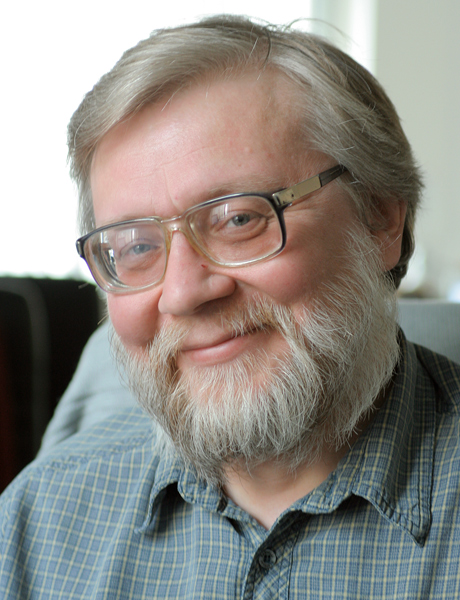
Vladimir Gubailovsky, poet, critic. An employee of the Internet edit of Radio Liberty.
2014
For a long time I was embarrassed by the disproportion of the celebration of Pushkin anniversaries and Lermontov. Pushkin dates have always been celebrated in the Russian Empire, and in the USSR, and in the Russian Federation-with some unnatural scope. With their splendor and officiality, they are comparable only with the 300th anniversary of the Romanov house, the fiftieth anniversary of the SPR or the fifty anniversary of the Victory in the Second World War. When the popular Pushkin celebrations are approaching, I want to hide somewhere away so as not to hear how the lines are trampled and distorted, as they explain-always the same words-why “Pushkin is our everything”.
Lermontov is below Pushkin in the hierarchy that was built and strictly intact, the keepers of the national cultural property, but he is the second.
- What are the great Russian poets.
- Pushkin and Lermontov.
The row is completed. Everyone else is somewhere far and from the side.
But for some reason Lermontov holidays are not satisfied. Maybe the winner gets everything? I thought, until I read the "Stories of Anna Akhmatova" Anatoly Naiman. There I met a convincing explanation of such, modestly, a calm attitude to the second Russian poet.
Naiman writes: “On the October day of 1964, we went in a taxi on the Kirov bridge. The sky above the Neva was completely in low clouds with blurry edges, but suddenly behind the exchange building began to flare up rapidly, stretching vertically, a light pillar, reddish, and if desired, to see something behind it - and scary. Then, in its upper part, a semblance of cross member arose, then the clouds in this place finally parted, the sun flashed, and the vision disappeared. The next day we learned that Khrushchev was removed on this day. Akhmatova commented: "This is Lermontov. Something terrible happens in his anniversary. In a century of birth, in the 14th year, the First World War, in the centenary of death, in the 41st, the Great Patriotic War. One hundred and fifty years-the date is so-so older. But still, with a heavenly sign."
It is quite difficult to check whether the “heavenly sign” over Leningrad in October 1964 is quite difficult, but everything else is exactly like that.
Neither in 1914 (October 15-Birthday), nor in 1941 (July 27-Day of Death) was not before the holidays. In 1964, the celebration was nevertheless arranged, but modest. The monument at the Red Gate did not have time to erect to the anniversary - it was opened only a year later. True, the Metro “Red Gate” was renamed “Lermontovskaya”. But is this a scope? Why, the stations “returned the original name” in the late eighties, and I still regret it. Getting on the Lermontovskaya, I was always surprised at how exactly its architecture corresponds to the name: granite, the colors of the gangstered blood of the column and the arches resemble the hussar mentik. For me, she remained Lermontovskaya, if not by name, then in spirit.
The phrase of Akhmatova “In his anniversary, something terrible happens” sunk into memory, although I reacted to her with irony. Riddly, it is easy to be a prophet. The main value of any theory, not that it is able to reduce well -known events to a single formula, but in predictive strength. Now, if the event predicted by the theory really happens, then it can be recognized as well as wealthy.
"Stories about Anna Akhmatova" were published in 1989. The next Lermontov anniversary-by the definition of Akhmatova, “Date So-Table”-150 years from the date of death, came on July 27, 1991. The country that remained to exist for several months was not up to poetic anniversaries. The country broke up, and this catastrophic event exactly coincided with the Lermontian anniversary. That this will happen, neither Akhmatov in 1964, nor Naiman in 1989 could not know. The theory received brilliant confirmation.
But then what will happen in 2014? Two hundred years since birth - a serious anniversary.
Is the Olympiad in Sochi comparable to the size of the distress with the outbreak of the First World War? Or…
Axiom Apostle Paul
In the essay “Mirror of Riddles”, Borges writes: “One verse of the first message to the Corinthians of the Holy Apostle Paul (13:12) attracted special attention of Leon Blois:“ Videmus nuns per spaculum in aenigmat: tune autem facie. Cognosce Ex Parte: Tune Autem Cognoscam Sicut et Cognitus Sum ". Torres Amat translates this very mediocre: "While we see the Lord, as it were, in the mirror, a vague reflection; then we will see him face to face. As long as my knowledge is imperfect, and then my knowledge will appear in all clarity, just as I myself have been known." Forty -four words protrude for twenty -two; It is difficult to be more verbose and helpless. Sipriano de Valera is more accurate: "Now we see through the mirror, indistinctly, and then we will see face to face. Now I know only partly; and then I know, just as I am known." Torres Amat believes that the verse reveals our vision of the nature of God; Sipriano de Valera (and Leon Blois) sees in him the disclosure of the nature of our vision as such. "
The Latin word "Speculum" means "mirror", this is the translators quoted by Borges, there are no discrepancies. In the translation that Borges liked more, the words of the Apostle Pavel are devoid of meaning: “Through the mirror” you can not see anything even “irreplaceably”: it does not miss, but reflects the light. Otherwise, this is not a mirror. In addition to the main value, the Latin preposition of “pr”, “through”, “by means”, “using”. If we translate the phrase as follows: “Now we see with the help of a mirror, it is indistinctly”, it becomes quite meaningful: we see only a reflection of being, and not being itself.
But first of all, in the mirror we see ourselves.
This is what Leon Bloe, who is quoted by Borges, says about this: “The saying of St. Paul:“ Videmus nunc per spaculum in aenigmate ”opens the veil over the mushroom - the soul of a person. The frightening innumerance of the abyss lurking in the firmament of heaven is illusory, for it is just a reflection of the abyss of our inner world, visible in the "mirror". We should turn our eyes inside and make the most difficult astronomical calculations in the infinity of our hearts, for which the Lord went to death ... We see the Milky Way only because He truly exists in our souls. ”
Blois speaks of the mutual reflection of man and the world, about the need to turn his gaze into himself and make calculations in the “Infinity of our Hearts”, instead of dealing with the “Heavenly Torpier”. But by virtue of symmetry, we can look at the "innumerable abysses" lurking in the sky to understand our own heart.
Two paths of knowledge are open to us - inside and in the infinity of the world. And none of these ways is better than the other. If we base our knowledge on the axiom of the Apostle Paul, the result will be the same.
But in order to peer into the infinity of heaven, to know ourselves, you need a special optics - telescopes and equations of the theory of relativity are unlikely to help.
Pushkin very often used symmetrical compositions in his verses. About his symmetry there is a whole book by Efim Etkind. But Etkind considers only “school” types of symmetry - mirror and rotary. And Pushkin also uses another, much more sophisticated, but directly related to the axiom of the apostle Paul. By building the compositions of his works, Pushkin uses the so -called inversion.
This is a special type of transformation of space, about which the reflection occurs not relatively straight, as with mirror symmetry, but relative to the circumference. With inversion, the circumference remains in place (as straight by mirroring), and the center described by the circle goes into infinity: the inside of the circle is turned out and stretched, covering the entire outer part of the plane. But at the same time, many properties of symmetry are preserved. Especially elegant inversion works in the integrated sphere of Riman, where there is a circle that passes through an infinitely removed point, but these mathematical details, I think, can be omitted.
The way Pushkin uses inversion can be shown on the example of “demons”.
The poem begins with a refrain that draws a place of action - some conditional space:
Clouds rush, clouds curl; Invisible Moon illuminates the snowy snow; The sky is dull, the night is cloudy.
The action begins further:
I'm going, I'm going in a clean field,
Bell Din-Din-Din ...
Scary, terribly involuntarily
Among the unknown plains!
The rider is wrapped in a sheepskin coat, as in a cocoon, hears the ringing of a bell and feels growing anxiety. He tries to interrupt his painful state, turning to the coachman: "Hey, went, coachman!" This appeal and the answer of the coachman - the answer is completely disappointing “no, urine, / horses, master, hard,” tearing the cocoon. The hero looks out - this is the first increase in scale - access to space. Expansion has begun. The coachman points to the hero of the poem at the demon:
There is an unprecedented layer
He stuck in front of me;
There he flashed a spark of small
And disappeared in the darkness empty.
The space continues to expand. Trying to make out a “unprecedented mile”, the hero sees another: the Demand is not alone: “Demons spun different, / like the leaves in November ...”. The scale changes again, the space blooms like a living flower. If the first demon was similar to a “mile away” (pillar), then “Different Demons” are similar to leaves, they are much smaller. There are many of them, but they can still be calculated, in any case, you can ask yourself the following question: “How many of them! Where are they driving? " They are still distinguishable. And then the space explodes:
Roy's demons behind the swarm
In the boundless embroidery,
Signs of mournful and howl
Turning my heart to me ...
In the text, written in the first person, the only personal pronoun is the last word of the poem: “To me”. The space collapses to the point, and this point is the heart of a person. It turns out that all these “innumerable abysses” (in the words of Leon Blois) are only a reflection of the internal state; It turns out that this exit to the “Infinite Embroidery” is needed only in order to cope with our own fear: by achieving infinity, we will know ourselves. This is the inversion - the symmetry of infinity and zero.
However, in the Russian synodal translation of the Epistle of the Apostle Paul there is no mirror, but instead it is said about the “dim glass”, and everything is clear without any long reasoning and comments. But to discuss which translation from Greek - Valgata Versio or Russian Synodal is more correct, I will not: Borges does not tell.