
Translated material
Crown and cross

Historians Peter Chistyakov and Sergey Brun that the saint in the Holy Kings
Yakov Krotov: This release of the program is dedicated to the kingdom of the earthly and the kingdom of heaven, how the kings of earthly with the king of heaven get along, and the veneration of kings, princes and emperors - with God's reverence.
We have two historians in the studio, believers: Peter Chistyakov and Sergey Brun .
Let's start with a small interview with the Moscow Archpriest, the priest of the Russian Orthodox Church of the Moscow Patriarchate, the father of Vsevolod Chaplin .
In the tradition of Christian holiness, many saints are princes, kings, warriors, commanders
Vsevolod Chaplin: In the tradition of Christian holiness, many saints are princes, kings, warriors, commanders. We recently celebrated the memory of the holy warrior Fedor Ushakov, the admiral of the Russian fleet. To kill is not a sin, but even valor, a correct, Christian business, if this is a murder to protect the Fatherland, your people, your neighboring true faith - Christianity always considered it. Pacifism is an ideology later and, in fact, anti -Christian.
It is completely natural that among our saints there are not only holy fools, wanderers, Bessremeni doctors and hermit monks, but also a large number of emperors, kings, princes, warriors, and commanders. And on the icons, these people are portrayed with weapons, with a sword. And we know that God Himself will command, defeat a large number of people with death (this is stated in the Apocalypse). So the cessation of earthly life is not always evil at all, often this is good. Only the distorted consciousness of people who believe that earthly life is the main value can always consider the cessation of earthly life evil. Earthly life is far from the main value.
If you make a separate list of saints who were not the rulers, and a separate list of those who were the rulers, then you preach anti -Christianity, satanism.
One of the main attempts to replace Christianity with anti -Christianity in the modern world is an attempt to delete from the Gospel, from the Holy Scriptures, from the Bible as a whole, the punishment of God, the anger of God, people who, through power decisions, made a statement of true faith. I understand why this is happening: intellectuals want to come up with another god, not the god of the Bible, but the God, who is supposedly a pacifist, supposedly does not approve of power as such. So, this God is not, this is a false god. The god of the pacifists is Satan. This is an idol, which is one of the worst substanes for today.
Earthly life is far from the main value
It all depends on which state defends the truth of God. During the Great Patriotic War, even the Soviet Union, which was formally atheistic, defended God's truth, because he defended the right of the people to choose a historical path associated with Christianity, the path against the enslavement imposed by Hitler.

Yakov Krotov: And now the question is historians. How did it happen that in today's Russia, after so many years of the absence of an autocrat, an anointed of God, the king’s veneration suddenly blossomed (despite the fact that he was not even in the 70s)? And despite the fact that in the Holy Scriptures of the Old Testament the creation of the monarchy is criticized as a violation of the fidelity of Israel to God, who is one, in fact, the king of the chosen people. And in modern Israel, as I understand it, there are also no special monarchical sentiments. And suddenly - like from the ashes! Why?
Peter Chistyakov: It seems to me that it was somehow built into the overall picture of the restoration of religiosity in Russia.
Both the cult of Stalin and the cult of Nicholas II are now blooming now
Sergei Brun: In general, this phenomenon of the agile veneration of Nicholas II and his family, the desire to deify the very personality of the emperor and his rule are absolutely understandable. This has nothing to do with the personality of Nicholas II, to Christianity and even to monarchism in its original forms, but is directly related to the dream of the empire. And against the background of this, in my opinion, both Stalin’s cult and the cult of Nicholas II are now blooming again now. These are not identical, but similar manifestations that are fueled by one bacterium.
Yakov Krotov: But still it began not with Nicholas II. There are such ideas in church-historical science that the centuries began with IX, when cults of the murdered kings and princes suddenly appear among the German peoples in England. Moreover, it is important that they were killed by a violent death, like Boris and Gleb , and there it is also accentuated that they are young, that is, there is an appropriation of these princely, royal mentors to Christ. Is this such a magical consciousness?
Peter Chistyakov: In the case of Boris and Gleb, this is certainly likening not to Christ, but to Abel, and this was very convincingly proved by Boris Uspensky . Svyatopolk acts as Cain, this is directly stated in ancient Russian literature, and Boris and Gleb act as an Abel, an innocently killed brother.
And it seems to me that each case of the canonization of the prince or king should still be considered separately: against the background of general similarity, there can be quite significant differences.
Yakov Krotov: Georgy Fedotov wrote in an ancient Russia book: it is quite strange that the Grand Dukes were in Russian and ancient Ukrainian history, but, rather, losers, rather, losers. For example, Prince Vladimir, unlike his children, fell into the holy no earlier than the XIV century, after the Mongol invasion. Alexander Nevsky was revered, rather, as the first of the Russian princes, who accepted the Great Schima, that is, in general, repented in his entire life, and not at all as the winner in the ice battle. It is the shade of failure in this sense of some kind of foolishness, defeatism that is essential for the Christian understanding of the ideal.
The shade of failure, some foolishness, amazement is essential for the Christian understanding of the ideal
One of the key metaphors that were called to describe the gentlemen of Jesus Christ is the metaphor of “son of the Davids”, and this means that he is from the royal family, not only the king of heaven, but also the descendant of the king of earthly. So, he is the one who should restore, restore the kingdom of Israel. He does not restore it, but, nevertheless, becomes in the center of piety.
Sergei Brun: He establishes the kingdom contrary to the expected laws, suggests that his kingdom is not from this world. And here it is very important that, accepting this law, accepting that the kingdom of Israel will never be fully restored, Christian rulers begin to really try to bring themselves closer to Christ.
What is the primitive role of the Byzantine, Roman emperors? This may already be the last, Byzantine emperor Konstantin Dragash, who runs half the Peloponnes, a pair of islands and Constantinople and its environs, but he is the last legitimate successor of Augustus, that ruler whose power is born Christ. The kings of kings appear in Ethiopia, emperors, part of the title of which is "the defeating lion of Judino." And they apply for blood kinship with Christ as the descendants of David and Solomon.
In Western Europe, starting with Spain, a liturgical and coronation act of anointing of the future monarch is introduced, which initially spreads only in the West. It’s good to recall here: when they say that Nicholas II is an anointed of God ... In general, anointing is such an oriental Orthodox tradition. And the first Byzantine emperor, the first Orthodox sovereign was anointed in 1208 (it was Fedor Lascaris), after the crusaders four years earlier occupied by Constantinople and anointed their Latin emperor in St. Sophia. And Byzantium immediately had an incentive to say: no, if you hold such biblical ceremonies there, then our sovereign has more right!
So there is a desire to approach Christ, to the biblical dynasty and prove God's chosenness in anticipation of Christ's country. Probably, under this desire, a number of canonizations pass, many of which are humanly and even in the Grandlassic justified and understandable, but many of them raise very big questions.
Yakov Krotov: The average Russian intellectual has a desktop book - the “golden branch” of Fraser, and it says that all the peoples of the world had princes, and they were periodically sacrificed, really or symbolically, because it provided crops, catch and so on. And the Gospel, the figure of the Heavenly Tsar, who is sacrificed, that you begin to ask yourself, fits so perfectly into this: so, maybe the Gospel is nonsense and variation on a folklore theme?
Peter Chistyakov: This famous concept of Fraser is now in very strong doubt. The book of Fraser is generally a fairly interesting case. When she appeared, it was a real sensation. Nobody did anything like this before him. Nevertheless, there are works, and already quite old in which his concept of ritual killing the king is subjected to serious doubt. I recall, in particular, considerations on this subject of the late professor of St. Petersburg University Alexander Zaitsev. He carefully studied this material and came to the conclusion that those examples that the milling cutter gives is not how the king was sacrificed, but about how this once existing custom was canceled.
Yakov Krotov: Can we take it out of the Gospel, from the message, from the church tradition of describing Christ as a king and remain Christians? Or, if we take it out, then everything collapses?
The seizure from the Gospel of anything, in principle, is impossible!
Peter Chistyakov: In my opinion, the seizure from the gospel of anything is in principle impossible!
Yakov Krotov: I think there is his own reason in the famous English proverb: "Everyone reads his own Bible." The apostle Paul did not create Christianity, but after a meeting with the Savior there were several bright images in his head, which no one had before him. The famous image of medieval scholasticism that Christ is a worm on the hook that God throws into hell-this was clearly composed by one of the theologians who loved to catch fish, with a fishing rod. For how many people, Christ is a wandering poor, and no kingdom ... And for someone he is a victim. We do not mention the kingdom of Christ in the liturgy.
And for you, Jesus Christ is, first of all, the king?
Sergey Brun: I really love the mythisites , so for me this is, first of all, the God, who became an embryo and suffocated in fear and pain on the cross, God who has become a man who completely accepted our nature. Here is the state of the king, the lord, the creator, the embryo, the corpse, a longing for a person, offended and devoted, beaten, blown up, dying in front of his mother - these conditions are inseparable. And here, likening to Cyril Alexandria and his too zealous followers in the East, one should not try to distinguish where the manifestation of the king ends and the manifestation of the poor begins.
Yakov Krotov: It seems to me that the gentlemen of Jesus Christ beat and insulted, but He was not offended.
Sergey Brun: I agree! But the trouble is that for a huge number of believing people in Russia, Christ is extremely divine and not a drop is human. And the same begins to be transferred to the veneration of the saints. Nobody is interested in the person Nikolai Alexandrovich Romanov, and everyone is interested in the image of Nicholas II, the King of the Skipper of the Russian land, the last great sovereign, and everything related to the industry and army of the Russian Empire.
Yakov Krotov: What did the first Christians mean when the Savior was called the Redeemer? This image is completely unrelated to the monarchy.
Peter Chistyakov: Of course, we are talking exclusively about salvation.
The gentlemen of Jesus Christ beat and insulted, but He was not offended
Yakov Krotov: To whom and why the victim has been made?
Sergei Brun: It is clear that Christ atone us, humanity from the consequences of what is made by humanity, that is, from the consequences of distortion of creation, sin and death that Adam brings. As for the parody of Christianity in the form of kingdoms, the same scheme works here: the good king Nicholas II has already obviously redeemed us, our state, our people from the consequences of all that the next 70 years did.
Yakov Krotov: So we are no longer to blame?
Sergey Brun: Apparently, yes.
Peter Chistyakov: And the Tsarebozhniki directly correlate Nicholas II with Christ.
Yakov Krotov: In 1937–38 there was a standard charge: they put a group of Baptists in Kharkov, they wrote “HB” on their gates, and the protocol said that they “want war”. At least several dozen priests went under an article for monarchism, because they had royal gates, and they refused to remove the crown. Especially in the south of Russia, in Ukraine, from the baroque times, a crown was made over the royal gates, and many were removed precisely because they were afraid of planting.
But we have a long period between the fall of the Roman Empire and the era of more or less centralized monarchies in Western Europe, when for most people the king was something very distant, and there was a boyar, the duke, the graph, the marquise ... unlike the 19th century, when the king was the king, I think that the century in the VII-VIII, and even more so in IX, was very interested in. But they still remained Christians. So, you can be a Christian without a monarchist metaphor?
Peter Chistyakov: Of course. The abuse of these metaphors leads us away from faith.
God is the king, God is the chairman of the globe, God is the UN Secretary General, or is it a father?
Yakov Krotov: God is the king, God is the chairman of the globe, God is the UN Secretary General ... (Laugh.) Or still Father? Today, a person does not live in the world of monarchs, but which are, they are so - to attract tourists.
Peter Chistyakov: But this does not have to be modern monarchs. We see that the image of Nicholas II is relevant and important for many of our contemporaries, and just an excessive hobby this way takes somewhere away from the faith.

Yakov Krotov: I am a little offended by Russia, because from the point of view of the Holy See, the Vatican, the Roman Catholic Church, the monarchs did not disappear, and some of the twentieth century were canonized ...
Sergey Brun: Canonized the last ruling Habsburg, Karl, the younger contemporary of Nicholas II. It has not yet been canonized, but Baudouin Belgian is Beatified - it seems like the process of Beatification is going on. In this regard, the Roman Church has a completely normal and very strictly procedural attitude, and it doesn’t matter, we are talking about the canonization of the poor Albanian nun or the last Habsburg. This is not attached to this, apparently, such an universal, supranational nature of the Roman Catholic Church, the canonization of a particular ruler is not built on the occasion for the messianic elevation of a particular people, which just took place in the Middle Ages in the East and in the West. And this is very closely connected with the veneration of Nicholas II not as an unhappy person, clogged with bayonets and shot with his daughters, servants and a son in the basement of the Ipatievsky house, and as a dream of an disappeared empire, which should be revived.
In the Orthodox saints, a huge number of holy princes and princesses
Yakov Krotov: I recall the atheistic brochures of the 20s, where statistics on the Orthodox holy were given: there are a huge number of holy princes and princesses, and, I assure you, the same picture in the Catholic Saints. There are a lot of aristocrats, and this is not because they exalted the empire, but because the secular power was and, perhaps, remains consonant with the supreme church authority. Atheists pressed this: look, the peasants are not so hot, there are no peasant women at all, and the merchant should become Seraphim of Sarov to be brought to the holy, and if you are a prince or princess, do not atrocities at all-and you will get. Is it Christian?
Sergey Brun: No, but very human. (laugh)
Yakov Krotov: Is this folk or apical religiosity? In Russia - as if folk, and in the Vatican - the apical, there, in general, do not give a damn about kings.
Peter Chistyakov: But the canonization of the Old Russian princes themselves is, of course, a manifestation of apical religiosity. And about their popular veneration, of course, questions arise: was it? Moreover, we see that the image of Alexander Nevsky, for example, has changed very much for centuries, and there are wonderful work on this score (I recall, in particular, the works of Igor Danilevsky). Its canonization itself, carried out by Metropolitan Makariy, was associated with a kind of rethinking of events with a relatively recent history. And the fact that at the beginning of the 15th century did not seem valiant and heroic, in the 16th century it had already become completely different.
This also applies to the perception of the Battle of Kulikovo, which, of course, was not perceived by contemporaries as a decisive victory, and descendants have already begun to treat it like that. The same applies to the activities of Alexander Nevsky. It should be noted that in pre -Petrine Rus' he appeared exclusively as a prince who accepted monasticism, and only after Peter he began to be read precisely as Alexander Nevsky.
Sergey Brun: There is still an interesting moment - the difference between the veneration of Alexander Nevsky and Dmitry Donskoy. Если можно говорить о почитании первого – прежде всего, за принятие пострига и уже потом за военные победы, то ни в до, ни в постпетровское время, ни в Московской Руси, ни в империи все-таки не было широкомасштабного почитания Дмитрия Донского, человека, канонизированного в 1988 году. Отклик от бегства князя при разорении Москвы спустя два года после Куликовской битвы и память о том, что этот человек сделал со святителем Киприаном Киевским, когда тот первый раз въехал в Москву (избил и заточил митрополита Киевского и Всея Руси), – это оставалось, вопреки тому, что супруга Дмитрия Донского была очень почитаема как святая.
Тут интересно сопротивление народа и широких слоев населения, и Церкви, может быть, даже вопреки интересам правящей династии. Так же, допустим, в Византии не канонизировали Ирину Афинскую, императрицу, собравшую Седьмой Вселенский собор, и только в позднегреческих вариантах есть ее почитание. Образ мамы, которая ослепляет своего маленького сына, чтобы не дать ему престол, оказался перебором даже для привыкшей к такого рода деятельности Византии. Поэтому другая императрица, окончательно утвердившая иконопочитание в империи, Феодора, канонизирована, причем сразу, а Ирина – нет.
Яков Кротов: А тогда как проскочили в святцы Константин Великий и Карл Великий?
Образ мамы, которая ослепляет своего маленького сына, чтобы не дать ему престол, оказался перебором даже для Византии
Сергей Брюн: Если говорить о Константине… У нас много вспоминают, что князь Владимир был чудовищем, но здесь, наверное, есть что-то оправданное относительно этого апостольного святого – он был чудовищем до крещения, а после крещения стал предельно смиренным и милосердным человеком. А вот что касается Константина Равноапостольного, то сразу же после его чудесного видения этот человек велит достать из реки брата своей жены, разрубить его тело на части, и его войска торжественно, триумфально ходят с ним на копьях по Риму.
Яков Кротов: Ну, шурин – это такое дело…
Сергей Брюн: Для Константина – шурин, тесть, два соправителя, старший сын, жена… Мама, которая вовремя уехала в Израиль. Император Диоклетиан, которого он позвал на совет, а тот предпочел принять яд – очевидно, потому, что понял, к чему идет дело. Здесь поразительно то, что убийство жены и сына – это как раз в то же время, что и созыв Первого Никейского собора. И мы видим здесь искренне обращение? No.

А в конце жизни человек ссылает Афанасия Великого, высылает его из Александрии, снимает с кафедры, открыто потворствует арианам … И христианином Константин Равноапостольный был лишь последние 12 дней своей жизни, он был крещен главой Арианской партии, Евсевием Никомедийским. Так что его канонизация – это, наверное, верх политической канонизации, потому что нельзя не канонизировать первого крестившегося императора, построившего Новый Рим и давшего столько щедрот Церкви.
Оказывается, что большевики с их орденами Суворова и Александра Невского – лишь слабые подражатели святых отцов IV столетия
Яков Кротов: Тогда оказывается, что большевики с их орденами Суворова и Александра Невского – всего-навсего слабые подражатели святых отцов IV столетия.
Сергей Брюн: А Ушаков? Два святых, в честь которых были советские ордена, – Ушаков и Александр Невский.
Яков Кротов: А что первично, и как сегодня распутать, где советское наследие в почитании Николая II, а где византийское наследие?
Петр Чистяков: Я боюсь, что советского наследия здесь значительно больше. Мне вспоминаются времена, когда о Николае II много и открыто заговорили (это самый конец 80-х годов) – вдруг стали появляться его портреты, статьи о нем, о гибели царской семьи. Вот тогда и запустился некий процесс, который привел к тому его почитанию, которое мы видим сегодня. На фоне ниспровержения советских идеалов этот новый и ранее старательно забытый идеал теперь возрожден, поднят на щит, и оказалось, что общество морально готово его принять.
Яков Кротов: А это, по вашей оценке, исходило из светской или из церковной среды?
Петр Чистяков: Я бы сказал, что на стыке, и, может быть, даже в большей степени – из светской.
Яков Кротов: Вот Александр Солженицын – это, скорее, церковный или светский мыслитель? Он же ведь писал "Колесо", это же была апология императора.
Петр Чистяков: Да, но здесь, мне кажется, решающую роль сыграли те настроения, которые были в монархических кругах рубежа 80-х и 90-х годов.
Ленин и Сталин – это тоже тотемы, которые гарантируют урожай, хорошую добычу нефти и газа
Яков Кротов: Я вспоминаю экспедицию 1919 года на Байкал: в разгар Гражданской войны какие-то энтузиасты пошли к семейским старообрядцам , стали их опрашивать, и они говорят: "А чего? Хорошо, все нормально, Ленин – это неплохо, это как царь, но только без царя. То есть, с их точки зрения, Ленин в каком-то смысле реализовал ту монархию, которую они бы хотели, – царь без дворян. Золотая середина, плюсы одного строя без его минусов. В этом смысле культ личности и Ленина, и Сталина носит вполне религиозный характер. Это тоже тотемы, которые гарантируют урожай, хорошую добычу нефти и газа.
Петр Чистяков: Безусловно! Как и в случае с Николаем II, здесь произошло некое обезличивание в смысле того, что не акцентируется внимание на каких-то человеческих чертах этих персонажей, они начинают восприниматься как некие совершенно идеальные герои.
Сергей Брюн: Здесь, наверное, беда в том, что полностью игнорируются не только человеческие черты, но и изрядная доля политических процессов и решений. Ведь если взять только человеческие черты, если не следить за тем, что именно подписывал Иосиф Виссарионович, этот скромненький человек с коллекцией грампластинок, с библиотекой, сажающий в садике розы... И сейчас мы будем наблюдать (и это уже происходит), как своеобразно сливаются царебожие и неосталинизм – как, наверное, самое страшное проявление современной России.
В любом случае это люди, с которыми связан успех империи, хотя, конечно, лучше уж жить в Российской империи образца 1913 года, чем в Советском Союзе образца 1950-го. Это именно воинствующая ностальгия по исчезнувшей империи.
Яков Кротов: Когда на литургии священник готовит хлеб перед началом богослужения, он цитирует слова из пророка: "Аки агнец веден был на заклание, и аки агнец перед стригущим его безгласен". Иисус молчит, как молчали, по "Повести временных лет" , Борис и Глеб, он принимает все, как есть. Он слаб, потому что не зовет легион ангелов, не разруливает ситуацию, но в этой слабости совершается настоящая божественная победа.
Николай II слаб, когда он в Ипатьевском доме, это низверженный царь, в этом смысле он похож на Христа, и он принимает свою судьбу с огромным достоинством. Но что важнее в глазах его почитателей – то, как он принял лишение престола, или то, каким он был царем?
Сейчас мы будем наблюдать, как своеобразно сливаются царебожие и неосталинизм
Сергей Брюн: Беда в том, что им не важно конкретное переживание Николая Александровича Романова в Иптьевском доме и не важно его правление, а важен образ империи. Когда люди выходят и кричат "Сталин!", они не говорят о небольшого роста плохом ораторе, бывшем бомбисте, террористе, который карандашиком убил больше людей, чем в свое время бомбами, и при этом любил кино, обладал определенным чувством юмора. Они говорят не об этом и не о концлагерях. Они говорят о танковых колоннах, победоносных парадах, стройке, страхе и трепете, который внушала эта держава.
То же самое с Николаем II – говорят о таком пряничном образе, где красиво марширующие русские полки сочетаются с церковными процессиями, с Фаберже, плюс образ милой, тихой семьи, которая сидит в Александровском дворце в Царском Селе. Они вырывают все это из контекста и делают из этого что-то. И это совсем дешевый, эфемерный, не имеющий отношения к чему-либо конкретному блеск, который не только манит, но и сводит с ума, и приводит сейчас к очень воинственным проявлениям. Есть воинственное неприятие реальности, и это очень страшно.
Яков Кротов: Можно вспомнить, опять же, Константина Великого и Карла Великого, который, чтобы крестить саксов, вырезал почти всех саксов, а остаток поспешно крестился. Или князя Владимира, который послал крестить новгородцев: Путята крестил мечом, а Добрыня – огнем. Когда мы все это произносим, когда вспоминаем крестного отца Владимира Красное Солнышко, Василия Болгаробойца – он ослепил десять тысяч…
Сергей Брюн: Порядка семи тысяч: разбил их по сотням, 99-ти выкалывали оба глаза, а одному, поводырю, выкалывали один глаз. И эти толпы шли к царю Самуилу Болгарскому, которому стало плохо с сердцем, и он умер.
Яков Кротов: А ведь царебожникам все это, кажется, нравится. Они считают, что еще недостаточно Николай II вешал. И это не сегодня, а уже в 1917 году говорилось, что надо было больше пулеметов (это из мемуаров отца Врангеля, если не ошибаюсь), нужно было больше стрелять всю эту сволочь! То есть это не просто ностальгия по империи, а ностальгия по насилию. Как это совместить с пребыванием христианина?
Петр Чистяков: В концепции царебожников насилие вообще занимает очень большое место. Другое дело, что это маргинальная позиция. Но все-таки не все почитатели Николая II – царебожники, и, безусловно, среди тех, для кого важен образ последнего русского царя, есть те, кто как-то ностальгирует по империи, а есть и настоящие царебожники, которые разделяют знаменитую концепцию искупительной жертвы. Но здесь для них главное – именно идея жертвы, то, что он добровольно взял на себя грехи России.
Яков Кротов: А это мирные люди? Когда я говорю о Спасителе – "искупитель", подразумевается, что меч в ножны и отнести в металлолом, и все, спасение совершилось?
Петр Чистяков: Царебожников невозможно назвать мирными людьми!
Есть воинственное неприятие реальности, и это очень страшно
Сергей Брюн: Как и христианами в этом плане, потому что Христос для них несколько вторичен относительно фигуры царя, которая гораздо больше занимает их внимание.
Петр Чистяков: В сущности, да, но они в этом никогда не признаются.
Яков Кротов: То есть слова Спасителя – "кесарю – кесарево, а Божие – Богу" – так и остаются актуальными? Можно впрячь в одну упряжку Константина Великого и Христа, Карла Великого и Христа?
Сергей Брюн: Николая II и Христа… Я думаю, что здесь мы на постсоветском пространстве сейчас становимся свидетелями очень опасной подмены. Идет не просто подмена почитания императора-страстотерпца мечтой об империи, подмена Христа земным государем, но происходит подмена Христа и христианства мечтой об империи, христианство начинают превращать в религию в римском понимании этого слова.
Происходит подмена Христа и христианства мечтой об империи
Почему римляне гнали христианство? Потому что христианство не укладывается в римское понимание религии, а римское понимание религии – это, как сказал один известный человек, средство для поддержания традиционных нравственных ценностей нашего народа, порядка. А христиане находятся где-то сбоку. Они вроде бы и милосердные, но они не участвуют в том, что образует фундаментальные основы нашего государства, нашего народа, нашего пространства. Это очень страшно, потому что сейчас не идет речь об этом царстве не от мира сего и соединении людей с Богом и друг с другом, а устами значительной части людей, именующих себя христианами, идет проповедь об империи, о порядке, о неких традиционных нравственных ценностях.
Яков Кротов: Ну, если нам стало страшно, то мы уже готовы молиться Богу, чтобы наш страх оказался пустым, а победил все-таки Он, а не мобилизанты царебожия.
-
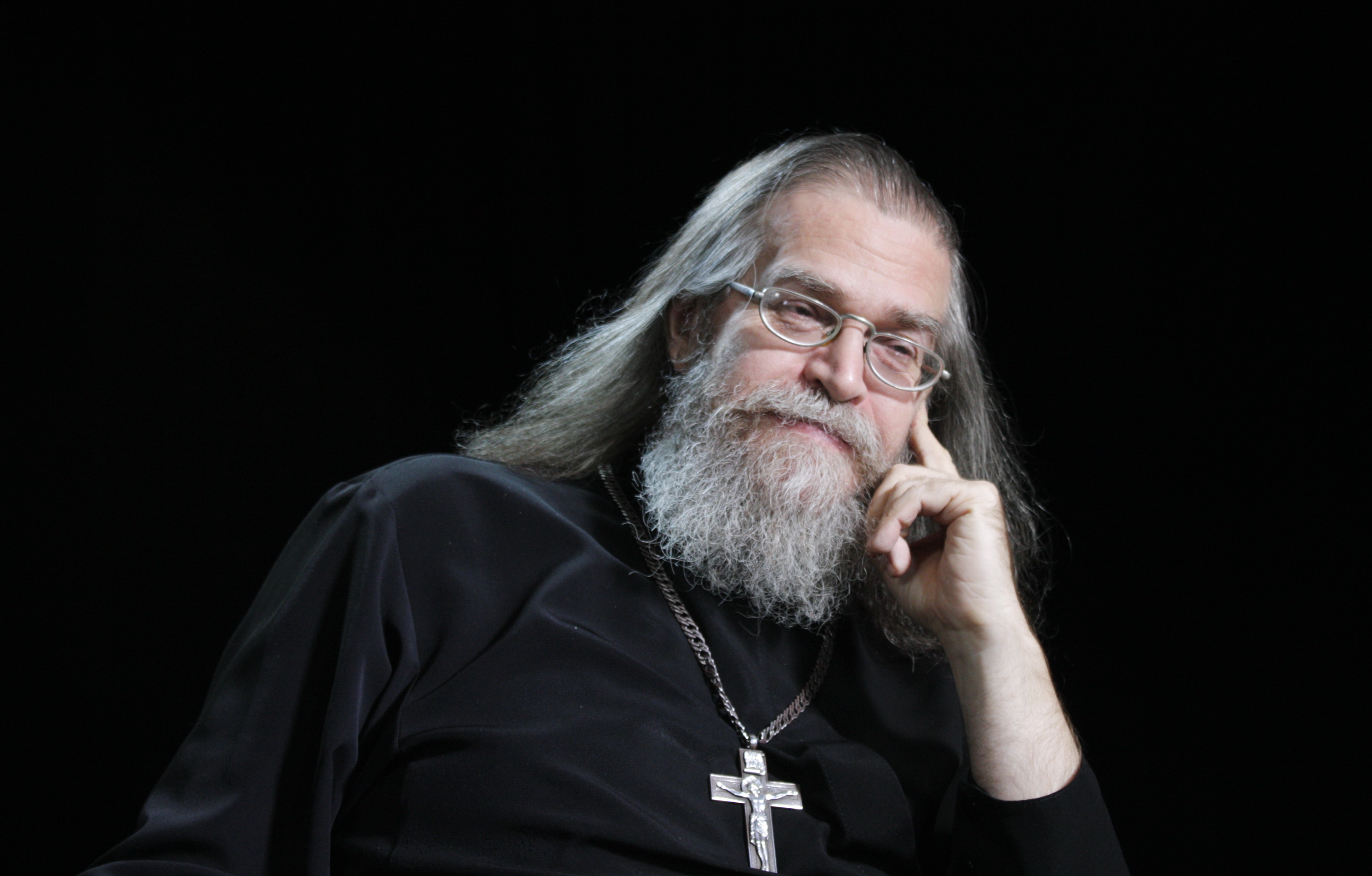

Yakov Krotov
Historian and priest, leading Radio Freedom Radio "Between Vera and Belief"
ykrotov@yahoo.com