
Translated material
Passed by the street
For the sixth time in Moscow, the Festival "Bright People" will host - on September 9 and 10 at the venues in Gorky Park and Museon will be shown performances and performances of the street theaters of Russia, Italy and France. This festival is one of the few in Russia that is generally engaged in street performing arts. The street theater in Russia - in a country where at the beginning of the last century the largest street performances in the Western world were held - today in decline, or in the infancy of development. Most teams are no different from provincial circuses and are engaged in stupid entertainment. City administrations do not understand the importance of platform performances and do not plan to maintain street theaters with finances. At this time in Europe, street theaters are a full -fledged part of urban culture sponsored by local authorities and cultural funds. Freedom finds out how street theaters feel in Russia and how their colleagues abroad live.
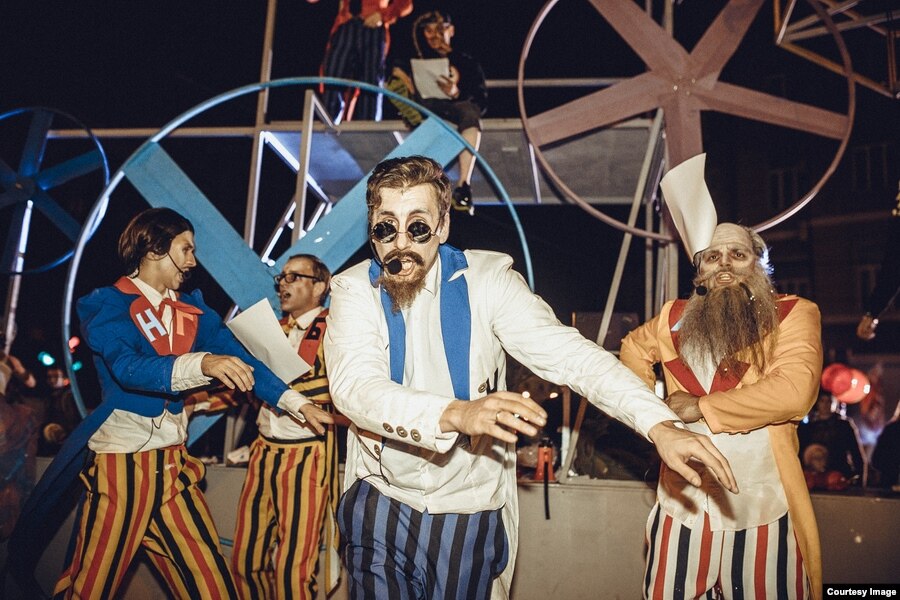
The notes of Korney Ivanovich Chukovsky are known, in which he recognizes several times in his active dislike for the theater. In the "St. Petersburg Theater Journal", however, there is a whole The text about how Chukovsky had these records preceded the periods of active translations of theatrical texts and their own dramatic works. Chukovsky died in 1969, when in Western Europe for twenty years was unfolding that at the end of the century it would be indicated by the post -dramatic theater, but now, of course, it is impossible to find out about the attitude of Chukovsky to this phenomenon. It’s also impossible to find out in any way, I would like Chukovsky the production of the street-opera “Tarakanische” according to his work, which is directly related to the syncretic theater language in which she speaks with the viewer. The performance was produced by the festival of street theaters "Bright people" and was first shown on it in September 2015. The creators of the production were the artist and director Pavel Semchenko from the Russian engineering theater "Ahe" and director Victoria Narahs; The music for operetta was written by Ivan Kushnir and Sergey Azeev.
The performance was shot because of the hope of Tolokonnikova and the similarities of the "cockroach" to Vladimir Putin
In the constructivist decorations of Semchenko, four mobile platforms were built, on which the action took place: four classics of Russian literature defended freedom of speech, reading rap on the unchanged text of Chukovsky. By affordable videos, you can understand that the spectacle was as cheerful as possible. It is not surprising that after showing the creative team they proposed to transfer the performance to the stage of the Meyerhold Center. The performance had to be adapted to the room, Victoria Narasa decided to add several scenes, one of which was the performance of Utesov’s song “Secret” by Nadezhda Tolokonnikova for the piano. The performance "Tarakanische" was removed from the scene of Tsim after the first and only premise on January 12, 2016. Tolokonnikova after the director said that the performance was shot because of her presence on the stage, as well as because of the similarity of the character of a cockroach to Vladimir Putin, but Tsim’s leadership claims that they refused to cooperate with the Narasa, firstly, due to the performance that was incompatible on the run, and secondly, due The drinking, broke the door and put it unplannedly without warning in the performance of Tolokonnikov. All the same, this whole situation very colorfully characterizes the fate of the modern street theater in Russia: first it leaves the street under the roof of the theater building, and then it is forbidden ..
It is especially disappointing - if the reader is generally inclined to such feelings - it can become if we recall that it was in Russia that the beginning of the last century was an absolutely stunning take -off of the mass politically charged street theater. In Petrograd, all these epic, albeit simple in the plot took place, actions for hundreds of thousands of spectators and several thousand performers: “Act of the III International”, “Mystery of Liberated Labor”, “To the World Commune”, “Taking the Winter Palace”. The dependence of the large -scale appearance of free street theaters on the freedom of a particular society and the state is obvious. It is clear that in the postal USSR, only some "all-Union crying after the leader of the leader" could appear from the local theater spectacle. Unfortunately, until the end of the 80s in Russia, nothing had happened to the street theater in a large theater, but meanwhile, by this time, the culture of street theaters has not only been reborn in Western Europe and the United States by this time-it did not particularly disappear-but street theaters are politically charged, as well as synthetic theaters working at the intake of performative practices, art and plastic theater, cycle, cycle. Opera - and doing all this in open city spaces.
Here is how the artist of the street theater in Russia comments on the art director of the Bright People festival Maria Halperina: “Street theaters are almost not developing. There are few actors ready to get off the theater platform to the public, ready for improvisation and direct interaction with people. Russia in this sense lags behind Europe. Especially from France, where there was a special program that develops this type of art. Where there is no street theater, but we participated in a similar program in Tatarstan, in connection with the development program, there was a plan for the development of theatrical art, we brought directors and artists who created the Tales in the city with local theaters - five different productions The 30-degree frost was waiting for us in different parks, and for them it was an event! The program continued in the summer in Nizhnekamsk, the actors of traditional theaters tried themselves in a new genre for them.
It is fair to associate the development of the street theater in post -Soviet Russia with the name of Slava Polunin. It was he in 1987 that the first all -Union festival of street theaters, in which more than 200 people took part as performers. Two years later, Polunin also became the Russian side of the organization in the Caravan of the World festival, which literally passed from Moscow to Blois in five months, from May to September 1989. In 1992, Polunin, together with Rolan Bykov, created the "Academy of Fools", which had an ambitious goal - the revival of the Carnival culture in Russia. As you can see, there was little out of this, but in 2001, Polunin, in the framework of the third theater Olympiad, conducts an off-program "Square theaters of the world", in which 40 groups from 15 countries take part. This was, in general, the last and largest that Polunin did for the street theater in Russia.
In 1989, when the “Caravan of the World” began in Moscow, in St. Petersburg there was a gathering of the theater group “Ahe”, collected from three participants in the project Boris Panzovsky Danet: Maxim Isaev, Pavel Semchenko and Vadim Vasiliev, who broke away from the group in the mid-90s. Developing the principles of the Panzovsky visual theater, the Russian engineering theater "Ahe" was at first engaged in performances and promotions inscribed in the urban environment. Having taken shape as a full -fledged theater (albeit without its own area), Ahe began to collect full -fledged street performances, which, however, were still different from the conventional street theater. The theater, which makes Ahe, is almost not a party: in some performances, the audience is completely separated from the stage space with fence or stretch tape, as, for example, at the show of the performance "Foam of days" or performance "Wet Wedding" . The more this theater is worthy of attention, since it does not engage in cheap immersion, the superficial involvement of the viewer in some kind of activity, which is not disdaining more fairly street groups, which are most in the landscape of the street theater. In their works, "Ahe" on the principles of Arte Povera string the elements of clowning, acrobatics, plastic theater, the artist’s visual theater and the so -called engineering theater. In their performances, water or foam flows from everywhere, something suddenly lights up and smokes, and objects interact according to the principle of a number of dominoes.
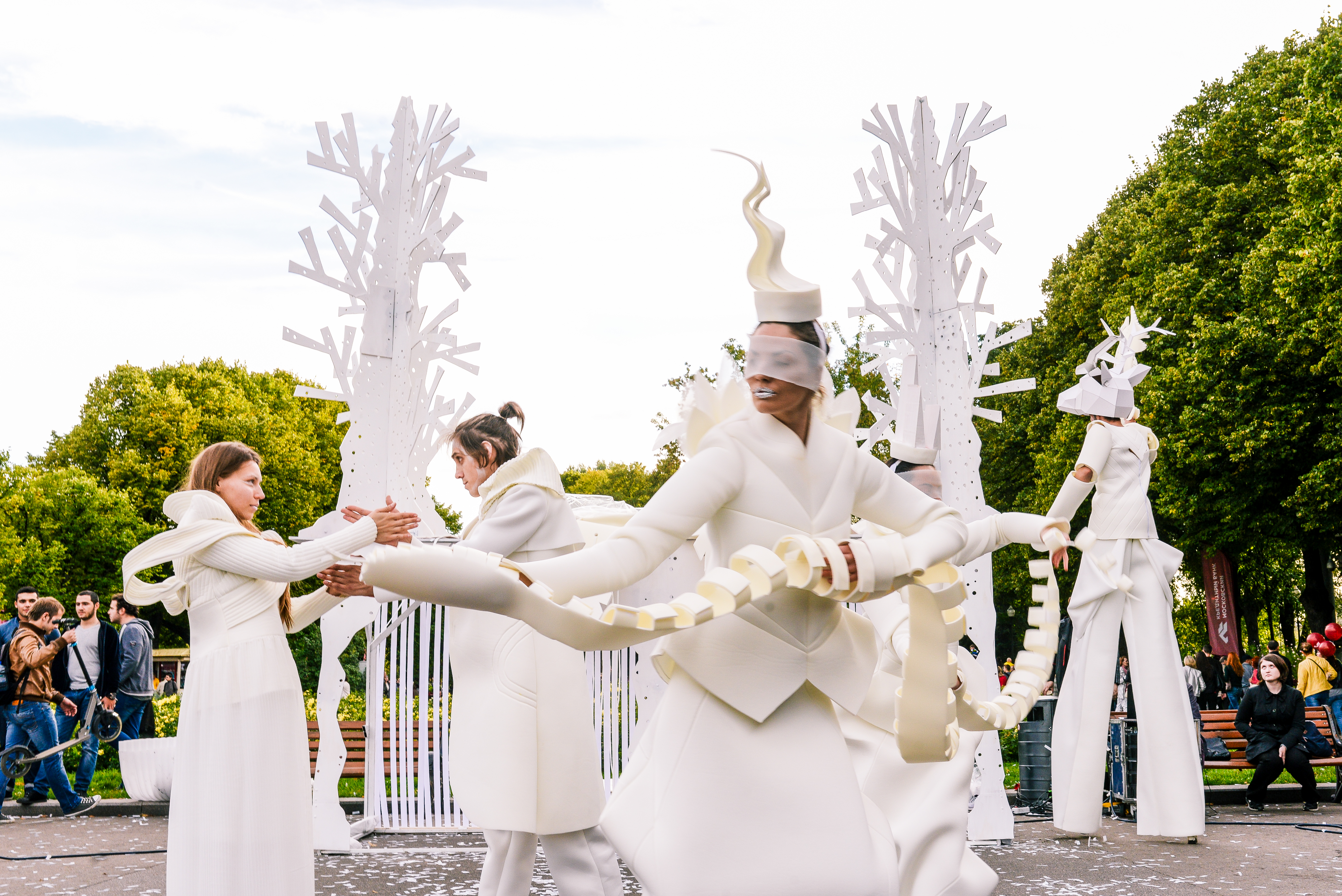
You can’t ignore the director of Maxim Didenko, who met Polunin just at the Theater Olympics in 2001, and since 2007 he has been cooperating with the Russian engineering theater "Ahe". Didenko is one of the most popular young directors of Russia, he works at the junction of almost all theatrical genres, which manifests itself in his stage work (which he is most famous) and in the scatter of the theater, which he works separately. Most likely, it will not be a great exaggeration to name Didenko to be the most interesting director of the street theater in Russia, although his experience in this type of theater is not represented by so many works. In the summer of 2016, for the Festival of Street Theaters in Arkhangelsk, Didenko staged a play "Cain Paths. The Tragedy of Material Culture" according to the poem of the same name by Maximilian Voloshin. In July this year, in the Austrian city, Graz Didenko put a street The performance "Fire" based on Andersen's fairy tales. In these performances, a minimum of visual elaboration, which usually street theaters sin, but the reality of the human body, which Didenko has mastered well in working with the physical theater, works in a powerful way.
Unfortunately, in Russia there are no prerequisites for the fact that the street theater will capture city spaces at least in cities of the central part of the country. Today, an actor or director of a street theater is nowhere to study today. “The departments are needed when there is a request from the state when people will be able to find work after training,” says Maria Galperina. “Now this movement is being built completely on enthusiasm and pure desire to continue to experiment. There is no such educational direction. There are simply a number of groups that are interesting: Liquid Theater,“ Sketches in the space ”,“ Theater of taste ”and so on. In projects, at theater festivals.
Local authorities in the regions (in Moscow, the deputy at least annually supports, among other things, “bright people” and some other similar events), arranging on the days of the city the performances of rural accordionists, do not even think of starting to finance street theaters or at least form a request for their appearance. Almost completely lacks the understanding that the street theater is able to perform the functions of transforming the public environment and citizens for the better. In the cities of Western Europe, street theaters have long been part of urban culture. Maria Halperina notes that there are studies that demonstrate the dependence of a decrease in crime in the city on the presence of street performive arts there. In addition, this urbanization of the spectacle, the theater’s premises to the urban space, as it were, returns the city to the townspeople, people feel the public space with their and safe, and if the theater is high-quality, it also teaches residents to communicate with architecture and their own city, highlighting some previously inconspicuous features. In Russia - and this is not a big secret - a critically few urban space that people would feel for their own. The street or square of the middle Russian city is the territory under the control of the invisible Leviathan, which needs to be crossed rather, without raising your eyes, on the way home or to work. Obviously, this affects the development of the street theater, which is almost none in Russia.