
Translated material
Absenteeism and loyalty. How deputies from the regions worked in the State Duma
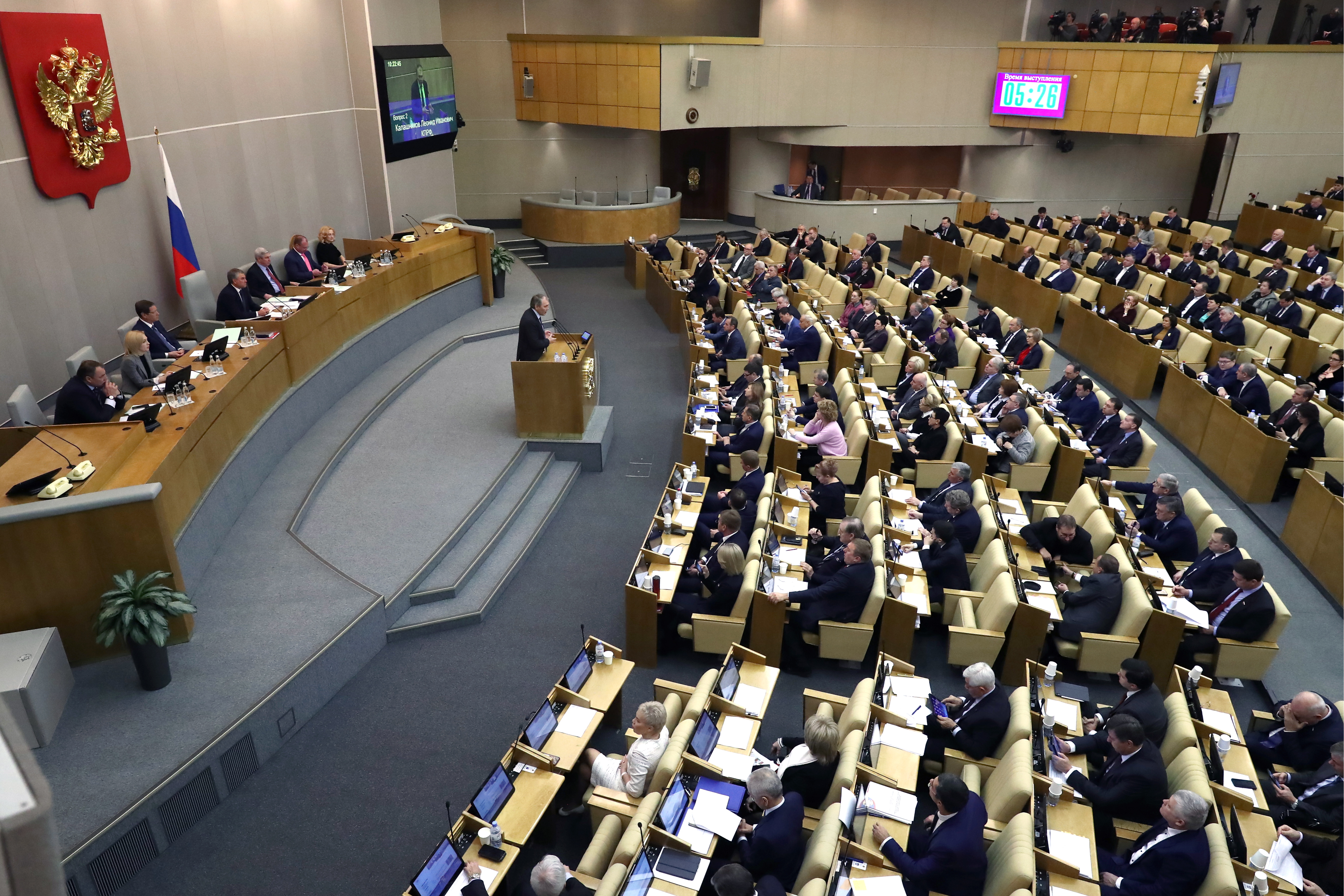
The Center for the Political Conjuncture conducted a study in which he found out how deputies of the State Duma of Russia from the regions attended meetings of the spring session. The North. Realities tell which deputies from the regions of the North -West often did not go to work and how they voted - protested or loyal.
A truce
Most often, voting was missed by deputies representing the Arkhangelsk region (59.44%of the missed votes), in second place-the Karachay-Cherkess Republic (58.44%), in the third-the Tambov region (55.27%). The fourth place was taken by Karelia - 41.7% of the missed meetings. Here is a complete list of the regions of the north-west and the percentage of absenteeism:
- Arkhangelsk region - 59.44%
- Karelia - 41.7%
- Petersburg - 37.3%
- Kaliningrad region - 34.5%
- Murmansk region - 32.4%
- Novgorod region - 23.4%
- Leningrad region - 20.4%
- Vologda region - 16.5%
- Komi - 15.1%
- Pskov region - 14.9%
Among the deputies from the Arkhangelsk region, Andrei Palkin missed the maximum number of meetings - 79.6%. In second place - Olga Epifanova - 53.6%, in the third - Elena Sobrygina - 42.2%. Olga Epifanova also represents the Komi Republic.
Among the Karelian deputies, Valentina Pivnenko most often did not go to work - 47.06% of missing meetings. Igor Anansky and Oleg Lavrov missed 35% of working sessions. Anansky also represents the Murmansk and Leningrad regions.
Deputies from St. Petersburg Vladimir Bortko , Evgeny Marchenko and Vitaly Milonov did not go 69.6%, 67.2% and 64.4% of the meetings, respectively.
Anger leaders in other regions:
- Kaliningrad region, Rizwan Kurbanov - 64.24%
- Murmansk region, Alexey Weller - 32.25%
- Novgorod region, Anton Morozov - 34.4%
- Leningrad region, Sergey Panteleev - 35.71%
- Vologda region, Alexey Chepa - 29.41%
- Pskov region, Anton Morozov - 34.41%
For and against
The experts of the center analyzed how the deputies voted from the regions - more often for or more often against. Among the voting for four leaders with a minimum margin: the Oryol region (85.24%), the Republic of Kalmykia (85.18%), the Kursk region (85.06%), the Republic of Tuva (85%). Deputies who often voted against are represented by the Republic of Mari El (4.71%), the Penza region (2.67%) and the Ulyanovsk region (2.62%).
This is what percentage ratio the deputies of the northern regions for or against bills voted:
For
- Pskov region - 84.7%
- Komi - 84.6%
- Vologda region - 82.9%
- Leningrad region - 79.2%
- Novgorod region - 76.4%
- Murmansk region - 67.7%
- Kaliningrad region- 65.2%
- Petersburg - 61.6%
- Karelia - 51.7%
- Arkhangelsk region - 40.5%
Against
- Petersburg - 0.84%
- Vologda region - 0.38%
- Leningrad region - 0.41%
- Komi - 0.35%
- Kaliningrad region - 0.30%
- Pskov region - 0.29%
- Karelia - 0.24%
- Novgorod region - 0.24%
- Arkhangelsk region - 0.03%
- Murmansk region - 0%
What was the spring session
The spring session in the State Duma was supposed to begin on January 9, and end on August 2, the first plenary session was held on January 13, and the last on July 24. In practice, the first meeting took place on January 14, and the last on July 22.
As the researchers specified, the pandemic of coronavirus in April made adjustments to the work schedule of deputies. Usually per month deputies hold 9 plenary meetings. But in April 2020 there were 3 of them, in May - 5, in June - 3, and in July −7.
As a result, for the spring session, the deputies held 40 meetings instead of 50-60 as it was in the previous spring sessions. For comparison, 57 meetings were held in the spring session of 2019.
Wed to Yandex.Zen CR on Instagram SR in Telegram