
Translated material
"Burn all the documents." As in Pushkin, two Jewish families miraculously saved
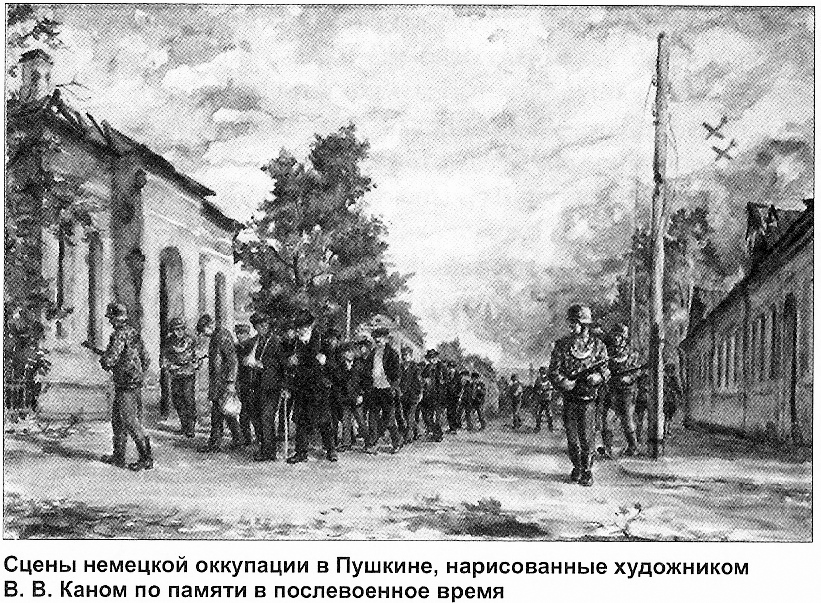
September 13 - International Day of Remembrance of the Victims of Nazism . For the city of Pushkin near St. Petersburg, this day is special: in September 1941, the Nazis entered the city shot all local Jews. Units were saved. Among them - Nina Khaimovna Vyshinskaya and Margarita Mikhailovna Ryabichenko. Both are far from 80 today, and then they were little girls. They told the correspondent of the Sever. Real, how their families managed to survive.
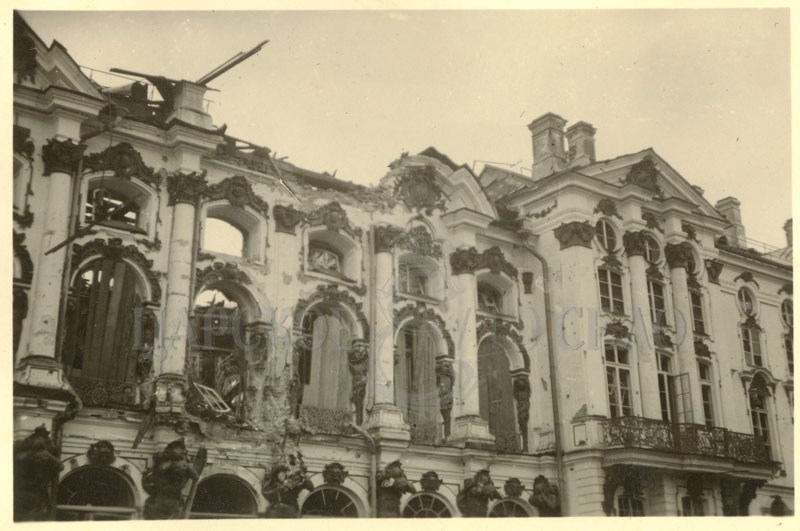
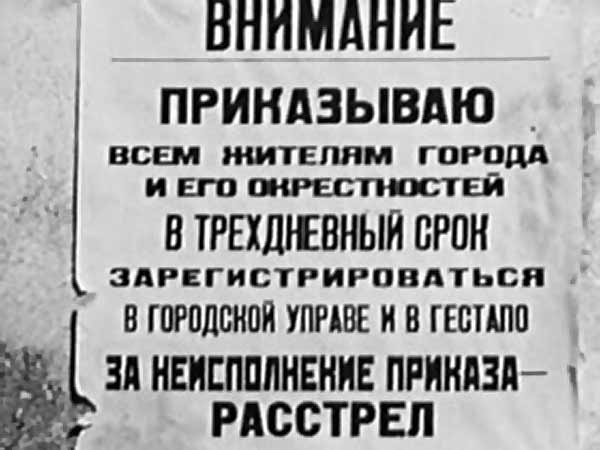
The Germans entered Pushkin on the night of September 18, 1941. The executions of the Jews began immediately: they were caught from the basements, inclined people to give out their neighbors, and Sulia for this things executed for this. When hunger began, a shelter of a soup was offered for one issued Jew. But the bulk of the Jewish population, including old people and infants, was collected at the commandant’s office. Local residents remembered how about 800 people led this column to shoot in the park and how doomed people went and sang a sad song. The exact places of the burial are unknown, but there are many testimonies about places where people were forced to dig ditches, shot and buried: this is a pink field, a lyceum kindergarten, and a capric, and Aleksandrovsky, Babolovsky and Catherine Parks, and black swamps, and a military airfield. There is evidence that about 670 people are buried in the courtyard of the 3rd school, about 500-at the White Tower in the Alexander Park.
Nina Klugman: "The German believed that we are not Jews"
When the war began, Nina Khamovna Vyshinskaya (Klugman) was 4 years old. There were three more children in the family: the older sister is 12 years old, the average 9, his brother is a year. Parents were ordinary people, mother of the housewife, his father worked as a red -drawn in the house of party education. The Klugman family, perhaps the only one in all of Pushkin, who managed, having visited the interrogation in the German commandant’s office, to avoid execution.
- We lived well, the house had a lot of furniture, which the father did with his own hands. When my younger brother was born, they called him David, in honor of the deceased uncle, but in the family we called him Vovka. This year, my mother did not go to her relatives to Ukraine - she was afraid that without her Vovka would slowly be cut. In those years, everyone was already enlightened, no one believed in national traditions except the older generation. My cousin was generally called a shift, a change, although in fact she was Sonya. There were nine children in his father’s family, and they were all progressive, all were revolutionaries. When the Germans approached Pushkin, my brother and I were sick, and therefore dad did not take us by train to Leningrad, where his sisters lived, and went there himself - to warn that we will come to them soon. The sisters lived in a large communal apartment, it seems, on the 5th Sovetskaya Street. But when his father was returning to our Pushkin, he was no longer allowed back, the Germans already occupied Pushkin. He returned to this outpost several times, and finally they told him: you will return again - we will arrest you. So it happened that we stayed in Pushkin, and he is in Leningrad. If he broke through to us, he would have caught with us. And now, the father does not return, the Germans in the city, and the neighbor tells the mother: burn all the documents. Mom did so. But still, the neighbors pointed to us that we were Jews. There were good neighbors, they were bad. And painfully good we had furniture. Then, after the war, our kind neighbor, Dobryakova, said that our furniture was pulled out - and the chairs were dragged, and stools, and then the Germans also took out two furniture cars from our apartment. The last thing I remember is a dark room and my mother dresses me. In a hurry, she dressed us all, and she managed to take almost nothing with her. And we were taken to the cellars of the Catherine Palace, only then my mother and sisters told me. They are not like Jews, their hair is blond, their eyes are blue, and mom is the same. And she also spoke Ukrainian well. During the interrogation, her translator asks: "Where are the documents?" She replies: "burned." And he, without raising his eyes, translates: "" They disappeared during the bombing. "He always told her how to answer.
- Why were you indicated? - the German asks.
- Well, people are evil, they envied us, so they pointed out.
"Can I return home? Children did not eat a day." And he, without raising her eyes, says: "They will be given you there again"
Then the German says: "Expand the child." The diapers turned around - the boy was not circumcised, and then the German believed that we were not Jews. And he went out somewhere. Brother yells, he was just taken away from his chest, his mother then says to the translator: "Can I return home? The children did not eat for a day." And he, without raising her eyes, says: "They will be given you there again." And we, along with the stage, were driven under the Pskov, to the refugee camp. They drove on the carts from the village to the village, winter came very quickly, and I well remember this winter road, as we are taken on firewood, we are covered with short fur coats. Sometimes they stop the supply, collect ice creamy cranberries by the road and put my brother and I in the mouth. In the village, the Germans ordered that we were allowed to spend the night and fed. And so we drove several villages. In one of them, the headman told his mother - where are you going, why? There are diseases, dysentery, hunger, stay better in some village. During the night, he sewed something like boots, mittens and crochets from the old hemispheres. So people helped us. Of course, a woman with four children is going, she has nothing - that she managed to pick up there, except that the diapers for her brother. We stopped in the village of Karatygino, identified us to my grandmother, aunt wagon, and her daughter was not in themselves, then the Germans shot her. There was also a aunt Maroussia, who had five children and her husband at the front, and she herself was a pious, sang in the church choir. Here they say to mom: "We will not be able to feed you, probably, to support the children, you will have to get to be fed." And my mother walked around the villages and picked up, came in the evening: who gave what to her, most often potatoes.
Mom spread her chest, Vovka still drank milk, but I sobbed, didn’t eat potatoes, my legs were sick, my hands were sick, I waited for a piece of bread. In the summer, the girls grazed cattle, my mother helped everyone in the household - in the gardens, to milk cows, and at the end of summer they paid with products. She received rye, learned to drive moonshine, the partisans were harassed to go to her, with whom she gave this moonshine. And in 1944, when the Germans retreated, they began to take the entire younger generation out of the villages. We were driven to the station, my mother was with us and with a goat. The older sister, Zina, was a tall prominent girl. Young people were planted separately in heat, but also my mother and goat got into this warmth. Well, the goat also helped us out, although it was hungry, but gave milk. So we reached the city of ENT on Main. And from there we were brought to the village of Zakenbach, very poor. All men were taken from there, the families were mostly large. We were identified into one large family, but Zina’s older sister was taken to another house, where there were also eight children, just have time to turn. The middle, Dean, determined the mouth of the cattle. Our mistress had seven children, she died her husband, and she really did not like Russians. True, my mother said the right to herself - so that at night all the children would come to sleep to her. And we were allocated a room on the second floor. In the afternoon, my mother worked around the house and in the garden, and my brother and I were identified in the kindergarten. We were not allocated there, even the photograph was preserved from some holiday, where I stand in a white dress, a basket with flowers on her neck. Although we still felt everywhere that we were not equal: these are the Germans, and we are.
Mom was interrogated, and she said - a Jewish. I remember my wild surprise
But there was still nothing in the kindergarten, but the master’s children did not love us very much and often beat us. Once the hostess threw a large piece of soap at me - she hit the head, blood flowed, so small Pleshin and remained on the back of his head. But there were such neighbors who always called to listen to “enemy voices” to her mother, it was already the end of 1944. Their husbands also died at the front, and they all the time they knocked my mother and brother from my brother to leave them to them, and my mother laughed and said - yes! Sometimes I was taken from the kindergarten, and I was a translator at 7-8 years old, because Russian workers came from neighboring villages and from factories. The first words of the brother were German. The middle sister also quickly mastered the German, and the eldest studied him at school. And my mother knew Yiddish, who was very similar to German. But it was only a mother and sisters who knew who they were, and my brother and I did not suspect that we were Jews. I first learned about this when the Americans were released, my mother was interrogated, and she said a Jewish. I remember my wild surprise. As long as they were captured, my mother seemed to separate the older sister from us, she was Zina Efimova, and we were not a Clugman, but the Klugmanovs. There were no documents, but my mother was still afraid that if they suddenly hook us, then even if she remained. At some point, the whole adult population took to the factories-because the Germans suffered collapses, took even the youths from factories to the front. And so, Zina worked at the factory, made shells and told us how they slowly spoiled them, engaged in subversive activities, so to speak. And Dina grazed cows, and when American bombers flew, she shouted: "Well done, they, Hitler Kaput!" And then her mistress meets her mother and says: "I do not want evil for your child, forbid her to scream it, we don’t have that good village." Well, my mother made Dina suggestion, and she no longer screamed. There they had such a rare forest, and when the Americans advancing, everyone went there, dug there dugouts there, and we also left. The village was very thoroughly bombed. After interrogation, the Americans got to the camp, and my mother searched Zina everywhere-and yet found her. So we reunited and returned back to Pushkin. Zina went to the evening youth school, her brother went to kindergarten, I am to first grade. And the average, Dina, went through four classes in two years, there was a clever man, then she became a candidate of geological sciences.
My father worked at the factory during the war, made drawers for shells. And then he volunteered for the front. He was a sapper, in 1942 he died near Leningrad. And mom, while we were in Germany, all the time believed that he was alive. The pension for him was very small, 300 rubles for three children, mother alone, she worked at the zonal station, it was hard. When her older sister found her, she says: "How to help you?" - "Buy a cow." And the sister bought her a cow.
But no matter how hard it was to survive, my mother gave us higher education all of us
Mom did not want to return to the former apartment, we were given housing in a two -story wooden house for six owners on the outskirts of Pushkin, but there you could hold a cow, and a hens, and goats. We had to always collect the bag of herbs every day, and my mother drove milk to the city, sold. Our family photos shows that the same dress is first on one sister, then on the other, and then on me. It was just a pity that I was small, and my leg was small, their shoes did not suit me, there was such sadness. But no matter how hard it was to survive, my mother gave us a higher education. We could not even dream of evading somewhere. Zina graduated from the Faculty of Physics and Mathematics at the Herzen Institute, my sister and I were an agricultural institute, I was an economist in a wide profile. My husband was a military man, for 20 years we lived with him in the Far East, now I have been living in Pavlovsk.
Margarita Ryabichenko: "We were not given out"
Margarita Mikhailovna Ryabichenko was born in Pushkin when the war began, she was 6 years old.
- I have a Jew’s father, and my mother is Russian. There was no father with us, it so happened that he stayed in Leningrad and died there from hunger. And we survived only because the neighbors did not give us out. Although Pushkin is small, we were born there, and everyone knew perfectly well who we were, but they did not betray us. I remember that our mothers dug trenches, and we hid in these trenches when the Germans came. As such, I do not remember - I only remember that we, children, were assembled, plunged into cars and sent to the camp to Gatchina.
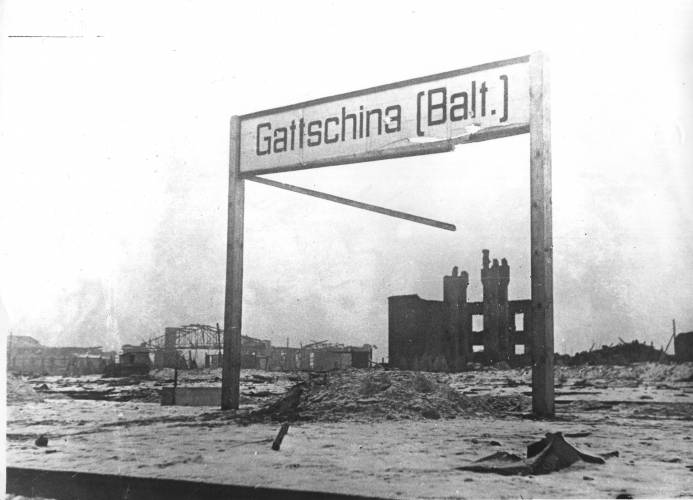
I well remember Gatchina, there was some huge barn, and there was a space fenced with wire, behind which our prisoners of war were. We lived there for two or three months. I had a brother and two cousins, and our parents followed us on foot, my mother and aunt barely found us, small, screaming and hungry.
We were allocated for six meters for four children and two women, someone slept on the floor, someone under the bench. There was nothing
In the camp, we were given a little bit terrible. Then everyone who was older was taken away somewhere in the Baltic states, and we, kids who were not needed, were put in a warmth with their mothers, they drove a little and simply threw in the Leningrad Region at a small station. And we went to look for a place where you can live, a village where we were allowed. I remember how we walked, snow was already lying, we knocked on some hut. We were not accepted everywhere and not all: who needs four children and two aunts? We walked for a long time, but still in one place on the outskirts we were accepted, it was the village of namede. There many children from Pushkin stopped with mothers. Even when we then returned to Pushkin, we all settled in the same house. Already in 2000, my son drove me there, we needed a certificate of where we were in the occupation. And the people who accepted us were still alive, and they confirmed that we lived with them at that time. And then we were allocated for six meters for four children and two women, someone slept on the floor, someone under the bench. There was nothing, it was very difficult. When the first grass crawled out in the spring, we walked with my sister, tore it, and our mothers baked some cakes out of it. Then my sister and I gathered spikelets. So that our mistress did not drive us out, my mother drowned the stoves, cleaned everything. And she worked on the railway for the Germans, and all the women worked almost there, some kind of ration was given to them for this. And when the Germans passed through our village, they went into the houses, then even the village did not give us out, but of course, we were still afraid and hid - in the barn, in the hay, we sat there, and we were not visible. When the Germans passed, we got out of there. But if then, in 1941, the Germans did not take us out of the city that they freed from the civilian population, then we would have died there exactly with hunger: those people who went to neighboring fields, searched for uncleaned potatoes, immediately shot. And in Pushkin, after all, there were no cards, even those 125 grams that were issued in Leningrad. In Pushkin there used to be a large market, all scored by goods. Mom said that when, even before the Germans arrived, shelling began, bombs were torn, there the text of sugar was gone right on the ground, we melted from the heat, and we all that could be collected. And near the industrial store, mom and aunt found a large leather roll, and when they were kicked out of the city, they took this skin with them, and then, already in the village, they cut into pieces and sold, exchanged for food, it also helped us. When Pushkin was released, we returned there. Then it was a big minus for us that we were in the occupation. My cousin graduated from a pharmaceutical college and only with great difficulty settled down in the military unit, they did not want to take her because of this. And the sister was not allowed to marry the military. For a very long time, this stigma lay on us, as if we were to blame that the line of defense passed through us. And I had two stamps - the fifth point ( a column of nationality in the documents. - SR) , so I barely entered the institute, only for the evening, and they didn’t let me go abroad.
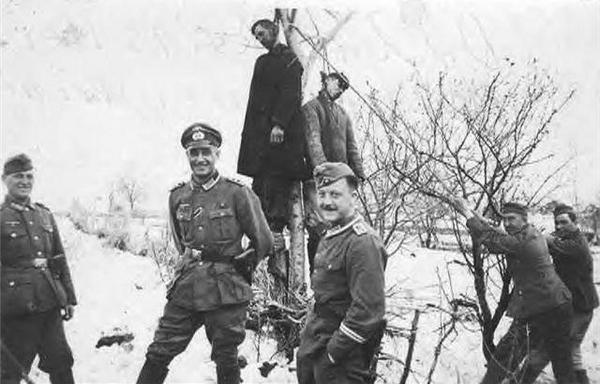
The fact that all Jews were shot in Pushkin, she found out after the war.
- When I studied at school, one girl told me how she walked along the street with her mother and saw the hanged people - an elderly person and a girl with long beautiful hair, and there was a sign on them: "Partisans." In this place, Jews were hung and in general everyone, now the chapel is standing, opposite the Avangard cinema.
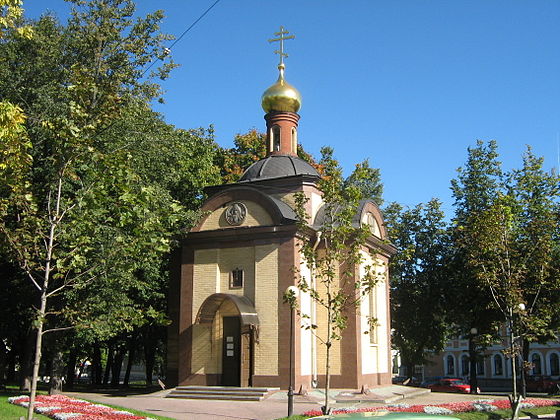
And nearby lived the famous writer-fantast Belyaev, then he died of hunger, and from his windows it was clear how all this happened. A lot was hanged, and Jews, and all indiscriminately. Before the war, we had 36 thousand inhabitants in Pushkin, of which 18 thousand were taken away from the camp, to the camps, to Germany, to Estonia, to Lithuania, about nine thousand died from hunger, and no one had left of the Jews.
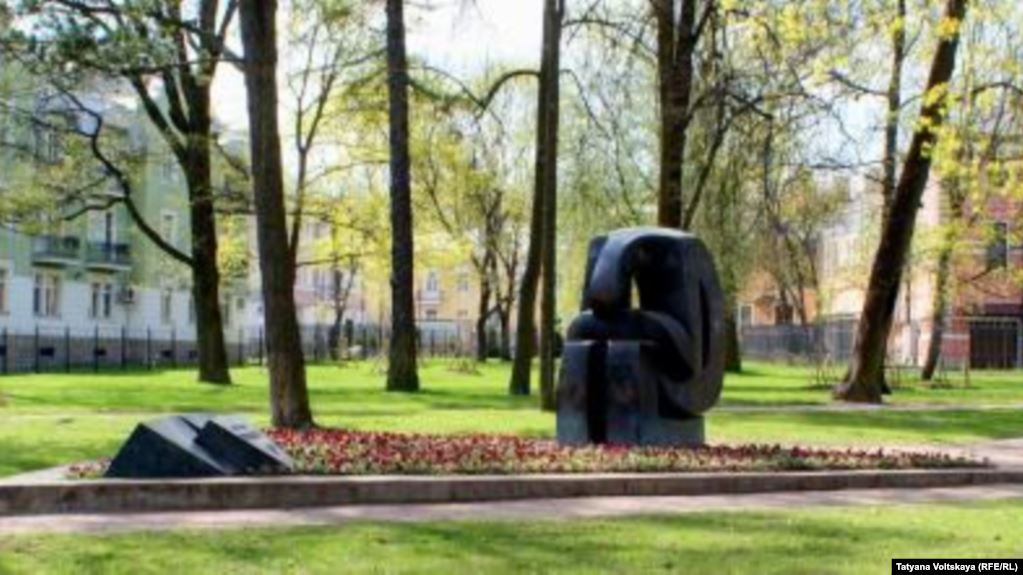
Such a fate befell the Jews not only in the city of Pushkin. Historians believe that during the occupation in the Leningrad region several thousand Jews were shot, these places are sometimes called the northern border of the Holocaust.