
Translated material
Urna in a bag from Auchan. The elections were held on hemp, with green and scammers
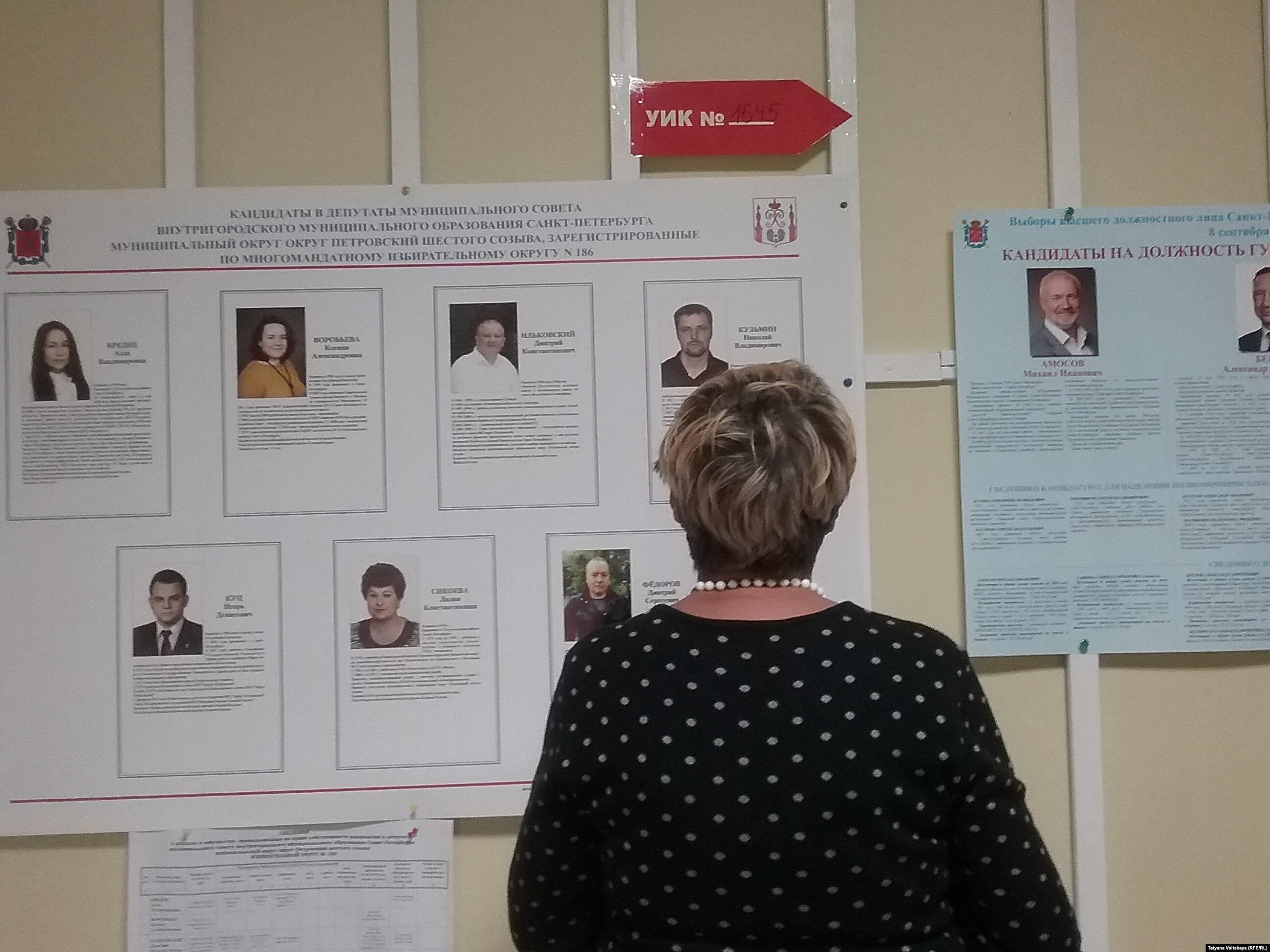
In Russia, elections were held in more than 80 regions of the country. The vote stretched for three days. About nine thousand election campaigns of different levels, including the election of governors, took place. Polling stations closed on September 13 at 20:00. Correspondents of the North. Realia tell how voting in the north-west of Russia took place.
How the "early"
The one day of voting was preceded by an early vote, which began on Friday, September 11. Residents of Russia could vote in polling stations themselves, adjoining territories, houses or outside the voting room. Activists, opposition politicians and members of the election commissions opposed a multi -day vote. However, the Central Election Commission approved its holding. The Chairman of the CEC Ella Pamfilova noted that the decision to vote on September 11 and 12 was made "in connection with the current sanitary and epidemiological situation to ensure the safety of Russians."
The Voice movement noted that only on September 11, about 600 messages were received about violations with early voting. Basically, they relate to the rights of observers and members of the commissions, a bribery of voters, a centralized submission of lists to the home voting, as well as forced voting.
In the Leningrad Region, observers from Navalny’s headquarters recorded that students were sent to one of the sites in groups.
Wed VKontakte Wed in classmates Wed on TwitterAccording to the "observers of St. Petersburg", in Kudrovovo, the chairman of the election commission on section No. 967 Eduard Nizovsky threatened the member of the commission Dmitry Shopot to break his hand. The shopkeeper recorded the possible falsification of the number of ballots in the urn. Nizovsky stated that he did not threaten anyone, and threatened to file a complaint about slander.
Disorders during early voting were reported by the candidate for governors of the Arkhangelsk region Irina Chirkova. According to her, observers noticed that in several areas in different regions of the region there are no numbers in the acts of early voting. In one of the sections, the document was completely empty.
In the Gdovsky district of the Pskov region, a PEC member refused to provide copies of acts of early voting, explaining this by the lack of copying equipment. And the on -site vote on September 11 was generally held without a registry.
In the Republic of Komi, during early voting, they attacked members of the precinct election commissions of Bogdan Litvin and Artem Vladimirov from the Communist Party. It happened in Syktyvkar. The conflict arose because of the leaflets that the victims allegedly stuck on the night of the main voting day. At the same time, the director of the PVS company ( engaged in the processing of secondary raw materials in Syktyvkar. - SR ) Alexander Nesykin, his deputy Alexei Belentsov, as well as the chairman of the Association of Children's Public Associations of Komi Vasily Andreev, identified as attackers. The latter did not deny his participation in the conflict, saying that the victims attacked them themselves, after they made remarks about illegal campaigning.
Schlosberg supposedly promises to "swing the area, because near Belarus" and "put at the head of European values"
Unusual leaflets during early voting appeared in the Pskov region. In the city of Nevel, on the night of September 12, unknown people distributed leaflets with supposedly “intercepted” negotiations of the leader of the Pskov “Yabloko” Lev Schlosberg and public figure Mikhail Khodorkovsky. It follows from the text that Schlosberg supposedly promises to "swing the area, because Belarus is nearby" and "put at the head of European values. Khodorkovsky in response guarantees good financing.
In the Leningrad Region, the turnout during early voting amounted to 28.2 percent. In the Komi Republic - 16.9 percent, in the Arkhangelsk region - 18 percent, in the Novgorod region - 9 percent.
A single voting day
On a single voting day on September 13, the elections in the regions of the north-west were calm, no significant violations were reported. The Voice movement, which monitors the voting progress, clarified that the five leading regions in the number of messages on the “Card of Violations” were Krasnodar Territory, Chelyabinsk, Nizhny Novgorod, Samara, Belgorod, Rostov regions, as well as Yanao, Tatarstan and Moscow.
According to observers, the main trends of the voting day are:
- "Legal arbitrariness" of election commissions. "Voice" indicated that members of the election commission simply refuse to accept complaints, acquaint the PEC members with documents and provide acts of early voting;
- Signals come from the regions that falsifications are being prepared - stuffing ballots and their replacement;
- In the areas, they hide broadcasts from video cameras and make access to the GAS “Elections” system difficult - you need to enter captcha all the time;
- HEC members behave aggressively in relation to observers and journalists.
In the Pskov region, in the election of the head of the Sebezhsky district, only for the very single voting day managed to collect all candidates for the post in one balllet.
In the Selyuzhsky district of the Pskov region on the second day of early voting - September 12 - the court allowed the LDPR candidate Alexei Kharlashin to participate in the elections for the post of head of the district. At the same time, the territorial commission did not annul the results of the vote for September 11, when Kharlashin was absent in the list of candidates.
Despite the restored status of a candidate, Kharlashin considers his rights violated. He told the north. Reali that he could not fully conduct the campaign because of the courts, he did not have the opportunity to appoint observers, because the court made the decision to participate in the election on the eve of the main voting day, and most importantly, the election commission decided to take into account all the ballots from early voting. "They have already sued the court to take into account the prechrer. In general, they take off the most powerful candidates. I have a chance to win, I took second place in the past elections in the same area," Kharlashin said.
The head of the LDPR faction in the Pskov Regional Assembly Anton Minakov specified the North. Realiy that the Harlashin’s lawsuit to cancel the results of early voting, the Sebezh District Court refused to register. The candidate has already appealed the decision in the Pskov Regional Court. According to official figures, about 1,500 voters voted ahead of schedule, and this is about 15 percent of the total number of voters of the district, says Minakov.
Within three hours, he received more than 800 calls from an unknown number
Already in Pskov itself on the morning of September 13, unknown people attacked the candidate for deputies from Yabloko Nikolai Kuzmin with spam calls. Within three hours, he received more than 800 calls from an unknown number. In parallel, two independent self-nominated candidates Pavel Oberemko and Mikhail Mikhailov, as well as the deputy head of the regional branch of the party of Lev Schlosberg, deputy of the City Duma Dmitry Permyakov, called. The latter oversees the observers from the "apple".
The single voting day began restlessly in the Leningrad region. In the village of Telman, a conflict occurred between an independent observer and a member of the commission with a ruling vote. Even before the opening of the site, the observer could not get acquainted with the documents at the chairman's table. The same member of the commission that refused to introduce himself and pushed the observer prevented.
In Bolshaya Izhora, the school, where two sites were located, were guarded by the fighters of riot police and the Russian Guard. On the eve of the city, the light was turned off. Polling stations had a generator.
In Komi, unknown doused the greenhouse of the candidate for the State Council of the Republic of Viktor Vorobyov. This happened near the Syktyvkar court, where a hearing was held on a lawsuit against the territorial election commission. Vorobyov connects an attack with his political activity. He filed a statement to the police.
Political scientist Konstantin Kalachev believes that the passions that were boiling throughout the elected campaign in Komi are associated with high protest potential in the region and similar methods ( attacks on opponents. - SR ) clearly go beyond the political struggle. “What of all this will be at the exit, we find out tomorrow. The techno has been too overcame there. This is for sure,” says Kalachev North. Realiy.
The opposite situation in the Leningrad region. According to the political scientist, a "calm referendum type campaign" was held in the region. This became possible, because the current governor of the region Alexander Drozdenko actually had no competitors. “He [Drozdenko] is non -alternative as a development driver and lobbyist of the territory. He saw polls on the Leningrad region. Voters are not against the next five years to complete what he had begun,” Kalachev noted.
According to the “Voor Violation Maps”, in the Komi near the three sites, people who proposed to vote for a candidate from a “green alternative” for 900 rubles.
Observers did not record serious violations on the main voting day in the Arkhangelsk and Novgorod regions. The CEC of Russia also has not yet revealed serious violations during a single vote day that could affect the election results. They came to similar opinion in the Ministry of Internal Affairs. At the same time, as noted by the first deputy head of the department, Alexander Gorova, “mass stuffing” was discovered into social networks of provocative information related to voting.
Voting on "hemp"
Caring for the health of Russians during the Pandemia of Coronavirus forced the election commissions to come up with unusual plots for voting. For example, in the Vsevozhsky district of the Leningrad region they voted on the bus, and in Kudrovo it was possible to cast their vote at the entrance to the entrance of their own house.
In Murino, the voting site was organized near the transformer substation, and the urn for the ballots was in the Auchan bag. According to the chairman of the commission, they were given a tent in which a vote was supposed to take place, but it flew away due to strong winds.
In the Pskov region Polling stations were also placed on buses, and some of the voting places were similar to shopping tents.
In Arkhangelsk, near the House of Folk Art, where the site is located, voters were met by Yunarmeye adolescents in military uniforms. They demonstrated an exhibition of weapons from the Great Patriotic War.
Despite the fact that the CEC reported on a high turnout in a number of regions, the voter reluctantly went to the plots. According to political scientist Abbas Gallamov , this is due to the general distrust of the electoral system.
“People previously suspected that the elections in the country were not very honest, and the last novels of electoral legislation, the introduction of which was accompanied by active criticism, which applied for the general growth of protest moods led to a significant deterioration in the perception of the institution of elections. This leads to a decrease in turnout,” the political scientist said.
Gallimov is sure that you can increase the turnout only when returning real competition to the elections. It is very skeptical to official numbers in the appleance for the election. In his opinion, you can relate to the official numbers of the CEC according to the turnout on the elections in the same way as "Chikatilo's statements about its innocence."
Preliminary results
According to the CEC on the morning of September 14, the turnout in the regions where the elections of governors were held:
- Leningrad region - 51.5%
- Komi Republic - 30.1%
- Arkhangelsk region - 32.6%
In the Arkhangelsk region, the acting governor Alexander Tsybulsky gained 69.5 percent of votes after processing 100 percent of the protocols. In second place is the deputy of the Arkhangelsk Assembly of Deputies Irina Chirkova. 16.9 percent of the voters of the region voted for her.
The acting head of the Komi Republic Vladimir Uyba received 73.1 percent of the vote after processing 100 percent of the protocols. The nearest opponent of Uybe - a deputy from Usinsk Andrei Nikitin - gained 10.8 percent.
In the Leningrad Region, Alexander Drozdenko again became the governor. 83.6 percent of voters voted for him. The closest pursuer did not gain eight percent.
At the same time, in the Pskov region, in the Upeligen volost in the elections of deputies of a rural settlement of 15 chairs, representatives of United Russia took only five places. Seven mandates received self -nominates, one at a time - the Communist Party, "Fair Russia" and "Yabloko".