
Translated material
"The past among us"
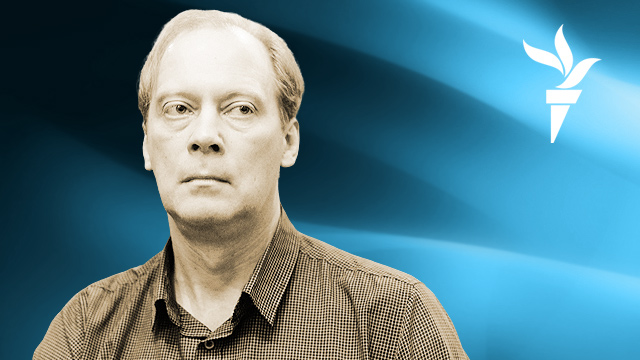
On October 16, 2020, Anatoly Kirpichnikov, a great archaeologist, professor, doctor of historical sciences, head of the Department of Slavic-Finnish archeology, the Institute of History of the Material Culture of the Russian Academy of Sciences (IIMK RAS), died in the ninety-second year of life. For Pskov and other ancient cities of the North-West, he was especially expensive, since he did not spare the time and time to protect the historical monuments of Ancient Rus'. He spent his influence, he spent his influence on convincing the regional authorities to take the side of the national culture, and not the interests of the business.
One of the articles of Professor Anatoly Kirpichnikov is called the "past among us." Thanks to such rare people as bricks, the past and present can become something one. Cultural layers are not mixed, but in contact, interact.
The past is not dead stones, dead bones or dead languages, but a pulse of time. Archaeologists feel him. But this is not enough. It is not enough to dig up something ancient. We must correctly enter this antiquity into our lives. Revive.
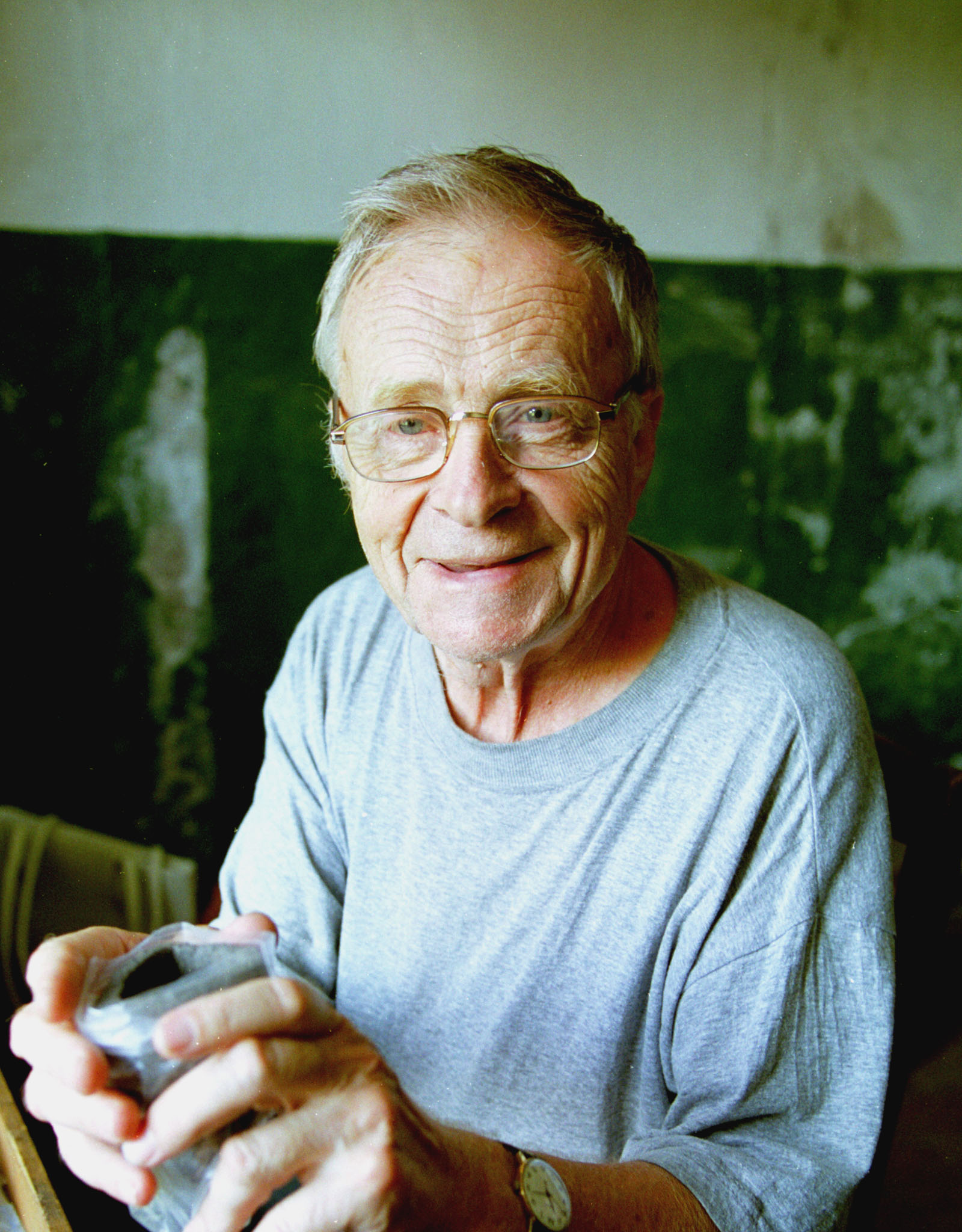
The doctor of historical sciences of bricks did this. He deepened into Russian land, got into the light, studied, told, changed our ideas (for example, about the old Ladog - the ancient capital of Rus'). He published hundreds of scientific historical works. It could be "stone fortresses of the Pskov land: Gdov, Izborsk." And there could be “Autographs of Yuri Pavlovich Spassky” or the article “On the annalistic term“ Klin ”.
One of his works is called "the journey of Nikolai Roerich in the first centuries of Russian history." Now you can write a big work "The journey of Anatoly Kirpichnikov in the first centuries of Russian history." It was a long journey - almost in a century long. But the journey could end without starting. For example, in blockade Leningrad.
In one of his articles - “Russian discord” - Anatoly Kirpichnikov wrote not about Rurik or Alexander Nevsky, not about the old Ladog and not about Pskov, and not about Russian medieval weapons, as usual, but about his own family. And this, too, was connected with excavations. Only the cultural layer was much closer and belonged to the twentieth century. That article, printed in 2003, was written based on the materials of the family chronicle and began with the words: "My eldest daughter Lena found in her apartment the old portfolio with family documents that I considered missing. The papers touched my mother Maria Ivanovna Kirpichnikova, who died in 1943 in blocked Leningrad."
Anatoly Kirpichnikov writes how he and his parents survived the first - the most terrible - the winter of the blockade ("Mother saved me and my father from starvation"). Maria Ivanovna gradually exchanged all any significant things for bread, but in the summer of 1943 she fell on the Vyborg side under the bombing. The Germans bombed the military plant. Anatoly Kirpichnikova’s mother worked at the factory by a doctor and headed for lunch.
Anatoly then studied in the sixth grade and forever remembered the terrible picture: the mother of the mother’s body in a hospital corridor riddled with fragments.
"Russian discord" is a brief story of the Russian twentieth century on the example of one family. The fact is that the Kirpichnikov family was divided after the October Revolution. The cousin, Vladimir Olisov (by the origin of the Tver peasants) immediately after the revolution - November 8, 1917 - prudently took his wife and children to Yalta, and then to London. Vladimir Olisov held one of the most fashionable workshops in sewing women's clothing on 14 Marine Street, in Petrograd. There, in 1915, his niece, mother of Anatoly Kirpichnikova, Masha Olisova, came from the peasants of the Okovesky district of the Tver region. It was her that Olisov left the workshop at the disposal. So, the peasant Masha Olisova met the proletarian revolution, suddenly becoming a bourgeoisie.
All those interested can find and read the article "Russian discord". It has a London photograph of the Olimov family, taken in 1922.
Already after the Second World War, the schoolboy Anatoly Kirpichnikov made an attempt to find his London relatives. This attempt was fatal, although the matter could end and worse. In 1946, Anatoly Kirpichnikov wrote a letter on the BBC-asked to help with the search. The letter, of course, intercepted the Soviet "competent authorities". “I signed a sentence as an unreliable, suspicious element,” the professor of bricks recalled many years later. Until 1984, he - a large scientist - was not released abroad (only once, by oversight, he went to Warsaw).
There are meaningless sacrifices, and suspicion, and suffering, and forced wandering. But there are those who are still trying to change the usual course of events
Kirpichnikov said: "At the interview, officials of different departments told me that I should not go to Denmark, for example, because she is a member of NATO." Yes, and in socialist Bulgaria, the Chekists convinced Kirpichnikov, it is also not worth going, because "there is more freer than in capstarans, and you can approach the Soviet person and immediately recruit agents of the CIA." Anatoly Kirpichnikov writes that he was suspected of an effort to change his homeland and reunite with his family.
And now , “years have passed, total surveillance of people began to go into the past, they waved my hand at me, began to let me go abroad, where I didn’t stay for some reason ...” Relatives were found-in New Zealand, Australia and Canada.
Anatoly Kirpichnikov wrote this article about the Russian discord at the beginning of this century and completed it with questions: “What is the coming century preparing us? Will there be fewer meaningless sacrifices, suffering, suspicion, forced wandering around the world or just flights over the best share?” After almost twenty years, partially partially can be answered. Humanity has changed, but not too much. There are meaningless sacrifices, and suspicion, and suffering, and forced wandering. But there are those who are still trying to change the usual course of events.
In recent decades, the Eurasian idea has been popular in Russian near -historical circles - with an emphasis on Asia: it was like no Mongol yoke, but there was an union equal. The basis of such statements is the Gumilya idea set forth in the book "Ancient Rus' and the Great Steppe." “The Union with the Tatars turned out to be a blessing for Russia,” Lev Gumilyov insisted. It does not rot, not a yoke, but a union. Moreover, the union is mutually beneficial.
Kirpichnikov had the opposite look at the Russian Middle Ages. In March 2009, in an interview with the “Pskov province”, he again and again explained that the invasion of the nomads of nomads in the middle of the 13th century was no good: “... such a psychological rebirth was performed. And then it began: another era, an Asian, atrocities and so on, and so on. We went through the European road of Russian history. We walked along the line of European civilization, and we really have it. Crafts and trade were highly developed, the city flourished, and then the ruins of the churches, in fact, it started from a clean leaf. But did it disappear? And if it disappeared, is it forever?
What the bricks called the "barbaric Asian" is not directly related to either religion or the nation. Barbarism, like the Asian, are the concepts of international and supervisory. Everywhere, those who want to start from a clean sheet live - not wanting to listen to the past ... Right now, many influential people are engaged in this in Russia, earning on this and hiding behind "patriotism."
Anatoly Kirpichnikov in Pskov in recent years we are used to seeing several times a year. Basically, these were cultural advice and urban planning advice. Much earlier he came here as an archaeologist. Since 1968, he headed archaeological expeditions in Pskov, Porkhov, Velier, Island, Gdov ... Yes, in other places of the North-West of Russia, he also searched and found-in Novgorod, Kopori, Ivangorod, Oreshka (Shlisselburg), Kingiseppe, (Yamgorod), Vyborg, Priozersk (Korela), in the Tiver town. Not to mention the old Ladoga.
Kirpichnikov was a member of the Council on the preservation of cultural heritage under the governor of the Pskov region. But he was also a full member of the New York Academy of Sciences. Still, we do not live in 1946.
But precisely because we do not live in 1946, we must constantly remember that construction companies now have a special influence. Their representatives learned to deftly bypass urban planning regulations and build their home houses where it is impossible to build either by law or conscience.
In the bells for the sake of saving antiquities, it is necessary to beat constantly. But this is not enough. Kirpichnikov-archaeologist as a time traveler, having practically visited the distant past, could evidence explain what actually happened in the distant past. In what he said, there were no sensations that adore many mass media. But they had thoroughness. No need to confuse scientific and glossy magazines.
If the representatives of the "bourgeois" family of Olysses after the October Revolution remained and died, then the chances of traveling abroad to international scientific conferences at Kirpichnikov rose. All this was also barbarism. Like the desire to start life from a clean sheet-in the same post-Soviet St. Petersburg, where they once intended to build a 396 meter "Otta Center", it is also Gazprom-City.
The Gas Skireb was supposed to appear not from scratch, but on the site of unexplored cultural layers and structures of the eras of the Neolithic, early metal, the Middle Ages and the New Age. Then Anatoly Kirpichnikov, like many other people of cultures, opposed, and did not give a threatening tower to build a tower.
In Pskov, there were also enough people who wanted to "start from scratch." Here he repeatedly opposed inappropriate high -rise construction and sealing development.
First of all, bricks studied the Russian north-west. Sorting through the numerous finds in the old Ladoga, Novgorod, Gdov, Porkhov, Izborsk, he saw very well what they indicate. To Europe. Russia is Europe. And this can be seen not only in the Petrine era and later times. She was always Europe - to the best of enlightened, albeit with huge flaws and excesses. But not at all what they often try to imagine it today.
Kirpichnikov studied ancient weapons, but he was not warlike (he was a specialist in the military armament of the first seven centuries of Russian history. His doctoral dissertation was called "The military affairs of Rus' of the IX-XV centuries.") Anatoly bricks was not at all similar to those spinning weapons of noisy "reconstructors", which in their own way are also trying to combine the past with the present. The difference is that these dense people drag out the country into the past and thereby deprive us of the future. Kirpichnikov did not forget about the future.
In Pskov, they listened to Kirpichnikov. But they argued with him. It was normal. He convinced someone. Someone could convince him.
Now that Kirpichnikov is gone, people in confusion ask the same question: "Who will defend the interests of Pskov at the very top?" It is bad when, in order to protect historical monuments, we definitely need intercessors with ties (an article about Professor Kirpichnikov in Wikipedia is accompanied by a joint reporting photograph of Kirpichnikov and Putin taken on the excavations of old Ladoga in 2004).
Of course, Kirpichnikov in high offices knew and sometimes listened. However, there was no guarantee that the words of Anatoly Nikolaevich and the words of his like-minded people would change something for the better. The "golden embankment" opposite the Pskov Kremlin was concreted without excavations. A multi -storey building near the Pskov Pokrovskaya tower was erected. The reconstruction of the Izborsk fortress ended with a loud criminal case ...
About the Pskov "golden embankment" bricks once said: "From the point of view of the history of architecture, this is an invention of the 21st century, but, in addition, under it-a cultural layer rolled up by concrete in the very center of the city!"
Under some good pretext, to concrete the cultural layer-in the literal and figurative sense-this is what they learned to do in Russia.
About the residential high -rise building near the Intercession Tower of Bricks, he said that it "invades the landscape, it tears the sky, it competes with this tower, it simply strangles, diminishes it. And this is a genuine tragedy."
For strangers, this is not a tragedy at all, in the best case, an annoying obstacle, or even just a beautiful structure. But the bricks here, in Pskov, was never strangers, and I saw beauty in a completely different way.
Today, turning over my old articles in which Anatoly Kirpichnikov was mentioned, I wrote out his phrases about the state of affairs in Pskov. The words of these were pain and a bitter irony: “Today, Dovmonts are the city of Pskov”, “ Do not have one hundred friends, but also have one anniversary” (about the anniversary of the Izborsk and the money allocated for him), “the officials acted carefully, waited ... But then the screens of silence was breaking through the same anniversary and about the expectation of“ golden rain ”from the federal rain treasury) ... and so on.
Anatoly Kirpichnikov wrote a lot about Alexander Nevsky. Including the behavior of the Russian prince at the headquarters of the Mongol Khan: "It is believed that in the second half of his life Alexander Yaroslavich made an oriental choice to enlist the support of the Horde and prevent the raids of the Mongol cavalry. It seems that this approach is too unilateral ...". It seems that at times, among Russian high -ranking Russian officials, Anatoly Nikolaevich behaved like Alexander Yaroslavich in the Horde Stavka among barbarians. He was careful and understood that sometimes straightforward criticism would only worsen the situation. It was a kind of diplomacy in a hostile camp.
It is important to know that the Horde invaders in the 13th century did not pretend to be Russian princes and Orthodoxy. The current rulers are issued and accepted. And they do not stop being invaders.
But we, including thanks to Anatoly Nikolayevich Kirpichnikov, still remember what European road the first centuries of Russian history were Russian cities.