
Translated material
Two fronts
Why Armenia wants to be both in Europe and on Red Square at the same time
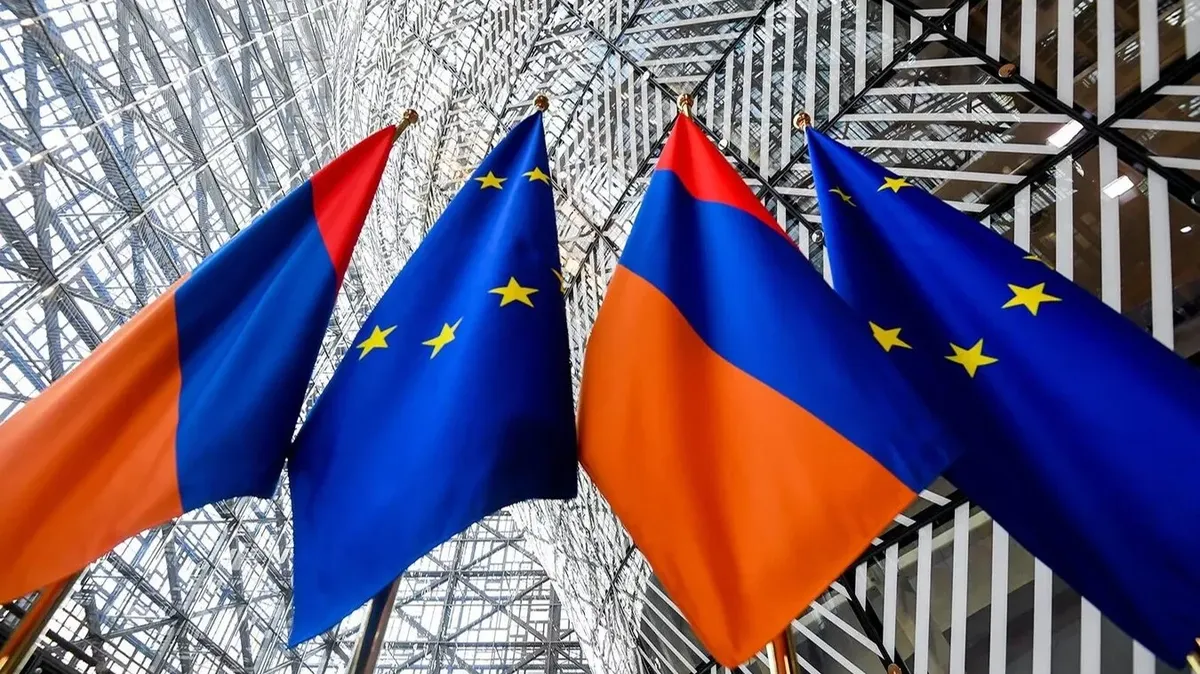
Photo: Compositions by Georges Meurant
If the main political word of recent years had been chosen in Armenia, they would probably become the term “met” (focus, pro). This term indicating the direction explains not only the foreign, but also the domestic policy of Armenia, either pro -Western, or pro -Russian. Surprisingly, the geopolitical separation line passes directly through the National Assembly of the Republic of Armenia.
This multidirectional movement has different explanations. And the number one explanation is security. After 2020, it is difficult to find any sociological survey in Armenia, where the respondents would not indicate security as a number one problem in the country. And since the solution to the problem of security for such a small country as Armenia is associated with the process of acquiring the right partners, the foreign policy course inevitably applies to the country's internal affairs.
For all the good against everything bad
On March 26, deputies of the National Assembly of Armenia in the second and final reading approved the bill on the process of entering the country into the EU. The document was supported by 64 deputies, seven more voted against. The Ayustan opposition faction did not take part in the vote, the faction “I have” had the honor opposed. The Armenian government was approved on January 9th. The project entered the National Assembly at the initiative of Euro Rock (Euro Golos), the initiative group of which included three parties: the European Party of Armenia, the Republic and the name of the Republic - as well as a number of NGOs.
In the first reading, the deputies adopted the project on February 12. Before the second reading, the issue was considered and received a positive opinion in the European integration commission of the National Assembly. “We brought this bill so that the Republic of Armenia expresses its political will to go to the European Union. This process is irreversible. The people supports this, ”said the plenipotentiary representative of the Euro Rock, Artak Zeynalyan.
Even Prime Minister Nikol Pashinyan spoke positively about the project. He noted that the Armenian people, according to their systems of values, want to move towards Europe.
In an interview with public television, the Prime Minister said that his performance in the European Parliament, in which he stated the desire of Armenia as close to the European Union as possible, became one of the most common in social networks.
“I went to the European parliament and said that the Republic of Armenia is ready to be as close to the European Union as the European Union will consider it possible. After my speech, the discussion in Armenia intensified, and these active discussions led to the collection of signatures, and the project is a member of the National Assembly. Political logic says that if the ruling majority, whose political leader made a statement from the rostrum of the European Parliament, will not accept it, it will be difficult to explain not only to our public, but also to the same European community. They may ask: for a minute, you announced this, and your public reacted to this, now you are against this? ” - Pashinyan emphasized.
Despite these words, everyone perfectly understood that such a sharp change of position in the foreign policy of Armenia would not like Moscow. And the answer from the Kremlin was not long in coming.
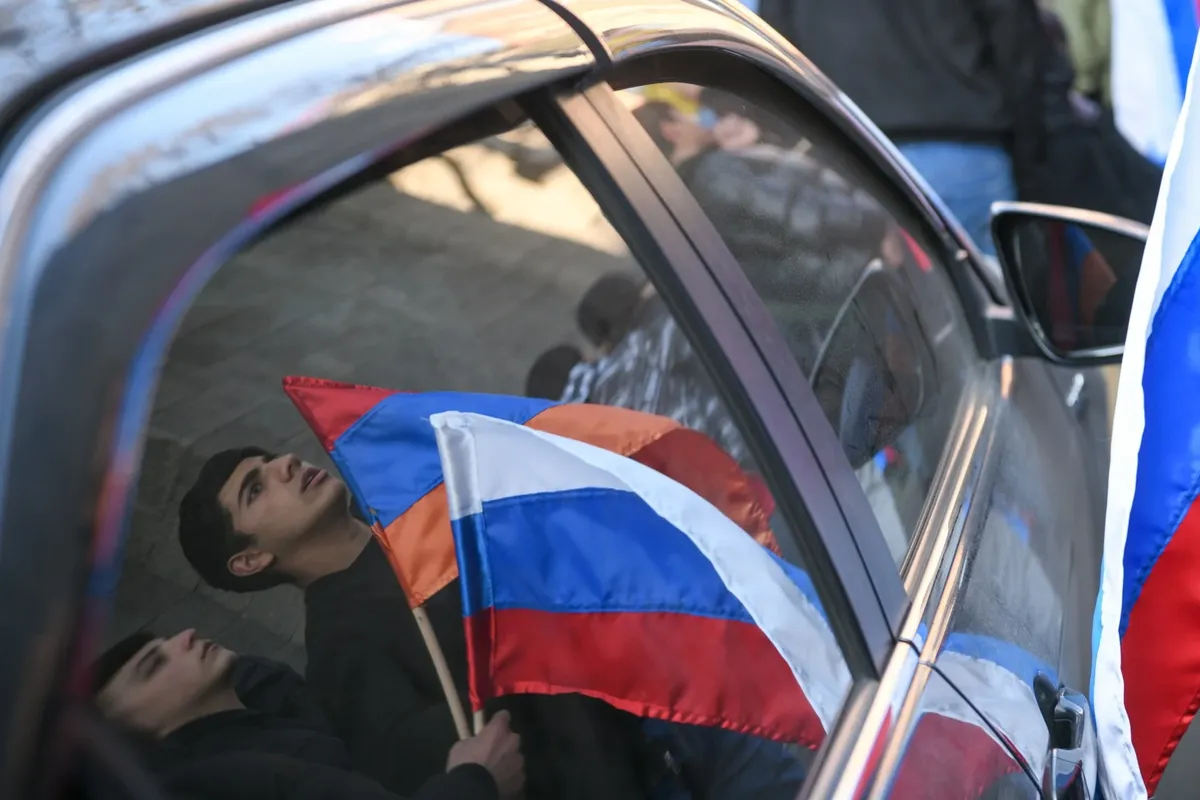
Geopolitical loop
Russian Deputy Prime Minister Alexei Overchuk almost immediately stated that Armenia would have to make a choice between the Eurasian Economic Union and the European Union. He added that if Armenia goes to Europe, Russia will need to revise the whole complex of economic relations with the country.
“In fact, we understand that both the EAEU and the EU have similar summons. And therefore, of course, the country will need to determine and make this choice. Because it will not be possible to sit on two chairs at the same time, this is absolutely for sure, ”said Overchuk.
The head of the analytical center for strategic research and initiatives, the political observer AIK Halatyan understands why Russia perceives movement towards the EU primarily as a geopolitical reversal.
Aik Khalattyan:
“Russia's position is based on an economic calculation. It is clear that the EU will not be able to replace Russia as the main economic partner for Armenia, a vivid evidence of which is, for example, by neighboring Georgia, for many articles of which the Russian market remains indispensable, even despite the presence of an association agreement with the EU and several years of complete embargo for the supply of Georgian goods to Russia during the presidency of Mikhail Saakashvili. However, now the European Union is perceived in Russia not only as an economic union, but also as a hostile political structure like NATO. Moreover, against the background of the official statements of European leaders, what they intend to build a security system, an alternative NATO within the EU, and openly recognizing that this system is directed against Moscow, and they consider Russia as a probable enemy. Given this, any rapprochement with the EU, demonstrative legislative acts about the beginning of the EU membership process (even if there is nothing in reality for this), they are completely different in Moscow than even a couple of years ago. ”
It seems that Nikol Pashinyan is trying to make the process of breaking up allied relations with Russia more controlled and safe for his personal authority. And he fears that the sharp reaction of Moscow and its response steps can cause a severe socio-economic crisis in Armenia, which will naturally lead to serious domestic political problems for the current government. That is why, as well as taking into account the sensitivity of the topic of victory in the Great Patriotic War for the Russian leadership and Vladimir Putin personally, Nikol Pashinyan understood that non-survival in Moscow for the 80th anniversary of the celebration of victory could have very serious consequences for bilateral relations, especially against the backdrop of steps and statements of the Armenian authorities in recent years, which were very negatively perceived in Moscow. And Pashinyan went.
Halatyan believes that in reality, under the slogan, “we go west, go to the EU” Armenian authorities generally mask their movement towards Turkey. It is Türkiye, unlike the EU, that has the opportunity to replace Russia as the main trade and economic partner, as has already happened with neighboring Georgia. It should be noted that the idea that the country's authorities are going to replace Russia with Turkey is quite popular in Armenia and is mainly supported by a parliamentary opposition.
"Where are you going?"
In the Armenian political discourse, you can often hear the expression "Where are you going?" This is considered a real expression of the Kremlin’s collective approach to Armenia. It sounds quite unpleasant, but nevertheless, according to some experts, expresses what is on Earth. Russia is a very strong power in the region. Objectively - it is impossible to live in the South Caucasus and not pay attention to Moscow. Accordingly, it is not surprising that, despite all this work in the direction of European integration, Nikol Pashinyan still decided to be at the Victory Parade on May 9 in Moscow. As they say, the people - the people, the king - the royal.
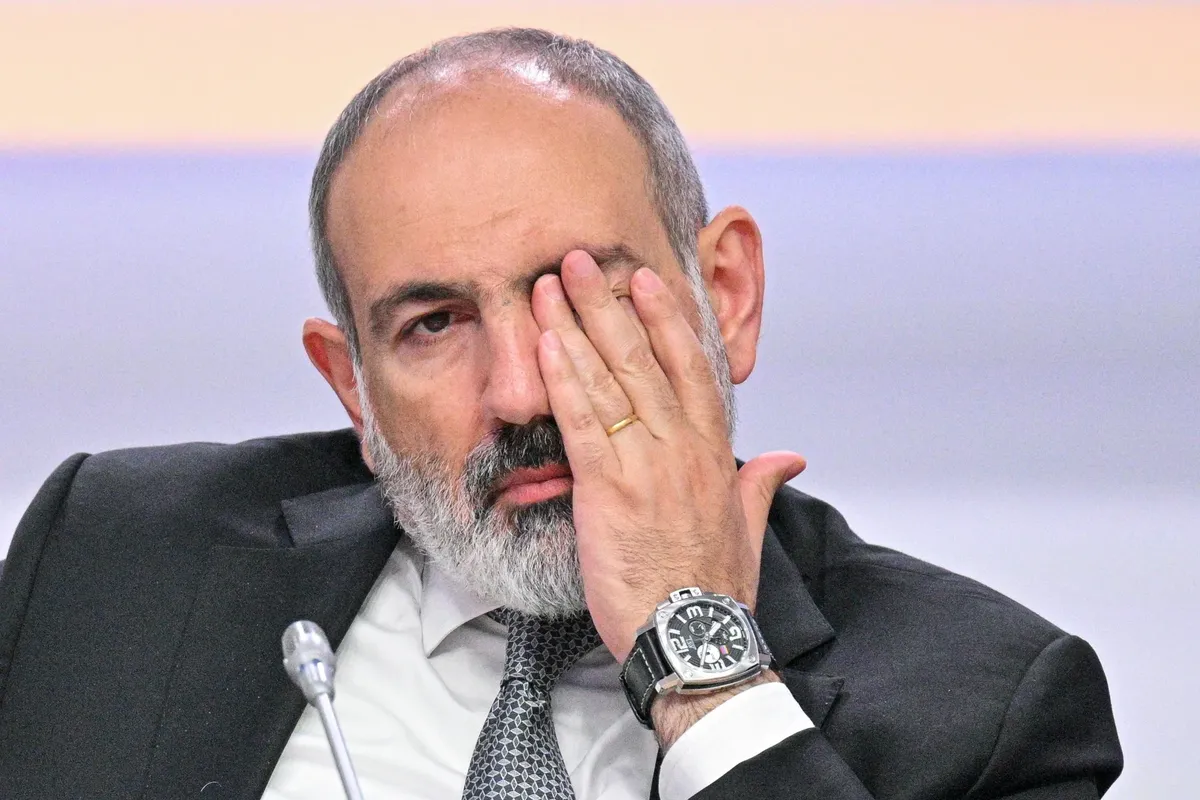
Many citizens, including experts, openly condemned this decision by the Prime Minister with pro-Western orientation. You can’t talk about European values and participate in an event organized by the number one enemy for Europe, Pashinyan’s critics say.
The problem is that wishing to leave the European family is one thing, and to stop depending on Russia in the economy is completely different.
Here are just numbers. In 2024, the volume of mutual trade between countries - members of the EAEU grew by 6.3% compared to last year. According to data published by Armenpress, according to the results of 2024, the share of mutual trade between member countries in the general trade of the EAEU amounted to 17%. For the Republic of Armenia, the share of mutual trade in 2024 amounted to 25.6% of the total foreign trade of the country. In the structure of mutual trade in Armenia with the EAEU countries, 94.6% of the exports of Armenian products falls on Russia. An analysis of the structure of Armenia imports from the EAEU countries shows that 98.5% of the EAEU products imported by Armenian companies falls on Russia. Not very similar to a European choice.
Apparently, the Armenian society, which is much closer to real politics, also understands the situation on Earth than it might seem at first glance. As part of a survey conducted by MPG LLC, a full -fledged Gallup International Association member in Armenia, people were asked: “How correct do you consider Nikola Pashinyan’s participation in the celebration of the Victory anniversary?” The picture of the answers is as follows:
36.7% consider this unequivocally correct;
25.4% consider it more right;
9.5% consider it more wrong;
22.8% are convinced that this is definitely wrong.
Very indicative numbers.
The limits of the desired
Interestingly, the law on the beginning of movement to the European Union was a surprise for Brussels. Deputies of the European Union hastened to cool the enthusiasm of the Armenians. They noted that the membership of Armenia in the European Union will require a long time and effort, this process cannot become a reality in one day or one or two years.
“If someone believes or if some politician promises that Armenia can become a member of the EU in several years, it is obvious that this is an exaggerated expectation. If we are talking about five, seven or ten years, I just predict, given the experience of previous countries, this may be more realistic, ”said the European Parliament from Latvia Nil Ushakov.
Political scientists note that the process of European integration of Armenia and EuroKove have nothing to do with the agenda of entry into Europe. This is done to resolve internal political issues.
The EU in many in Armenia is associated with good life, freedoms and rights. Therefore, a demonstration that you are in this direction allows the ruling force to collect political benefits.
Ahead of the parliamentary elections of 2026, so everyone needs to clearly position in advance in the political field.
According to the coordinator of the programs of the Armenian office of the Fund. Friedrich Ebert, a teacher of the American University of Armenia, the candidate of political sciences, Narek Sargsyan, a change in the country's foreign policy vector began after Azerbaijan’s aggression against the sovereign territory of Armenia, when the ruling elite did not receive the support that was expected from Russia. EU observers stood on the Armenian-Azerbaijani border and became as if public manifestos of this movement.
The new vector of cooperation with Brussels first accelerated sharply, but for a short while, because, according to Narek Sukiasyan, he reached his possible peak. Now the space for the maneuver is narrowing sharply, because any steps suggest the path to real membership. And here in the issue of cooperation there is a dead end, since Brussels do not have a agenda for Armenia in the EU.
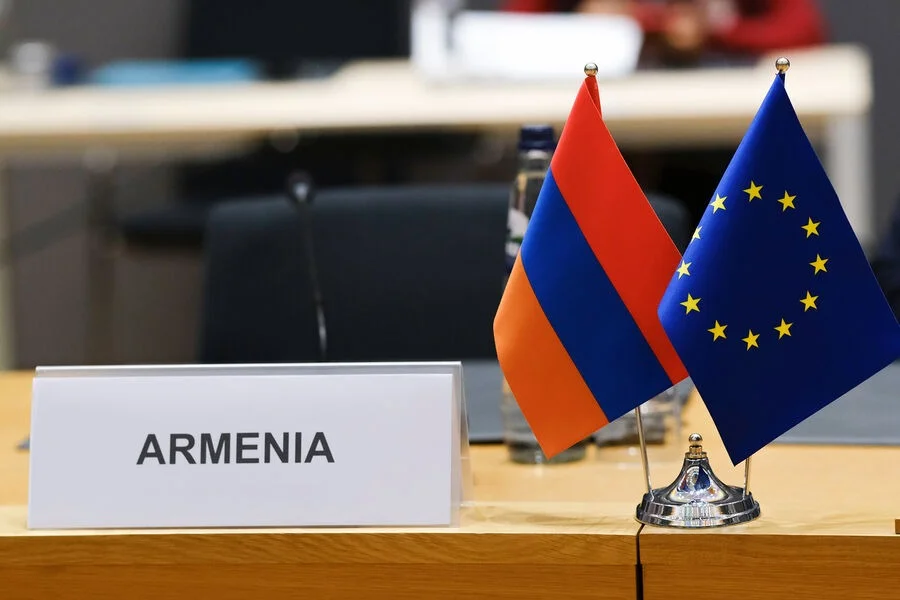
“Armenia at the moment also cannot afford it, even if a legal and technical miracle had happened and the country would meet the standards of the Copenhagen process of membership. Armenia is limited by membership in the EAEU, and at the moment, it seems, the government is more than the rather economic benefits extracted from this. In particular, those opportunities that have been created in recent years through re -export routes, ”says Narek Sukiasyan. The numbers only confirm this: the economy of Armenia is currently not able to replace the Russian market by the Western market. “As for the adoption of the EU membership law in parliament, this is the result of collecting signatures of several political and civil structures. According to the Constitution, by collecting 50,000 signatures, you can make a real project to the National Assembly. In this case, the bill with certain amendments was approved in parliament. But it is mainly declarative in nature. Although this is a law, it is in no way connected with any link in the Copenhagen process of membership in the European Union. I think it is mainly aimed at the internal audience, ”says Narek Sukiasyan.
The political scientist adds that Yerevan and Brussels have currently achieved possible political boundaries of deepening relations. Consequently, the law on membership in the European Union is just another election step taken with the sight for the next year.
Liana Khachatryan