
Translated material
There is fish, no optimism
Recently, Rosrybolovstvo estimated the damage caused to the resources of the Black Sea as a result of the collapse of oil tankers last winter - we are talking about two and a half billion rubles. At the same time, according to the research that the department refers, seafood and fish are safe for eating. Only now it is quite difficult to convince vacationers who, after the disaster, do not willingly go to the beaches of Anapa. “Such things” talked with local fishermen to find out what is happening with their fishing, is it good this year and is it possible to eat this fish at all
Early June morning in the village of Bolshaya Utrish. Not far-15 kilometers to the north-west-Anapa, where the advanced line of struggle with the consequences of the environmental disaster has recently passed (it is difficult to throw away the shots with fuel oils from memory). But this area affected only the tangent. On the beach pebbles, you can still find traces of oil products, and the sea looks perfectly clean. True, the water is still cool, a little bathing, but gradually the beach is filled with vacationers.
The sun had not yet managed to warm the air properly, and life is already boiling. Like drum sticks that knock out the fraction, soar rods: local amateur fishermen are passionate about the barabulka. The caught fish sparkles and pleases the eye, but these volumes of prey, even taking into account an excellent bite, are unlikely to impress someone.
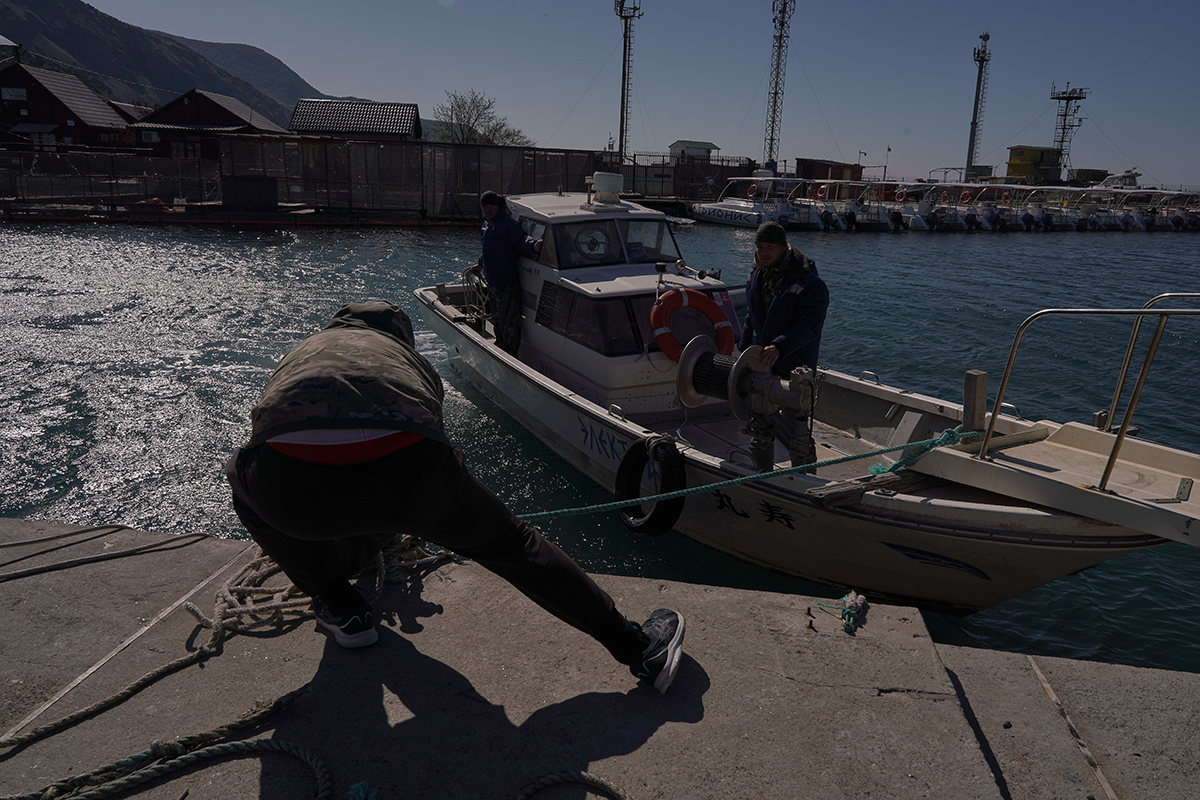 Big Utrish. Fishermen "Electra" return from the sea)
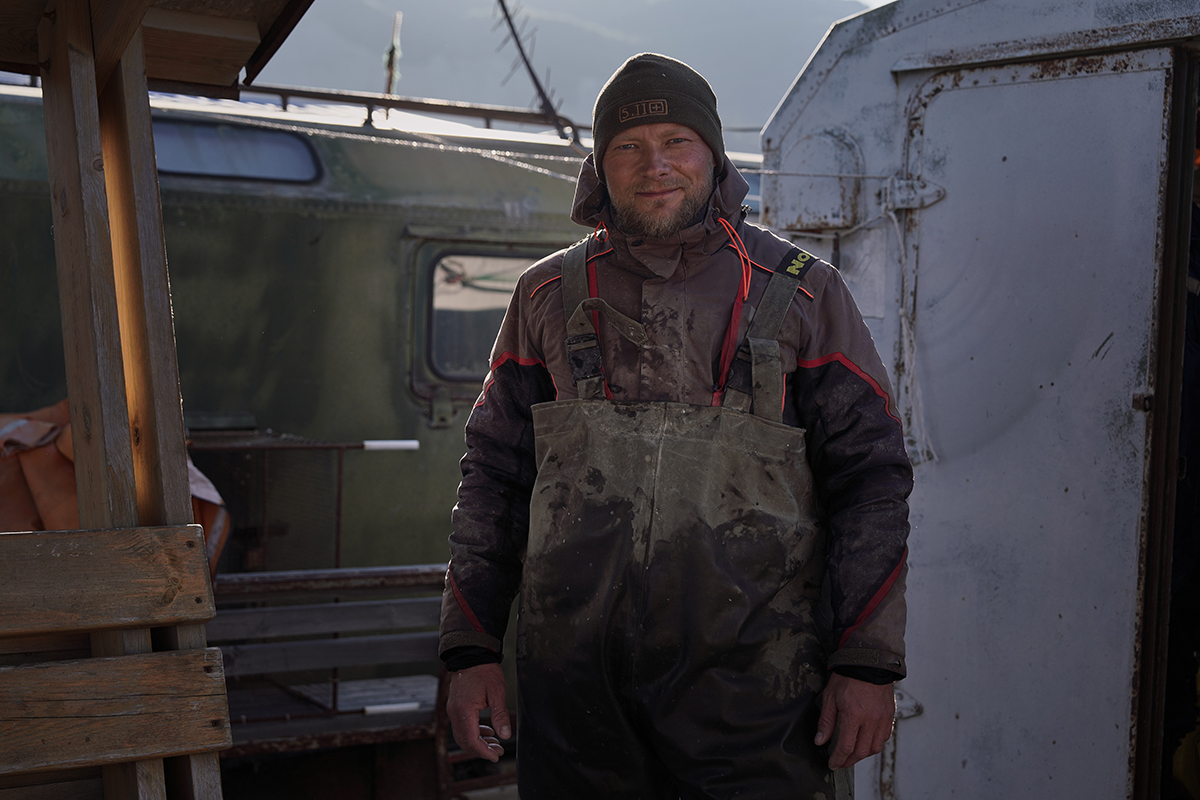 Uzhrish. Vanya from the Irbis brigade. Fisherman, diver, also works as an instructor in divingfufoto: Dima Kaverin
Another thing is if you cross the decrepit iron bridge to the small island of Utrish. Here, the berths are based on fishermen. Two brigades just returned to the shore with the first morning catch and sorted the hut along the boxes.
“There were no normal catch for five years, and this year is very strong in fish, there are a lot of huts,” says Mityai (as he asks to call himself), the team leader and individual entrepreneur. Today, the first exit to the sea brought it to the brigade 600-700 kilograms of fish. This is a good result.
He says that Barabulka (aka Sultank) is one of the most valuable fishing fish of the Black Sea and the basis of the well -being of such small fishing brigades. And although Mityai himself prefers flounder, he admits that it is this relatively small and inconspicuous fish due to its taste that is most popular among the people, especially among tourists.
With varying success, it can be caught all year round, but right now her Putin (intensive fishing) is in full swing and will last for some time until the water near the shore warms up and the fish will not go to the depths.
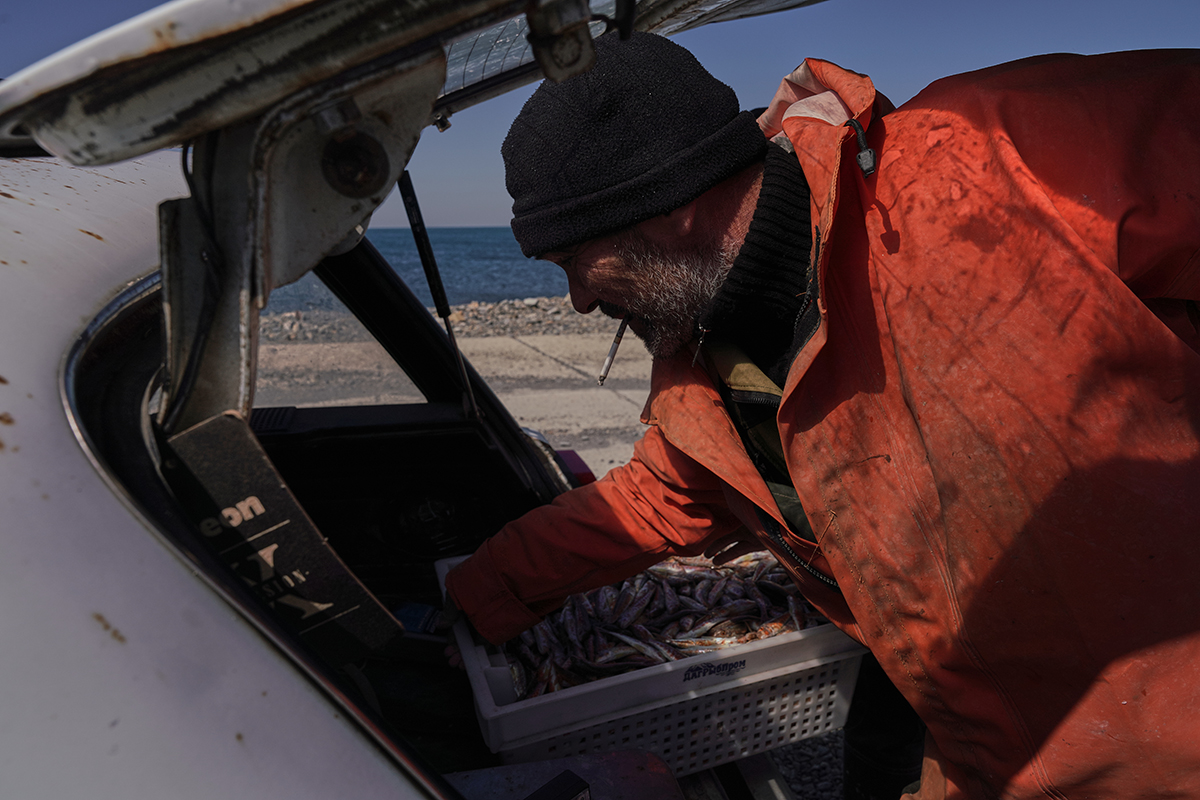 Big Utrish. Alexey and Andrey carry a catch to the car after checking the brigade by the border guards: Dima Kaverin
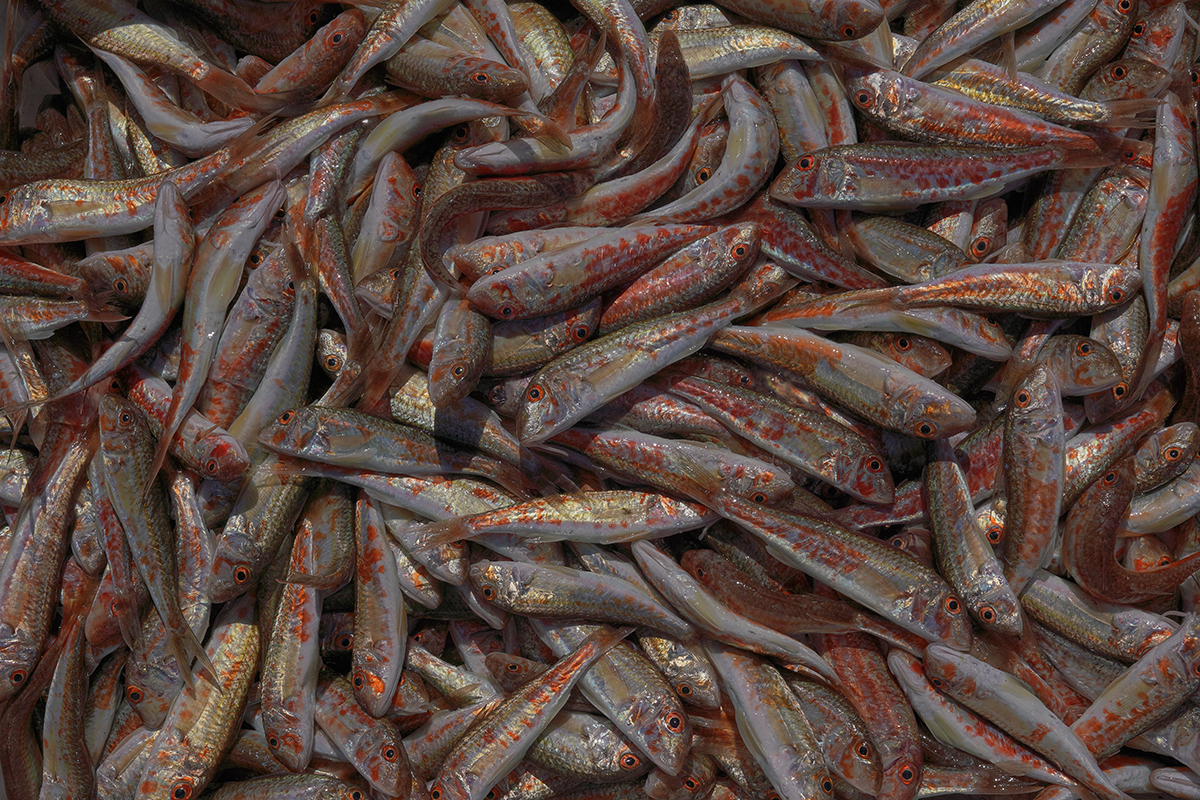 Barabulka caught by the Irbis brigade photo: Dima Kaverin
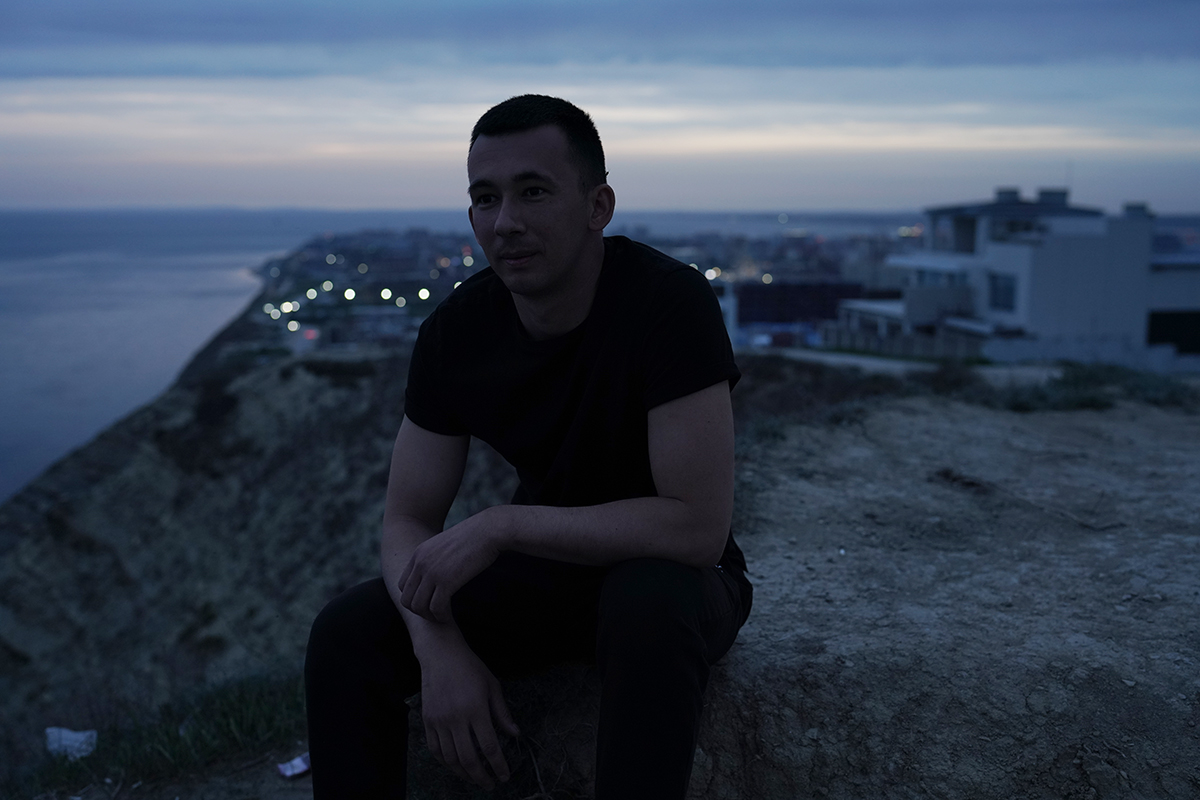 Oleg from the Irbis brigade. The youngest among local fishermen is 29 years old. In addition to fishing, he is working as a driver Taxifoto: Dima Kaverin
Shallow fish
"The volume of catch is wonderful, but how safe is this hut?" - Now this is perhaps the most relevant question. Denis, one of the Utrish fishermen, answers unequivocally: “It is 100% safe. Unlike many other species of fish, the barrabulka is far from stupid, it will not go to the fuel oil. For example, Kefal or Loban - so these water do not smell at all. I once caught Loban in Novorossiysk, right in the bay where the boats are standing. As I remember now: I prepared, but the fish seemed to give some kind of gasoline. And Barabulka is another matter. She always bypasses the polluted seats of the sea. ”
Denis explains that due to high sensitivity to changes in the hut environment, a kind of water quality indicator. “Next to Gelendzhik, not so long ago there was an oil spill , and after that the huto was simply not in the district for a long time,” he adds.
But the public considers differently. Mityai accuses bloggers of this, who, in pursuit of hype, “dispersed the topic” for a long time, that there is no fish from the Black Sea coast of the Krasnodar Territory. “At first, we didn’t want to take a hut at all. I first began to catch in April, but, to whom I called, they answered: “We do not need a fish, you are all in fuel oil.” And we have Rospotrebnadzor every day it takes it for research: no complaints. Already the media began to write that the quality of the Black Sea fish is good. What is the point? People are afraid, their negative in their heads was already deposited. ”
 Big Utrish. Arthur from the Krisha brigade smokes in a fishing room before going to the sea)
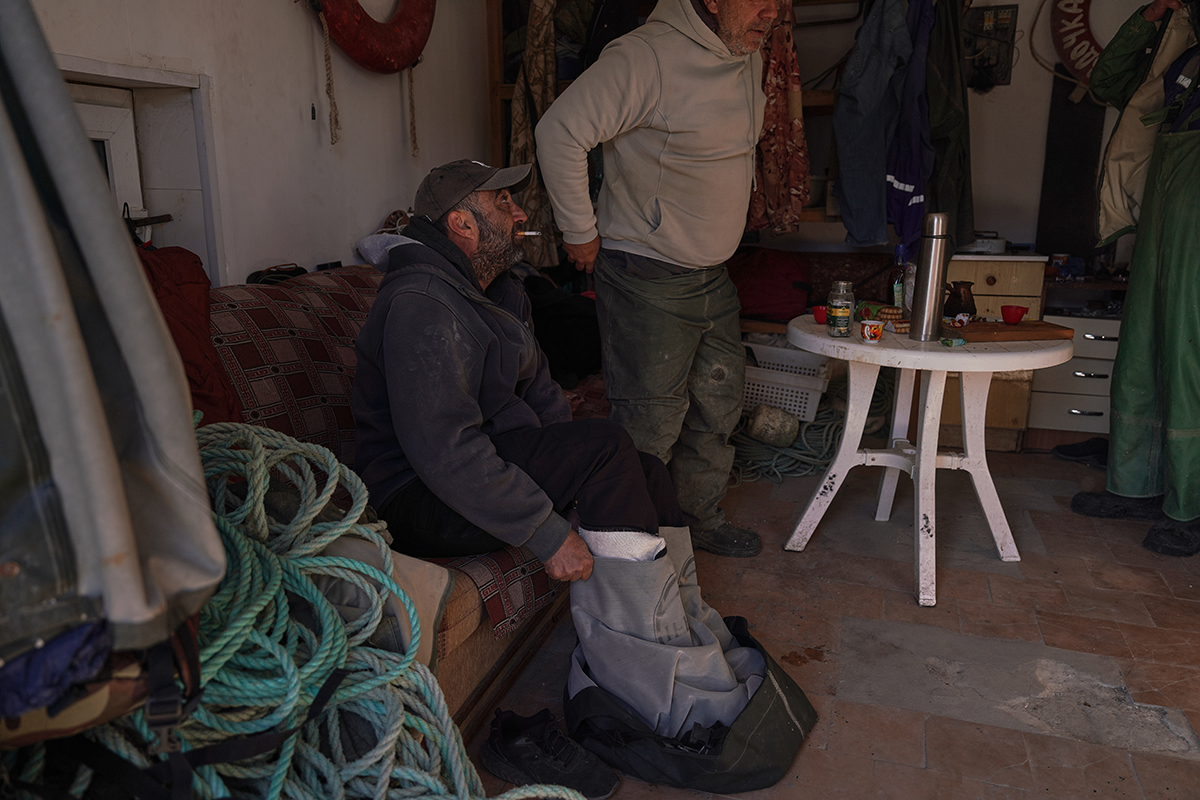 Big Utrish. Arthur and Sergey are dressed before going to Nastoto: Dima Kaverin
However, the main problem is not even that. Barabulka is caught throughout the Black Sea coast. And every seaside village or city has its own brigades, which in Putin go to fishing daily, completely overlapping the local demand for fresh fish. “Of course, we are trying to look for sales markets outside Anapa,” says Mityai, “but basically it is sold only here. No one needs it further along the coast. If there is no demand here, in place, we have big problems. ”
He sighs, looking at the boxes with the morning catch. Now a veterinarian must come, take the fish for analysis to confirm its compliance with security standards. Then all of it will go to freeze. There is still hope that in the summer it will be able to sell it. And now the demand has almost fallen on fresh fish. “We caught the first 500 kilograms, the locals ate and forgot. But there are no tourists. ”
Nominally tourists both in Anapa and in its environs, of course, are. But this is a relative question, especially if you recall the previous years.
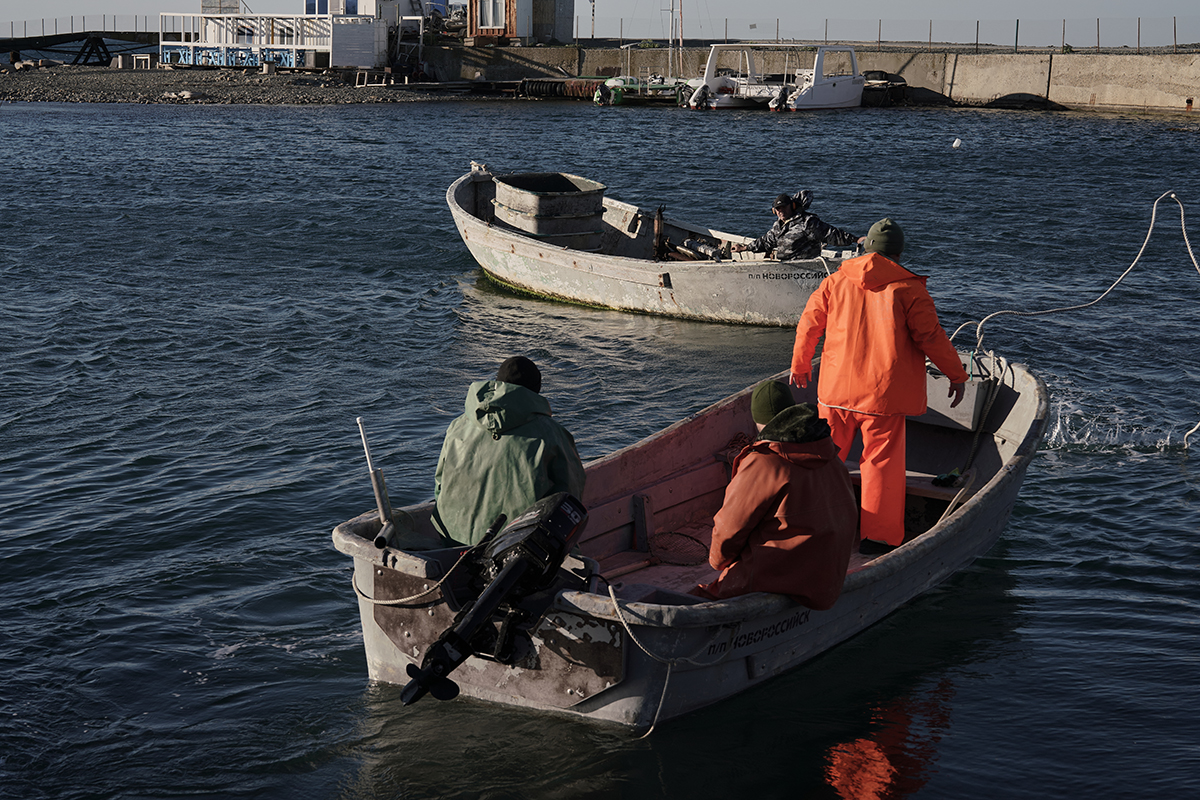 Big Utrish. Fishermen go to sea)
Red flags, black spots
Local beaches this season look really unusual - a relatively small number of vacationers quite allows an apple to fall here, and not one. For the first time stepping on the sand of the central city beach, I catch myself thinking that perhaps everything is not so bad and managed to cope with the consequences of the disaster. These hundreds of people cannot simply ignore the elementary safety rules.
Everything looks quite everyday: joyfully screeching children play with a raging wave, multi -caliber adults lazily turn their bodies lazily under a pleasant June sun. There are not many people in the water, perhaps because the sea has not yet warmed up. Only a long sandy shaft going through the entire beach is embarrassed: a mesh is stretched on it (as it turned out to delay the fuel oil that comes with a high wave).
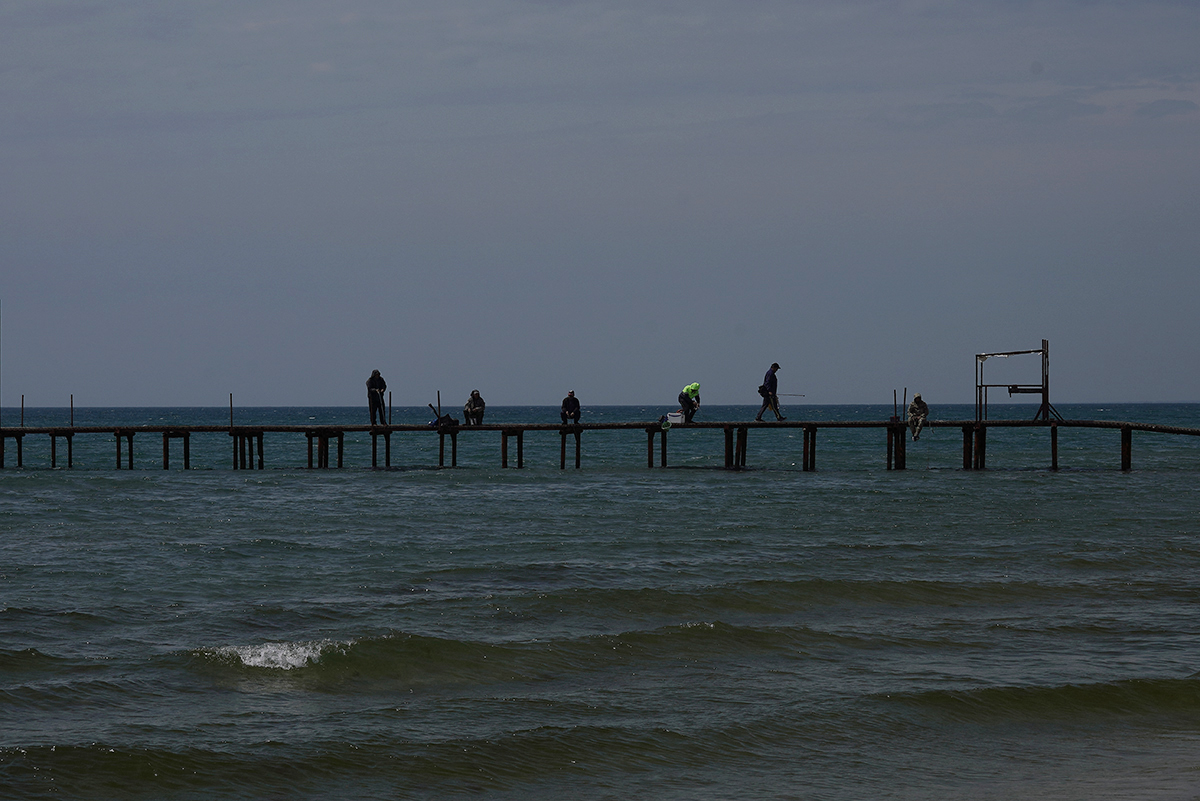 Fishermen on the beach in the village of Verkhnyaya Dzhemeta in the suburbs of Anapa during the bite of Kephalifoto: Dima Kaverin
In a good mood, I walk along the edge of the coast, the waves roll on bare feet. The sea is like a sea, sand like sand. But it is worth taking a closer look - and small, with a five -ruble coin, black spots are found on the surface of the water, and an oily film becomes noticeable at a certain angle. It is clear that the dark color of the shells that are lying on the shore is not at all natural origin. I look at my feet - the feet are in stains of fuel oil.
Why is the beach not closed? Why is swimming not forbidden? It turns out that it is formally very forbidden. Red flags flutter on the life tower - a signal that bathing in the sea is unsafe. A strict voice from the reproducers also warns about this. But who in our country can stop formal bombings, not backed up by the threat of punishment? Especially when they are everywhere accompanied by a slight wink: they say, everything is fine, there is nothing to be afraid of.
All the inhabitants with whom I managed to communicate tried to assure that there was no reason for concern: the sea is crystal clean, rest for their pleasure. In parallel, however, they do not forget to bore the local authorities, which, according to them, did little to save the season.
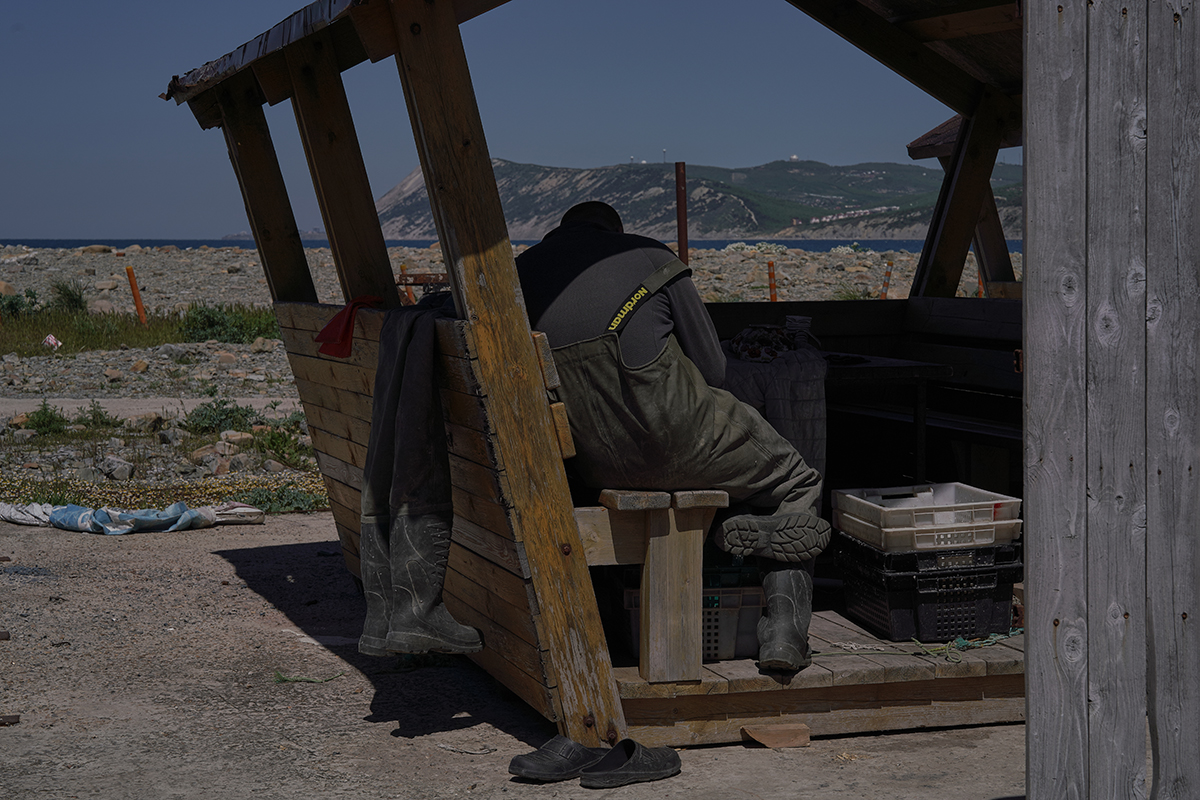 Fisherman on the beach photo: Dima Kaverin
An unpleasant display from such conversations. On the one hand, people can be understood. For them to believe that everything is fine, and spreading this faith is a matter of survival. On the other hand, you see with your own eyes that this is not so, and you are horrified, watching the vacationers who are quite imbued with this faith.
In the parking lot by the beach, a guy with a girl, just arrived from Krasnodar. I am interested in why they went here.
- Yes, there are only two hours of journey, the road is good. We decided to take a walk, see ...
- Look at the fuel oil?
- And what, there are fuel oils?!
The girl's eyes begin to round. I show them my feet, which I have not yet had time to wipe away from dark spots. The couple hardens in a half -fainting state. It seems that this revelation is for them.
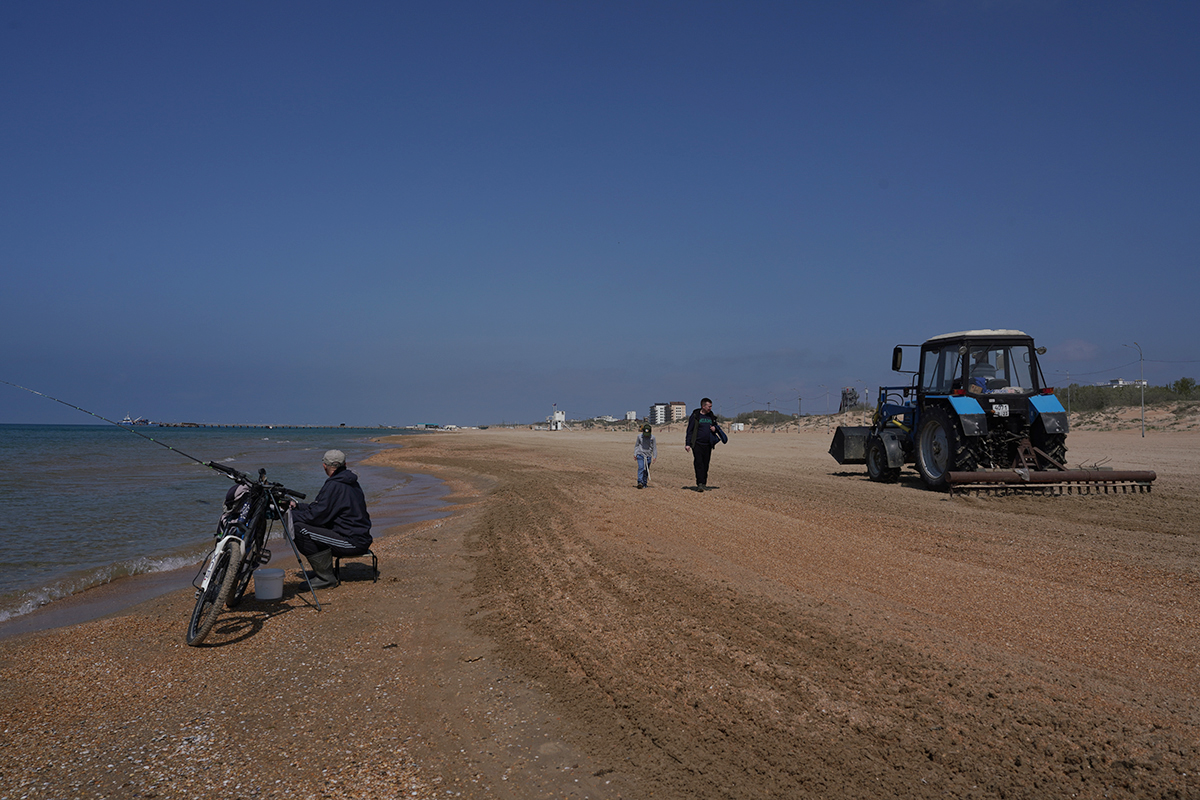 Beach in Anapophoto: Dima Kaverin
Adrenaline and quota
Vitaly is another of the Utrish fishermen with whom I managed to spread a couple of words. He looks very tired, he is not inclined to long conversations. “He worked the day and in the evening fell dead to wake up at three in the morning,” he explains in a hoarse voice. - It happens that a few hours remain for sleep. The first time we go to sea with the very dawn. We went out, raised the nets, came, processed, we go out again. And so three or four times a day. "
“Physically, this is a very hard work,” Mityai confirms. - I have two people recently [from the brigade] left: they thwarted their back. Imagine what it is-from a 30-meter depth to raise a ton of fish, manually. The winch is installed on my boat, with its help I raise the anchor, but you cannot raise the network through the winch: it is forbidden. So tear your back - because you have a small -sized, not a fishing ship. Where is the logic? "
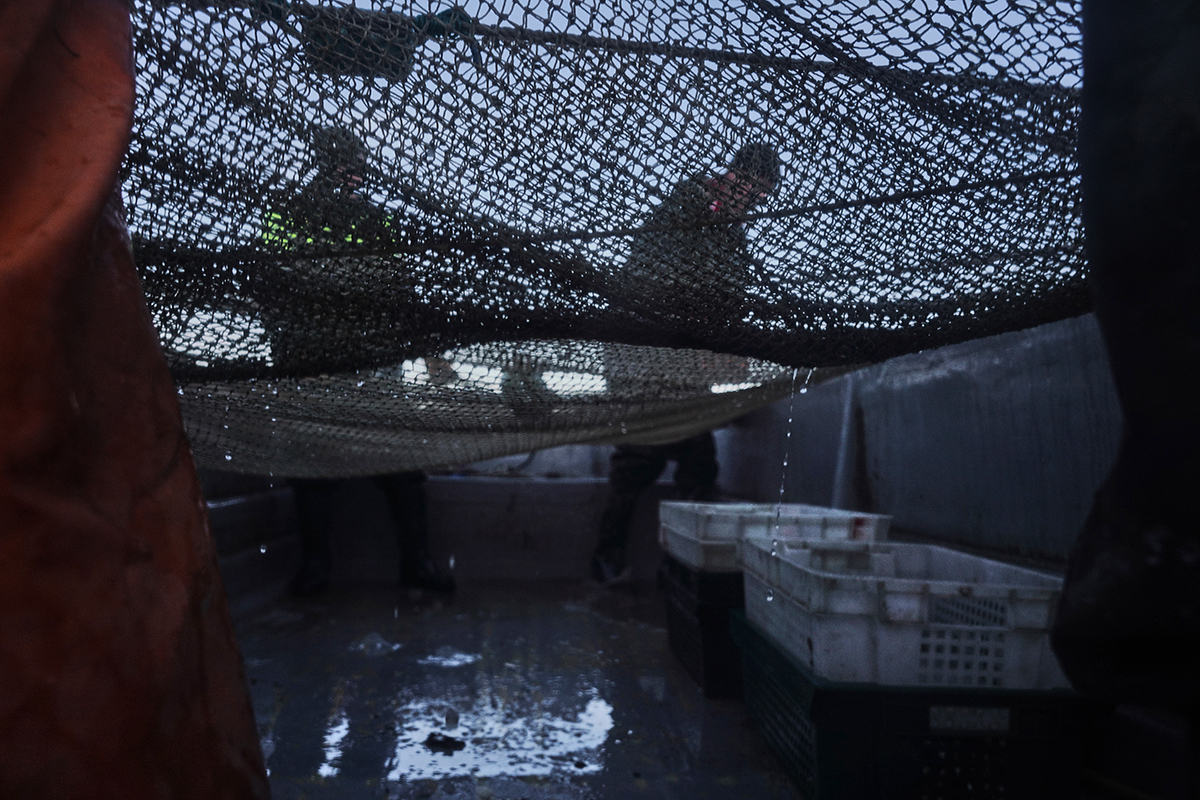 Fishermen take out nets and throw fish into a boat: Dima Kaverin
Mitya - local, fishing since childhood, started with a fishing rod, but this is a long time in the past. “Now I'm high from another. Fresh sea air in the morning, adrenaline, an indescribable feeling when the fish rustles in the net. It’s hard for you to get up in the morning, but you get up to prove to yourself that today you can catch more than yesterday. ”
A beautiful picture, but far from cloudless. Mityai explains that the routes and places of fishing are strictly regulated, the types and volumes of fish weaved too. “On the flounder we have only 30 tons of quota. The deadline expired on April 22. And at this point, the fish only comes here. We stood for a month, waited. They went out, took 500 kilograms one day. They almost drowned on the way back, because because of the new forbidden zones I had to make a huge hook. On that fishing ended. "
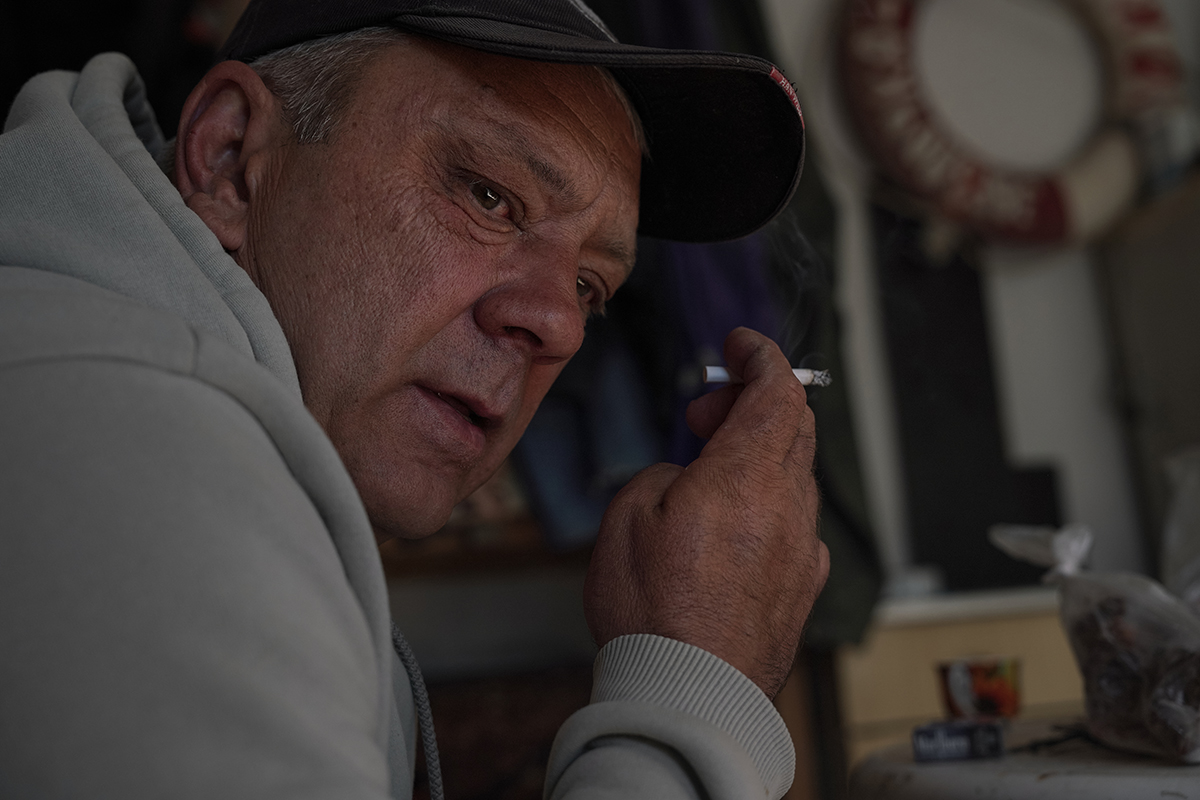 Sergey Photo: Dima Kaverin
There are also questions to the team’s completion. “Here I have two fishermen fell ill, my brother says:“ Let me help you, I don’t need money, just give me two drawers of fish, ”says Mityai. “And I just can't take it.” We need to make a request, make it on the brigade list, pay a tax for it. ”
And finally, the fishermen do not have the right to sell a freshly low-powered silver-pink fish from the pier. Probably, there would be a lot of buyers, especially taking into account its vacation price. But Mityai explains that this is strictly forbidden. The fine is 200 thousand rubles. They sell it only to wholesalers of 100-200 rubles per kilogram, depending on the size.
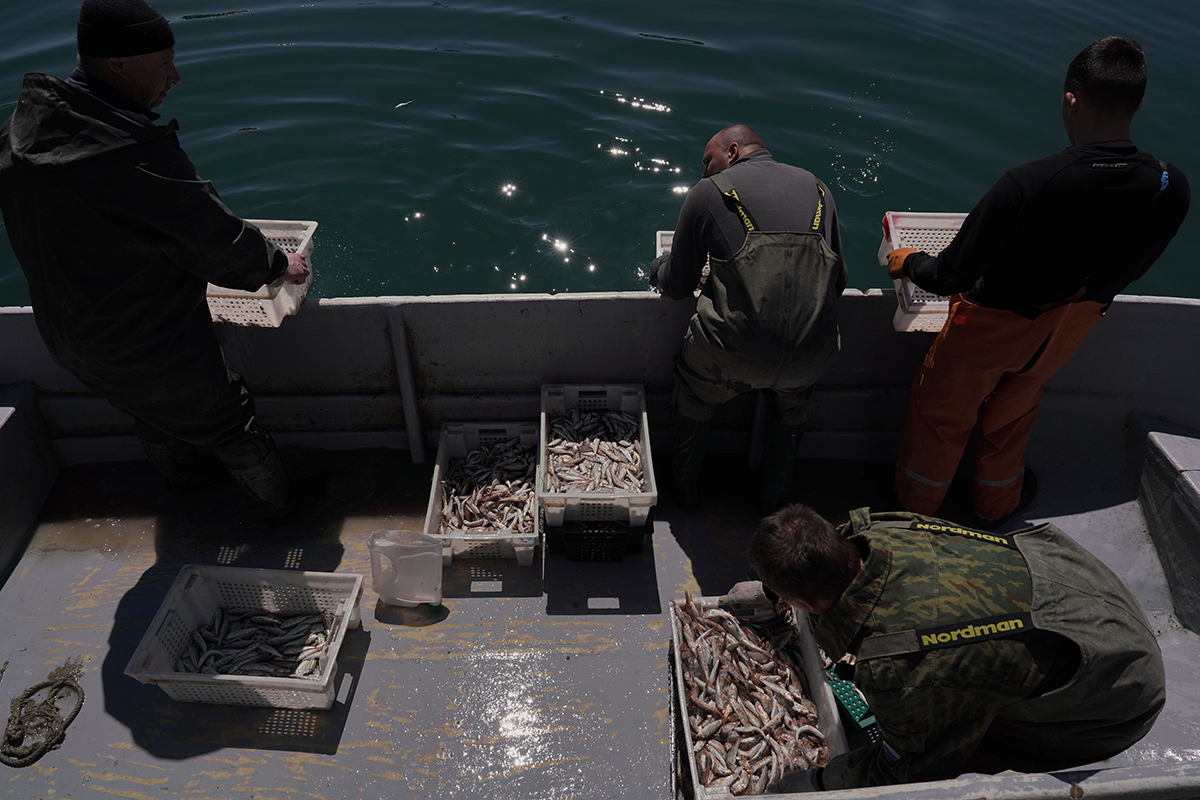 The Irbis team takes fish after returning from the sea: Dima Kaverin
Sea lottery
You can evaluate the taste of fried hoods in a small local cafe, a few hundred meters from the fishing pier. True, the price order there is completely different - 3.2 thousand per kilogram. There are few visitors. Which is understandable.
The fish rows of the Central Anapa market offer a much more humane margin for cost. Fresh local barabul here can be bought at 500 rubles per kilogram. The saleswoman, who is not spoiled by the attention of customers, with enthusiasm talks about nutritious qualities, shares recipes and guarantees quality: “All fish passes through the laboratory, so take it, do not hesitate.”
In addition to fresh fish, other options were found on the market. For example, a smoked hood for 1.6 thousand rubles per kilogram. As a result, I acquired a kilogram of cold smoking hoods in a farmer shop in Sukko - the village between Anapa and Utrish - for 600 rubles. It was delicious.
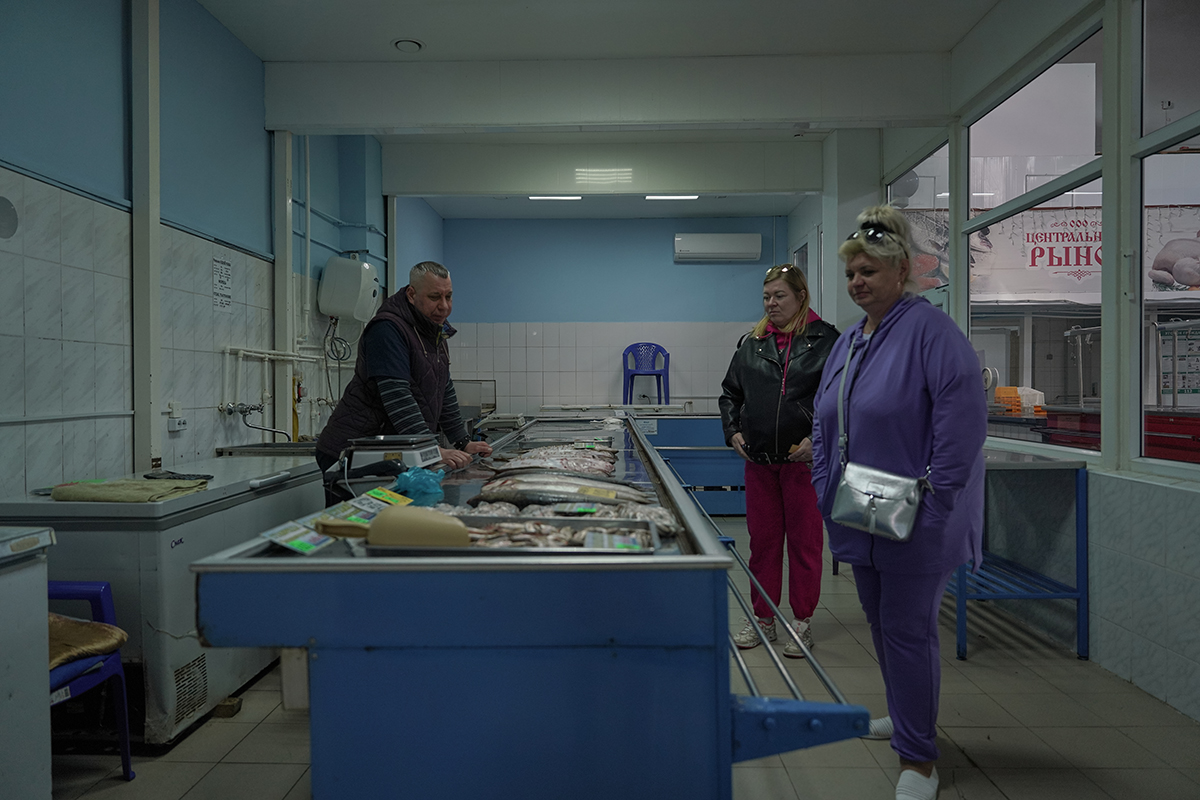 Anapa. Central market. Buyers consider fishophoto: Dima Caverin
If in trade and catering things are not very good, then this year certainly does not bode of special profits. Mityay about the financial side of the issue speaks evasively: “We are not at a loss, of course, we work. And not by zero. We still earn a little. ” Denis is a little more frank. He himself from Siberia, moved to Anapa ten years ago, and opened fishing fishing for himself in 2013 in Kamchatka. He says that the process is very addictive, but it is not worth expecting a stable income from it: a year for a year does not have to. “You can sit for 10 thousand a month, and you can earn hundreds of thousands. This is a lottery. "
Putin was still in full swing, but Denis has temporarily changed his occupation: he moved from a fishing boat for the helm of a walking boat. He says that more and more vacationers come, the tourist season is gradually swinging. There is a hope that he will still not be quite a failure.
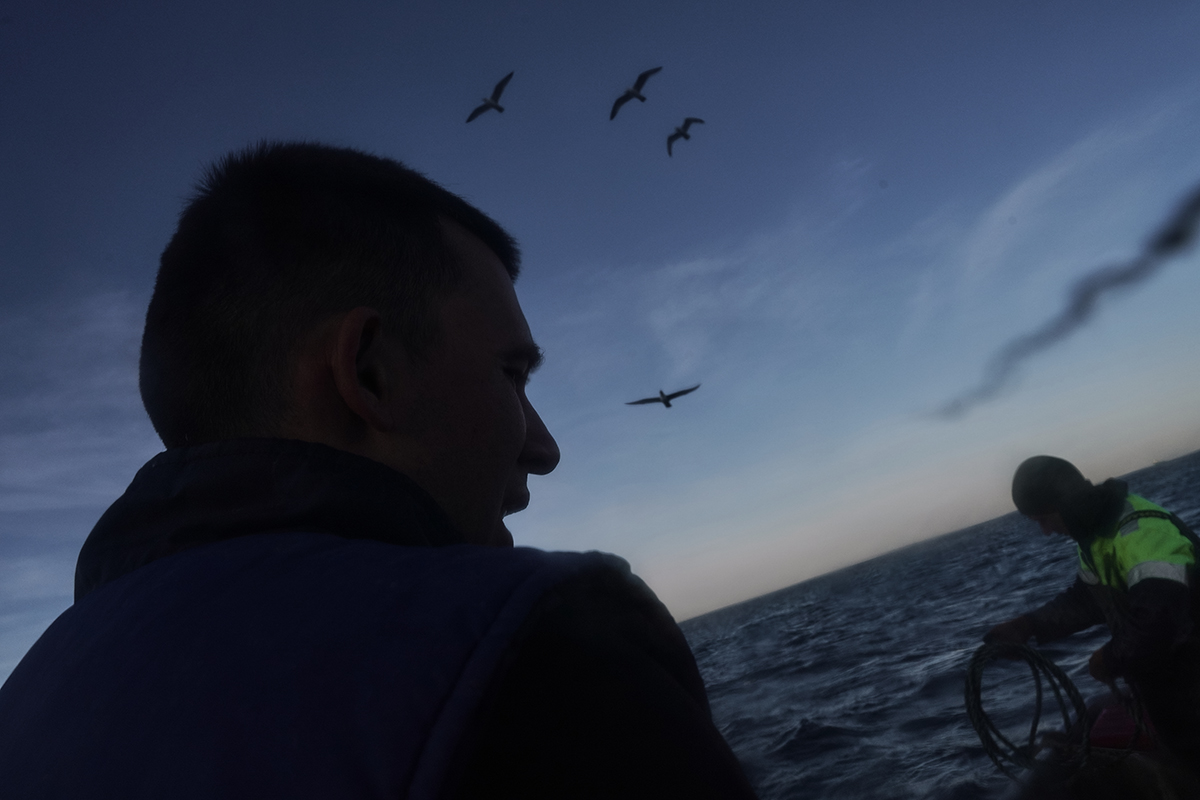 Fishermen take out nets and throw fish into a boat: Dima Kaverin
On the waves with a laptop
All caught fish now needs to be carried out through Mercury. This electronic certification system was introduced in 2018 to control the turnover of products and consumer protection. But fishermen perceive it exclusively as another article from an endless list of expenses. And there are already many of them.
“I opened a bank account to conduct settlements with wholesalers, so there are more than 6% commission for operations, even for withdrawing my own funds,” Mityai is indignant. “Another 30 thousand a month, be kind, pay for the parking of the boat on the water.” And not counting taxes for sold fish, taxes that he pays for all the fishermen of his brigade, regardless of whether they go to sea or not.
“Here, for example, I took a quota, 40 tons of fish, and paid 80 thousand for it. That is, I bought this fish in advance from the state, although I have not yet caught it. But that's not all. I have to pay and pay: taxes, fees, commissions. Can't you just make a quota more expensive? Let the ton cost 10 thousand or even 12, but this amount will already be all included. So that I pay once and calmly doing my job. So that this constant headache is not. ”
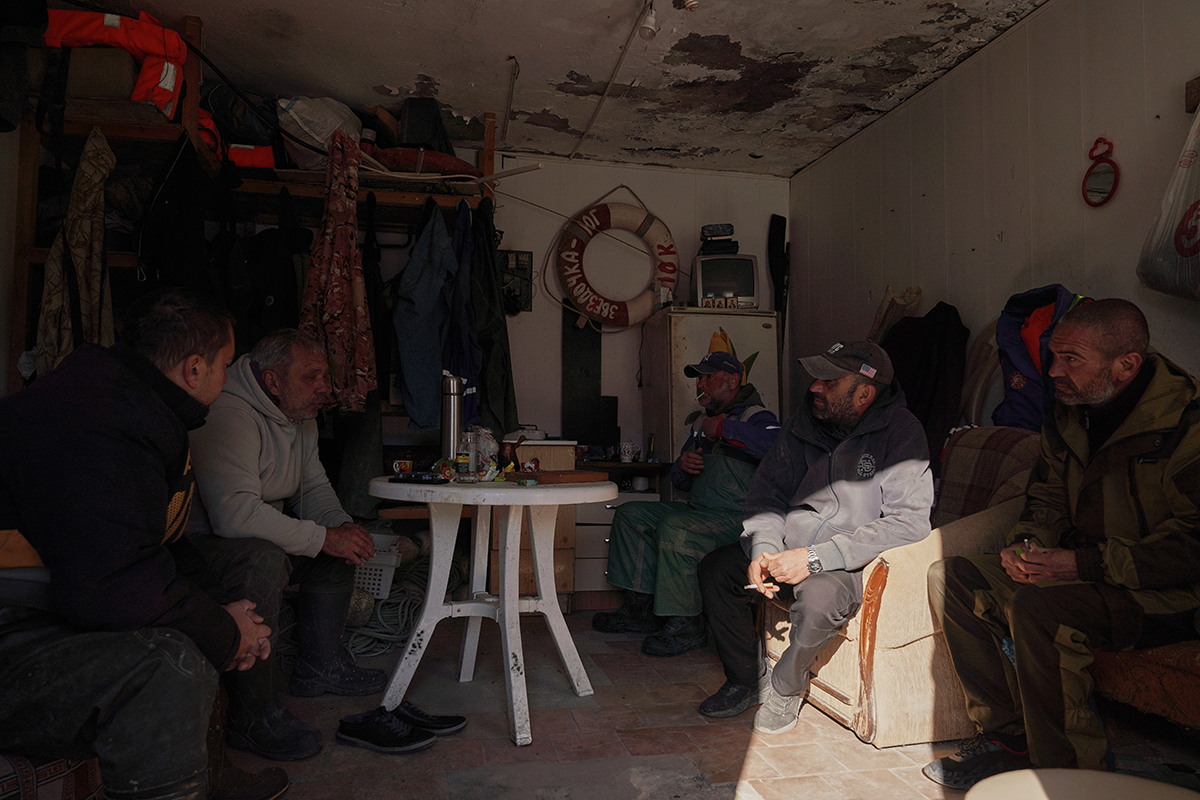 Big Utrish. The Krisha brigade drinks coffee before going to the sea)
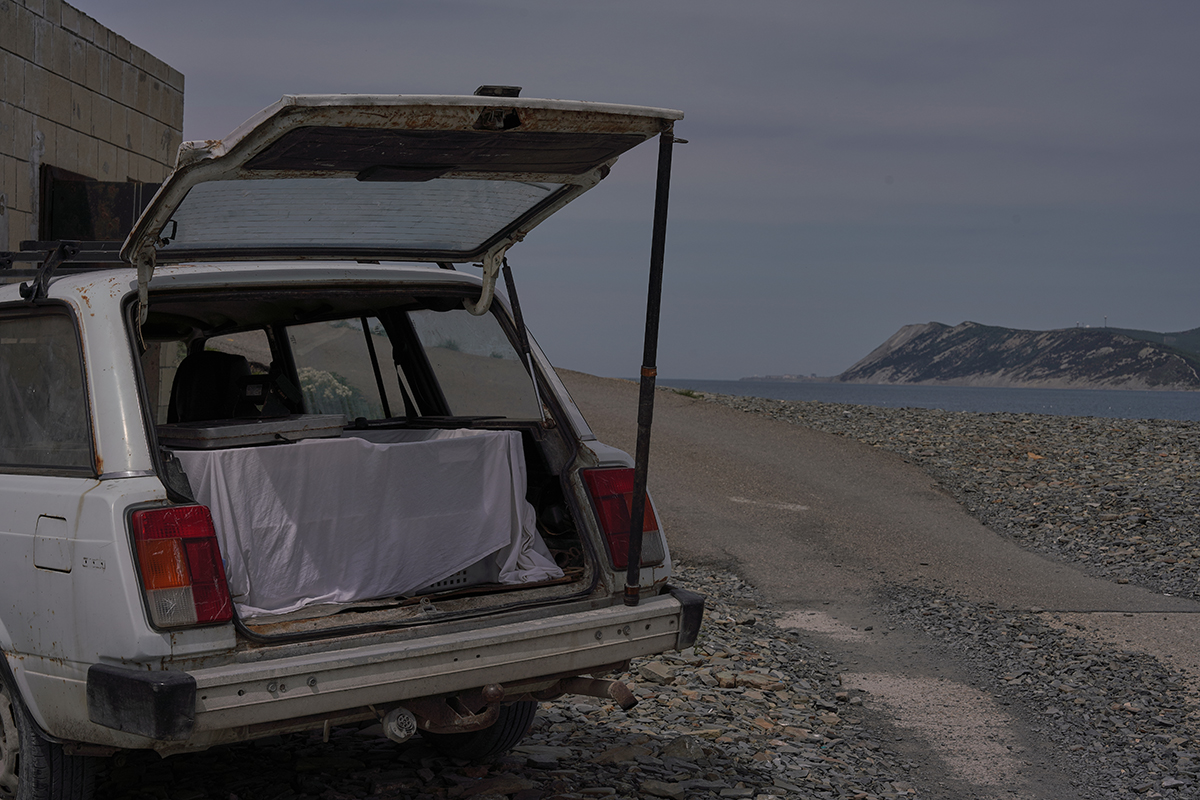 Big Utrish. The fish caught by the brigade of the boat "Krisha" is waiting for the buyer in the bagazhniknikhoto: Dima Kaverin
He smiles sadly and shows a large plastic box with documents. “I have more papers than in any legal company. Each time after going out at sea, I sit for an hour, I fill them out. You can go crazy. ”
Each exit to the sea is also not so much a meeting with the elements as a clash with the bureaucracy. Mityai shows his huge fishing magazine, which he is obliged to take in the sea in order to bring time and accurate coordinates on the spot. “The wave is one and a half to two meters-I can’t hold the pen in my hands, but I have to fill it. And it seems to be already used to it, but now they want to replace it with electronic. How should I swim on a small boat with a laptop? "
A separate story is the definition of coordinates. “Now he, the satellites zero, the location is not determined. It is good that I have been fishing for many years, the coordinates have been preserved. But to rearrange to a new place is already a violation of the law. A fine of 20 thousand rubles. "
“One fisherman earn another fisherman,” Vitaly supports. And adds that no one is concerned about their unforeseen expenses.
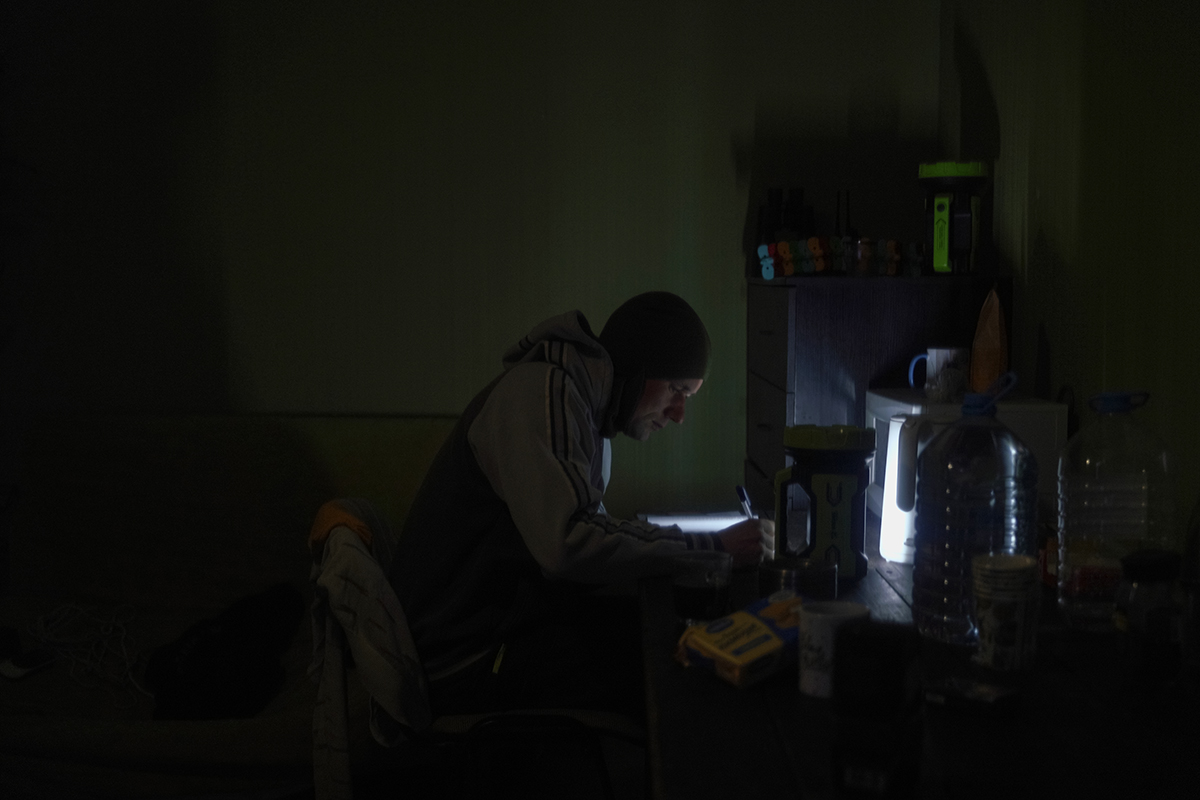 Uzhrish. Irbisa foreman Dima fills out the on -board magazine before going to sea for fishphoto: Dima Kaverin
The strobulka is caught on the shift networks, which are installed vertically at a certain depth and periodically raised. “Sewing such a network is not for you to sew socks,” says Vitaly. - It is necessary to cut the corners, to adjust, it is not so simple. Everything should be perfect. I go to specialists. Previously, they took 500-600 thousand rubles for this. Now the price is already reaching 1.2 million. ”
And you can lose these rather substantial investments in one day. He says that once a 30-meter wave came and destroyed all the gear. “Someone had 4 million in them, someone has 2-3 million. And to repel 4 million, you need to work for a year. This is not counting that it is necessary to serve the tackle, hire divers, stretch, put new anchors. ”
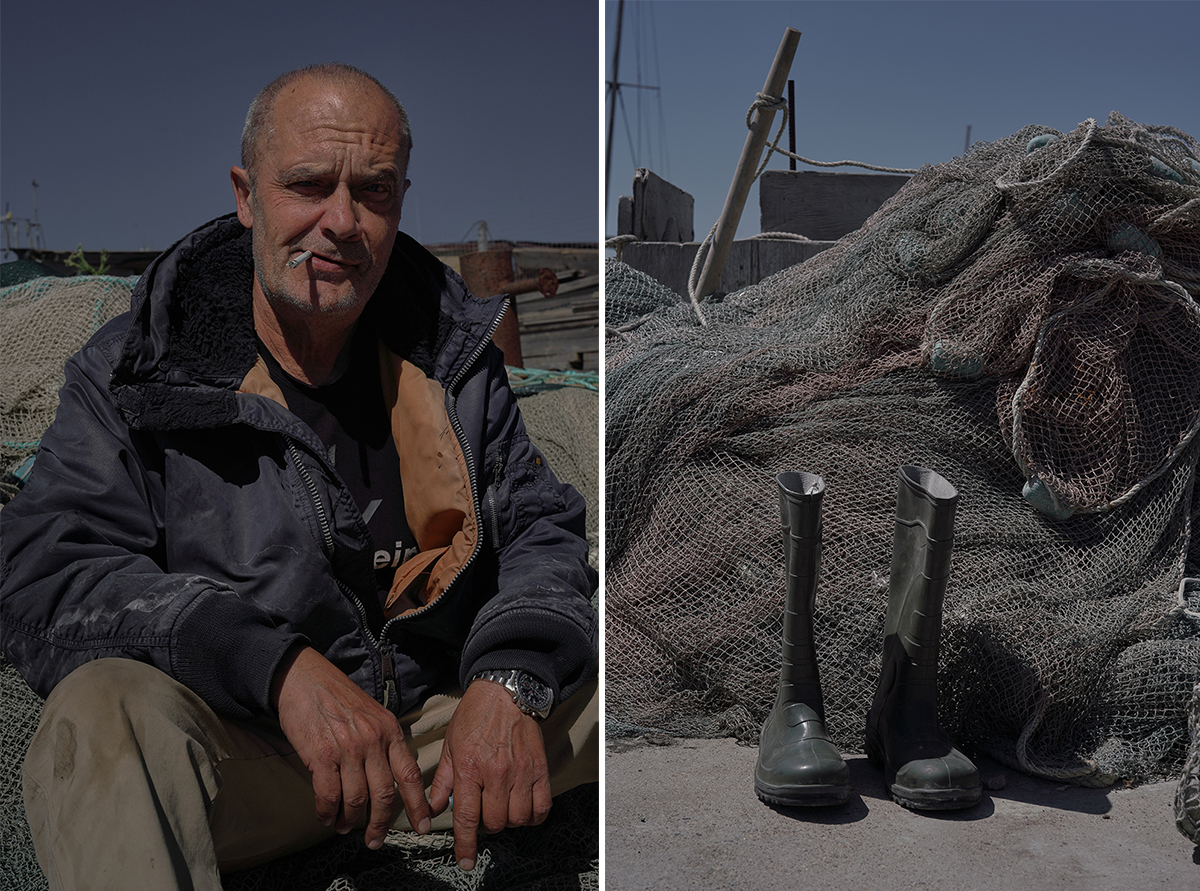 On the left: Sergey on the pier. Right: Big Utrish. On piercephoto: Dima Kaverin
"Why didn't the president come?"
“In large cities, like Moscow or St. Petersburg, people have a good, stable salary. And here everyone lives in a season, ”says Mitya. - Half a month of summer has already flew by - and we have not earned anything. But June is okay, no one is especially counting on it. In July, investments have always fought back. And August is usually a net profit that feeds you until the next season. ”
He says that in his native village Vityazevo, depressive sentiments are very strong. Many sell hotels, houses, cars: there is nothing to pay for loans received in better times. However, it was worse.
“In the Great Patriotic War of our district only at the expense of the fish and survived,” says Mityai. - This is now we have special costumes, and then people smeared with lard in winter, settled in worship and transported fish with baskets so that people would not die of hunger. And now to fishermen as a sucker is some kind of attitude. Well, we would have large ships, tinning plants, huge profits. But these are small boats, coastal fishing, we feed people. ”
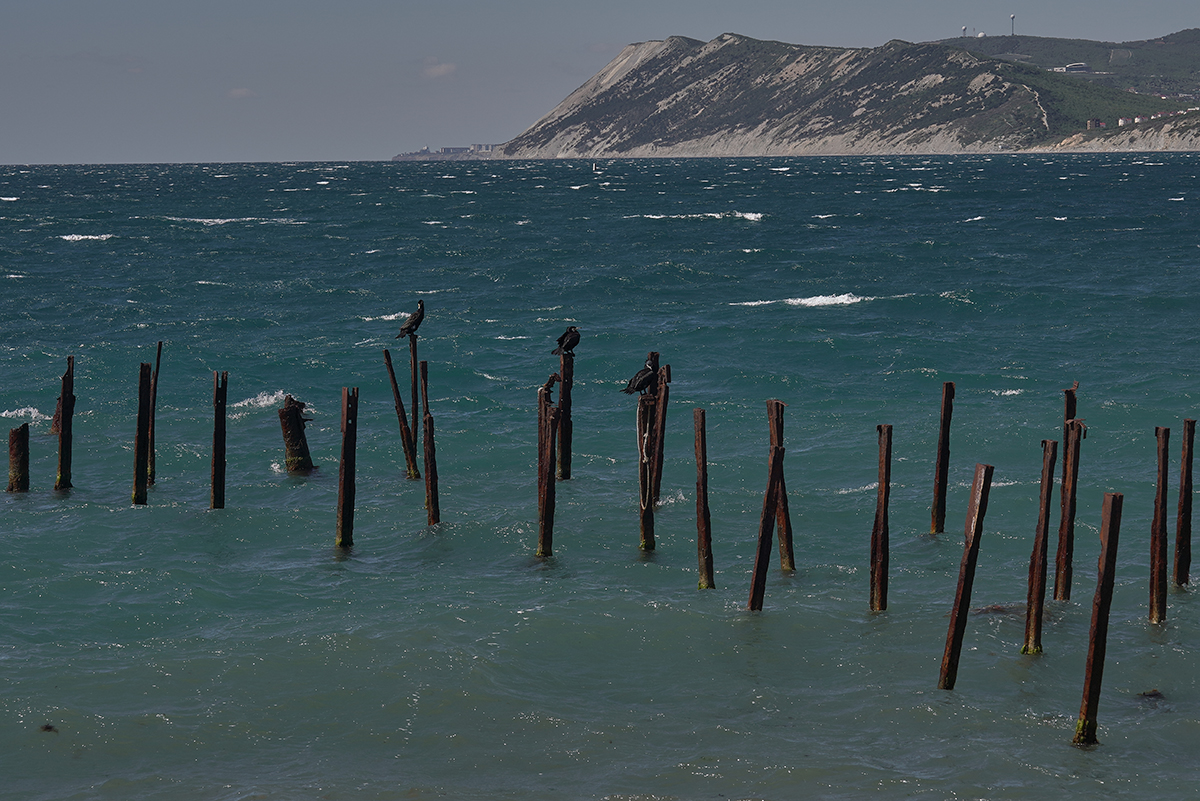 Big Utrishfoto: Dima Kaverin
Впрочем, он признает, что для власти характерно пренебрежительное отношение в принципе ко всем местным жителям. Особо ярко оно проявилось во время ликвидации последствий разлива мазута.
«Столько денег на это выделялось… Если бы захотели, могли бы за месяц все устранить. Но им было все равно. Только благодаря волонтерам как-то справиться удалось: у нас весь поселок работал на пляжах, и еще тысячи приезжали со всей страны. Если бы не они, вообще бы сейчас жопа была. But this was not enough. Все население должно было подняться, встать, и тогда бы все быстро решилось. И чтобы президент приехал посмотрел. Почему не приехал?»
Вопрос повисает в воздухе. Ответа на него нет. Только шум прибоя и скрип невостребованных прогулочных катеров у причала.
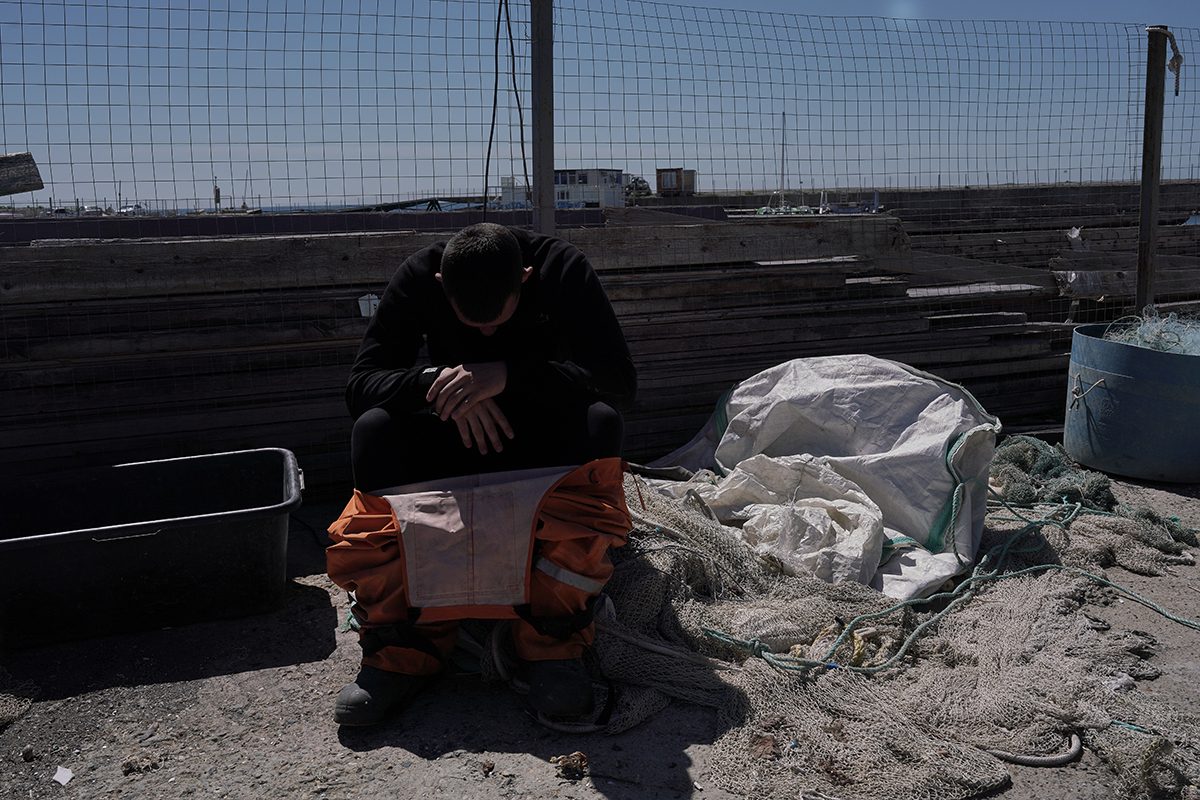 Олег отдыхает после возвращения с моряФото: Дима Каверин