
Translated material
What the screen tells you
The international festival "Mirror. Tarkovsky philosophy "An extremely strong program
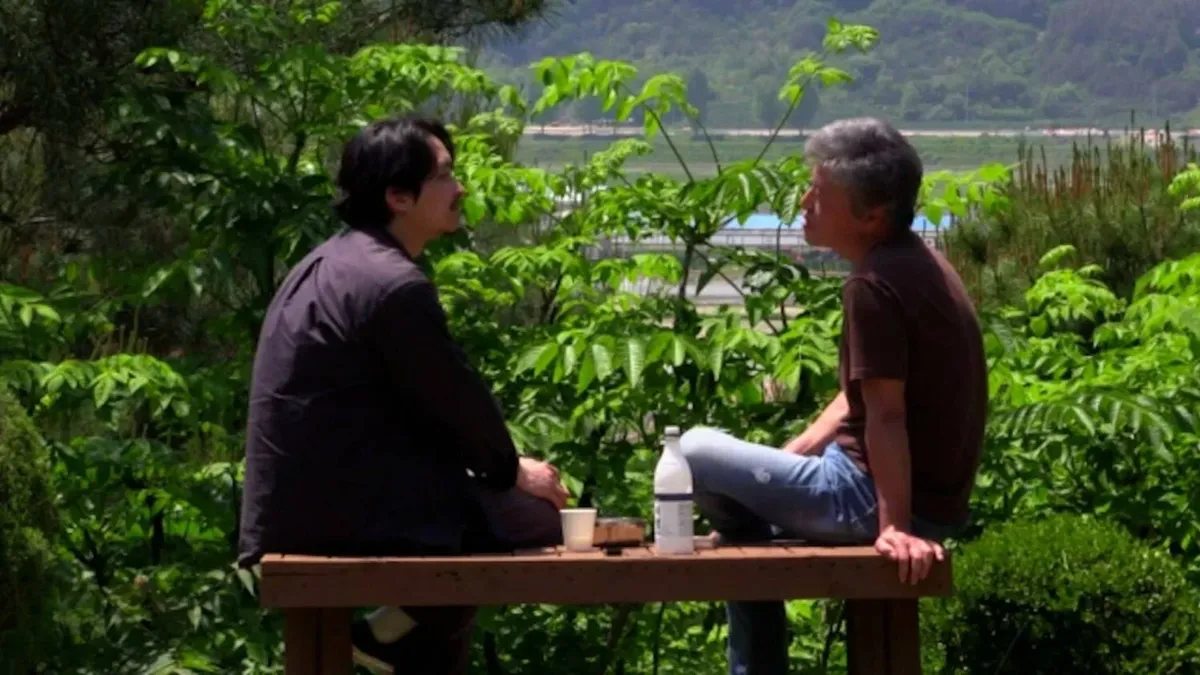
A frame from the film "What this Nature tells you." Photo: Kino- Teatr.ru
The film, awarded the main prize of the Tarkovsky festival-“What this nature tells you” is the next melancholic comedy of the master Hong San-Su, charming, airy, funny, defiantly optional, as usual, unhurriedly. In general, the typical Hong San-Su is a lover of film festivals. In the watercolor, although not without comedic tones, the director told the daily story from the life of ordinary Koreans.
Junhi is thirty, and she finally leads the poet Donchy to the house of her boyfriend, whom he has been dating for three years. He really wants to like it, but gradually gets drunk. A deceptively sleepy day, excessively bright, blinded by the sun, the landscape around the house. At times, he blurred as if we see the whole “speaking nature” through a soft blurry focus through the eyes of a drunken poet Donchi.
Buddhist temple on the river bank, lunch in a restaurant, dinner of the house. Talks on the topic of family ties, about poetry, about the most commonplace things that develop in rhymes. Hong San-Su can put a camera in the house, in the garden, on the slope of the mountain-it does not matter: the feeling of movie in his blood. And the dungeon is similar to a typical, not too prudent wanderer-a poet or artist-from the multi-sectional Odysseus Hong San-Su. But the author looks exclusively on the persecution of beauty - the author looks with condescending irony on the philosophy of the hero.
The prize for directing was received by the picture “Santosh” - an exciting procedure on the wrong side of modern India. The film is a talented debutant of Sandhiya Suri (India - France - Great Britain - Germany) was shown in a special view in Cannes. Sandhiya Suri is an ex-documentary, therefore, in her criminal thriller, the burning truth in every frame is primarily striking in, as if the whole story is spied on a hidden camera.
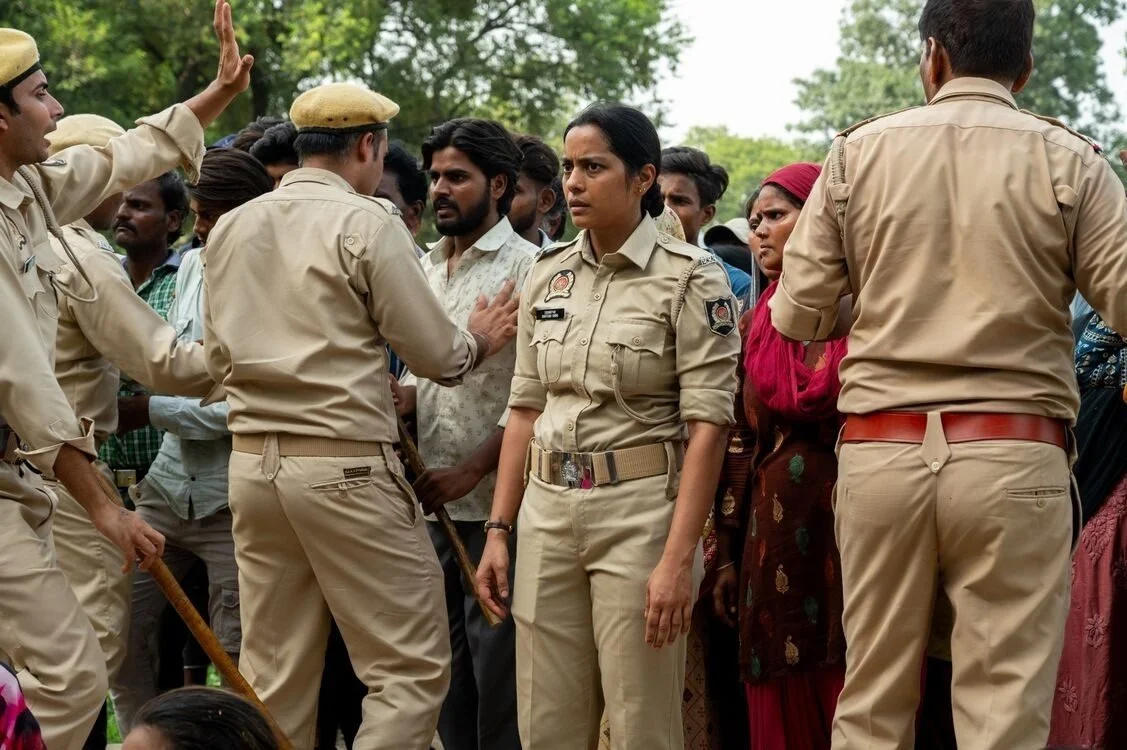
The young widow of Santosh (Magnetic Shakhan Gosvami), who was killed during Islamic riots of the policeman, becomes a police constable in accordance with Indian laws: the wife has the right to inherit the work of her husband and his salary. She is responsible, attentive, restrained. In her investigation of the murder of a very young girl from the Dalits (lower caste), a charismatic and merciless boss, a police guita (Sunita Rajvar) helps her. And far from immediately Santosh understands that Gita deftly manipulates her investigation, her ambitions and the system of justice itself in order to reassure local unrest. And behind the facade of the indicative legality - humiliation and mockery of “untouchable”, sexualized violence, total sexism and very specific claims of the authorities (a woman in shape - light prey) and other “joy” of his new life. Indian censors have banned a film “discrediting the work of the police” for showing in cinemas.
Among the interesting works unnoticed by the jury, -
“What you kill” (The Things You Kill), director Alipar Hatami, 2025.
I would call a picture that flew from Sandens with a prize for directing in Ivanovo, “What we learn to ourselves, but we want to forget.”
The curious existential thriller of the Iranian writer-director Alireza Hatam (“Terraial verses of the huts”) living in Canada.
The story is transferred from Iran to Turkey to avoid censorship problems.
Ali, after studying in the United States, returns home, teaches a literary translation at the University of Gazi in Ankara. At one of the seminars, he analyzes the word “translation” with students. During the discussion, it turns out that the word - in Arabic - has other meanings: “destruction”, “murder”. Destroying one version of the “text”, you create a new one.
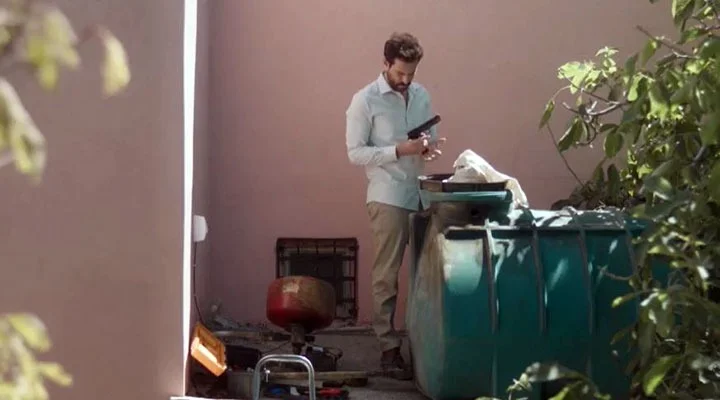
The death of the mother seems to be suspicious. Perhaps she was killed by an unrestrained father, who had previously raised her hand to her. Moreover, recently, he started his mistress, apparently trying to start a new life: to write a new “text” over the old. Ali hires a gardener, a strange person who promises to plant a garden around his country hut. The gardener's name is cut, they talk with Ali about the ability of different souls to exist within the same body. By the way, the name of the director is the unification of these two names: Alizer.
Family secrets are revealed, awakening the revenge that captures, attacks, begins to wash the former life of Ali. Behind the semi -criminal plot is the author’s intimate thoughts about twin, hidden in a person, about the split personality, transmutation, about Dr. Jekyle and Mr. Hyde, who are trying to conclude a “peaceful agreement” for at least for a while. And about the right to revenge, the consequences of which are irreversible. Echoes of non -linear stories about the internal substitution in the “Highway to nowhere” David Lynch, about relationships with death in the psychedram “The Taste of Cherry” Abbas Kirosts. “What you kill” - from the films with which you continue the dialogue after the credits.
More about the cinema
Larisa Malyukova leads a telegram channel about the cinema and not only. Subscribe here .