
Translated material
A very large trophy
The Red Book of Russia will lead the hunters of hunting. What animals - and not only animals - now under threat?
Red Book Drasers
The Ministry of Natural Resources transferred the Red Book to the Department of Development of the Hunting Economy. The decision was made at the end of May, but it became known only now. The transfer of authority coincided with the appointment of the head of the department Tatyana Aramileva, who had previously headed Rosokhotrybolovsoi, the largest association of hunters in the country for 12 years.
In the environmental and scientific community, the incident caused a sharply negative reaction. "New Gazeta" together with ecologists tells why.
We publish this material together with the environmental publication "Kedr"*.
"They will simply bury the Red Book"
- Earlier, the Red Book was conducted by the Department for specially protected natural territories. Employees never showed any interest in shooting rare animals, ”a specialist in the field of environmental law notes in a conversation with a“ new ”. - But the possible actions of the hunting department, especially in the light of the appointment of a new leader, cause great fears.
Tatyana Aramileva is one of the main critics of the Red Book. In 2017, she, as the environmental media reported, supported the exclusion of more than ten species of animals from there, which caused bewilderment even among some representatives of the hunting community.
“In public organizations, there were people who wrote letters in the Ministry of Natural Resources about the exclusion of disappearing species. These were, for example, the head of the Rosokhotrybolovsoyuz Tatyana Aramileva and the former head of this organization Eduard Bender. Letters, in fact, consist of the same phrases in different formulations. An overstated, mythical number of rare animals is given there, ” said Andrey Shalygin, the owner of the National Explorer hunting publication.

Despite the recommendations of scientists, in 2017, the Presidium of the Red Book Commission, which included Aramlev, did not include 16 threatened species: the Himalayan bear, several subspecies of the northern deer, several subspecies of the governor, gray duck, the Caucasian noble deer, Siberian mountain goat, Kloktuna and Kloktuna and the Caucasian Bear. Ordinary throat.
Now, new species may be under threat.
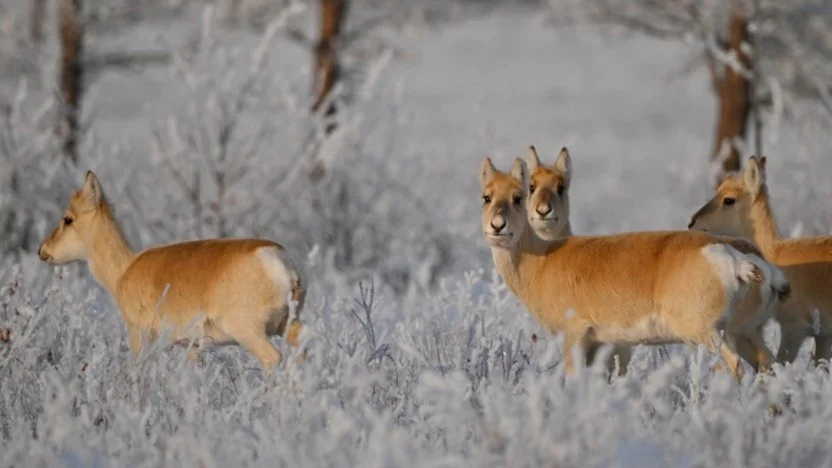
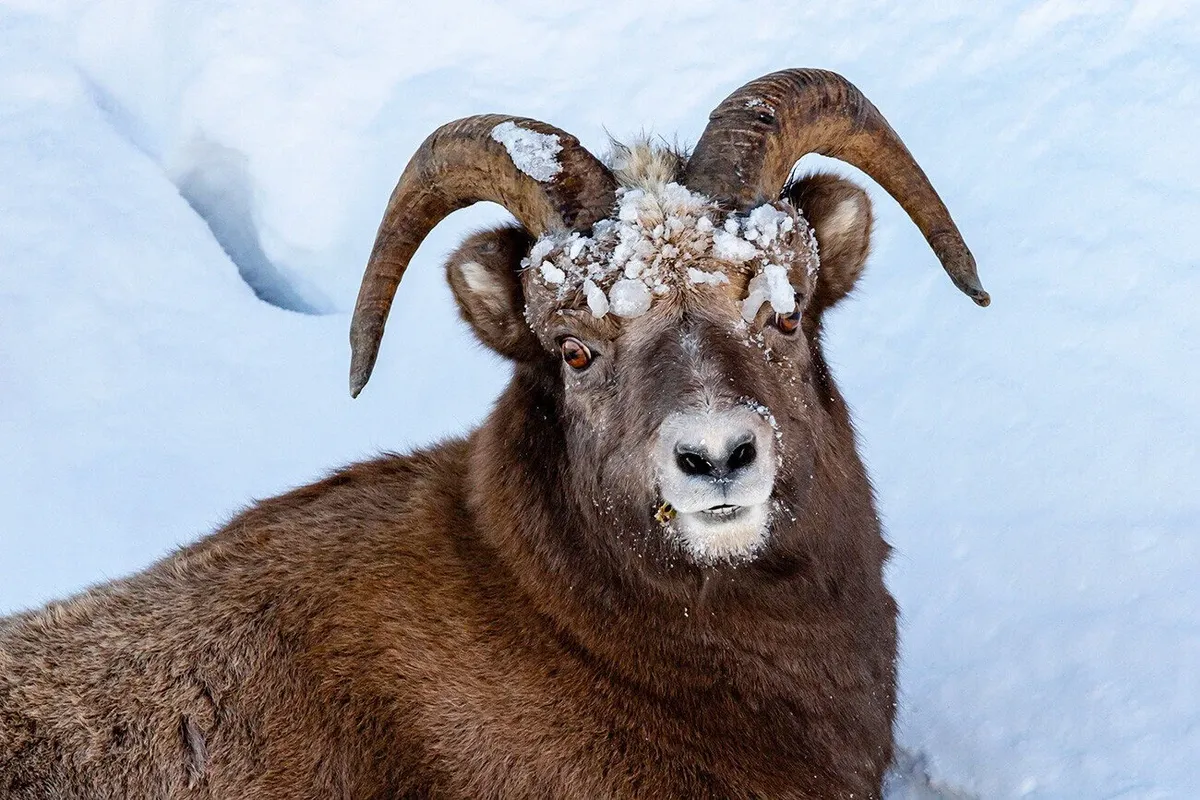
- There are fears that the question of the exclusion of animals that are interesting to trophy hunters from the Red Book can be raised. In particular, the Altai Mountain Baran, the Putoran snowster, the Chukchi population of the Yakut Snow Baran. I know that there is a certain interest in Dzeren, ”says the“ new ”ecologist interviewed.
The trophy hunters really had species on these animals: in 2018, State Duma deputy Vladislav Reznik proposed creating special programs, within the framework of which the scattering of the Red Bookniks would be allowed to finance the hunters of their preservation programs. The initiative caused criticism in the media and the environmental community, the State Duma did not support it.
However, that failure did not force either Reznik or his comrades from the Club of Mountain Hunters, which includes representatives of the Russian political and business elite, to recover from their plans.
In 2024, the Ministry of Natural Resources proposed changing the rules of hunting and allowing to kill brown and Himalayan bears all winter ( when animals are in a state of sleep. - Ed. ). Ecologists also stated that this is done in the interests of elite hunters, for whom the Himalayan bear is a valuable trophy: for an attempt - even unsuccessful - they pay to kill one animal up to 700 thousand rubles. But in the summer, shooting a Himalayz living in mountain impassable forests is very difficult. It is much more comfortable to do this when the animal sleeps in the den. After all, the only goal of such a hunt is to take a picture with the murdered beast.
Among the guides of this initiative, zoologists called Tatyana Aramileva in an interview.
The proposal of the Ministry of Natural Resources did not receive legal force: at public discussions it was supported by 12 people, and 9598 opposed it. The department removed it from consideration.
But now elite hunters can get influence on the Red Book.
The interlocutors of the "New" in the environmental community note that the current head of the hunting department is close to the "Club of Mountain Hunters." In 2020, she even participated in the award of the club members: she handed them the “mountain five” figurines - for the successfully shot West Caucasus and Eastern Caucasian goats, the Caucasian chamois, the Central Asian goat and the snowster. At the same time, Tatyana Aramileva herself believes that the trophy hunting industry deserves not club awards: “For example, in Russia I would generally introduce a reward for the hunting economy that will grow a worthy trophy that will be quoted as a certain heritage of Russia,” she said .
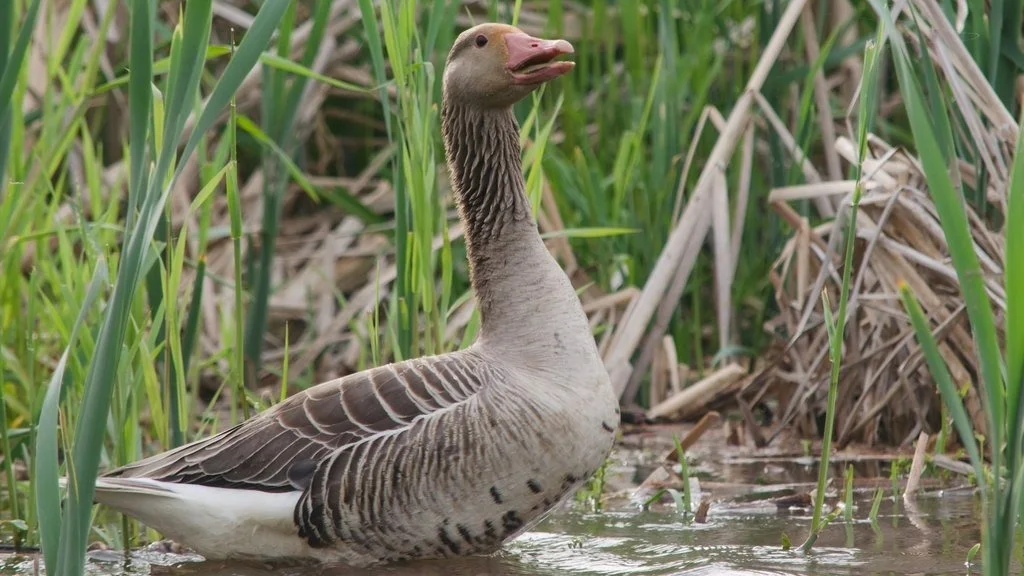
In a conversation with RBC, the ornithologist Sofya Rosenfeld expressed concern for the birds. “I am engaged in geese, and just on the goose they worked out tactics to exclude subspecies and populations from the red book. For three years, we fought with this, and with attempts not to turn on the subspecies and populations of other animals, ”she emphasized.
The interlocutor of Novaya Gazeta among ornithologists to the request to comment on new risks answered concisely: "They will simply bury the Red Book."
However, it is known that Tatyana Aramileva herself has a different hunt: at least publicly, she emphasizes that it is hunting farms that are interested in preserving animals: after all, they need to support their business. However, the zoologist Sergei Kolchin in a conversation with RBC notes that in practice everything can happen differently: “In the south of the Far East, most hunting users simply earn money to sell vouchers.
The intentional overestimation of the real number of animals allows you to get more limits on their shooting, that is, to earn. And according to the reports, everything is fine with us, the populations of the same habitat and roe deer are on top, but at the same time, hungry tigers for four winters in a row are terrorizing villages, forced to hunt dogs and cattle. ”
Because of this, scientists are also worried about the fate of rare animals. In working with the Red Book, it is customary to rely on state monitoring of the number of species based on the information provided by the owners of hunting grounds.
"What is the valley?"
But not only the fate of the representatives of the animal world is concerned. The Red Book also includes plants and mushrooms - the hunting department is now also responsible for them.
- We must understand that the Red Book is, among other things, also a tool for preserving the territories. According to the Federal Law “On Environmental Protection”, any activity is prohibited related to the destruction of not only the Red Book plants themselves, but also with the destruction of their habitat. Therefore, if there are red -blooded plants on the territory, it is subject to protection, ”says a specialist in the field of environmental law.
As an example, he gives a case recently occurring on Altai when, due to the gold-bocked flower of Siberian, the gold work to extract gold, the gold-bombed flower of the red-hot flower was stopped. Moreover, the Investigative Committee opened a criminal case under the article "negligence"
And he began checking the activities of nerds, which issued the conclusion that red -billing plants did not grow at the site of development.

- This is a serious tool in our legislation, which favorably distinguishes us from other states. But many industrialists do not like this, ”the specialist says. - And there are fears that this norm will also try to cancel. Moreover, objectively speaking, the hunting department is not very versed in this: at the session of the St. Petersburg Legal Forum, which was also performed by Tatyana Aramilyov, the question has already been raised: what are there in general red -knitting plants? Like, we understand - a tiger, yes, but the valley - what is the valley? And they discussed this. At the same time, no one even hinted that the valley in the Red Book was not. Therefore, yes, there are great fears that there will now be attacks on red -billing species of plants and mushrooms.
Who is hope for?
In the Ministry of Natural Resources, to the beginning of indignation, they already reacted and stated that it was allegedly from scratch.
“Changes have occurred in the structure of the ministry. A separate hunting department is liquidated. The Department of Protection, the use of the objects of the animal world and the development of the hunting economy was created on its base. The task of the department is to comprehensively solve state issues of preserving animal populations, including red -knit. Note that the Ministry, as a federal body, is responsible only for regulatory regulation. The Red Book of Russia is engaged in the All-Russian Research Institute "Ecology". The decision on the inclusion or exclusion of one or another type of animal or plant from the red-hot list is made by the commission on rare and under threat of disappearance of animals, plants and mushrooms, ”the press service of the department said.
However, the “new” surveyed specialist in ecological law considers this statement a trick.
“The provision on the new department clearly states that it is it that provides the Red Book, the introduction and exclusion of objects of the animal and plant world from it,” the expert explains. - At the same time, yes,
Formally, the decision on the exclusion of animals or plants from the Red Book is made by the minister or person performing his duties. But in reality, the minister only signs the document prepared by the Department.
As for the All -Russian Research Institute of Ecology and the Commission on rare types, they, according to the expert, give scientific conclusions that are advisory in nature.
“Nevertheless, they still try to listen to these recommendations,” he emphasizes. - And the hopes of the environmental community, of course, are due to the fact that a large number of people with a fundamental position are still sitting in the commission. Public opinion in ecological topics today also matters: that is why in 2024 the new hunting rules that significantly increase the possibilities for shooting animals were not accepted. At the moment, it remains to count on scientists and the fundamental position of civil society.
With the participation of Katerina Ruvtsova