
Translated material
“Of course, it’s a bit of a pity for the girl” - Layout
How residents of Efremov justify the trial of Moskalev’s family
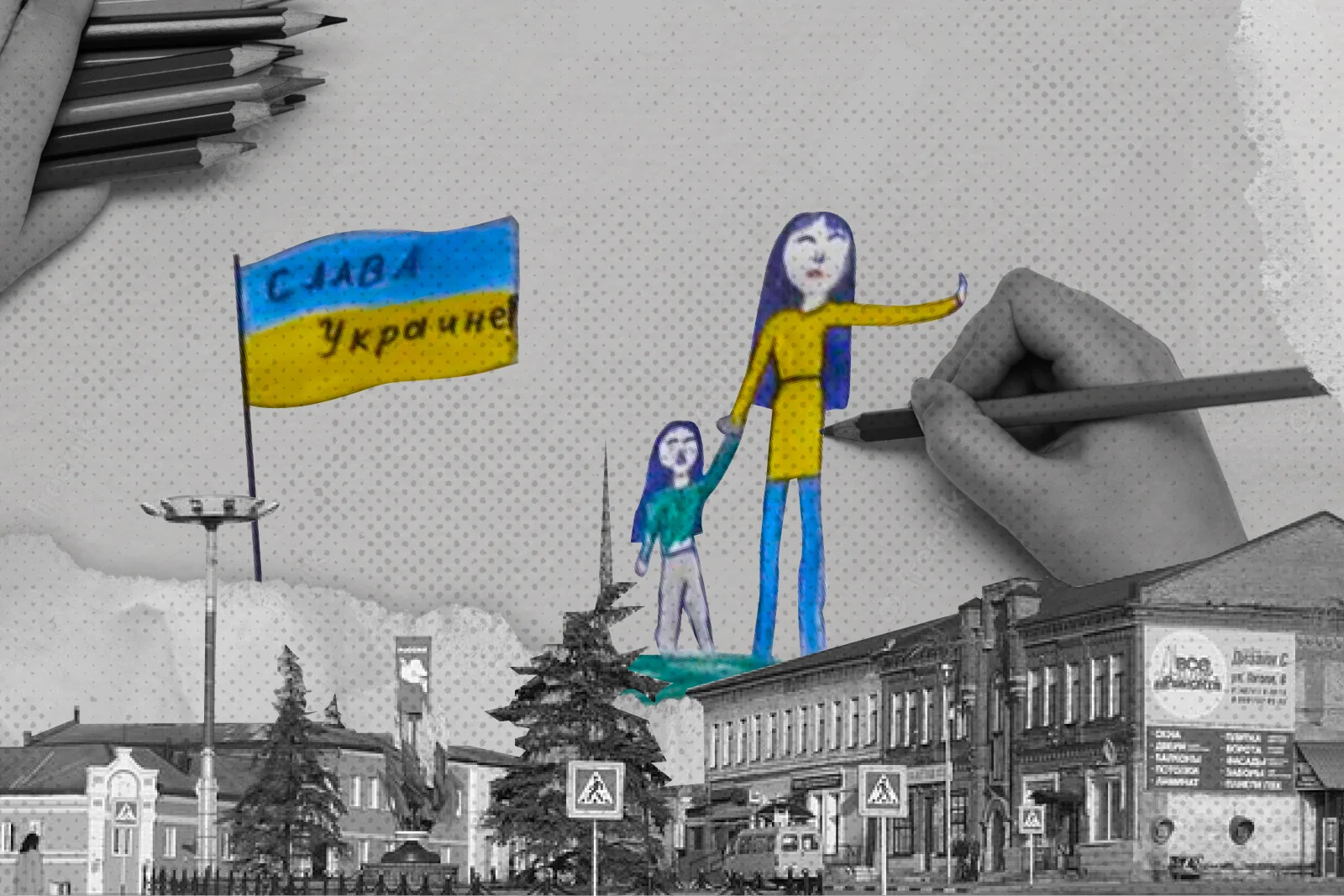
On April 20, the court in the Tula region will continue to consider the claim for restriction of parental rights of a local resident, single father Alexei Moskalev. His daughter was taken away from him by guardianship because of the girl’s anti-war drawing and posts on social networks by Moskalev himself. “The litigant,” “did not pay for the intercom,” “sent a drone to the city,” “kept his mother’s corpse on the balcony” — “Vorstka” went to Efremov and found out how city residents put forward the most fantastic versions to justify what is happening to the family.
In order not to miss new texts from “Layout”, subscribe to our telegram channel
Efremov is a small regional center in the Tula region. A little more than 30 thousand people live here. In the center there is a square called Krasnaya, landscaped in the fashionable Moscow spirit for 90 million rubles . On the corner of the square there is the ruin of a merchant mansion, Derevenev’s house , whose roof has already collapsed and the walls are collapsing. Now the ruin is hidden behind a huge banner with the inscription “Strength V to Truth”, images of soldiers and the verses “Good must come with fists”.
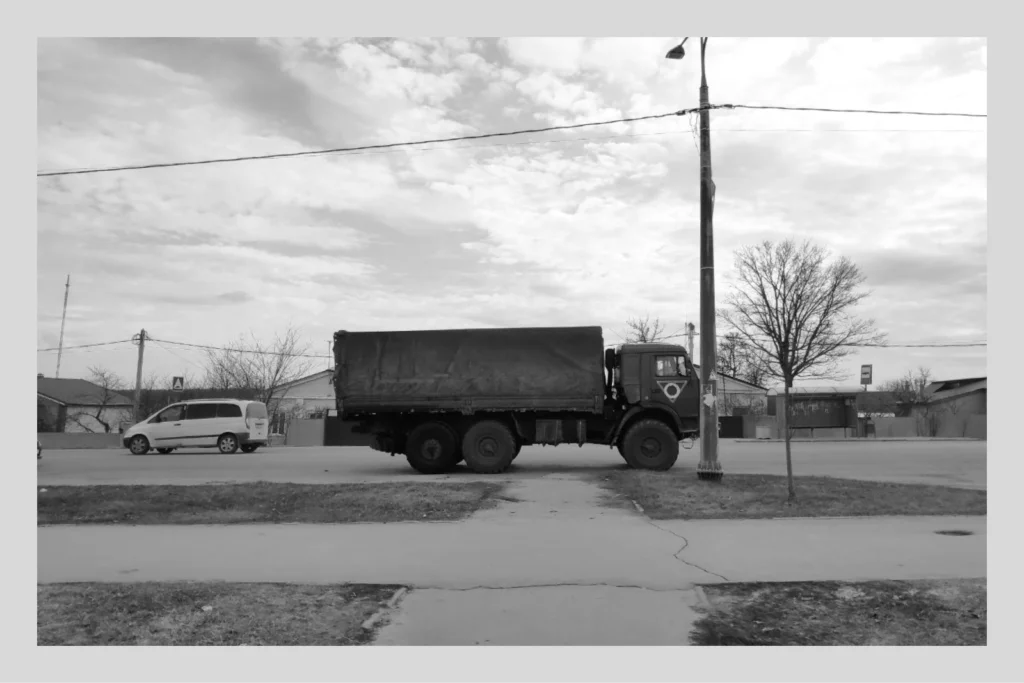
Near Efremov there is the M4 Don federal highway, which leads to Crimea and southern Ukraine. About another hundred kilometers away is the M2 “Crimea”. It goes towards Orel, Kursk and north-eastern Ukraine. From time to time in the city you can see a convoy of trucks under a tarpaulin or hear the rumble of a group of low-flying military aircraft.
The mortality rate in Efremov is four times higher than the birth rate, deputy of the city assembly Olga Podolskaya tells Vorstka. And they live here less than the Russian average, and women do not die later than men, as happens in other regions. The environmental situation in the city is bad, Podolskaya believes, and partly the reason is that it was affected by the Chernobyl radioactive cloud. In 2023, the authorities did not disclose demographic data.
Efremov is a single-industry town. In Soviet times, the city-forming enterprise was a synthetic rubber plant (SR). When it collapsed in the 90s, several smaller enterprises arose in its place. Most of the capacity was bought by the Western corporation Cargill, which processes grain: it produces sunflower oil, animal feed, starches and food additives. Efremov residents value it for its high salary, by local standards: nowhere else in the city, including the administration, is it almost impossible to earn 50 thousand rubles a month.
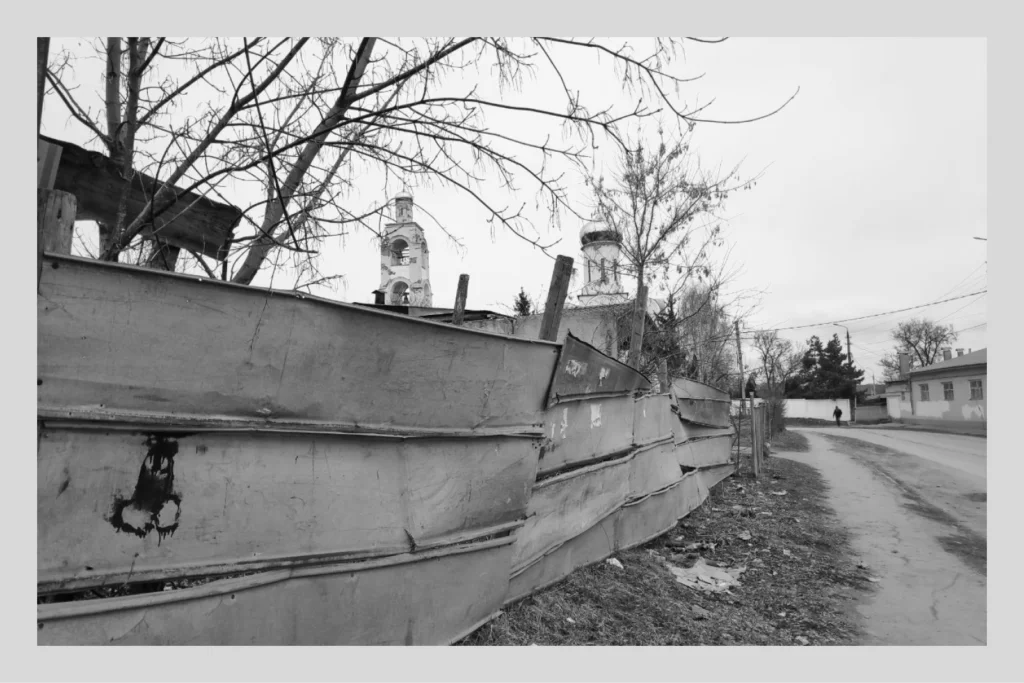
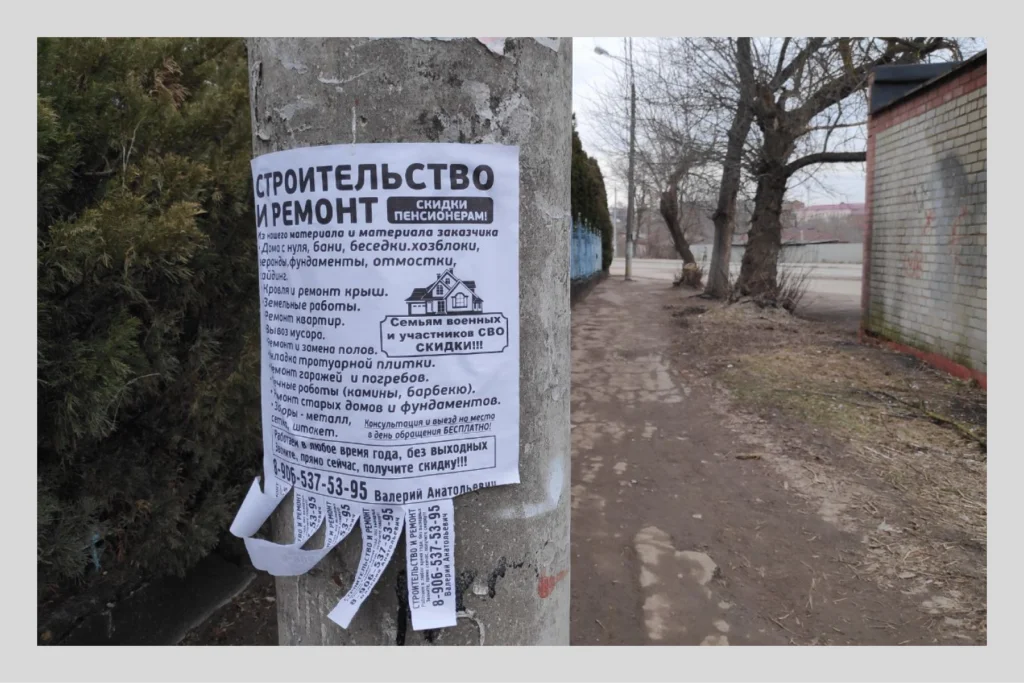
The city also lives on subsidiary farms and small businesses: electronics stores, tire shops, construction work. On almost every post or fence there are advertisements from private traders: “Selling potatoes”, “Hairdressing services”, “Alignment”. On one of the advertisements there is a note: “Discounts for SVO members and veterans.”
“I heard a lot of bad things about him”
On April weekends the city looks deserted. The only people the Vorstka correspondent met on Sunday evening on Red Square were three tipsy men. After a minute of acquaintance, the townspeople boasted that they were allegedly soldiers of the Wagner PMC on leave. The guy, who called himself Bes, happily showed off his tattoos: “This is such a Slavic-Scandinavian yin-yang,” he commented on the images of runes on his neck. On his forearms is the inscription “My honor is loyalty” and a swastika. To the songs of Timur Mutsuraev, the men told stories about their criminal records, about the torture of prisoners with a Soviet boiler, about explosions on a frog mine, about the severed legs of colleagues and about dead comrades, who, according to Bes, are already “more numerous than friends on VKontakte.” Near Red Square there is a temple where the Wagnerites, according to them, went during the day to light candles in memory of the dead. They said that after this my soul felt lighter.
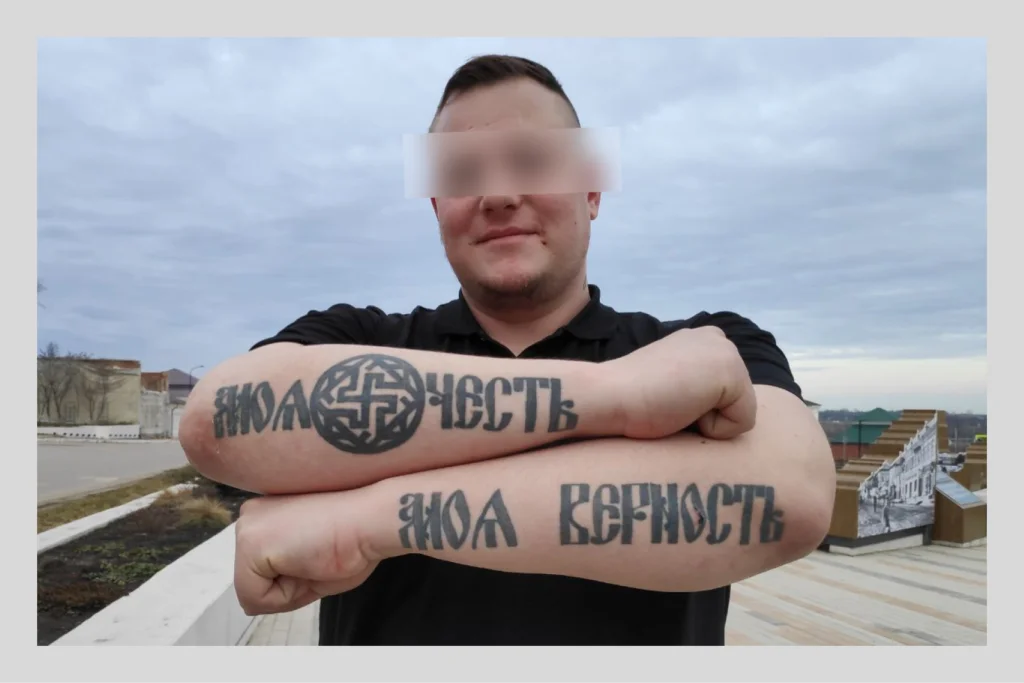
“But I don’t have any feelings towards Moskalev. But, to be honest, I heard a lot of nasty things about him,” Bes responded to the question. “Do you know about the drone? - He turned to one of his friends. “I think it’s all his doing.” The man apparently remembered how in April 2023 the country was briefly frightened by a drone stuck on a tree in one of Efremov’s courtyards. It later turned out to be a children's copter with a dead battery and no cameras or ammunition. But the supposed Wagnerites did not know this.
Fifty meters from Red Square, Efremov’s private sector begins: simple wooden houses, unpaved streets going downhill. On one of these streets, opposite the funeral services office and the VIP sauna, there is a house that belonged to Alexei Moskalev.
He and his daughter Masha came to the attention of Russian authorities after an anti-war drawing that a sixth-grader drew in an art lesson in March 2022. Teacher Nina Vorobyova, Masha's class teacher Ekaterina Ovsyannikova and school director Larisa Trofimova reported the drawing to the police. After a year of checks and investigations, in March 2023, 13-year-old Masha ended up in a shelter, where she was without contact with the outside world for a long time.
The wooden building is surrounded by a two-meter metal fence. On the locked gate is an advertisement for rent and sale with Moskalev’s phone number (the same number is indicated in the court documents in his case).
Now the phone is not answering. Since March 2022, Moskalev has been under house arrest in the case of “discrediting the army.” And then he was sentenced to two years in prison.
“And he had chickens running around here”
Alexey Moskalev is 54 years old. In the eighties, he and his mother moved to Efremov from the surrounding village of Skorovarovka, which was demolished and resettled. Didn't serve in the army. For the last 36 years he lived in a five-story building on Komsomolskaya Street. It was built for the residents of the demolished village, and also for the workers of the rubber plant. Now the house is half empty. Of the three apartments on Moskalev’s floor, not one is inhabited, neighbors say.
After the death of his mother, when he was already closer to forty, Alexey married Olga Sitchikhina. Olga’s daughter from her first marriage also moved in with the couple.
Deputy Podolskaya, who communicated with Moskalev, says that before Masha was born, the couple already had a child who died as an infant. He died due to an incorrect diagnosis and treatment, the deputy says, according to Alexei: the child began to choke, and the doctors could not understand in time what was happening to him.
That is why, Podolskaya believes, Alexey was so worried about Masha. The girl was born in 2009. When Masha turned five, Olga left her family and went with her eldest daughter to Tambov. So Moskalev became a single father.
Moskalev had three previous convictions , the prosecutor said at a meeting in his case of “discrediting the army.” The first, back in Soviet times, was for theft; the second, in 2004, for unlawful imprisonment; the last one, in 2008, for the provision of services that do not meet safety requirements. On the websites of the Efremov and Tula courts, as well as in the State Automated System “Pravosudie” database, “Verstka” did not find any verdicts.
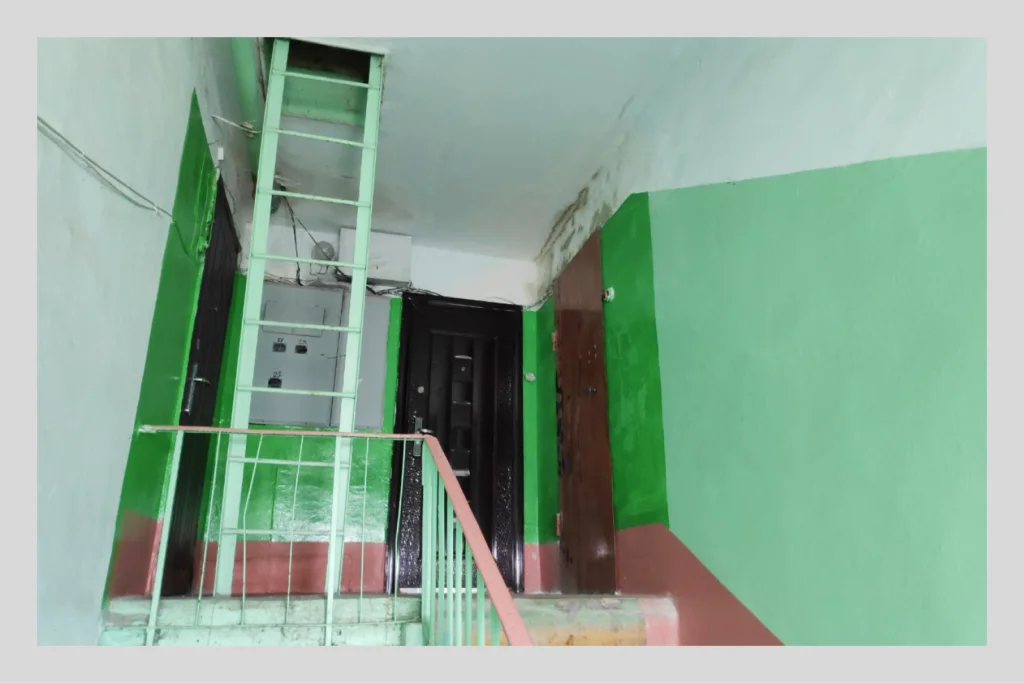
Since 2010, Alexey has been involved in business – and quite an unusual one. He raised birds: partridges, turkey ducks, pheasants, chickens and even peacocks, “small ones,” say local residents and activists familiar with the family. There was a time when birds lived right in the attic of a five-story building, above the Moskalevs’ apartment on the top floor, his neighbors say. A steep staircase leads from the stairwell to the attic, and the hatch is closed by a wooden door without a lock - getting there is not difficult, so nothing prevented Alexey from using this room.
But in recent years, he kept his “zoo” - as, according to Deputy Podolskaya, Alexey himself called his birds - on the very site that is located opposite the funeral services office and the VIP sauna. Sometimes Moskalev and his daughter Masha were seen at the local bazaar, where they handed out leaflets about the sale of birds.
In Getcontact, Moskalev’s number is marked as “Alexey incubus eggs.” Apparently, he did not sell poultry meat, says Podolskaya. According to Moskalev’s already deleted advertisements on one of the popular sites, he sold “hunting” and “Romanian” pheasants for 1,500 rubles, wild decoy ducks for 800, Kholmogory gander for 3,000, bantam chickens and “Pavlovsk gold” for 1,200. Legal entities or registration as an individual entrepreneur "Layout" Moskaleva is not found it.
Birds were not Moskalev’s only business, his neighbors say. “He had a canteen for truckers and a repair shop,” says Vera Alekseevna, who lives on the floor below his apartment. “Some people worked for him,” adds Svetlana from the apartment opposite.
In the supposed canteen-workshop, however, they said that Moskalev “did not work here: he simply rented out the garage.” “And he had chickens running around here,” added the owner of another workshop located nearby. “Layout” found an advertisement from 2014, where Moskalev offers to rent a cabin car “for a building materials store, a car shop, a workshop for making monuments, a tire shop, an office for a taxi.”
“But as a person he was shit,” adds the owner of the workshop.
“I always found something to complain about”
Moskalev’s neighbors speak of him like this: “unsociable,” “dark personality,” “didn’t communicate with anyone, didn’t even say hello,” “in his own head,” “suspicious person,” “kind of wild.” Among its neighbors, Moskalev has already acquired legends similar to urban folklore. “He served in the police, then he was expelled from there. They said that when his mother died, he wrapped her in something on the balcony and received a pension for her for another six months,” says a man from a tire repair shop.
“I sold moonshine. And they said it was also drugs. But moonshine - one hundred percent. Drunks came to him constantly. Sometimes they were on the wrong floor and broke in on us. They say that he also had a certificate - a white ticket,” says neighbor Svetlana. Vera Alekseevna, who lives opposite, also believes that Moskalev was involved in moonshine brewing - although he himself did not drink. She claims that he never had an official job.
But there are facts on which all Moskalev’s neighbors and acquaintances agree.
First, he was very concerned about whether the authorities and local residents were following all the rules and regulations . In other words, the townspeople say, he was a litigious man. “When we were doing the redevelopment, he peed on us everywhere. He loves to write,” says Svetlana. - Both to the police and to the administration. I complained everywhere. He wrote that we were demolishing the load-bearing walls, that we were creating a threat of the house collapsing. We didn't have guests coming from anywhere. In the end, everyone realized that we weren’t creating any threat, and he was just trying to get the hang of it.” The owner of a tire shop says that when Moskalev appeared on the street, he always found something to complain about: “Someone planted a tree wrong, then someone walked the dog the wrong way.”
Secondly, Moskalev was extremely reluctant to pay utilities and other fees. “He himself is still a miser. I didn’t rent it out for anything: not for repairs, not for the intercom, not for the doors. The girl came from school and kept yelling at him to open the window. Although the intercom costs a penny,” says Svetlana. For non-payment, Moskalev’s gas was turned off, neighbors add. “Layout” found on the website of the Federal Bailiff Service and in its leaked databases information about Moskalev’s numerous debts for utilities.
The teachers at the school where Moskalev’s daughter studied did not like him because he opposed extortion and did not hand over money for anything , says deputy Podolskaya: “This was his unique point of view.”
The deputy says that in Efremov people sometimes turn to her who consider themselves “citizens of the USSR.” Supporters of this conspiracy theory are confident that the Soviet Union de jure continues to exist - and therefore, there is no need to implement the decisions of the Russian authorities, pay taxes and other fees. Podolskaya emphasizes that she cannot claim that Moskalev shared these views, but refusal to pay for utilities is typical of adherents of this ideology.
On August 24, 2022, the Russian Ministry of Justice added Citizens of the USSR to the list of extremist organizations. By decree of the Ministry of Justice, the organization was to be liquidated, and its activities were to be prohibited in Russia.
The Vorstka correspondent accidentally met one of the banned citizens in the city - on the street near a private house where Moskalev kept birds. The man, who asked not to be named, said that he supports the Moskalevs. Being the father of three children, he takes the history of this family to heart. I even went to court hearings, even though I don’t know Alexei personally. The initiators of repressions against the family are “the elite that destroyed the USSR,” the man believes.
“This is the top that is hidden from us. We only see dolls, but we don’t see puppeteers. They all worship the horned mammon, Baphomet . Let them all burn,” sums up the interlocutor of “Vestka”.
“He walks by and she rushes straight towards him.”
From the age of five, Masha grew up practically without a mother: “I don’t deny that Masha really misses her mother in her life,” says a family friend named Elena. It was she who first told the story of the Moskalevs to local activists - and later helped to temporarily hide the family in another city.
“He loved his girl, it was obvious from everything. In the morning you look - he is carrying her backpack, and he is leading her by the hand. And she was already quite big, in the sixth grade. It seems to me that she was a little behind her peers in development. This is where the kittens live - she fussed with them all the time. She played with the little ones on the playground - although the girl is already an adult. She, of course, grew up under his influence. He spoke to her with gestures: he will show her something - and she understands. She is walking, and he walks past - and she rushes straight towards him. I remember she was still little and said: if I’m not there, then dad won’t live,” says neighbor Vera Alekseevna. She says that the schoolgirl was very polite - “unlike her father.”
“People even thought badly about them - they walked by the hand all the time. But the last time the police came, they said: “ Everything has been checked. He didn’t touch the girl ,” says the woman.
“Of course, I feel a little sorry for the girl,” she sums up.
The fact that Moskalev and Masha spent most of their time together is confirmed by other townspeople. For example, the owner of a tire repair shop says that when Alexey came to his garage, he often took his daughter with him. Deputy Podolskaya emphasizes that Masha always had high-quality and warm clothes for the season. And family friend Elena shows photographs of the girl sitting on a horse: “She was involved in equestrian sports. It’s clear that her father tried to give her a comprehensive education and upbringing.”
When Masha submitted an anti-war drawing at an art class in the spring of 2022 and the teachers reported this to the police, the girl was questioned several times in the absence of her father by law enforcement officers, activists say. “She was interrogated by the FSB. They interrogated me without my dad, without my teachers,” says Elena Agafonova, a volunteer of the public association “People’s Control”. She contacted the prosecutor's office and the Commissioner for Children's Rights of the Tula Region, Natalia Zykova, about this - but received only replies.
The drawing and denunciations of teachers attracted the attention of the authorities to the family. Law enforcement agencies began to study Moskalev’s social networks - and in April 2022, the court imposed a fine on him in the amount of 32 thousand rubles for the administrative offense of “discrediting the army.” The reason was Moskalev’s post on Odnoklassniki, where, according to the court, he accused Russian military personnel of raping Ukrainian women .

Around the same time, activists first made this story public - and received a lot of support. Olga Podolskaya says that after that Alexey Moskalev was confident in the safety of his family: it seemed that all the problems were in the past and there were no more questions for the Moskalevs. For example, he did not even challenge his fine. Starting from the new school year, Moskalev officially transferred his daughter to home schooling.
In order not to miss new texts from “Layout”, subscribe to our telegram channel
“This is an institution for children in difficult life situations”
But Moskalev did not stop writing anti-war posts on social networks. Moreover, Moskalev had passwords to his daughter’s accounts on social networks - and posts periodically began to appear there with words like “Now everyone who dreamed of dying for Putin has the opportunity to make their dream come true!” and analysis of the politics of Kazakhstan.
In December 2022, the family was searched . Activists then suggested hiding the family in the nearby town of Uzlovaya. Elena Agafonova found an apartment for the family, where Alexey and Masha were hiding for a couple of months. But they were found there too.
At the beginning of March 2023, the court put my father under house arrest in an apartment on Komsomolskaya in Efremov, and Masha was sent to a shelter.
At the end of March, a few days before Moskalev’s sentence, he cut the bracelet and fled from Efremov to Minsk. Neighbor Vera Alekseevna recalls how, after Moskaleva’s escape, she made fun of the police. Their squad was on duty outside the windows of the house for several months before - and for some time after. “What did you expect, I say? You thought he was a law-abiding citizen. They sat him down and thought that he would be waiting for you. And he... If you put all the scammers in a row, he will be the first among them,” the woman is sure.
In Belarus, Moskalev did not remain free for even three days. He was found and detained. On March 28, he received a two-year prison sentence in absentia in the case of “fake news” about the army. On April 12, Moskalev was extradited from Minsk to Russia and sent to a pre-trial detention center to await a court decision on the appeal.
Among the people who came to the announcement of the verdict against Moskalev were several men in camouflage clothing. They introduced themselves to journalists as members of the local veterans organization “Flame”. Its chairman, Rinat Gilmiyarov, told Vorstka that he himself has been working at the Efremov orphanage as a teacher - “for more than a year.” However, I hardly saw Masha: “I have another group, boys.” “Well, he spoke out against the guys who are fighting and defending our Russia. Therefore, we came out in their support - for a special military operation, for the president and the extermination of Nazism.”
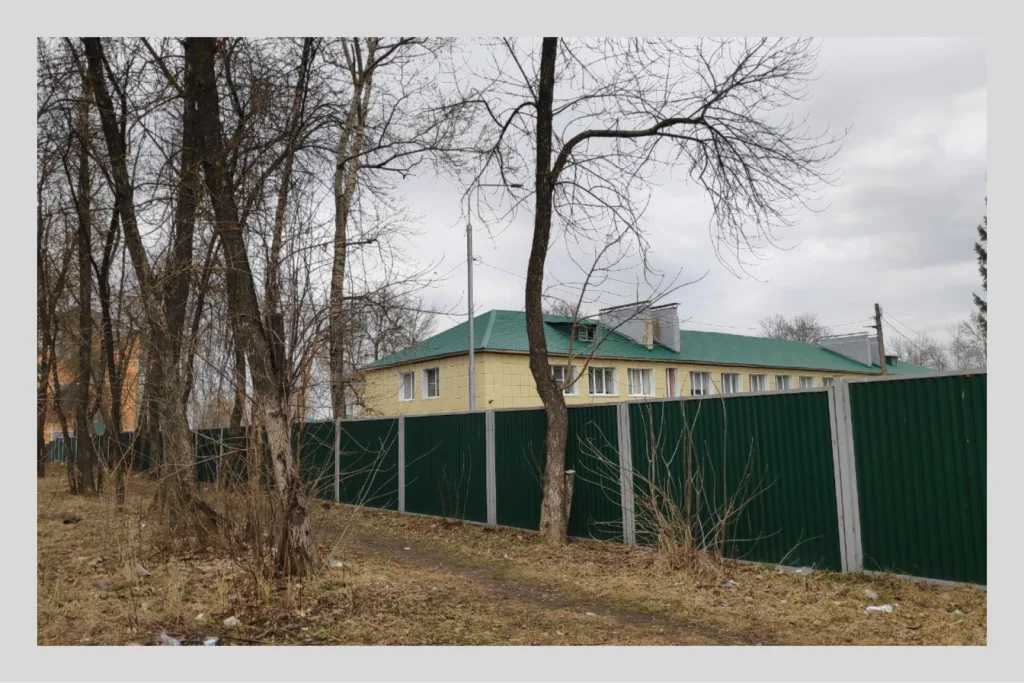
Officially, the institution where Masha is kept is called “Social Rehabilitation Center for Minors No. 5,” although local residents continue to call it by its former name, “Youth.” “This is an institution for children in difficult life situations. For example, children may be there while their mothers are in hospital. I even heard about cases where children were sent there for vacation. Although this is completely incomprehensible to me,” says deputy Podolskaya. Now it is impossible to get there: neither the lawyers, nor the activists, nor the “Vestka” correspondent succeeded.
The girl has no connection with the outside world. Friends of the family, through security, handed her a mobile phone and a SIM card - and received an answer that they had been delivered. But there was no news from Masha . By the beginning of April, the children who were kept there were isolated from each other in separate cells, says Vorstka’s source in Efremov’s administration.
On April 5, Federal Children's Ombudsman Maria Lvova-Belova reported that the girl was handed over to her mother, Olga Sitchikhina. A Tula news portal published several photographs of mother and daughter together. However, it is still impossible to contact Masha - and activists are not sure that Masha is with her mother. Apart from a few clearly staged photographs, there is no evidence, family friend Elena Agafonova tells a Vorstka correspondent.
“It is necessary to interrogate Masha herself”
On the morning of April 6, 2023, a line formed in front of the entrance to the Efremovsky Interdistrict Court. Gathered on the stairs were young activists from Moscow and St. Petersburg with multi-colored hair, clown noses and glitter on their faces, journalists, including foreign ones, and several short-haired men in black with gloomy faces.
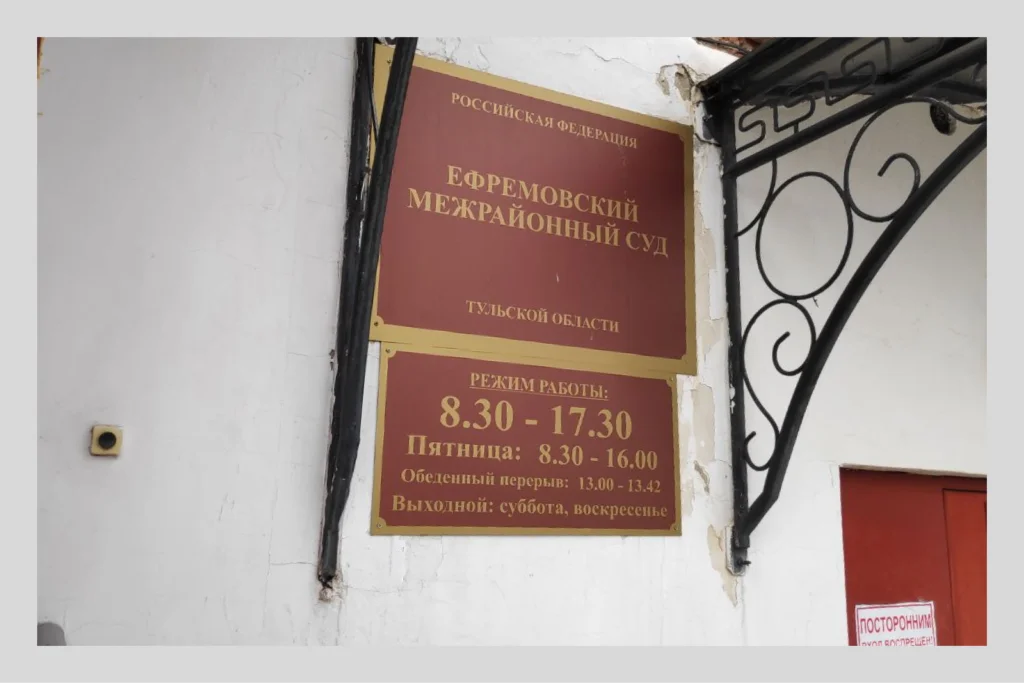
A sharp, suffocating smell could be heard for hundreds of meters around the court. Opposite is the Zernoprodukt plant, which produces alcohol, and the waste from its production smells like that, explained deputy Podolskaya, standing in the same line. One of the members of the “Citizens of the USSR” movement, who spoke with a “Vestka” correspondent a couple of days ago, also tried to go to court. But because of his USSR passport, he was not allowed to attend the meeting.
On April 6, the court was supposed to decide the issue of limiting the parental rights of Moskalev and his ex-wife Sitchikhina. But judge Larisa Shatalova decided to postpone the hearing. The process takes place behind closed doors - the law requires this in cases where the rights of minors are involved . Neither Masha's father nor mother were brought to court.
After the meeting, lawyers Vladimir Bilienko and Ekaterina Gordon came out to the press and listeners. The latter said that the judge behaves attentively and listens to the defendants’ requests: “For example, she agreed that it was necessary to interrogate Masha herself.” That is why Shatalova decided to postpone the meeting. The process will continue on Thursday, April 20.
Editorial "Layout"