
Translated material
"Meet - Marx"
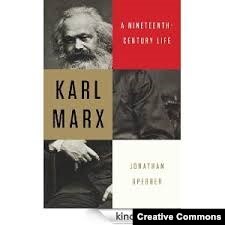
Alexander Genis: When in euphoric times, which came immediately after the Cold War, Francis Fukuyama announced the end of the story, he noticed that the Marxists remained only in two places: in Pyongyang and Harvard. However, since Marxism has ceased to be a dangerous teaching, which, according to Jung, has killed more people than a bubonic plague, the personality of Marx himself appears in a different light. The new biography of Karl Marx is represented by Marina Efimova.
Jonathan Sperber. “Karl Marx. A nineteenth-center Life. "
Jonathan Spermber. “Karl Marx. Life in the 19th century. "
Marina Efimova: The book of Jonathan sperm is called “Karl Marx. Life in the 19th century ”, and this is the first“ naturalistic ”, so to speak, a portrait of Marx, written by a professional historian. The book sets out in detail all the characteristics of the character of this legendary personality (starting with great performance and ending with absolute inability to bring to the end of none of his undertakings), as well as all the details of Marx’s everyday life (up to problems with personal hygiene).
The author leads the reader from Trier - the native city of Marx - to Cologne, where his career of a radical political journalist, which ended with a link, begins, and then to London, in which Marx lived most of his life, and where he died. We will learn the details of all the financial difficulties of Marx, even about his sleepless nights because of the civil war in America (not because we believe in the sperm that Marx was worried about the fate of slaves, but because he was worried about the loss of fees from the New York Time Tribune newspaper). We learn the story with the illegitimate son of Marx, the guilt for which Engels took upon himself - to save the happy marriage of his friend. Finally, we read the countless messages of Engels to Marx with the same prayer: “Bring the work to the end” (meaning work on “capital”). The last two volumes of “Capital” were published posthumously - the concerns of Engels (and not without his editing) - as well as the brochure of the “Communist Manifesto” - the most popular text of Karl Marx.
The reaction to the new biography of the reviewer of the book is curious - the famous London journalist, employee of the Guardian newspaper Joe Friedland:
Announcer: “In the description of the sperm, Marx seems to be a real, living person for anyone who is at least a briefly familiar with the current radical -minded American intellectuals. Like them, Marx lived in an apartment, to put it mildly, - bohemian, and strictly speaking - neglected; He spent hours in the Scriptures of letters with requests for money (in the modern context - applications for Grants); He pulled with work, but with passion he rushed into any disputes, most willingly - on the attack on his own supporters (like the current radicals), and, like them, was not consistent in reasoning - until it reached complex theories and abstractions. Marx, described by the sperm, is easy to imagine in 2013-the obsessed “blogger” and a radical professor of history somewhere in Missouri. ”
Marina Efimova: However, the biographer himself (by the way, the professor of history at the University of Missouri) is trying to destroy this impression step by step. His goal is clearly formulated to him - to show that Karl Marx was a man of his time and only his time. “Marx,” he writes, “the figure of the past, not the forerunner of the future.” The sperm approaches Marx's personality with unexpected pragmatism, representing him not by a philosopher, not an economist or a preacher, but a political journalist. “What scientists call Marxist philosophy,” writes Spermber, “was actually the then journalistic commentary, the topical, and, consequently, full of contradictions.” Giving a lot of examples, Spersber is trying to prove that Marx was always interested only in German politics and only hated Prussian despotism:
Announcer: “All his conclusions, including the most general and abstract, were caused by specific events. And Marx has repeatedly abandoned his conclusions if the circumstances changed. ”
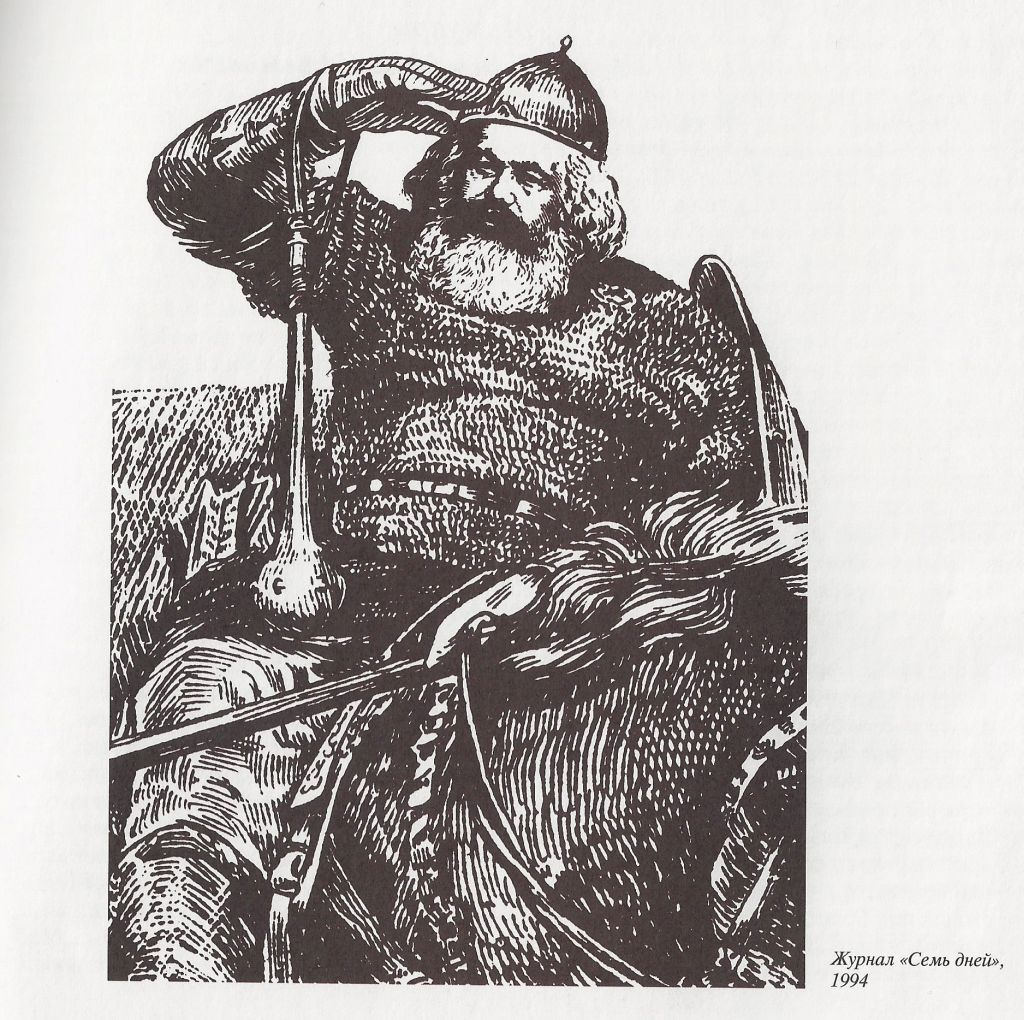
Lowering from the pedestal of the canonized image of Karl Marx is extremely pleasing to the British reviewer of Friedland. He writes:
Announcer: “Spermber offers not only a new view of a person whose influence on the world is difficult to overestimate, but also a new principle and a useful template for the approach to the great world, especially to the great thinkers. This principle is the demistification of their words and deeds, which, out of habit, consider it sacred. For example, we are still waiting for a historian who will write about American founding fathers the way Sperma wrote about Marx. ”
Marina Efimova: However, another reviewer of the new biography - the American writer Daniel Calder - does not recognize such a simplified approach to the figure of Marx - not only a sperm, but also the former interpreters. Calder writes:
Announcer: “Marx's apologists believe that he, observing the same 19th century factory (the conditions in which are probably outdated during his observations), discovered the eternal laws of the economy and history. Marx opponents tie his theories to the epoch -making crimes of Lenin and Stalin. Spermber rightly denies both extremes, but in his book for many details, like many trees, there is no forest. Spermber draws Marx with a figure so rooted in the 19th century that it is absolutely incomprehensible why millions of people killed in the 20th century, shaking the banner of his economic philosophy. ”
Marina Efimova: One of the short explanations can be found in the book of Russian writer Igor Efimov “Communication of the times”:
Announcer: “It’s funny to look at the map of the world, which Marco Polo operated on, but there was no other, and at the very least, using it, he drove to China and returned back. The same thing with Marxism - for a hundred years he was the only "grid of coordinates" of world history. But the rapid events of the 20th century categorically refused to squeeze the scheme into the Marx: primitive-communal system, slave system, feudalism, capitalism, socialism. When the socialism, who triumphed in Russia, China, Vietnam, Cambodia, without blinking an eye, revived slavery, surpassing all ancient despotism in cruelty, the scheme collapsed. ”
Marina Efimova: If she collapsed, then not everyone noticed this. “There is no doubt that Marxism is still attracting a lot of supporters,” writes Daniel Calder in conclusion of his review. - This attractiveness is based on Marx's seductive fantasy about the possibility of economic and social paradise on Earth and his simplified moral condemnation of capitalism, which is not similar to paradise. And these ideas will forever seduce people and forever attract dozens of interpreters and interpreters. ”