Date
Author
Соломон Волков; Александр Генис
Source

Preserved copy
Translated material
Dialogue on Broadway
Brief story "Plywood"
Alexander Genis: Solomon, what is they talking about Broadway?
Solomon Volkov: Broadway they talk about the "faner."
Alexander Genis: It's already funny
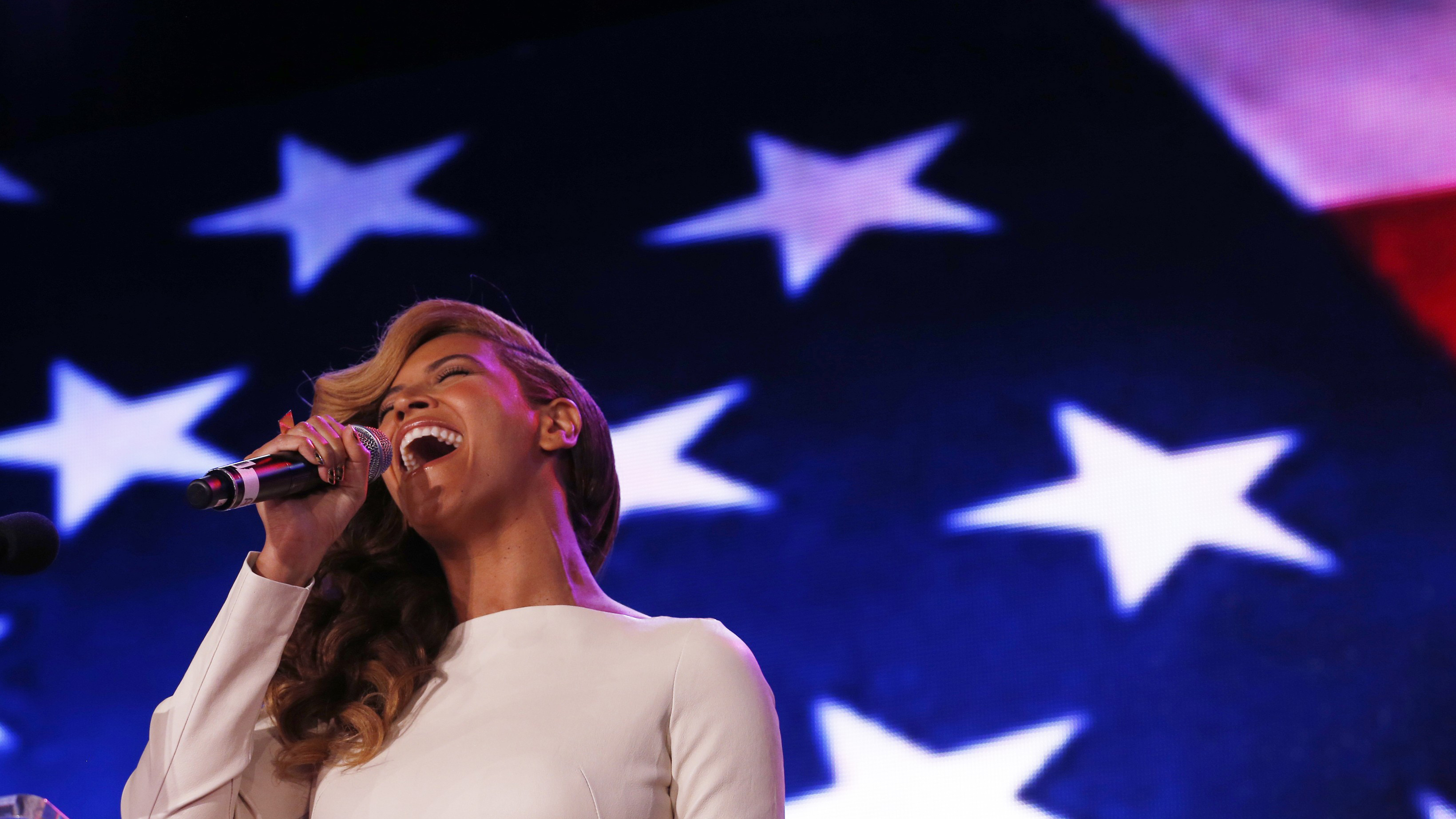
Solomon Volkov: I thought I would surprise you, Sasha. So, on Broadway they say about the “faner” in connection with the article on this topic, which appeared in the influential conservative weekly “Nashnl Revoy”. The author of the article, the famous American political commentator and a great music lover Jay Nordlinger, began to talk about the faner, starting from the sensational story, namely: the famous pop singer Beyoncé sang a national anthem on the inauguration of President Obama, and then it turned out that she did not sing, and her lips moved and played in advance recording. This is called in Russian "plywood."
Alexander Genis: Moreover, I must say that the orchestra did not play, but pretended to play, the conductor did not conduct, but pretended to be conducting, and all this was such a puppet performance.
Solomon Volkov: And this is precisely Jay Nordlinger is indignant. And I was not particularly indignant about this and looked at the whole problem in a new way precisely thanks to this article by Nordlinger.
Alexander Genis: The fact is that she explained her behavior. She said that it was too cold to sing, the orchestra was too cold to sound the instruments and, in general, was too cold to pronounce something seriously. Because it could spoil and disrupt this procedure. But the Faner was not invented today?
Solomon Volkov: Oh, yes! The history of the "plywood" is very long and stretches for many years. The most famous case of “plywood” is an episode related to 1916. But this is a very peculiar “plywood”, I would not refuse to attend it. Namely, in 1916 the metro opera tourished in Philadelphia and in the play on the opera of Puccini Bohemia Bas at the end of the performance suddenly discovered that he could not sing that he had lost his voice. There are such cases. To which the tenor present on the stage by the name of Karuzo told him: "Do not worry, turn your back to the public, I will sing this aria for you."
Alexander Genis: How can a tenor sing bass aria?
Solomon Volkov: He reproduced the bass aria with a tenor, which in itself is a feat. Of course, he did not sang in the bass register, he sang her a tenor. The audience, I assure you, did not protest.
Alexander Genis: I would also not protest against Caruso.
Solomon Volkov: I would sit on this performance with great interest. But it was such a unique case of "plywood". And later, Plywood was legitimized by truly Hollywood, because actresses for leading roles were invited in music films, they had to sing, but they were invited because of their external and acting data, and their voice was very often absent or insufficient. And for such famous actresses as Audrey Hepburn or Natalie Wood, the singer singed, who remained the widespread masses unknown - Marnie Nixon. But she gave the unforgettable paint that made music films with the participation of Audrey Hepburn or Natalie Wood events in the history of the American musical.
Alexander Genis: This is a legitimate “plywood”, because cinema is the same record on its own, it will always be reproduced, one way or another. But when you are present at a living concert, and there they give you a “plywood” - this is a scam. Elton John said that if you are selling a record for 75 pounds, then this is a theft.
Solomon Volkov: The concrete performance of the Madonna was meant, and he told her it right in the face. On this occasion in 2004, there was a great scandal. But this is pure truth. But here is the most regrettable different. Here, the technique and its capabilities, first demonstrated by Hollywood, then invaded the classic recording area, where, if the singer of the classic did not have any upper notes, another singer recorded these upper notes, which was not reported at all. There is another case, also epoch-making, when in 1965 Vladimir Gorovitz the Great Pianist, after a 12-year break, performed at Carnegie Hall. People were breaking, there were gigantic queues, the pea played amazingly, but a certain amount knocked down and fake notes. And when the record came out, by some miracle of these fake notes there was no longer there. And when critics made a complaint about this, he said: “I was worried, I went on stage, my sweat came out, he stared my eyes, I did not see the keys well. It was an act of God, (this was the action of God). I can’t allow the descendants to judge my performance in Carnegie Hall in connection with these circumstances. ” He proved that he has the right to do so. In general, he was forgiven.
Solomon Volkov: Absolutely. Say, a wonderful musician, the great tenor Luchano Pavarotti has played more than once or twice under the “plywood”, especially in large stadiums. And it is known that in 1992, the Air Force simply demanded to return the money that he was paid because they signed the contract for the performance alive.
Alexander Genis: Okay, and now let's talk from the point of view of the viewer. You are sitting at the stadium where the singers are rock, where you can’t hear anything because of the roar. Is it important for you that it is living singing, and not under the "plywood"?
Solomon Volkov: It all depends on your position. If you want the performer to go along a stretched wire, there would be a real threat that he will fall from there, and this adds sharpness ...
Alexander Genis: Yes, of course!
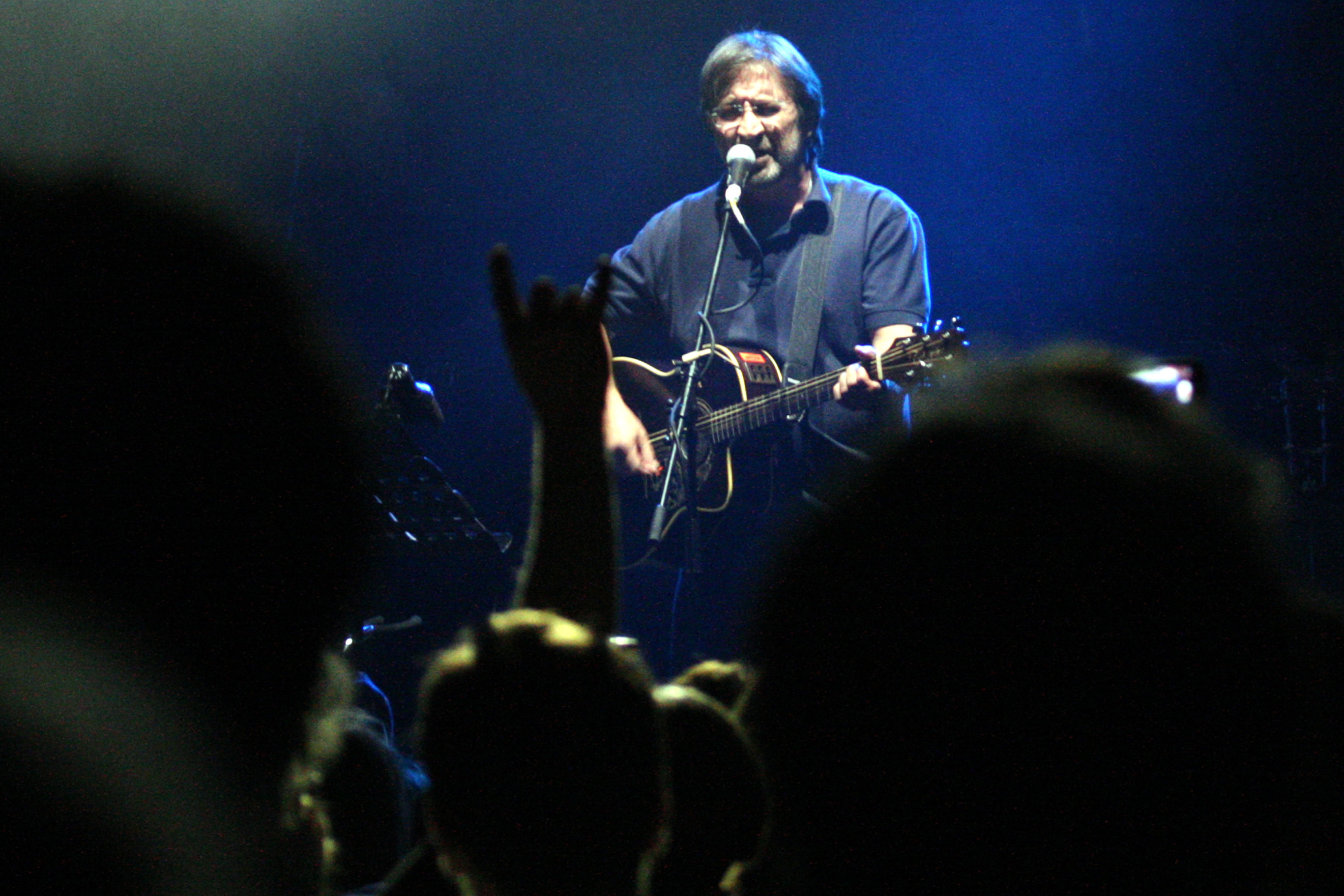
Solomon Volkov: Then you have every right to demand your money back, as the Air Force did if you find out that this singer actually performed under the “plywood”, as happens today in 95 cases out of a hundred. But if you go just to live alive at your beloved artist, if you go to stare at the McCartney or Madonna Paul, and you want them to jump in front of you and sang something well-known to you at the same time, and it is better to be one hundred percent quality, then go, just do not need to be in the power of illusions, that this is lively, real execution. This is canned food, in a sense. And today's technology allows you to choose any of these two options. In Russia, as far as I know, today the Plywood reigns - almost all the performances of the most famous stars are recorded. There is only one performer, as far as I know, who, firstly, fundamentally refuses to speak under the “plywood”, and, secondly, actively opposes the dominance of “plywood” in pop music. This is Yuri Shevchuk. He just visited New York, went out and said that there would be no plywood. And he laid out. I must say that everything went wonderful. He complained that something was wrong with his voice, sitting down. Nothing of the kind! It was better and better, he bloomed and at the end his voice was like a bouquet of roses. And, of course, when you know that a contractor works in front of you without a grid under him, your respect for him increases. And we will finish our brief story of the “plywood” of all time and peoples with an illustration of how Beyoncé sang a national anthem under the “Faner” during the inauguration of Obama. We took it from You Tube.
(Music)
Alexander Genis: Solomon, what do you have on the book shelf today?
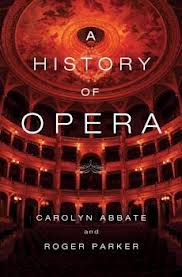
Solomon Volkov: Today I have the “Opera History” , which recently published in the American publishing house Norton. Its authors are Professor Caroline Abbate and Roger Parker. And to their honor I must say that the book was released without musical examples. I am completely for this. I am terribly annoyed when in books about music there are musical examples.
Alexander Genis: Do they not help you?
Solomon Volkov: And I will explain to you now what's the matter. If you know this music, then you do not need musical examples. If you do not know her, then these musical examples also do not need to you, because they will not tell you anything - it is impossible on these several lines that are squeezed into the text, to make out something. This is nonsense. These professors or musicologists who thus operate with their books, they simply cover their file parts and nothing else.
Alexander Genis: The publishers of popular science literature have a rule to never include equations and formulas, because when the reader sees these formulas, he will not buy a book.
Solomon Volkov: This is very simple: either you can tell about music and describe it without a musical example, or you can’t, but then do not write a book at all. And you can - you are absolutely useless to you.
Alexander Genis: But, judging by the reviews, these authors just managed to describe the music perfectly, they recreated the story of the opera in the form, as they said, the beautiful mausoleum or morgue.
Solomon Volkov: The authors have two points of view on the opera, and they do not quite coincide. On the one hand, they admit that over the past 50 years, the opera’s space has expanded extremely - new opera theaters have been being built, there are more audiences, in recent years the opera began to show in the cinema, on television - this increases the audience. On the other hand, their point of view lies in the fact that from the middle of the 19th century, opera theaters have turned into such a beautiful deceased, in which old, classic operas prefer to grow, attracting the public’s interest in the fact that these productions are modernizing, transfer them to modernity or, conversely, overturning in prehistoric times. That is, in every possible way they change the situation in which the action proceeds and music sounds.
Alexander Genis: This point of view is extremely close to me. I would only spend the upper border along Puccini. After Puccini, the opera becomes not so popular. And not in vain, because all the best has already been created. The authors, by the way, say about it that 400 years of opera is a lot.
Solomon Volkov: This is even too much for the history of the genre.
Alexander Genis: Well, how much can a musical genre live? Therefore, the opera turns into a museum, with which they agree.
Solomon Volkov: But there is a contradiction. Museum, good. But we know the Louvre, suppose. It is now visited by many people like ever, and the Louvre administration from this in horror, they would no longer want so many people to come to them. That is, the flow increases, and claims are a museum, here the old dead masters are also growing. There is some contradiction. It seems to me that we hear too often and take the opinion of critics as a “popular opinion”. Critics, indeed, can get bored for the hundredth time and listen to Bohemia Puccini or Rigoletto Verdi, they would like to hear something new. In this sense, the fate of ballet critics is much more unenviable. There, in general, ten masterpieces can be counted. And they look at these masterpieces - “Corsara”, “Bayater” or “Swan Lake” - in million times. These ballets, I think, dream in bad nightmares. But imagine a person who first comes to the opera. He will listen to Carmen with great pleasure. And he does not need to push modern operas into the throat, as musical critics do. But the voice of these “simple” listeners is sometimes ignored by the administration of opera theaters precisely because it is very important for them at the next meeting of the board of directors or when they represent their state instance programs, as is done in Europe, where opera theaters are still subsidized to the state, it is very important for them to represent the opinion of the press. And the press stubbornly insists on more and more include modern works in the repertoire, and modern operates created in the last 10-20 years are meant.
Alexander Genis: The tragedy is not this, but that the operas are bad, they are not held in the repertoire, because they perform a new opera once or twice, and then it disappears forever, as it was before our eyes. I already lost my account of how many operas have disappeared. Remember, there were operas “View from the bridge”, “Great Getsby”, “First Emperor”? These were all gorgeous premieres in the metro, which no one remembered the next season.
Solomon Volkov: Because they were all accepted under the pressure of precisely these circumstances - we need a new opera. Why? Why not stop and not to say: yes, we have an opera theater, this is a museum, and we end in Puccini with the addition of some individual operas, already created in the middle of the twentieth century, which, in this sense, have been tested by time.
Alexander Genis: Katerina Izmailova, for example.
Solomon Volkov: for example, operas of Britten, Prokofiev, Shostakovich. You can also add several names to them.
Alexander Genis: There will still be very few of them, and still they are also created half a century ago. I have another proposal, which, in my opinion, is easier and more effective - to change the concept of opera. If we insert the musicals into the opera, then everything will change at once and it turns out that in recent years it has been written not so little popular music. And if, say, “Jesus Christ is a superstar” to put in a metro, then this opera will certainly collect a huge audience. You just need to change your attitude to the opera.
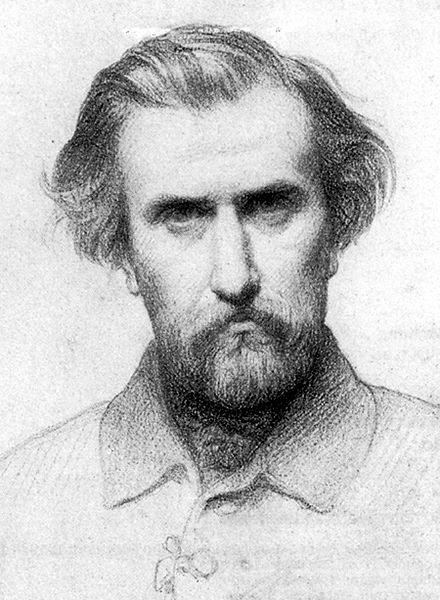
Alexander Genis: This is the very opera that is mentioned in Joyce in the story “The Dead” from “Dublin”. Joyce was a great lover of opera singing, he himself sang perfectly.
Solomon Volkov: On the plot of Goethe. And this opera was incredibly popular in 1866, when it was written and first set, and for a long time after that, and now they are very rare about it. And I will be happy to show the aria from the opera Mignon performed by Tenor Nikolai Gedda Lebel Emi.
(Music)
Mirror. How to live with Russia
Alexander Genis: Recently, New York Times, not only the main newspaper of the country, but also the most informed newspaper, especially in Russian affairs, arranged a kind of forum, inviting her readers to discuss an important article on how to relate to present Russia. And the essence of this problem boils down to the fact that each president is trying to re-launch relations between Russia and America, and each president promises that something new will begin. Nothing new begins and all these attempts are beating. What to do America with Russia, how to relate to what is happening in this country and how to build relations to these two powers? Perhaps the most interesting thing is that Matthew Bryza, one of the diplomats with extensive experience, said: “Russia will remain Russia and will always pursue its interests. The only thing that can be done is to accept Russia, and this is called Real Politics. ”
Solomon Volkov: I completely agree with this. And Gary Hart-it was the person whom New York Times chose in order to formulate some opinions about a fruitful dialogue with Russia ...
Alexander Genis: Let's not forget that Hart was a presidential candidate. He did not reach the final race, but, nevertheless, he is a very experienced politician and, in addition, I remember that his favorite book is Anna Karenina.
Solomon Volkov: He just insists that with Russia it is necessary to maintain a patient and respectful dialogue in any situation, and insists that in some sense, in his opinion, Russia is unfair, especially if we compare the American attitude towards China. Hart, not without sarcasm, says that if Russia invested in American funds and loans the same amount of money that China invested, then, perhaps, the attitude towards it would be much more restrained. Do you think he is right or not?
Alexander Genis: I do not think that everything is so simple and everything is determined by the economy, because nothing is ever determined only by the economy. And the attitude to Russia, as well as the attitude to China, is due to how the society reacts to this. This is democracy - they are forced to react to some things. This is the Magnitsky case. Why can't they forget about him in America? Because this is a terrible story, it is constantly extended by the press. After all, the press constantly presses on politicians, and politicians have nowhere to go from this. And the same thing happens with China. You will take the case of Ay Wei-Wi, a Chinese artist and dissident. Have you forgotten about him? The whole world speaks of him. They forced him to release him from prison. He spent 88 days in prison and, under pressure from the international public, was released. Dissentes are not a political affair, but a public one. И до тех пор, пока демократия существует, она не даст политикам успокоиться. В этом проблема политики, которая не может скрыть какие-то вопиющие факты, вынуждена с ними считаться и реагировать на них. Отсюда - Список Магнитского.
Соломон Волков: Я хочу обратить ваше внимание на следующее обстоятельство. С одной стороны, нам говорят, и мы об этом напоминаем, что интерес в Америке к России и градус заинтересованности Россией постоянно уменьшается. Right, right? А, с другой стороны, мы видим, насколько эмоциональным становится обсуждение практически всякой проблемы, связанной с Россией. Именно эмоциональным.
Александр Генис: Потому что Россия производит очень странные движения. Дело в том, что они все не имеют никакого реального значения. Разве Pussy Riot это важно для кого бы то ни было вообще?
Соломон Волков: Почему тогда история с Pussy Riot оказалась таким важным событием для Америки?
Александр Генис: Только потому, что российские власти так реагировали на Pussy Riot. То же самое с законом о несчастных детях-инвалидах. Ведь каждый раз происходит нечто такое, что совершенно не нужно российской стороне, и это вызывает дикое удивление, потому что никак это не связано с реальными интересами России. Однако вы знаете, о чем я хотел сказать? Меня поразило заявление одного болгарского политического аналитика, который, по-моему, очень принципиально важную вещь сказал. «Отношение к России в западном общественном мнении меняется в худшую сторону, в том числе и в странах традиционно благожелательных, как Германия и Франция. Но это возврат не к советскому образу, а к оптике 19 века. Россия воспринимается как часть политического антуража, с которой придется иметь дело, но она чужеродна по своей культуре, по системе ценностей, поведению и представлениям». Это ведь очень важное наблюдение, потому что в 19 веке к России тоже относились как к «тюрьме народов». С точки зрения либеральной истории, Англия была страной либеральной демократии, в которой существовала законность, а анти Англией была Россия, и именно так строились геополитические отношения. И вот сейчас, как говорит наш аналитик, возвращаются именно к той системе 19 века. Когда из 21-го века вычли 20-й, то получился 19-й.
Соломон Волков: А вам не кажется, что в этой ситуации упомянутый вами болгарский аналитик протягивает руку российским националистам, которые говорят: да, нас не принимают, нас всегда не принимали, нас всегда не будут принимать. Потому что речь идет о двух разных цивилизациях. Это то, на чем они настаивают. Они говорят: да, у нас в России автохтонная цивилизация, независимая, свои правила, свой уклад, ненавистный «западным либералам».
Александр Генис: Но это же ложь по той простой причине, что Пушкин к этому укладу не имел отношение, и Аксенов не имел, и Бродский. Дело все в том, что государство и народ в России, как в 19, так и в ХХ, и в 21 веке находятся по разные стороны. И то, что говорят националисты, то, что говорят западные аналитики, сравнивая Россию 19 века с Россией 21 века, относится к государству, но не к обществу. Вспомним, что российская интеллигенция, российская творческая, культурная часть народа всегда тяготела к Западу, она всегда была европейской.
Соломон Волков: Мне кажется, что в этом плане российские чиновники, которые разрабатывают и предлагают какие-то конкретные действия для администрации, всякий раз наступают на те же самые грабли. Они недостаточно информированы о том, как те или иные их действия будут восприняты на Западе, какой они вызовут эффект.
Александр Генис: Отсюда - Pussy Riot, закон о детях.
Соломон Волков: Им кажется, что для домашнего «рынка» правильным будут такие-то ходы, которые одновременно Запад проглотит, и вдруг оказывается раз за разом, как по Козьме Пруткову, что Запад не проглатывает, а вскипает, и всякий раз для чиновников это колоссальная неожиданность.
Александр Генис: Так что же делать?
Соломон Волков: Я думаю, что тут могут иметь место действия и усилия с обеих сторон.
Александр Генис: Сейчас все время идут разговоры о том, что детям российских чиновников нельзя учиться на Западе, и это такой прогрессивный закон, который должен их ограничить. Но я думаю, что ничего хорошего в этом нет, потому что именно опыт западной жизни открывает глаза. Однажды провели такое исследование. Лет 30-40 назад Латинская Америка была сплошь диктатурой. Из 20 стран 19 были не демократическими. А потом выяснилось, что 19 стран стали демократическими. What happened? Оказалось, что во главе каждой страны оказались политики, которые, так или иначе, учились в США. Это просто статистика. То есть, чему-то они там все-таки научились.
Соломон Волков: Боюсь, что это латиноамериканская статистика, а российская история демонстрирует тоже чрезвычайно памятный, но прямо противоположный пример. Петр Первый направил огромную делегацию российской молодежи учиться на Запад, и практически все на Западе и остались.
Александр Генис: С другой стороны, вспомним перестройку. Яковлев, архитектор перестройки, долго жил в Америке, в Нью-Йорке, он хорошо знал Нью-Йорк, и посмотрите, к чему это привело. Я думаю, что если бы Путин работал шпионом не в ГДР, а в США, то результаты могли бы быть совсем другие.
Соломон Волков: Я с вами согласен, что мы недооцениваем значение пребывания Путина в ГДР для формирования его взглядов. Оно оказало колоссальное влияние и окрасило все его последующие ходы и все, что теперь происходит можно вывести из дрезденского опыта. Для него ГДР осталась образцом.
Александр Генис: Сытое, дисциплинированное общество, в котором работает образцовая политическая полиция.
Соломон Волков: Тут уже ничего не поделаешь. А относительно того, что как-то надо учиться с обеих сторон, понимать психологию противоположной стороны - это несомненно. И должен вам сказать, что это в какой-то степени проблема и для американской дипломатии, потому что пришли новые люди, над которыми уже не тяготеет вот этот страх разговора с Россией, когда действительно от этого разговора зависела жизнь, выживание мира. Это ощущение, мне кажется, очень многое давало для более чуткого понимания интенций противоположной стороны. Пришло новое поколение, и этому поколению с американской стороны нужно учиться, как разговаривать с Россией. А российскому чиновничеству нужно начинать учиться понимать как будет реагировать Запад на те или иные их инициативы.