
Translated material
In Yelets - behind the anniversary of Chekhov
Marina Timasheva: Chekhov forever made his way to the anniversaries. But, those times - 150 years from the date of his own birth. The Berlin Theater teacher and director Yuri Alshits, who once studied at the famous directorial course of Vasiliev, where “6 characters” played, timed to the Jubilee of Chekhov an unusual international campaign, about which he told Yuri Veksler.
Yuri Alshits: 150 years since Chekhov's birth. We thought different to make official, ordinary, traditional anniversary celebrations. And then I thought that it was boredom and vulgar, and I think that Chekhov himself would refuse it. And I thought that some should be an alternative idea and not Moscow, and it is necessary not where he was born, and not where he died. To come up with something where others will not go to celebrate the 150th anniversary of Chekhov. And then the idea came with Yelets. This is a city about which Nina Zarechny in the fourth act says that she is going there.
A fragment of the film sounds:
- Tomorrow to go to Yelets, with men, in the third grade. And in Yelets, educated merchants will pester with courtesies. Rude life!
- Why - Yelets?
- Benes for the whole winter. We must go.
Yuri Alshits: I thought it was nice to go to this provincial city at the end of January. I found out that there is a theater, that the city has about 60-70 thousand inhabitants. And then I thought: why don't all Europeans come there? And if you come, then you need to do something, and not just drink. Then the idea arose to erect a monument to Nina Zarechny, that is, erecting a monument to the actress. For me, the actress is not Gina Lolobrida or Elizabeth Taylor, but such an actress who gets up every day, puts on an old coat, goes to the cold theater, in the makeshift, goes on stage, plays .... The provincial actress who carries her cross every day and believes that he does some kind of golden business. Here, in fact, the idea was to gather everyone and erect a monument to Nina Zarechny. A year ago, I wrote a letter, sent on the Internet to all my former colleagues, students, actors, directors with a proposal to create an action.
Yuri Veksler: And how did they respond to him?
Yuri Alshits: I thought about two response options. First: that no one will respond at all. It would, too, would be a joyfully enjoyed position that, here they have reached, in the theater no one is interested in anything, even such romantic projects.
The second option is that people will respond. And people responded. First of all, my students, former students, actors, then began to write from different countries, came letters, began to send money. But I gave all this to my assistant, Italian Ricardo Parmieri, and he does it. Then they asked the “Russian railways” to be given wagons. And they gave us. Oleg Pavlovich Tabakov, and Anatoly Mironovich Smelyansky, helped us. And on January 27, at 20 o’clock we meet in the waiting room at the Paveletsky Station and going on the Lipetsk train to Yelets. People who come from ten countries in Europe are gathering: Norway, Sweden, Italy, France, Holland, and so on to get into this train. In the Yelets there should be the conference “The image of the actor in the works of Chekhov”. Then we will discuss the monument together, what should be the image of Nina. Then there will be a charity music concert on the same day, like a gift to Chekhov. All actors from all over Europe will sing there, dance ... This is the first day. The next day we go to church, there will be a prayer for the memory of Chekhov. Then the installation of the foundation to the monument - everyone will bring a stone from his country and put it in the foundation. And later - an evening from Chekhov scenes, where people from different countries in different languages will play.
Yuri Veksler: Tell me, is the name of the sculptor who will make a monument is already known?
Yuri Alshits: Oh, there are many options. There are students from Sienna, from Italy, and there is a famous sculptor from France, and from Holland. But I would like, before you call the name, to discuss the idea with the actors. Here the conference will pass - what is the image of the actress, and then there will be a general discussion. It seems to me that it is important.
Yuri Veksler: Chekhov’s plays in Europe are constantly placed, everywhere, annually, and it seems that if he is not the second after Shakespeare ...
Yuri Alshits: He is the second. This is well known.
Yuri Veksler: What are you explaining? What did they find in it? Chekhov himself, I think, would be surprised that his plays are so often set around the world.
Yuri Alshitz: The topics that he affects, and his pen is not related to some particular century. I think that this can be set in a hundred years, things are touched on, which, like Shakespeare, are always alive, always worrying. Another thing is how to read Chekhov today, what is the secret. Now we are sitting, snow on the street, in white snow you can see a lot of things. Here are Chekhov’s plots - very simple, but in these plots, in these simple stories you can see a lot. Every century sees this a reflection of his own problems. I think the case is. Of course, he laid the foundation in general of the entire dramaturgy of the 20th century. But, I think that the point is not in form, but that in this, some kind of rattling material, not concrete, you can see everything.
Yuri Veksler: Yuri Alshitz wants a monument to Nina Zarechny, a monument to the actress in Yelets. Indeed, a wonderful romantic idea. I saw many monuments to Chekhov himself, in particular, in the German Badenwaller, where Chekhov died.
But the best of all the monuments I have seen, Chekhov, is a monument that created in an adequate beloved writer the material, word, Friedrich Gorenstein. Its, written more than 40 years ago, the essay “My Chekhov Autumn and Winter of 1968” begins: “Chekhov died earlier than Leo Tolstoy, but it was Chekhov who summed up the spiritual rise of the Russian XIX century, and perhaps the spiritual rise of the entire European culture - the era of revival, his youth, which spent in the painting of Italy, Spain, Spain, Spanish, and Youth - in Shakespearean England, in Shakespearean. Mature years - in the music and philosophy of Germany, and finally, already at the end, already, as if the last efforts, who gave birth to Russian prose, which lies the underlying imprint of fatigue and excessive stresses inherent in any old age, an imprint of senile childish, a childish pure dream, naive sadness, naive faith and wise of irony. ”
Marina Timasheva: Yuri Veksler told us about the wonderful, original plan of Yuri Alshits. And you heard a fragment from the film version of the "Seagulls" Yuri Karasik.
-
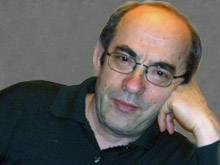

Yuri Veksler
Foreign Correspondent of RS in Germany Mirgor2017@gmail.com