
Translated material
Dossier to the general
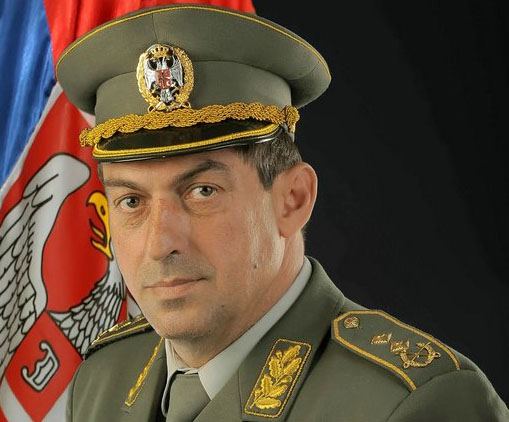
However, a month after the appointment, the largest and influential non -governmental organization in the region investigating war crimes, the Belgrade Humanitarian Rights Fund, published documents entitled “Dossier Loving Love”. The Humanitarian Rights Foundation claims: General Changes is not worthy to be the chief of the General Staff of Serbia, he is responsible for the most severe war crimes in the zones under his command-on the border with Bosnia and Kosovo, at a time when the 37th Motorized Brigade of the Union Republic of Yugoslavia was commander in the 90s. By the way, the then President of Serbia Slobodan Milosevich awarded the brigade of a bow for actions in Kosovo in the spring of 1999 by the Order of the People's Hero. Tells Aiya Kuga.
Aya Kuga: The Humanitarian Rights Foundation claims that in 1999, in Kosovo in the Drait area, 37 motorized brigade under the command of love of a circle committed the following crimes: murders of civilians - Albanians, rape women, beating. His soldiers participated in the destruction and arson of Albanian houses, in the robberies of their property. Many cases of concealment of the bodies of victims in wells, secondary reburial of the remains in secret places have been registered.
And in 1994 and 95, when Lovisha was the commander of the 16 (sixteenth) border battalion, he took part in the arrests of the Bosni Muslims, who tried to find salvation in Serbia. Many of these refugees were returned to Bosnia, where they were killed by the troops of the Bosnian Serbs. Evidence on all these points is contained in the "Dossier Love the Cast". They are based on documents from the trial of the International Tribunal in The Hague, including the testimony that the Knicac himself gave to the tribunal in 2007, acting as a witness to the defense of General Vladimir Lazarevich, and certificates collected by the Humanitarian Procedure Foundation. This is what the Fund Director, a well -known Serbian human rights activist Natasha Kandich, stated for our radio.
Natasha Kandich: Where 37 motorized brigade was deployed, terrible crimes occurred. First of all, in the village of Bezbitsa. The testimony of the curly himself as a witness to the defense in the Hague tribunal is extremely clear, he in no case denies that his unit was in the beaten. In answers to the prosecution questions, he claims that his unit entered the bend, but only in order to stop armed actions and withdraw civilians from there.
The crime in the beaten is the most terrible. According to the Hague Tribunal, more than 100 were killed there, and according to our data - at least 119 people. Among the remains, only two bodies were found in the form of Kosov’s liberation army. But even this is not evidence that these people were in the Kosovo liberation army. Indeed, at that time in the village of Beaty, in the fields around him, fights were not fought. The following happened there: from the column of local residents allocated men, divided them into groups and killed.
There is also evidence that near the village of Gloglovatz, they shot the peasants of the Albanians. They brought them in groups to the pits and shot. Then the mosque in the village of Chistras - the place where some fathers were the last time they saw their minor sons - 25 boys, whose bodies were still not found, disappeared.
Aya Kuga: Here are excerpts from the documentary materials of the Fund for Humanitarian Rights:
"In the afternoon of May 1, 1999, in the village of Chistras, police officers and soldiers of the army of Yugoslavia detained about 110 arrested Albanians 25 minors. The rest of more than 70 people, including Shapher Veliu, who was separated from his thirteen -year -old son Shuhria, was taken out of the mosque and loaded into two trucks: one truck: one Gray-green military and one civilian, before he was plunged into a truck, the Schafer heard a police officer on the military nickname "Bosniyts": "Do with the children what you want, we no longer return with the trucks."
Ayya Kuga: All Albanians were shot from those trucks, in groups of ten people. Miraculously managed to escape the three, among them Schafer Veliu. The fate of his 13 year old son is unknown.
The military leadership of Serbia reacted to the data of the Fund for Humanitarian Rights with irritation, arguing that all this is a lie - that if crimes were committed in the zone of responsibility of a bow in Kosovo, then he personally cannot bear responsibility for this. With a special anger, the Minister of Defense of Serbia Dragan Shutanovatz rejected the accusations against General Kundach that he allegedly complained to Kosovo, sending cows and horses taken from the Albanians to Serbia, caring for himself one jeep of the landlord and Mercedes.
Dragan Shutanovats: I have to note that before General Kundich was appointed to this position, a complete check of his work in the past was carried out, and now we checked the materials from the “dossier”. And I can tell: it is completely false. Even if the non -specialist looks at the official and official case of General Cossack, it is clear that he was physically not in those places that include accusations against him. He was not in 1994 and 95 in Western Serbia, on the border with Bosnia, as in 1998 - he was not in Kosovo and Metohiya. It is also pointless and even indecent to blame the chief of the General Staff of theft of horses, small and cattle. I hope that the state bodies will respond accordingly, and General Cossacks will require protection in court. This will be a good test of democracy in Serbia. Everything in Serbia is allowed, it is unacceptable to denigrate people in this way. This false "dossier" does not bother us at all. However, the question arises: why is the moment when the armed forces of Serbia receive the largest population support in recent years, when we begin to receive sympathies at the international level, which we have not had a long time, why did someone come up with such an initiative?
Aiya Kuga: The former military prosecutor of the Yugoslav troops in Kosovo Lakich Dzhonovich, who acted as a witness in The Hague, recalls how General Dikovich still admitted that he was in Kosovo in some places where the most serious war crimes against civilians were committed.
Lakich Dzhonovich: There was a moment when he himself protested in court and asked the representative of the prosecution: “Is this, do you accuse me of the murders?” The prosecutor in cold blood replied: "Yes, I blame you." Then the bow was asked to clarify the problem whether he was in the area of Zbitsa or in the beaten itself. The prosecutor said: “But you always claimed that you didn’t go into the village, but were only in this area?” Then the circle specified that he was in the beaten, but there was a police detachment at the same time as the military. Thus, he wanted to transfer responsibility to the police. However, the surviving Albanian witnesses claim that the army, and this was a brigade under the command of a bow, and, in their own admission and he personally, were at the place of crime in the beaten. The curiosity was in the place where the Albanians were collected, then divided into two groups and killed.
Ayia Kuga: The Serbian special prosecutor’s office investigating war crimes, on the contrary, claims that although the crimes in the zone of the responsibility of the soft in Kosovo took place, but he personally is not responsible for this. The official representative of the prosecutor's office of Bruno century.
Bruno century: the prosecutor's office for military crimes of the Republic of Serbia conducted a check of the data of the Humanitarian Rights Fund collected in the “Dossier of the Learn of the Descue”, and came to the conclusion that there was no reason for suspicion of criminal liability of the chief of the General Staff of Serbia, General Cossack for the commission of war crimes.
Earlier, during the investigation of events in places mentioned by the Humanitarian Rights Foundation, we interrogated 120 witnesses, among which 10 Kosovo Albanians, and in any of these evidence, General of the Cossacks was not mentioned as a person who committed something bad there. On the contrary, he is mentioned as a person who saved three or fourth gypsy children, who in those terrible times were in an inappropriate place.
Ayia Kuga: The former military prosecutor of the war in Kosovo Lakich Dzhorovich notes that General Lyubisha Kundich, and this was proven by the international tribunal, had military power during the commission of war crimes and therefore bears command responsibility for the crimes that he had to know and which was supposed to prevent.
Lakich Dzhonovich: Everyone confirms this fact: the police and the army and the army were operating together with the support of at least 4 tanks. Naturally, there were servicemen from the Cossack brigade - this was also established by the Hague Tribunal, thanks to the testimonies of General Stev and Novich. Thus, team liability has long been established and if it is in force, then, first of all, it refers to a curiosity, who himself in the Hague confirmed that he was in the places where the crimes occurred.
Ayya Kuga: The International Hague Tribunal did not defend all senior officers involved in war crimes in the former Yugoslavia, hoping that national courts will be engaged in their affairs. And why did these cases remain not investigated in Serbia? Director of the Humanitarian Rights Fund Natasha Kandich.
Natasha Kandych: A lot of facts have been established, including the prosecutor's office for military crimes of Serbia, which on this basis can easily institute criminal cases. However, we are talking about the generals, and we have not been initiated by the generals who have occupied very influential positions in the state and in political parties for many years. So, for example, we tried to initiate a criminal case against General Bozhdar Delich. But despite the fact that this lawsuit was convincingly backed up by the facts proved during the processes as part of the Hague Tribunal and the certificates of the soldier 549 motorized brigade about which crime was committed in the Kosovo village of Trnya, the court did nothing. We are ready to judge direct performers, not the main perpetrators who bear the main responsibility for all these serious and mass crimes, primarily in Kosovo.
Aya Kuga: Serbian human rights activist Natasha Kandich also claims that this is the first case for all 20 years since the creation of a fund for humanitarian rights, when someone disputes the funds of the fund based on reliable sources and documents. This, Kandich says, was not even during the time of the Slobodan Milosevich regime.