
Translated material
30 years of struggle against AIDS
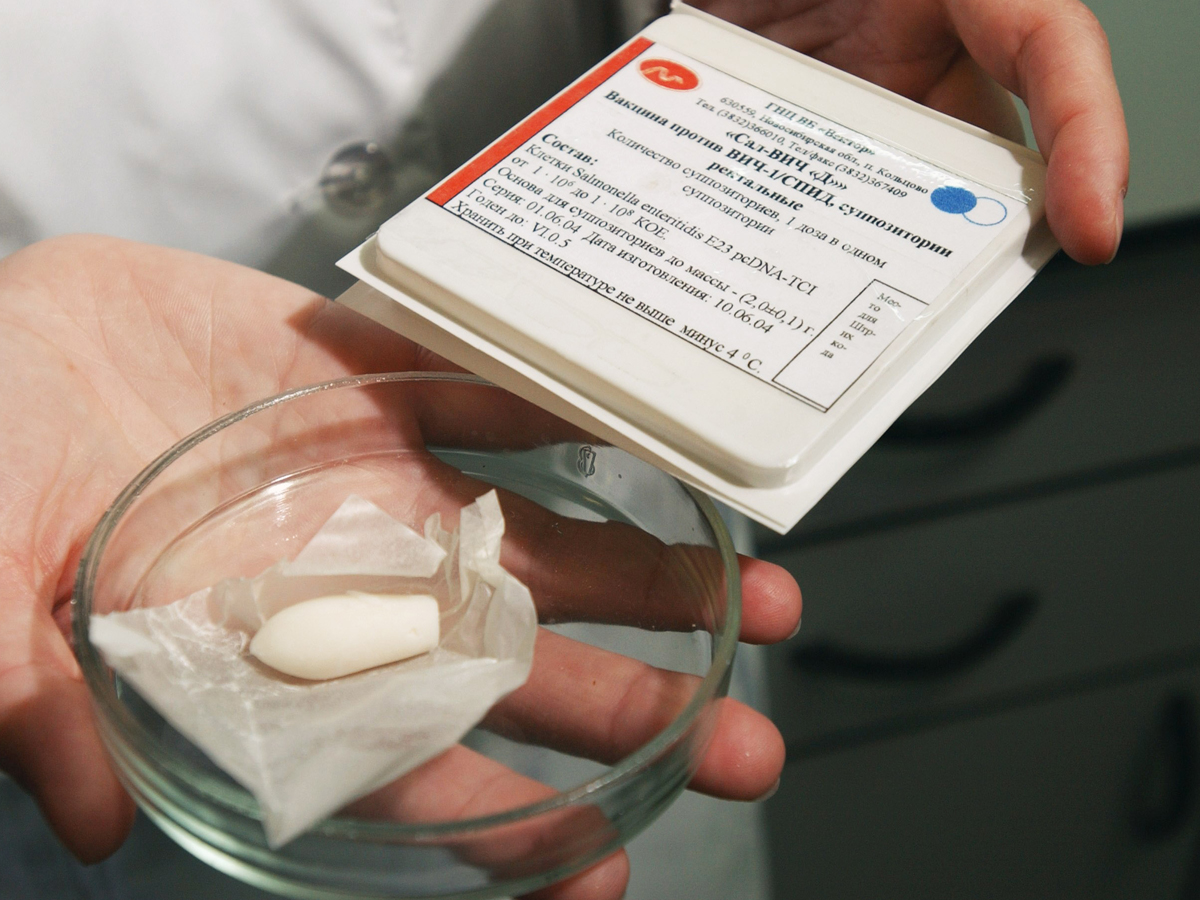
Vladimir Abarinov: 30 years ago, on June 5, 1981, the first five cases of infection unknown to science were registered in Los Angeles. Patients were diagnosed with pneumocystal pneumonia. All five were homosexuals. Soon another risk group was determined - drug addicts. For this reason, the disease was considered shameful for a long time, the public opinion of Vinilo in it themselves. In the Soviet Union, the first case of AIDS was registered in 1985 with a foreigner. In 1988, a 29-year-old woman, infected with AIDS, died in Leningrad. In the same year, in Kalmykia there was a massive infection with the immunodeficiency virus of women and children due to the use of non -sterile syringes in the hospital.
The discussion in the Council on International Relations was opened by Set Berkeley - the president and general director of the global alliance for vaccines and immunization. He briefly outlined the current state of affairs.
Seth Berkeley: Today, more than 33 million people are infected, they live. And about 30 million died. Every day 7100 people are infected. In the field of treatment, a real revolution took place. Today, we have at our disposal more drugs to treat the immunodeficiency virus than for the treatment of all other viruses combined. We have achieved great progress in providing medical care to those who need it. Currently, 6 million 600 thousand people receive such assistance. But there are also 9 million people who need medical care, but do not receive it. For every three patients receiving treatment, there are five new cases of infection.
Vladimir Abarinov: The attitude to AIDS changed slowly. For a long time it was considered a purely medical problem, not social or political. The world community took 20 years to realize its essence and scale. This was said by Paul Dilai - Deputy Executive Director of the United AIDS United AIDS program.
Paul Diley: In 2000, no one thought that we could provide people with complex antiretroviral treatment. No one thought that we would receive resources from donors. No one thought that we would be able to really change the risky model of behavior and overcome the prejudice and discrimination associated with this epidemic - unlike most other infectious epidemics in the world. We proved that skeptics were wrong. Now, of course, skeptics say that we cannot forever keep people in medicines or that preventive measures do not give a quick effect. We have achieved a 25 percent reduction in cases of accidental infection compared to 2001. All this was the result of zealous work, enthusiasm, public support and financing. Currently, the United States spends about $ 16 billion per year on combating AIDS in countries with average and low income. We never thought that we would achieve this level. This is probably not enough. But this, in any case, was enough to expand the assistance programs from several thousand people in the 90s to the current millions both in the aspect of treatment and in the aspect of prevention.
Vladimir Abarinov: Assistant to the UN Secretary General for Strategic Planning Robert Orr talked about how difficult the theme of AIDS broke his way to diplomatic salons.
Robert Orr: A huge impression of the change of the last decade made me a huge impression of me. 10 years ago, this topic was still forbidden. It was an area that was impossible to discuss at the official level. But today, while we are talking here, at Kennedy International Airport, planes with the heads of state on board are sitting one after another. 10 years ago, the rules of politeness did not even allow to touch on this topic in the presence of the head of state without risking. In diplomacy, it was a letter not in demand by the addressee.
These last 10 years have become not only a time of scientific breakthrough, but also a breakthrough of the bureaucratic. The UN became the center of counteracting the disease, in many respects it filled the vacuum of leadership in this matter. It was not easy. At first it was unpleasant. I recall the attempts of Richard Holbruck, in the apparatus of which I then worked, to raise a question in the Security Council - there was a rejection instinctive reaction. It was simply impossible. This distorted the UN goals.
Since then, the situation has changed. I put this in a special merit of Kofi Annan and Richard Holbruck, who created an atmosphere in the organization, which allowed us to talk about the problem. This merit belongs to many other initiative people. As a result, Kofi Annan managed to establish a global AIDS Foundation. Subsequently, he, however, left the UN structure to survive and succeed, and this, I believe, also testifies to the bureaucratic framework.
But I would like to touch on the topic of the exclusive position of AIDS, because there is another area where we are on the verge of a breakthrough. For some time, the status of exclusivity was necessary for AIDS to draw the attention to the problem that she deserved. But we have long left this period. Now we need to destroy the barrier of the exclusivity, which is surrounded by AIDS. We must do this for the sake of success in other areas of healthcare. And now one of these areas is the global strategy in the field of health protection of women and children.
Vladimir Abarinov: In June 2001, the UN held a special session of the General Assembly for AIDS. Its result was a declaration of commitment to the fight against AIDS. In this document, the UN participating country pledged to provide universal access to prevention, treatment, and care.
Paul Diley: a decree on commitment, approved by 182 member states in 2001 at a special session of the UN General Assembly, is an incredibly bold document. He was dedicated to an epidemic, which, frankly, no one wanted to deal with. This is not tuberculosis, not malaria - this is an epidemic whose roots go deep into the nature of human behavior, behavior associated with sex and drug use, behavior, the existence of which we do not like to recognize. It was critical to get a strong document considering the problem from the point of view of human rights, in this case - the right to access to health care services. I do not know any other infectious disease, no other epidemic in which patients would be deliberately devoid of such access. And with patients with AIDS this happens every day. So it was a strong document. But its duration expired on December 31, 2010. Therefore, now we need a document that confirms the former, strengthens it, makes additions to it, clarifies aspects that were not registered in the declaration, a document with which we will enter the next decade.
Vladimir Abarinov: Significant funds are required for the fight against AIDS, which in the conditions of the economic crisis is becoming more and more difficult. Assistant Secretary General Robert Orr emphasized that international AIDS programs should optimize their expenses and report to donors for each dollar.
Robert Orr: We must see which business model will work in the next 10 years. We just talked about the last decade, about what we have achieved success and what not. If there is a sphere that is absolutely necessary for a new business model, then this is responsibility at all levels: responsibility for the results, responsibility for the money spent. The fight against AIDS was quite expensive, and it was here that unnecessary conflicts arose between the program of female and child health, the fight against malaria and the fight against immunodeficiency. We must report for every dollar spent, Ien, Euro. But responsibility is something much more. No one loves the expressions “The fatigue of the donor”, but today some donors literally lie in layer. We are not going to try to squeeze blood from stone. We must moderate appetite, act smarter, faster. But we also need to maintain political support that we had.
Vladimir Abarinov: All these years, the main donor of international organizations conducting AIDS fighting were the United States - both represented by the federal government and in the person of private entrepreneurs, primarily the founder of the Microsoft Corporation Bill Gates, who created the largest private charity fund in Seattle with his wife Melinda, one of the tasks of which is the financing of medical research aimed at treatment aimed at treatment AIDS. However, in the current economic and political conditions, both state and private contributions can be reduced. About this is a question from the audience that Paul Dilai is responsible for.
- The main consequence of the global financial crisis for global financing of healthcare is not so much to reduce the total amount of funds allocated for these programs, but in who is now the main donor. At the moment - at least at the end of 2010 - much more than 50 percent of state allocations came from one source: Washington, the District of Colombia. And from Seattle, Washington. Thus, the tone is set by two Washington. You are a bureaucracy that does its job thanks to the generosity of two Washington. Now we have a completely different congress in our United States, we are experiencing a real budget crisis, the struggle for the 2012 budget promises to become bloody. How can we take this next step, I want to hope, positive if one of the two Washington radically reduces its contribution?
Paul Diley: I think, is a Republican, a democrat or something between, the United States wants to see the observance of three conditions. They want to see that in the states of international assistance, internal expenses for these goals are growing, and this justifies international contributions. They want to see that other donors take on a greater share of responsibility. And the European Union, despite the economic crisis, is trying to do it. And finally, the third: they want to make sure their money is well spent. And this returns us to the topic of accountability. If the result is, and you can present it, the USA, I am convinced, will remain a major donor.
Vladimir Abarinov: More than 30 heads of states and governments and vice presidents took part in a high-level meeting. The Russian delegation was headed by Deputy Minister of Health and Social Development of Veronik Skvortsov. Here is a fragment of her performance at the plenary meeting.
Veronika Skvortsova: The national legislation of Russia guarantees all citizens access to large-scale preventive programs and free voluntary testing for HIV infection, and HIV-infected access to free quality medical care and social protection. The country has created a comprehensive system of opposition to the HIV epidemic, which is implemented under the guidance of a government commission that coordinates the coordinated actions of all federal departments of 83 constituent entities of the Russian Federation and non -governmental organizations. The result of the implementation of this program was the retention of an HIV epidemic in Russia at a concentrated stage. The defeat of the country's population is currently 0.36%. After several years of escalation of the epidemic in 2008, a decrease in the growth rate of first detected with HIV infection was first noted, and in the 9th and 10 years, the stabilization of their number was recorded.
Vladimir Abarinov: From the Information Bulletin of the United AIDS United AIDS program:
“From 2000 to 2009, the number of people living with HIV in Eastern Europe and Central Asia has increased almost three times. In 2009, according to estimates, this number reached 1.4 million people, while in 2000 it amounted to 530 thousand. In the region, the number of deaths due to AIDS is growing: according to estimates, in 2009 this number amounted to 76 thousand people, while in 2001 it was 18 thousand, i.e. four times less. The Russian Federation and Ukraine account for about 90 percent of all new HIV infection. ”