
Translated material
Historian Andrey Zubov - about the baptism of Rus'
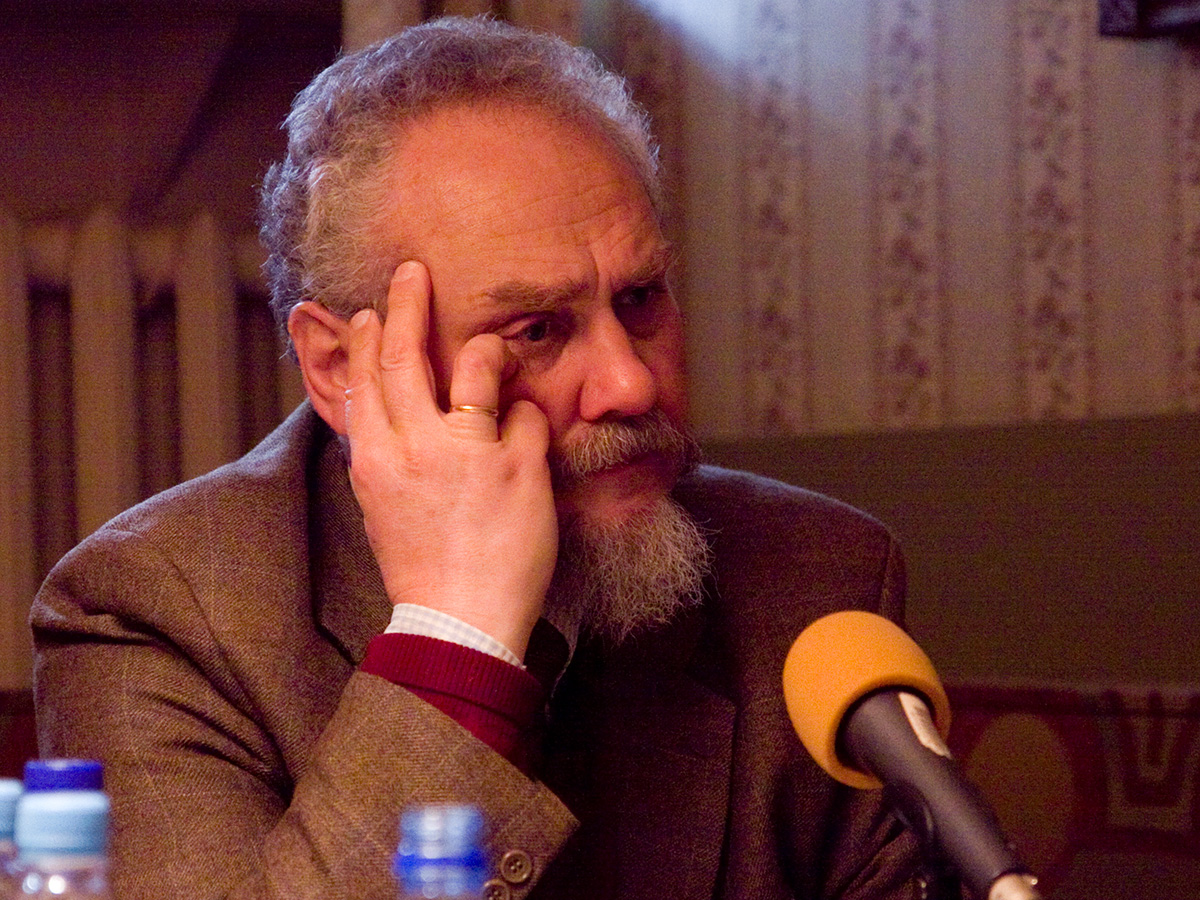
Prince Vladimir of the Rurikovich dynasty, with whom the baptism of Rus' was associated, became the Novgorod prince in 970, in 978 he seized power in Kyiv, and in 988 chose Christianity as a state religion. About the reasons why the prince decided on such an act, about his personality and the role that Christianity played in the formation of East Slavic ethnic communities, Radio Liberty was told by the Doctor of Historical Sciences, Professor MGIMO Andrei Zubov :
- The end of the 10th century is the time of the general adoption of Christianity in so many not Christianized societies of Eastern and Northern Europe. Almost simultaneously with Russia, Scandinavia, Hungary accepts Christianity. It was a time when, in modern concepts, modernization was associated with the idea of adopting religion of the most developed part of the then world. Christianization was a completely natural act for Prince Vladimir. Interestingly, he prompted his relative to Olaf the saint that it was necessary to Christianize Sweden. And she was Christianized 5 years after that.
- What kind of man was Prince Vladimir?
- There are a lot of white spots. There are still debate not only about the date, but even about the year of the baptism of Rus', about where Prince Vladimir himself was baptized in Kyiv or in Khersones, or in Berestov near Kiev. Nevertheless, the annals give us a fairly bright image of Prince Vladimir as an extremely interesting person. Although then Christianization was a fashionable business, Vladimir reacted not to him as a political element, but as a purely personal one. This is clear from the fact that he, having been baptized, abruptly changed his whole life. Vladimir had weakness in part of the female. Committed a number of crimes on this basis. Say, he killed his brother and took him a beauty-woman, by the way, in the past, a Greek nun, pregnant from his brother. He killed the parents of his other wife Rognede, Varangian princes. They said that not a single beautiful women in Kyiv could go through violence without risk. All this was over. Baptized, he creates a normal family. He cancels the death penalty. One of the main elements of the Economics of the Vygaryazhsky conquest was the sale of Slavic slaves in the slave market. He stops selling his subjects into slavery, practically cancels slavery as such and begins to actively redeem the prisoners, on which he spends money from the princely treasury. Relations between the Varangians, Slavs and the Terround-Finns are also changing. If before that they were quite antagonistic, the Varangians considered themselves the highest caste, then just the process of creating the Russian people as an alloy of Varangian, Slavic and Teru-Finnish ethnic groups begins under Prince Vladimir. Christianization is a very serious personal choice that had a very strong influence on the entire subsequent course of Russia's development.
- It will be true that the baptism of Rus' was the main or very noticeable stage in the formation of the Old Russian people that you are talking about?
- This is noticeable for us. Then it was a natural religious act. But centuries have passed and we understand that the Russian -Slavic nationality is largely the result of the baptism of Rus'. Elementary example. The Varangians did not have their own writing, but the Slavs had. Long before Vladimir, the South Slavs received it from Cyril and Methodius. Christianity is a written faith that is unthinkable without liturgical books. Therefore, a single nationality perceived as a literary single language not Varangian and not threat adverbs, namely the Slavic language. By the way, in addition to the three mentioned elements in the alloy, there was also a Khazar ethnos. In fact, it was a huge boiler of peoples.
- And in this melting cauldron it was seething and in the end turned out to be some kind of unified old Russian nationality. When did the historical paths have developed that Russians, Ukrainians, Belarusians began to stand out from this general ethnic group?
- The separation began about 100 years after the Tatar-Mongol conquest. In the middle of the XIV century, even closer to the end of the XIV century, the Lithuanian princes liberate the current Belarusian and Ukrainian lands from the Tatars. As a result, there is a freed from the Tatars, but open to the West through Lithuania and Poland the Russian world. On this basis, Belarusian and Ukrainian special ethnicity, special cultural consciousness, developed. The current Belarus remained as part of Lithuania and after the union was enclosed between Lithuania and Poland, and present -day Ukraine was transferred to Poland to the Office. That is, Moscow and Vladimir, on the one hand, and Novgorod, on the other hand, remained outside this field. Novgorod was opened by the West through the Baltic, it was a completely peculiar Russian culture that was never subordinated to the Tatars, but, unfortunately, was completely destroyed by Moscow. The eastern part of the unified Russian ethnic group actually took the type of Great Russian and Tatar in the political consciousness of community, very different from the West Russian, with a focus on separation from the whole world, to isolation, to the idea of Moscow - the third Rome. These ideas develop at the end of the XV - at the beginning of the 16th century, and this is the time of objective separation. And subjectively - by different nations, Ukrainians, Belarusians and Russians felt in the XVI and especially clear in the 17th century.
-

Andrey Shary
I.O. Regional Director of Radio Free Europe/Radio Liberty for Russian -Sound Content
Andrey Shary on Facebook
Sharya@rferl.org