
Translated material
Alexey Kudrin warns
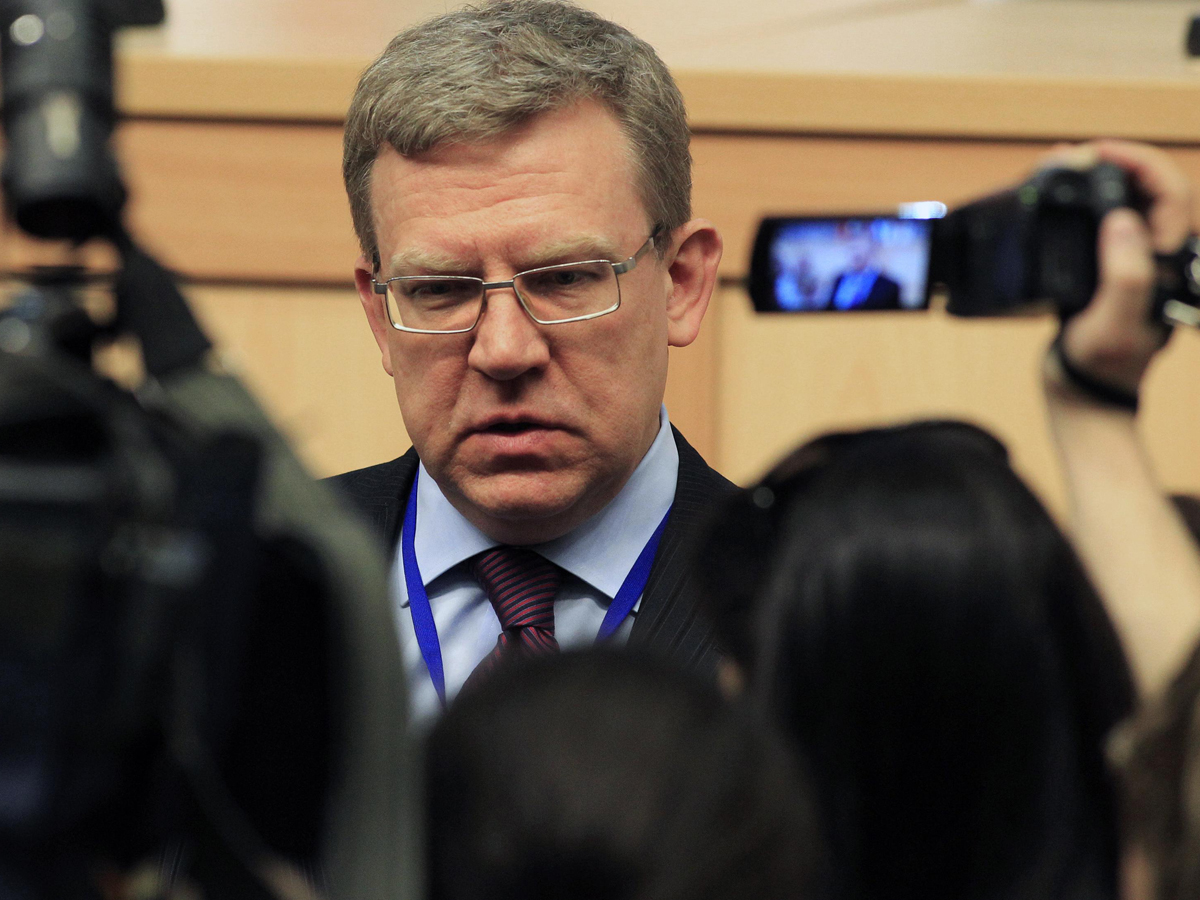
Alexey Kudrin admitted that the volume of election decisions, sometimes contrary to the medium -term and long -term stability of the Russian economy and its budget, turned out to be larger than expected. With the approximation of the elections, according to him, the budget policy of the state is becoming more risky, and therefore the next government of the country will have to increase taxes - in order to withstand the possible drop in oil prices and strengthen the budget.
Reasons for concern, the chief economist of the Finams Management, Alexander Osin , agrees, the government will appear next year:
- In my opinion, in 2011 the government will be able to reduce the budget with zero shortage. As for 2012, as the chairman of the government suggests, budget revenues will grow by 7.2 percent compared to the previous year, which corresponds to about a 4 percent GDP growth. At the same time, expenses will grow in nominal terms by 14.5 percent. That is, an agreement between the Ministry of Finance and the government of the government that budget expenditures will grow no faster than GDP growth rates is violated. In the elected year, it was apparently decided to abandon this rule, ”says Alexander Osin.
Among the most controversial decisions of the authorities, the Minister of Finance called a decrease in the rate of insurance premiums for business, raising pensions , as well as an army of a ten -year re -equipment of the army, which is estimated at 20 trillion rubles (this program, according to him, is not provided in the long term). Only independent experts, including the head of the Economic Expert Group Evsey Gurvich , previously spoke about these risks for the budgetary stability of Russia:
- In the midst of the crisis, a sharp increase in pensions was carried out. Now all countries get rid of their pension obligations (or at least reduce them), increasing the retirement age. Russia is the only country that, on the contrary, sharply increased pension obligations. In addition, we have approved a ten -year state weapons program, which will cost an average of 2.5 percent of GDP per year. That is, we are gaining expenses, which then it is impossible to quickly get rid of ...
Experts emphasize that all increased budgetary obligations of the government, announced in the pre -election period, are built only on the expectations of a favorable conjuncture of world oil prices. However, the situation in the raw material markets may change and the country simply does not have enough money to fulfill promises. This was openly stated by Alexei Kudrin. The chief economist of the opening financial corporation Vladimir Tikhomirov shares such fears:
- If you do not take measures to increase not the oil revenue component of the budget (and such measures can be used due to an increase in direct or indirect taxes), then it will be possible to maintain the budget childlessly at all a higher oil price. This increases Russia's dependence on fluctuations in oil prices. It is clear that if there is a serious decrease in oil prices-due to strengthening the ruble, slowing down the global economy or due to a new financial crisis-Russia will be in a more difficult situation than three years ago, when the previous crisis happened,-Vladimir Tikhomirov predicts.
Given the increasing risks for the budget, the head of the Ministry of Finance, in fact, considers a new increase in taxes inevitable, especially since the current fiscal burden on business in Russia, according to him, is one of the lowest in Europe.
Alexander Osin from Finams Management doubts the effectiveness of tax increased:
- It doesn't work particularly. They tried to increase taxes on the wage fund, but then this idea had to be very modernized, actually raising taxes only on the most transparent and wealthy companies and industries: financial sector, technological, production of raw materials. In general, the potential for tax growth is quite limited ...
However, the head of the Economic Expert Group Evsey Gurvich is ready to agree that reserves to increase taxes in Russia exist. Although, according to him, this process should be carefully calculated in terms of the degree of its impact on economic growth:
- The least harmful to the development of the economy of the seizure of natural rents. Therefore, it is necessary to do this where natural rent is not sufficiently removed - first of all, in the gas industry, as well as in metallurgy. In the oil industry, the rent is seized quite fully, although we use a very preferential tax regime for oil refining. Secondly, it makes sense to increase consumption taxes, since they are less than others harm economic development, ”said Evsey Gurvich.
In part, the idea of selective, in certain industries, increase in taxes - depending on their current level - is ready to support the chief economist of the Finam Management management company Alexander Osin. However, he believes that the government will not be able to solve the problem of increasing budget revenues with such methods:
- This is probably not what taxes to increase, but in which sectors of the economy to extend such an increase. Trying to increase social contributions, we did not get an effect. So, with other taxes it will be the same, since the process of their collection is no more transparent. Moreover, the sectors from which you can collect something are a few units. Therefore, it seems to me, some alternative decisions related to some other, non-tax routes of budget replenishment will be made. For example, ideas about the state monopoly on the sale of alcohol have long been circulating, ”says Alexander Osin.
Design of the federal budget for 2012 and for the planning period until 2014, the government is expected to consider at its meeting on September 20. True, it is not yet clear whether the ideas of the Minister of Finance on increasing taxes will be discussed on it.