
Translated material
NHL: The threat of a local
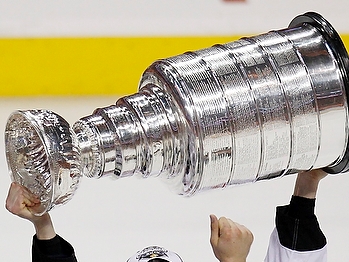
Sports blogger . RU Alexei Mayorov is sure that the refusal of the Trade Union of players to confirm the new format of the NHL divisions was the official beginning of hostilities against the League. Negotiations on the new collective agreement have not yet begun, but they promise to be very hot.
Having sent a new league format as a trial ball to the Association of Players, in response, the National Hockey League received a real grenade and confirmation that the next nine months they promise to be funny. The abandonment of a new plan for a shuffling of divisions, the confirmation of which on the part of the players seemed an empty formality, became an official announcement of the war between the two sides. The term of the current collective agreement expires on September 15 and the NHLPA and the League still have plenty of time to come to a common denominator.
But in order to do this, they will have to make a lot of efforts, and now the leading hockey experts are expressing serious fears that the next season in the NHL is unlikely to start on time. Let's try to figure out what will become the main controversial issues in the league and players dialogue, and what concessions you will have to go to the parties so as not to leave in the losers of those for whom all this seems to be - fans.
1. Revenues of players. The main issue that will have to be resolved to the warring parties is the distribution of profit between players and clubs. Under the terms of the current agreement, 57% of all the money earned is departing to players. Compared to other professional leagues, this is an incredibly many. For example, in American football, this amount is only 48%, and the locout in the NBA ended only after the basketball players agreed to 51%. Regardless of the amount of hockey player agreements, their total income at the moment cannot be more than 57%. For their happiness, the general financial condition of the league is normal, otherwise it would have to be tightened to the belts tightly.
Looking at their more popular and successful neighbors in professional sports, the NHL management intentionally apply the principle of "half and half of me to me in the distribution of profit." The League is ready to go to one side or another within two percent of 50% possible, but it is unlikely that the players will want to share what they had earned with such difficulty during previous negotiations. Players will also insist on the abolition of a delay in about 10% of the current salaries (the so -called escrow), until the league accountant reduces the debate with the loan and will not be able to make sure that hockey players are entitled to rely on their legitimate 57%. Now, sooner or later, money is returning to the players, but as in that joke "the precipitate still remains."
2. Reducing salaries. Seven years ago, one of the conditions for ratification of the new collective agreement was a one -time reduction in players by almost a quarter (24%, to be completely accurate). It seems that the league leadership believes that guys chasing black rubber on ice get too much for this and will try to crank up the focus with cutting salaries again. Since the last Lokout, the average salary of the player has grown from 1.5 to 2.3 million dollars, which a little ahead of the growth rate of the league for the same period. Not the most healthy situation for any commercial organization.
It seems that players and their agents already know something about the plans of Bettman and the company. Many of them have already prepared for such a step on the part of the league, having tried to replenish their bank accounts as much as possible last summer. The naked eye can be seen in the general trend in almost all major contracts concluded by unlimited free agents before the start of this season is the maximum possible amount in the first year of the agreement and a huge signature bonus. For example, Brad Richards until September this year will become richer at $ 22 million, Christian Erhoff from Buffalo received 8 million as bonuses to the 10 millionth salary, and the most expensive league Ilya Bryzgalov may enjoy 15 million on his own account. Anyone who managed to calmly “winter” the locout, but everyone else should prepare for the next reduction.
3. Distribution of income between clubs. In this matter, the players' trade union can be stepped aside and watch how club owners are drawn among themselves. Despite the general income of the league, which, due to the new contract with television, strengthen the Canadian dollar and solid attendance in traditional hockey markets, increased to $ 3 billion, 18 out of 30 NHL teams were unprofitable. At the same time, the distribution of income between the clubs occurs in equal shares, which does not suit such teams as Toronto, Montreal and Rangers, which are forced to share with much less successful organizations.
Rich clubs still remember the times when they could spend as much as the owners allowed them, and may well demand from the league of the introduction in the ceiling of salaries in exchange for such a solid support of teams with negative financial statements. The “soft” ceiling of salaries or luxury tax, which until recently seemed impossible, will probably be one of the points for discussion at the upcoming negotiations.
4. Structure and size of the ceiling of salaries. When during previous negotiations on a collective agreement, the Association of players proposed introducing a hard ceiling of salaries in the amount of $ 45-47 million, the league rejected this idea. Now, when the lower boundary of the payment statement has exceeded the mark of $ 48 million, the option proposed by the trade union then seems to be saving. But we are all strong in hind mind. In the sentence season, only four teams spent more than the current salary ceiling: Detroit, Rangers, Philadelphia and Dallas, and 18 league teams would not have reached the current sex. Then, in 2005, the NHL was in crisis, and no one expected that the league's income would begin to grow so rapidly. The amount of the ceiling of salaries was set at 39 million dollars, and the floor was decided to make at the level of 55% of the maximum amount of the payment statement.
Initially, the salaries were a sound idea. Clubs had to spend money on strong players, which would increase the level of competition in the league, and would not allow the owners of the teams to assign funds received from the league as a result of the distribution of income. But at the same time, instead of counting the difference between the ceiling and the floor in percentage, it was decided that the difference would be a fixed amount of 16 million. With an increase in the level of the ceiling of salaries, this began to create problems for poor teams. The clinics were not financially not very successful financially forced to spend a certain amount on players, and sometimes this figure was obviously higher than that they could physically earn a season.
So it turns out that only a few teams-served people are satisfied with the current state of affairs. Rich clubs want to spend money, but the ceiling does not give them. Poor clubs do not want to spend, but are forced because of the salaries. It is possible that we are waiting for a radical change in the current structure: a new salary ceiling, the value of which will be fixed or will change to some insignificant size from season to season, expand the “corridor” of the costs of clubs, even if this can weaken competition in the league, and possible relief for rich teams, which were already written above.
5. Contract structure. What the players have recently been doing for a couple with their agents, otherwise you can’t call a mockery of common sense. Agreements for a period of 10-15 years and astronomical amounts that are mostly paid in the first seasons of the contract. Those "tails" that the player’s club and agent come up with to reduce the load on the payment statement, do not cause anything but a smile. Does anyone seriously expect that Roberto Loongo, Ilya Kovalchuk or Marian Gossa at the age of 40 will still go out on the ice, then get a million per season at the club cash desk?
Modern medicine is able to work miracles, but let's look in the eyes of the truth, most hockey players will "finish" somewhere in the bagams with a glass of Pina-collar. The owners and general managers of the teams are forced to follow hockey players, and they probably want to find a council on their wards in the form of the rules of a new collective agreement. The league will probably want to reduce the maximum term of contracts to some reasonable value (5-7 years) and ensure that the difference in the salary between the first and subsequent years of the agreement is no more than previously agreed. Players who want everyone and at once will insist on their own with all their might, but it is likely that 100 millionth agreements for a couple of decades will soon be forgotten.
In addition, here, in addition to the confrontation, the league players pop up a conflict of interests between clubs. It is no secret that many teams enjoy using all kinds of loopholes in the current agreement, unloading the payment statement by sending unnecessary players with large contracts to AHL or to Europe. General managers of other teams will surely try to close these holes in a new agreement in order to complicate the lives of richer competitors and force them to pay for their own mistakes.
6. Contracts of newcomers. More and more often in the NHL teams you can see players who stepped into the league immediately after performing at the junior level. It is risky to have an 18-year-old hockey player not only from a game point of view, but also because the club can lose rights to him earlier than he thinks. Under the terms of the current collective agreement, the player can receive the status of an unlimited free agent after 7 full -fledged seasons in the league. Such guys, as for example, Jeff Skinner from Carolina or Taylor Hall from Edmonton, if desired, can enter the market already at the age of 25, and who knows what offers a hockey player who is in the prime of forces can count on.
To avoid the loss of such precious assets, the team managers are forced to "buy" from their wards for several years when the player can find the status of a free agent. And this status is expensive. That is why recently there are so many problems precisely when signing the "second" contracts. The situation can be aggravated by the fact that over three years since the debut, the player managed not only to get used to the NHL, but also to become one of the team leaders. So it was with Drew Dauti and Stephen Stamkos, who, from the standard contract of the beginner at once, jumped to the amounts of $ 7-7.5 million.
The owners of the teams will most likely want to reconsider the current conditions and not only increase the term of newcomers to 5 years, but also to move away the minimum age of the status of an unlimited free agent up to 29-30 years. Given the fact that the problems of youth in the trade union are used not to pay much attention, the newcomers of the league should prepare for the fact that their conditions will be much tougher than the predecessors.
7. Other. During the negotiations, many not so significant issues will be affected, which, nevertheless, can become a kind of exchange coin in solving more serious problems. Everyone knows that NHL players, regardless of national affiliation, are eager to participate in the upcoming Olympics in Sochi. The league also knows about this, which will try to turn this desire in its favor. The owners of the teams want the maximum security of their assets, which are also players and can insist on the mandatory use of visors from the next season. Players, in turn, want to reserve the right to make a decision on this issue, and will be forced to compromise with the league in order to remain free in their choice. Disciplinary sanctions, fines, pensions and much more will become a subject for discussion, but so far these are all details that does not make sense to dwell on in detail.
Summing up, we can say that the trade union of players led by Donald Ferom immediately made it clear that he was determined and did not intend to give way to no fraction in future negotiations. Gary Bettman, in turn, has long been accustomed to conducting a dialogue from the standpoint of strength, and will not tolerate it so that they are crushed. And if so, the fans of the NHL teams is the time to look for some other field for entertainment at least for future autumn.
* * *
Sportbox site blogger . RU Pilot29 is returning to the topic of a possible reduction in the number of teams in the Russian football Premier League.
On January 15, 2012, an interview with the former defender of the Moscow Spartak and the USSR national team, football expert Alexander Bubnov about what the Russian Premier League (RPL) should be an interview with the Internet. In his reasoning, A. Bubnov came to the conclusion that the RPL should consist of 12 teams and pass the tournament in four circles to avoid the so -called "swamp", where the teams do not fly to the lower league by the end of the championship and do not reach European competitions.
According to A. Bubnov, such teams do not need anything and at the end of the championship they "sell" games to those who need tournament points, contractual matches. The phenomenon in football Russia is vile, but, unfortunately, it has a place to be. Well, the idea is good, but A. Bubnov forgot in his discussion about the most important component of football - fans.
Personally, I believe that it is impossible to reduce the RPL, but it is necessary to increase to 18 (currently RPL has 16 clubs). That's why. Our country is large and fans from many regions want to see in live Spartak, CSKA, Zenit and other teams. Let's calculate from which regions the teams will be if today's RPL tournament table is reduced to 12 clubs.
Take 12 at the moment the best clubs (the first 12 seats in the standings). It will turn out - FC Zenit (St. Petersburg), FC CSKA, FC Dynamo (Moscow), FC Spartak (Moscow), FC Rubin (Kazan), FC Lokomotiv (Moscow), FC Anji (Makhachkala), FC Kuban (Krasnodar), FC Krasnodar (Krasnodar), FC "Rostov" (Rostov-on-Don), FC "Terek" (Grozny) and FC "Wings of the Soviets" (Samara).
And now we’ll calculate elementary: 1 club from St. Petersburg, 4 clubs from Moscow, 1 club from Kazan, 2 clubs from Krasnodar, 1 club from Rostov-on-Don, 1 club from Makhachkala, 1 of Grozny and 1 from Samara. In total, 8 cities are obtained.
And if you look a little global, we get 1 club from the North-Western District, 4 clubs from the Central Federal District, 5 clubs from the Southern Federal District (I united the South and North Caucasus District, because they are geographical neighbors and the distance between them are relatively small), 2 clubs from the Volga Federal District-4 districts are obtained in total.
According to A. Bubnov, for such a huge country as Russia, the Russian Championship is enough to hold in 4 regions and 8 cities. Is it funny!?
Now let's look at it from the other side. On one side of the income of clubs - attendance of matches. It's no secret that high attendance of RPL matches is observed only when our top clubs are found. There are few such matches. But if we reduce the number of clubs to 12, then there will be many such matches at times, which will undoubtedly affect the increase in attendance. However, if there are many such matches, whether interest from the viewer will fall in them!? The question is very relevant. And if someone thinks that the same "Luzhniki" will be filled with 50-60 thousand people, at least in a week-he is just a short-sighted person. Take at least Supererby "Spartak" - CSKA. These matches are collecting a multi -thousandth army of fans at the stadium and a multimillion -dollar audience near the TV screens (including broadcasts on the Internet), but these matches have been waiting for months, freeing days in advance for a campaign to the stadium or viewing with the help of the media. And if such matches will be at least in a week!? Fans will undoubtedly go to the stadium and gather at the TV screens, but gradually their number will begin to fall (not talking about fans) and the average attendance for the top matches will be about 20 thousand people. Then it will sadly look at the half -empty stands of top matches.
A. Bubnov is also constantly looking towards leading European championships, and says that they have attending matches at times higher. Yes, it is. But look at the European arenas and our dull stadiums. In Europe, stadiums are made for people, starting with places for viewing the match (try to come and sit on plastic seats - in the summer in mud and dust, in the winter you can freeze one place) - and ending with service in stadiums (politeness and service speed). Well, the presence of the police in such quantities in stadiums. At our stadiums, you feel like a zek at the stage - don’t go here, don’t yell loudly, don’t look askance. I'm not talking about the speed of calling and leaving the stands. Thank God that we received the right to hold the 2018 World Cup and these problems are slowly solving. По крайней мере будут построены современные арены и многие клубы обретут "свой дом".
Бороться на мой взгляд нужно не с сокращением клубов, а прокуратре, полиции, РФС, Комитету по этике заняться своими прямыми обязанностями – выявлениями договорняков, нецелевом расходовании средств клубов (которые финансируются из госбюджета), растрате средств (опять же, которые финансируются государством). Почему опять должны страдать простые болельщики, когда лица отвечающие за это и которым за это платят не маленькую зарплату не хотят (именно не хотят) делать свою работу?! В ведущих чемпионатах Европы у клубов из середины таблицы бюджеты сравнимы с бюджетами наших середняков, а то и ниже, но они бьются на поле, c кем бы ни играли. У них не снимаются команды с чемпионата из-за того, что обанкротились. Why?! Ответ простой – там в прокуратуре, полиции и футбольных властях люди работают, и недобросовестные люди, работающие в клубах знают, что если их поймают (а это только вопрос времени) они получат реальный срок, а то и с конфискацией имущества
. А у нас опять хотят заставить страдать болельщиков и фанатов, а ответственные лица будут сидеть ни хрена не делать и заявлять, что у нас все хорошо. У нас проблема в главах РФС, КДК, комитета по этике, прокуратуре, полиции – и решать проблему нужно с ними, а не с сокращением РПЛ.
* * *
Блогер "Пять-три два" на сайте Sports. Ru напоминает, что одна из обсуждаемых тем межсезонья – предстоящее введение уголовной ответственности за "договорные" матчи. Взрослые, серьёзные люди спорят на тему – сколько же лет лишения свободы должны получить злодеи? Ещё важно, какого режима – общего или строгого?
Я вот предлагаю не мелочиться и шокировать весь мир, введя за "договорняки" смертную казнь через повешенье. Можно даже гильотину.
Пусть весь футбольный мир содрогнётся, глядя на нашу принципиальность в преддверии чемпионата мира в России.
Не надо только хвататься за сердце, кричать об антигуманности подобных мир и моратории на смертную казнь.
Ведь всё равно с головы отечественных "договорщиков" не упадёт ни один волос.
Совершенно не важно, какую именно меру наказания прописать для околофутбольных аферистов. Не важно, потому что мера эта всё равно не будет применяться.
Каждый из тех, кто следит за отечественным футболом, может составить целый список из "странных" матчей любого из последних, скажем, 10 чемпионатов России, которые должны были закончится серьёзным расследованием и наказанием виновных.
На деле что? Nothing. Zilch. Никаких результатов. При том, что при отсутствии реальных серьёзных санкций за подобные вещи жуликам даже и не приходится трудиться слишком глубоко в воду прятать концы.
Всё равно эти концы ровным счётом никого не заботят, кроме болельщиков, чувствующих себя идиотами, да ряда журналистов, которые чувствуют себя не лучше болельщиков.
Обсуждать меру наказания имеет смысл лишь тогда, когда присутствует главное условие – НЕОТВРАТИМОСТЬ наказания.
У нас же, судя по тому, что мы видим, наказывать некого. Ничего нельзя доказать, если верить высоким футбольным чиновникам.
И уголовная ответственность тут ничего не изменит. Потому что Уголовный кодекс по части требуемых доказательств куда более строг, нежели пресловутый "Кодекс чести".
Вот и получается, что единственное, что изменится в новых реалиях, так это инстанция, разводящая руками со словами: "Мы не в силах ничего сделать, нет доказательств".
А доказательств нет, потому что нет ни малейшего желания их искать, даже в самых вопиющих случаях.
Для успешной борьбы с "договорными" матчами в качестве меры наказания хватило бы и публичной порки, будь она неотвратимой для проходимцев.
А в нынешних реалиях, когда даже глядя в упор на комедию, которую ломают договорившиеся команды на поле, футбольные чиновники заявляют: "Мы не видим ничего странного", не поможет даже электрический стул. Всё равно будет стоять без дела.