
Translated material
Caricature: exhibit and not only
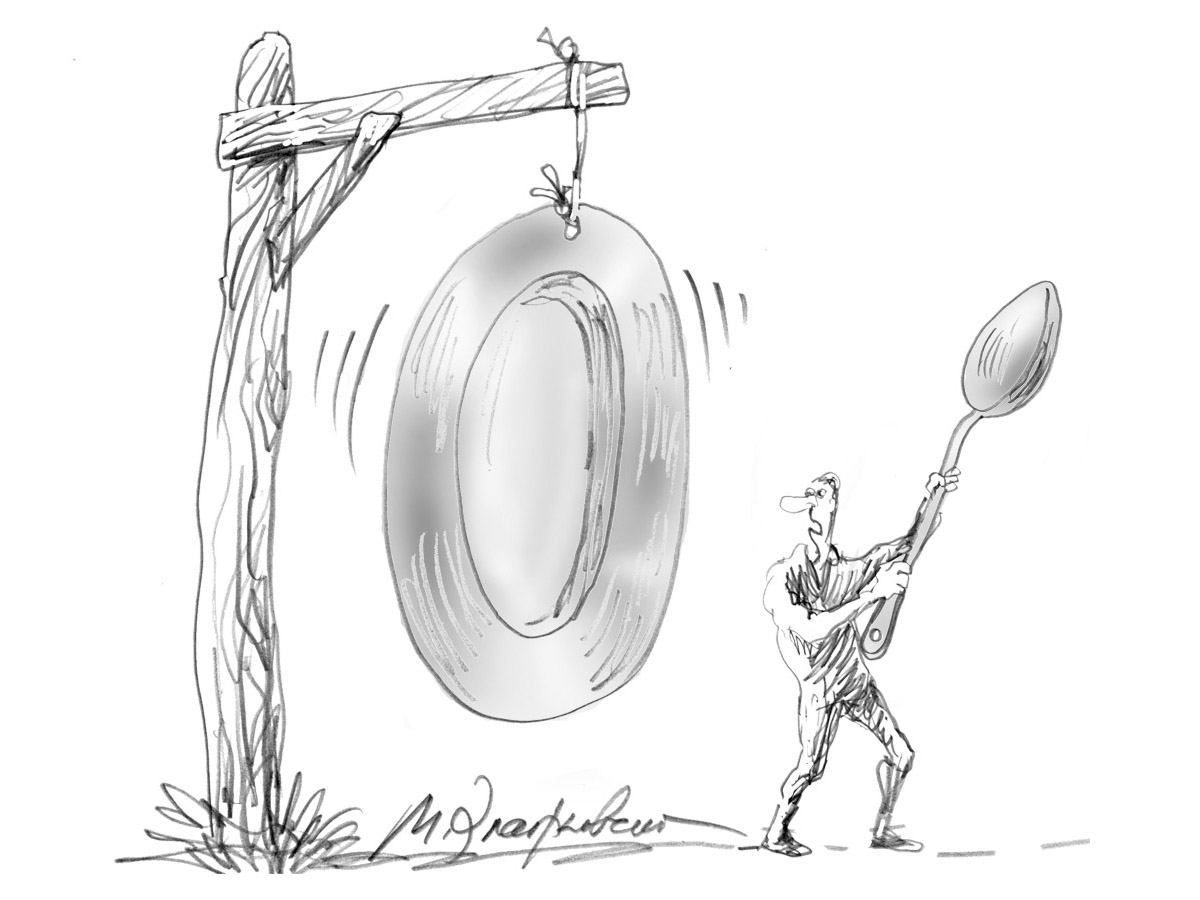
Caricatures of the time of the Polish People’s Republic, as in other countries of the former socialist camp, were divided into three conditional categories: drawings that ridicule enemies-capitalist enemies and their henchmen, unscrupulous internal enemies and pests, which interfere with a bright future; caricatures for socialist orders; And finally, satire on household topics. Of course, the well-intentioned political caricatures easily fell on the pages of the main periodicals of the PNR, but the cartoons for the communist regime spread underground, although one of the authors from time to time and managed to earn the vigilant eye of censorship.
In the center of Warsaw on Novogrodskaya Street there is a cafe club of former Polish Radio Service Service Free Europe. On the walls - a number of carications that make fun of this radio. The PNR authorities were very afraid of radio stations, which they listened to up to 40 percent of the Poles, and therefore did not spare money both for jamming and an ideological war with her. Krakowyan, Andrzej Mlechko , one of the most popular Polish satirists, recalls how he worked in the days of PNR:
- A big plus of that system, and at the same time minus, was censorship. If the drawing passed censorship, then all the responsibility from the author and from the editor of the newspaper or the magazine that published it was shot. And most people feel good when they do not have responsibility-someone decided for you, and that’s all. I personally more comfortable when I myself can decide what and where to publish. The most important minus of that time is Tabu theme. But in fairness, I’ll say that now there are such topics, except that instead of censorship is a frightened edition. Nevertheless, if one of the caricaturists wants to be very aggressive now, then an publication belonging to a certain niche can always find himself. In general, the situation is not as good as it seems, but much better than it was.
Forbidden topics that Andrzej Mlechko speaks of, of course, are present. First of all, it seems, this applies to the religion and tragic pages of the history of Poland. At the time of the PNR, there was probably something to ridicule. Does this mean that now the artists-cricaturists of objects for drawing are less, it is more difficult to find them? Andrzej Mlechko answers this question like this:
- There is no difference in which system a person lives in. People of my profession are fueled primarily by household topics that do not change with the change of system. The topics are out of time: family relationships, relationships between a man and a woman, erotica ... - their mass. For example, I have less desire to draw politicians. And, probably, most of my fellow citizens are just tired of the policy, so I should not be limited to political caricature. By the way, my gallery has been working in Krakow for 30 years. So, it is interesting that earlier people looked with excitement and bought caricatures on political topics, and now they run around them with their eyes with some fatigue. They are looking for simply funny, intelligent drawings, and not comments on what one politician said, and the other answered him. Another time now - and this is not so interesting.
The drawings of Andrzej Mlechko are very popular in Poland, they are published by leading media. However, often they have a very acute socio-political character, which probably does not like a certain part of society. Here is a caricature of about a two -month prescription: floods in Poland, on the roof of a flooded house are sitting two people along with pets who managed to save, and one says: “Oh my god, that this Putin will come up with?!” Andrzej Mlechko believes:
- They often tell me that I am the artist scandalous, sharp. It’s hard for me to evaluate this as an author. But recently, the journalists with whom I gave the interview told me that they examined comments on my drawings on various forums on the Internet. It turned out that it is almost impossible to find frankly critical statements about my modest person. Therefore, it seems to me, a widespread opinion of me does not quite coincide with what is actually. There are three options: a) my caricatures are not so critical; b) people just like them; C) I am not so famous and therefore few people pay attention to me. As in fact - I do not know, but these are the facts.
Almost every of the main weekly magazines, which in Poland come out of extremely large circulations, 200-300 thousand copies, necessarily has its own cartoonist. The reader often begins to get acquainted with the publication with the caricature. What is the future of the Polish caricature of the Polish caricature?
- If we talk about a satirical drawing, then here the situation is the same as with any other type of creativity: literature, journalism. Since we have democracy, there is no longer so many taboos, it is obvious that the caricature does not have that strength, does not play such an important role as before. Then the goal was one - to blame the regime, and now - pay attention to certain problems. Now caricaturists are not growing like mushrooms after the rain, as it was, for example, in the 70s, when a lot of talented artists united around the magazine "Stork". It seems to me that being a cartoonist is a rather rare skill. Please note: directors, writers, actors - hundreds, thousands, and several influential cartoons in any country are several. I always thought: why so? Why are caricaturists so rarely appear? And then what came to. The cartoonist must have two talents at once: literary and artistic. And this rarely happens.
Thus, it is too early to take the Polish caricature to the Polish caricature, although there is a caricature museum, it has been working in Warsaw since 1978. Having visited it, everyone can evaluate which caricature was 30 years ago and what it is now - having bought several popular weekly magazines.
(The plot from the heading "History of the West and the East" Programs of Freedom - Day release. " )