
Translated material
Blue blood
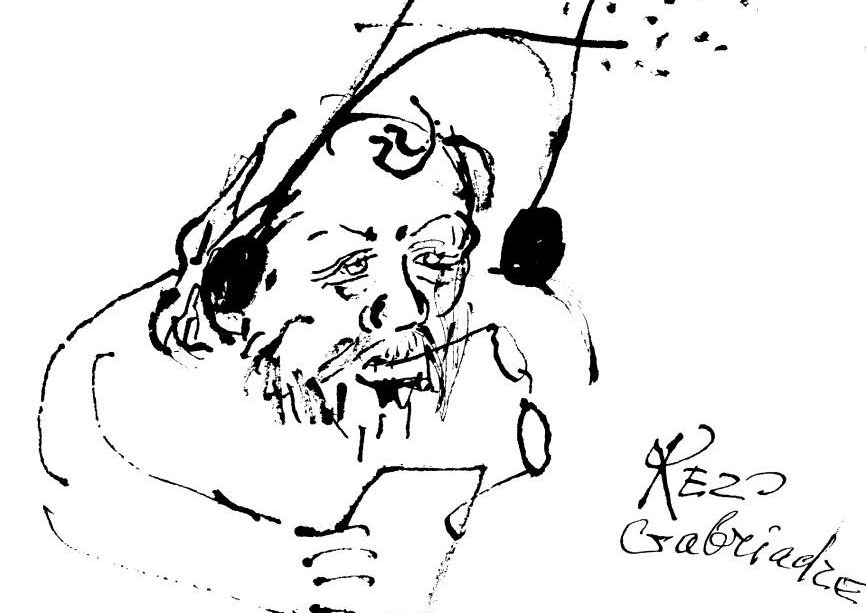
The Russian noblewoman Alena Kozhevnikova, in the girlishness of Berdnikova, was born in an emigrant family in Yugoslavia, lived in Australia and Western Europe. In recent years, it has been living in Moscow. Our conversation began with the question, which means for Alena Kozhevnikova her noble origin.
A. Kozhevnikova: The family on both sides is the Russian nobles, most of them served. For example, the Komarovs always served in the Semenovsky regiment. And this meant, I think, that their eyes were always turned to Russia. When my grandfather and grandmother left Russia, it never occurred to anyone that this was for such a long time. They thought that for two to three months. Grandfather remained in the White Army. And I was brought up in the spirit that Russia is my fatherland. And my grandmother never doubted that at least I would ever return to Russia. And she was right.
I. Pomerantsev: From childhood did you know that you will grow up in a noble family?
A. KOZHEVNIKOVA: Yes, but I can’t say that someone made something special out of this. As a child, I grew up in Australia, but I never had a feeling that I was Australian, it was always very strong - the consciousness of Russianness. And I would say, then, of course, abstract, because I was not born in Russia. But now I have a completely real love for the country of my ancestors.
I. Pomerantsev: Alena, Higher Sveta has its own social hierarchy. What is the relationship of the Russian nobility and the court Russian aristocracy?
A. Kozhevnikova: As far as I know about the history of my family, for example, my great-grandfather General Major Yakov Gennadievich Dudyshkin, his mother was Princess Orbeliani, and therefore, when he was from the Kherson province, where they had an estate, he came to Moscow, the entrance to the high light was open to him. This hierarchy was quite recorded, but nevertheless there is enough mobile inside itself. It seems to me that the court aristocracy has not been added to the development of culture. The nobility - this average - has made a much greater contribution. Now a completely different picture is formed, and it seems to me from what I saw, those who now call themselves nobles or descendants of the Russian aristocracy, many of them suffer, well, cheap snobbery, otherwise this cannot be called. That is, some kind of painful perception of what, ah, here is my grandfather or there my great-grandfather was so and so. In fact, you yourself do not get better or worse from it. I remember in childhood, after all, my family is the first emigration - friends of grandfather, grandmother who lived in refugee camps. But somehow they did not lose dignity from this. And now there were no completely unnatural and stiff relations, which before, judging by what grandfather and grandmother told me, was not. Maybe I'm wrong. These are still the remnants of the world that has left and which will not return. Now, maybe something new will be created. God forbid, I wish them success. But this should be new. With all the desire, we cannot turn into our great -grandfathers, and no need.
I. Pomerantsev: The Russian nobility and aristocracy were forced to leave Russia after the seventeenth year. How did they accept the Higher Light of Western Europe?
A. KOZHEVNIKOVA: Very differently. Depending, who got to it. For example, in England, where much less went than, say, in France or Balkans, in England was accepted very well. Still, our royal family was in close relationship with the British royal family. There, the Russian aristocracy disappeared, that is, they became more British than the British themselves. I had to meet such deep old people who could barely connect two words in Russian. I'm not talking about their children and grandchildren, many of whom are now painfully learning to speak Russian. In France, it was different. Most of all, perhaps, was from the Russian aristocracy, and they had quite difficult for them. There was some kind of duality: having accepted them by the world of literature, music, theater, and so on, but at the household level they lived very badly. In Yugoslavia, on the contrary. Here my family was in Yugoslavia. In view of the fact that King Alexander was brought up in Russia, to the Russians in general, to the intelligentsia, to the aristocracy, to the nobility, they reacted perfectly. Everyone tried to arrange in services that corresponded to their knowledge and education. For example, my grandfather on the part of her mother was a military engineer. And when he and Wrangel were evacuated from Constantinople, he was arranged by a civil engineer.
I. Pomerantsev: Alena, you were born in exile, lived in Yugoslavia, Australia, Great Britain, and only recently moved to Moscow. Did you find a common language with the nobility that remained and survived in Moscow?
A. KOZHEVNIKOVA: I had a little feeling of repulsion, maybe I'm not right. About one and a half - two years ago, I remember, I launched the “Moscow News” and there a lot of places were given: “Our new political parties”. To my amazement, I see that the head of one of these parties completely appropriated my family biography. This caused an explosion. I myself did not even expect this - an explosion of indignation. I think: “Lord, where did this impostor come from?!” And then she decided: well, if he so wants to belong fictitiously to my family, well, let it.
I. Pomerantsev: Alena, which branch of your clan was attached to the impostor?
A. KOZHEVNIKOVA: To Engelhardt.
I. Pomerantsev: Everyone who is at least familiar with the history of Ukrainian literature knows about unhappy childhood
Fortress Cotton Taras Shevchenko. With your belief, clarified dad Engelhardt, he was a Cossack until a group of Russian artists and writers bought young Shevchenko. Alena, why did you torment Tarasik?
A. KOZHEVNIKOVA: Nothing of the kind. We gave him the opportunity to go to people - let us go. We said that
The Russian nobility contributed to the development of culture not only of Russian, but Shevchenko, for example. My ancestor realized that this was a very talented artist. True, no one thought he would become a writer, but everyone was sure that he would become an excellent artist. And so when Shevchenko had the opportunity to leave and study, there were no barriers.
I. Pomerantsev : Grandfather of my next interlocutor, Ukrainian poet and prose writer Yuri Andrukhovich, was called Maryan Volynsky d'andrukhovich. He lived in Galicia and was a Polish nobleman. True, his grandson Yuri considers his blood, at best, bluish.
Yu. Andrhovich : I don’t know how to fenger well, stay in the saddle and lay down, so in general all this is more like a myth, a myth of brilliant ancestors. Rainer Maria Rilke has such an image of Cornet Christoph Rilke, supposedly his distant ancestor. This is a kind of self -defense from total lumpenization or something.
I. Pomerantsev :: Yuri, sorry, if my question sounds, well, let's say, greatly. How do you think there is Ukrainian nobility and aristocracy?
Yu. Andrukhovich: Of course, we are far from the Hungarians, in whom, in my opinion, every second is a graph, or we are far from the Georgians, who probably have every third prince, but nevertheless, the Ukrainian national aristocracy is still not an invention, not a myth. This, on the one hand, is the Cossack elite, the foreman, as it was called, Cossack nobility: at least the same Mazepa, the same Vygovsky, the same Razumovsky. On the other hand, these are large land magnates, Vishnivetsky, Pototsky, Ostrog, who called themselves - and so they called them in the old Commonwealth - "kings". The value of their possessions was sometimes equal to the whole European kingdoms. These are, in fact, the old Ukrainian clans, the surnames, which gradually ran into the Polish faith, and today in our minds they seem to represent the Polish gentry, the Polish nobility. But in addition, Ukraine also crystallized such a completely peculiar type of free army, closer to the phenomenon of European chivalry, wandering combat monasticism, I would say. I mean, of course, Cossacks.
I. Pomerantsev: Yuri, is there no temptation to Ukrainians with social ambitions to impersonate a Russian or Polish nobleman? By the way, there were really many such nobles: both in Russia and in Poland.
Yu. Andrukhovich: The emergence of such ambitions was associated with the loss of Ukrainian national statehood. In principle, who is a nobleman? Firstly, this is a free person and most often a warrior, who with a weapon in his hands stands guarding a certain system of values. Poltava crushed the remnants of the Cossack chivalry, the total extinction of our aristocracy began, which, incidentally, with such tender sadness, Gogol showed in his “old -Soviet landowners”.
I. Pomerantsev: Yuri, a classic of Russian literature (I mean Pushkin) was a noble nobleman, while the classic of the Ukrainian Taras Shevchenko was from serfs. Do you think this affects national culture?
Yu. Andrukhovich: Yes, I agree. The characters of the Ukrainian classics almost do not speak French. Nevertheless, Ukrainian classical culture, like Russian, like all European ones, was mainly created by people of the noble estate. It is enough to recall the names of Kotlyarevsky, Kulish, Fedkovich, Lesya Ukrainka, Nakhui-Levitsky. Another thing is that these people created a culture of an oppressed nation, and hence a different ideal, an aristocrat not by blood, but in spirit: what the Americans call "a man who made himself." But Shevchenko is generally a misunderstanding here. His clan surname was Grushchitsky, the origin is undoubtedly Cossack, military, and free origin. The slavery of his family by the 1814th year, that is, by the time of his birth, is limited, well, one or two generations. And if we consider his fate as a kind of aesthetic gesture, we will definitely notice the reckless chivalry with which he stood on guard of the weaknesses of this world, and at the same time found so much freedom - and the listeners of your radio station should especially appreciate this word - so he found so much freedom in order to act in fact not only against a huge empire, but also against the world order as a whole. At the same time, his blood also played a role, undoubtedly blue.
I. Pomerantsev: To Russian and Ukrainian blue blood, we add the blue British. The name of the radio -journalist Frank Williams has repeatedly sounded in our programs. Usually we write down with him in the studio of the Radio Radio Radio Radio on top of the barriers. The name of the ancestors of Frank, Williams, indicates the list of noble families, compiled back in the thirteenth century. So today Frank takes part in a conversation as a British nobleman.
I. Pomerantsev: Frank, what does it mean to you to be a nobleman and a landowner?
F. Williams: The pedigree is a colossal reference point, this is in the first place, because wherever you are, you always know where you are. Even if you want to abandon the family, from the genealogy, you cannot do this, because in ten years it will all return to you, and with interest. I wanted to refuse, and then it turned out that, of course, I was not the first in the family who refused the family. For all local people, you are also absolutely banal, because they also watched your family for centuries.
I. Pomerantsev: And which of the family dissidents is closest to you?
F. Williams: Me? I do not know what he was, great -grandfather, but he lived at the end of the eighteenth century. I am not a very drinking person, but I had, perhaps, great-great-great-grandfather, Humphrey, Humphrey Kineston, a big eccentric, a passionate hunter, a sharp-sensed seeker. He once brought a bear to the dining room to frighten other guests to watch the reaction. And we have preserved at home his notebooks. On a day, he drank on a bottle of cognac, a bottle of port and a bottle of wine. And every second day the doctor came from the village, put an enema in the literal sense of the word in order to cleanse all these nasty things. And he lived so for a long time - for many years in the village - hunted for women, for all sorts of other creatures and creatures. Of course, in the end, he lost all his money. Ended up in prison as a debtor.
I. Pomerantsev: Frank, you are not just a British nobleman. You are a Welsh nobleman. Do the Welsh nobles differ something, say, from the English?
F. Williams: We, of course, are more poor than English. We have smaller estates, the earth is a little more victorious. Of course, we have a smallest at home. Here the parents have seven bedrooms, and not, say, ten or eleven. Like the Welsh, they felt secondary, they wanted to be English, they even stopped speaking in Valley at home. The Welsh Language was the tongue of the stable and kitchen, not the dining room. But by nature, of course, they are completely different. They were more gambling. They filled the places in the colonial hierarchy a little smaller, compared to the British, but they played a very prominent role there.
I. Pomerantsev: British society, perhaps, is the most class in Europe, and the class faces in England are not erased. This can be seen even by the faces of the British. Are you for or against a class society?
F. Williams: I was very opposed, I am still against: after all, I did not send my children to a private school. Although if they went to the school where I went, it would be the fourth generation already. So I'm against it. Let's say our current Prime Minister is not only
Not a graduate of a private school, he is not even a graduate of the university. And Margaret Thatcher is also a very vulgar person in his genealogy. But still, she managed to lead the country for a long time and successfully. So I think this question in a sense has lost its severity. In addition, now it is a burden - to have such a number of agrarian land - a large burden. So we are now in England and, I think, in all of Europe we measure wealth with other measures. Because of this, the noble chic, the noble beginning in English culture, in English society far, far over. We have other values, we have other class instincts.
I. Pomerantsev: Frank, and what is the relationship in the UK between the nobility and the aristocracy?
F. Williams: Well, the nobility is just the younger brothers of the aristocracy. And aristocracy are those who were sitting in the House of Lords. It was the ruling elite. The nobility is local, these are the characters of Shakespeare, these were different people. These were generals, bishops, those who built the empire, but they were not people who determined the fate of the country. And the aristocracy decided the fate of the country. And, of course, the nobility was envious.
I. Pomerantsev: Why is the aristocracy in England younger than the nobility?
F. Williams: Because the aristocracy is those who received their ranks after the Great Wars, and the nobility is, of course, a caste with a certain ethics, with a sense of their place on Earth, their place in society. And these great aristocratic families, they often started like plebeians, and they knocked out the titles. So the aristocracy is always a more flexible layer - you can always buy a title.
I. Pomerantsev: Do you belong to the royal family to aristocracy?
F. Williams: No, the royal family is a completely different thing. The royal family is a ruling family. This is due to the ruling houses of Europe, and not with the English aristocracy. Dynasty is a completely different matter.
I. Pomerantsev: Frank, and you can, by some signs, find out the British nobleman now, in our time?
F. Wilyams: You can, by behavior, by appearance, by lifestyle, at the place of rest. The Englishman can always determine - where a person is socially and geographically - very accurately. Because of this, we are such snobs. Immediately by language, by the dictionary you can determine the social origin of any person in England, after two minutes.
I. Pomerantsev: The Russian nobility has practically created a classic Russian culture. Is there something to boast of the British nobility?
F. Williams: The British nobility created a very attractive, very cozy lifestyle. They were generally not very well-educated people. They were simple people. They loved the hunt very much, did not treat the intelligentsia well, to the bourgeoisie. They all lived in their estates. The British estate is a unique thing. The architectural wealth of the English estates is great. The English gardens are the work of the hands of people who looked after this because they did not work. It was a non -working estate. They had the time and tendency to do this. And, of course, the British tradition (major), when the eldest son receives everything, this, of course, helps. Well, the eldest son receives everything, including land and money. So, he can afford to continue his father’s classes. He can complete the house, buy new fashionable furniture, new paintings, he can plant a new garden. And the youngest son - either in the army, or to the church, or in another profession. But, having got to the church, he had a lot of free time to engage in botany, or science, or something else that enriches this rural lifestyle. This is not an intellectual life, this life is absolutely normal, calm, quiet rural, where everything is well established.
I. Pomerantsev: Are you an eldest son?
F. Williams: No, I'm the youngest.
I. Pomerantsev: So you have to work?
F. Williams: I have to work, but I received freedom. My brother is chained, and I am a free bird.
I. Pomerantsev: Therefore, do you work for "freedom"?
F. Williams: Therefore, I work for “freedom” ...
И. ПОМЕРАНЦЕВ: Фрэнк, у Вас есть чувство социальной близости, скажем, по отношению к французским, немецким или русским дворянам?
Ф. УИЛЬЯМС: К немецким нет, потому что проезжая по югу Германии я не вижу усадеб. Я вижу крестьянские дома, но я не вижу большие усадеб. Значит, где дворянство? Во Франции, конечно, я узнаю пейзаж. Мой старший брат конечно, нашел бы очень много общего с французским дворянином, французским помещиком. Да, потому что он выращивает пшеницу, выращивает лес, занимается охотой. Можно отличить его по одежде, по машине, по вкусу, по еде. Все-таки дворянство английское все еще очень плохо кормится - это уже дело традиции. Конечно, они узнали бы друг друга моментально. Но я ушел от всего этого, ушел. Я нарочно ушел, потому что
будучи младшим сыном я не имел никаких надежд. Французское дворянство мне ничего не говорит ни о чем, потому что мы просто живем в разных мирах. Это больше не мой мир.
И. ПОМЕРАНЦЕВ: Какой британский класс всё-таки больше всех и продуктивнее всех поработал на британскую культуру?
Ф. УИЛЬЯМС: Буржуазия.