
Translated material
Kyoto Protocol - yesterday
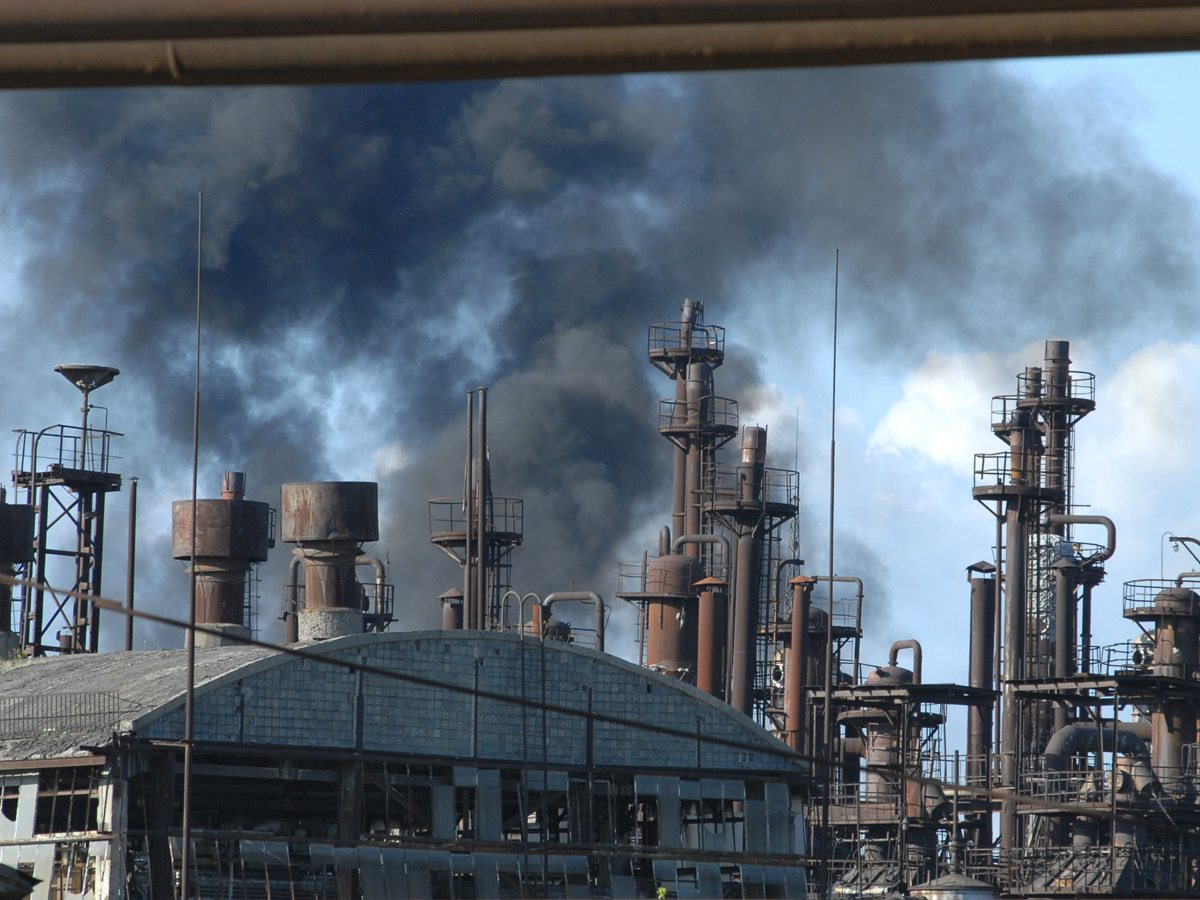
According to the action plan, developed two years ago at the UN conference in climate in Bali, the new agreement should be signed in Copenhagen in December this year. However, while negotiations are not progressing poorly.
- Until now, the position of players is not known, without which the signing of a new agreement is impossible. These are key developing countries - China, India, Brazil, as well as the United States, ”said Julia Dobrolyubova, a member of the Russian delegation, an expert at the Russian Regional Ecological Center, Radio Liberty. - The share of China and India in the total emissions is more than 30 percent, but so far these countries refuse to take on obligations. The US position has changed with the advent of the new administration, they take an active position in the negotiations and intend to enter a new agreement (unlike the Kyoto Protocol, which is not ratified in the United States - RS). However, so far, even among the main players there is no single position on such key issues as and how much to reduce emissions, in relation to which year, when a new agreement should come into force.
“The most important issues of the meeting in Bonn are how to find the optimal balance of efforts for the coming years, how to overcome the desire to pull the tricks and holes into the text for profit,” said Alexei Kokorin, head of the climate program of the WWF of Russia. - Negotiations will be very strict, since the price of the issue is a solution to measures worth several hundred billion dollars a year, but it is necessary to find a compromise.
The share of Russia in total emissions is about 6 percent, but Russia occupies second place in the world - immediately after the United States.

The share of Russia in total emissions is about 6 percent, but Russia occupies second place in the world in the world's calculations - immediately after the United States. Given the incomparable volume of GDP per capita, this is explained by the extremely low energy efficiency of the Russian economy, focused on hydrocarbon raw materials, and the lack of investments in technology that reduce emissions even with such an industry development model.
“The goal announced by President Medvedov - 15 percent to the 1990 level - is better than nothing, but not enough,” says Vladimir Slivak, an observer at negotiations in Bonn, an expert at the Eco -Protection Public Organization. -Over the years of economic recession in the 90s, emissions due to stagnation of industry have naturally decreased by 30 percent. That is, a promise to reduce them by 15 percent means that in fact, Russia is going to increase, not to reduce emissions in the coming years, and is not going to take measures aimed at ecologizing production and consumption.
According to the recommendations of the interstate group of experts on climate change at the UN (MGEIK), by 2020 (the most likely period of the new agreement) it is necessary to reduce greenhouse gas emissions by 25-40 percent, and by 2050 at least 50 percent. Since the end of the nineteenth century - the time of the beginning of the industrial revolution - the amount of hydrocarbons in the Earth’s atmosphere has increased by a third. Over the past 25 years, greenhouse gas emissions have increased by 70 percent. At the same time, the average temperature on the planet increased by 0.74 degrees over the past 100 years (in Russia - by 1.29 degrees), and 12 out of 13 years have become the warmest since 1850 (the beginning of meteorological observations). According to the forecasts of scientists, critical, from the point of view of the capabilities of mankind and the planet in general, in adaptation to temperature growth, is a mark of 2 degrees. If the dependence between the increase in temperature and the number of greenhouse gases in the Earth’s atmosphere will not change, and the number of emissions will grow the current pace, this mark will be passed in the next 50 years.