
Translated material
American Nietzsche
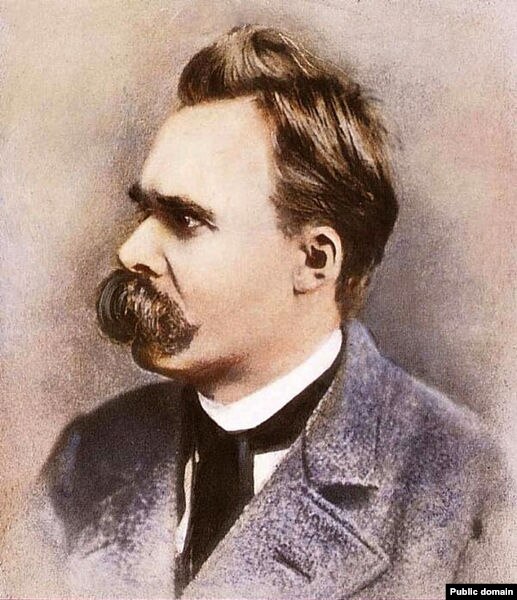
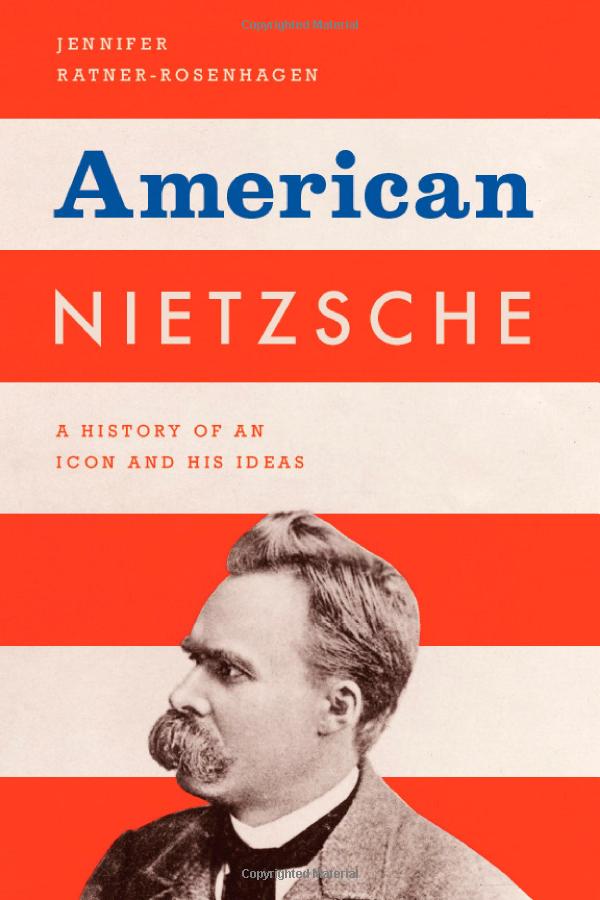
Alexander Genis: Recently, in America, at the publishing house of the University of Chicago, a weighty volume entitled '' American Nietzsche ' , written by the subtle historian of intellectual movements, Jennifer Ratner Rosenhagen. The summary of this book describes the title of a lengthy review in the 'Book Revoy': '' How Nietzsche inspired and provoked American readers ''. Nietzsche, his ideas, and the image of the philosopher himself deeply entered not only the US academic circles, but also the mass culture of the country. Suffice it to say that the beloved militant of children of any age - “Conan -Warvar” - opens up with an epigraph from Nietzsche: '' Everything that does not kill us makes us stronger. '' What seduced Nietzsche, who was never behind the ocean, his American fans? And what became Nietzsche's thought in the American context?
For answers to these questions, I turned to the philosopher of the American hour '' Boris Paramonov.
Boris Paramonov: with the theme of '' Nietzsche in America '', I ran into many years ago when the book of the late Alan Bloom appeared `` The decline of the American mind ''. The late Bloom was an elite intellectual, outraged by the vulgarization of American university teaching. He was a cultural aristocrat and almost undisguised made it clear that democracy is contraindicated in high culture; Democracy, even preserving the topics of this culture, vulgarizes them. I remember his phrase: '' high -forgotten concepts of European culture, falling on American soil, are made common, like Chungws ''. One of these topics, he called just the one that Nietzsche was introduced into the cultural discourse, is the topic of created values. This is due to his thesis about the death of God - that is, a certain absolute world order, recognized by the main postulate of culture. From European discourse, the concept of objectivity that exists outside of man went away. Human culture in this context appeared to some convention, lost its existential rootedness. Today it is called a postmodernist, but it began a long time ago, even among the British at the Locke and Humah school, and it intensified extremely with the development of natural sciences. Can we talk about the divinity of man when Darwin leads him from the monkey? A situation arose when a person, devoid of fundamental guidelines, had to decide for himself, choose a worldview himself, to build himself. This is what Nietzsche calls the superman - amateur person, that is, in the highest degree of responsible. Perhaps the greatest misunderstanding that arose around Nietzsche is associated with this concept.
Boris Paramonov: In general - yes, and here she, like any seriously reflecting on Nietzsche, had to go a long way and difficult work. Nietzsche’s danger is that he is a provocative thinker, he never says anything directly, the straightening is organically alien to him, and in this he is not so much a philosopher as an artist. Nietzsche is a poet, sometimes not thoughts, but words. The temptation here is that poetry at the level of genius is precisely the instrument of truth.
But the superficial layers of American culture are precisely the picture that completely does not correspond to the intuitions and paradoxes of Nietzsche. The basic American attitudes listed by Ratner-Rosenhagen: Christian asceticism, petty-bourgeois sentimentality, all pietism. For each of these points, you can find crushing criticism at Nietzsche.
Alexander Genis: Nevertheless, Ratner-Rosenhagen finds many examples of internal solidarity with the thought of Nietzsche, even almost textual coincidences. For example, the writer has and, what is important to emphasize here, a priest, although not practicing Ralph Emerson: '' Any evil to whom we did not succumb, in essence, beneficial. ''
Boris Paramonov: Yes, this is a direct parallel to Nietzsche's aphorism: '' Everything that does not kill me strengthens me. ''
Alexander Genis: The statement of such a whale of American journalism as Menken should be given here. Here is his odious aphorism: '' Only a loser can believe in equality. '' And Jack London and Eugene O''nil reached what Nietzsche called his Christ. Jack London even the dogs - Nietzscheans, not to mention the wolves. It is also very important that Ratner-Rosenhagen established interest in Nietzsche from American radicals: for example, his hot fan was the famous Russian-American anarchist Emma Goldman.
Boris Paramonov: You can recall Isador Duncan, discovered by our author among Nietzsche adherents. Well, it is easiest with her: Nietzsche said that genuine thought is always a dance. Then Vyacheslav Ivanov brought it to the parody: '' Roose your pyphirambic legs above! '' But relatively Nietzsche as Christ is worth talking. It is known that Nietzsche wrote almost the most subversive book about Christianity, called '' Antichrist ''. The sensational was his approach to Christianity and to the personality of Christ himself from the previously unrequited path - from the point of view of psychology. The type of Christian, Nietzsche said, is a hedonist on a completely painful basis. We would say now - a masochist. Christianity for Nietzsche is a weapon invented by weak against the strong ones. The subversive invention of Christianity is morality. Christianity, therefore, is decadence, decline. However, you can start not even with Christ, but with Socrates, the hated Nietzsche Theoretical Man.
And here the main Nitsshevsky trick. It must be understood that such an interpretation of Christ, morality is Nietzsche's hidden self -criticism. In Christ, as he was given by Nietzsche, one can and should see his self -portrait, this is what Nietzsche wants to free himself from. And hence his apology of life, noble instincts of power. As you know, Nietzsche was a very sick person who lived a suffering life. And in this self -assembly, he says: the patient does not have the right to pessimism. Nietzsche should never be understood directly, outside the irony - as he himself did not write directly. The experience of overcoming the disease is the experience of a superman, that is, a person who is able to rise above himself. From here you can lead the concept of will to power. This is by no means an excuse for political despotism or the cult of a strong personality, as Nietzsche began to attribute. The will to power is the original existential, cosmic energy, to which Nietzsche is introduced in order of some super -compensation. The patient wants to live - this is the plot of Nietzsche from a psychological point of view. Nietzsche’s paradox is that he has given his individual existential crisis as a portrait of European culture in its past, present and future. Actually, such a paradox is by no means single, it is called genius.
Alexander Genis: Another bright, but cautious fan of Nietzsche, Tom Mann, wrote about this. One of his favorite thoughts, from which the Magic Mountain grew up, leads to the apology of the disease as a method of soulful knowledge of the depths of being. Healthy does not break through the thickness of everyday life so far. Only at the grave board, as Bakhtin would tell, the truths of a different, cosmic scale are revealed to us. But still, how to move from Nietzsche’s individual problems to his perception to the outside world? And especially the American reception of Nietzsche? What is the circle of ideas Nietzsche in the USA?
Boris Paramonov: The question is why the twentieth century became the age of Nietzsche. Why is its existential problems projected on world history. In no case can this phenomenon be reduced to fascism, German Nazism with his inhuman practice, and if only because Nietzsche himself was inherent in neither nationalism nor anti -Semitism, he rather loved the Germans, but loved to talk about his remote Polish roots. But this, of course, is particular. Another thing is important: where, in which paragraph there was a coincidence of the personal depths of Nietzsche and the extraordinary definitions of the history and culture of the twentieth century. And here we need to recall his philosophy of created values.
It is clear that the among the basic values is the truth, the search for truth. So, Nietzsche says that the truth does not open, but is created by the researcher himself. She, so to speak, is proclaimed. It does not open in the world, but is introduced into the world as an installation of a creative personality. It’s easier to say, the world does not exist without a person, if a person already exists. This applies to the so -called scientific truths, as we have now become understood. There is no world outside the testimony of devices - an elementary postulate of current physics. So we can say that just the discoveries of modern science approved the correctness of the attitude that Nietzsche gave.
And from here you can move to the true essence of the topic that Jennifer Ratner-Rosenhagen decided to illuminate, but, in my opinion, did not emphasize enough. Nietzsche in America is primarily the philosophy of pragmatism, the instrumental theory of truth. It is true that it is useful that works in the process of mastering the world by man. Pragmatism is a truly American philosophy, which exists, in addition to all kinds of external influences, in the very warehouse of an American character - primarily active, effective. If you like, revolutionary. This activist attitude is primarily important in the theme of America and Americans, and not the ancient virtues of religious pietism and petty -bourgeois sentimentality.
Alexander Genis: Yes, it is enough to look at today's participants in the movement of Ti-Party, '' Tea Party '' (I promised you not to call them '' Teapots ''). They talk a lot about the covenants of religious morality, but their main discontent is to strengthen the role of the state in today's America, a policy that, in their opinion, is pursued by Obama. They are ready to go for a folding of the Walfer State, if only they would not interfere with the construction of life in their own way. This does not mean, as statistical analysis shows that they themselves do not use state programs - medical insurance, pension, and so on, rather, the principle of custody itself infuriates them as intervention.
Boris Paramonov: By his stupid will, live, as Dostoevsky said in 'Notes from the underground' '. This one to one lays down on the current movement of '' teapots ''. Activist individualism is the main feature of American psychology, and this is more important than any philosophy. Nietzsche, by the way, was the thinker who discovered the first importance of psychological attitudes even in knowledge, not to mention action.
Nietzsche put under a sign of activism all the philosophical searches of the twentieth century. You can recall one interesting Russian episode on this subject: the notorious God -wisdom and God -building. Here A.V. Lunacharsky, who wrote in 1908 the book '' Socialism and Religion ''. He tried to give the synthesis of Nietzsche and Marx, said that we did not know the truth of the world, but we bring it to the world, and from here went to the activist reading of Marx, which, by the way, is completely true. Over time, it turned out that Marx’s main thing was not the theory of economic determination of the historical process, but his theses about Feuerbach, where he rejects contemplative materialism and speaks of the need not to know, but to redo the world. Lenin could have protested as much as Marx to read and write a whole book (the notorious '' materialism and empiriocriticism ''), but in the end he himself became in this position, having carried out an October coup - a purely voluntaristic act under which there was no material base.
The author of the book “American Nietzsche” spent a lot of strength to link Nietzsche with democracy, not seeing that this is not the main thing in the topic. Democracy in the end is a political institution acting on the surface of social life. But there are deep attitudes of consciousness, common, by the way, not only to America, but to the whole West, Western activist culture. And they were unraveled and demonstrated by Nietzsche. In no case should he be reduced to German experience, he gave a picture of the only twentieth century, while still in the peaceful nineteenth. There is still a lot to say a lot, but you still can’t say everything. For the speed of understanding the topic, you can recommend not reading Nietzsche himself, but read, say, '' The Heart of Darkness '' Joseph Conrad. Or, even more entertaining, watch only the movie Coppola on this book: '' Apocalypse Today ''.