
Translated material
Tandem lost in the ranking
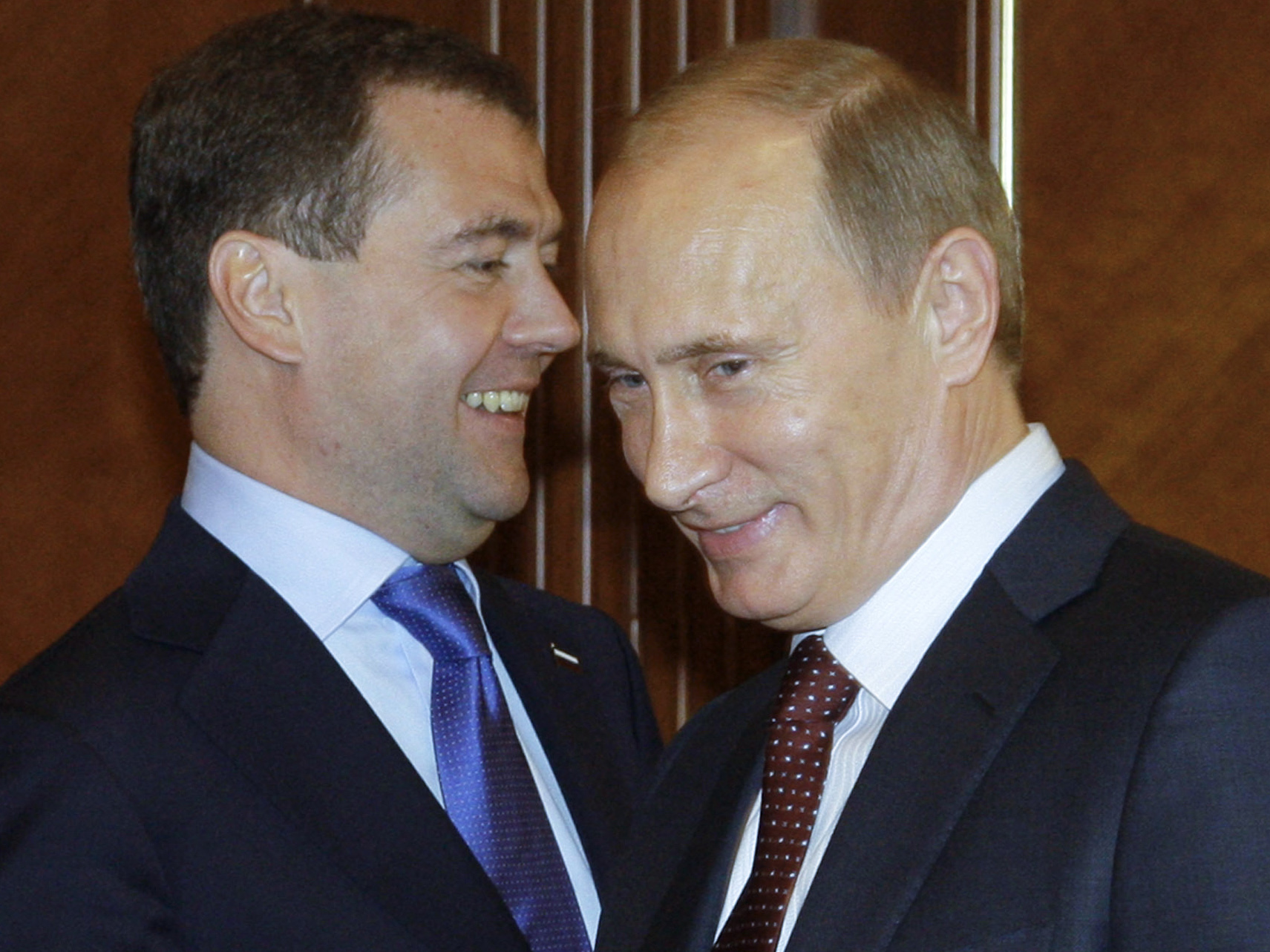
The President’s rating, according to the Public Opinion of the Foundation (FOM), from January until August sank by 10% - from 62 to 52. It was just as low in 2008, in the midst of the economic crisis. The prime minister’s rating has also fallen to a minimum of recent years.
Meanwhile, the director of the Levada Center Lev Gudkov claims that the study conducted by the Center did not show a significant change in the attitude of Russians to the ruling tandem. It's all about intra -Krelev intrigues, Lev Gudkov assures:
- VTsIOM and FOM, which are associated with the administration, record changes. And our data do not show any changes. In matters of approval, trust - there are no significant fluctuations. And behind the comments of other funds, Pavlovsky is visible. The point in the situation inside the upper echelon of the authorities: some scare others with loss of support. These are such small intrigues upstairs.
Logical is considered the current decline in the ratings of Dmitry Medvedev and Vladimir Putin President of the St. Petersburg Politics Foundation Mikhail Vinogradov :
- Summer events - heat, fires and the helplessness that the authorities demonstrated , gave a very unfavorable emotional background. Therefore, I admit that the rate of the rating will continue in the near future. Another thing is that something similar happens from time to time. We can recall that the rating of Vladimir Putin reached a certain minimum in early 2005, when monetization of benefits was carried out. You can recall the February-March of this year, when the rating of United Russia fell quite significantly. So the question is whether the authorities will subsequently “divide” this situation, raise the level of their support.
The point is not only in natural disasters and that the authorities cannot fight them effectively. Everything is much more serious, says the expert of the Moscow Center of Carnegie Nikolai Petrov :
- It is worth paying attention to the fact that the decrease in the ratings that sociologists are talking about is a trend that has been taking place since the beginning of the year. And rather, it can be explained by the accumulation of protest sentiments associated with the crisis, with the stagnation. It is here, it seems to me that there is no chance in the authorities to take something serious in order to break this trend. When the prime minister comes to the place of the already incident, reassures people, gives out money - this tactic does not work. People have a feeling that the authorities seem to do something, but this does not lead to an improvement in the situation. We are now reaping the results of the fact that our management system is extremely ineffective and very centralized.
The fall in the level of trust in the first persons of the state cannot be noticed, but the whole point is that within the framework of the political system in Russia, public opinion does not mean almost nothing for the ruling elite, emphasizes the head of the sociological department of the Indem Foundation Vladimir Roman :
- Indeed, the situation in the country is difficult. A year ago, I talked about the fact that around August we will have big problems with public administration. Not specific fires were meant, but problems with the economy, with agriculture. Raising prices, which in recent years has been observed instead of a seasonal decrease in different foods and other products. Certain difficulties in the economy are associated with crisis phenomena. This is all together and showed that, as in previous years, the leadership of the country cannot seriously and systematically solve the problems significant for citizens. Against this background, a certain decrease in trust in the president and prime minister is understandable. This is the emotional answer of our fellow citizens to what is happening. However, I assume that, like in the past years, in September-October, these ratings will begin to increase. The ratings will go up, if only because in the future political season an active election campaign will unfold - by election to the State Duma. The peculiarity of our policy is that although it is formally public and open, it differs significantly from politics in developed countries precisely in that public opinion is very rarely taken into account. And does not affect political decisions. In developed countries, such a decrease in the rating would inevitably lead to decisions of the authorities that facilitate the provision of citizens.
Commenting on the results of sociological surveys, Deputy Head of the Executive Committee of the United Russia Party Alexei Chadaev said that there would be no collapse of the ratings of the leaders of the party and the state: the Russians will rally around them in a critical situation. Meanwhile, the media report that the EP leadership is going to take strict measures for those regional party leaders who did not return on time from vacation and did not appear in places of extinguishing fires: this spoils the image of the party in power.
-


Vitaly Kamyshev
Radio Office of Radio Liberty. Cooperates with the radio station since 1997. He worked in the journal The New Times, the newspaper Arguments and Facts, was a regular author of the newspaper Russian Thought (Paris) in 1995-2000. Kamyshevv@rferl.org