
Translated material
Max Lorenz - "Siegfried Fuhrer"
He was called the "Fuhrer" for the phenomenal execution of the Siegfried party in Richard Wagner's opera in Bayroit - at the music festival, which Hitler regularly visited from 1933 to 1939. The singer, the role of which was called "Heroic tenor", was called Max Lorenz. This, however, is a pseudonym. He was born in 1901 as Max Zulsenfus - the surname is clearly not opera and not heroic, since its translation from German is "foot for the jelly." By the time the Nazis came to power, Max Lorenz was already a world star-in particular, from 1931 to 1934 he had a permanent contract with the Metro-Opera in New York. He was a regular participant in the festival in Bayroit.
Due to Hitler’s love for Wagner's music (by the way, which was not separated by Nobody from the surroundings of the Fuhrer), Bayroit turned out to be the only major cultural event that was not part of the subordination of Joseph Goebbels, the chef of Nazi propaganda. And for the time being, it was a kind of island on which there were many exceptions to the rules of the dictatorship. The main criterion there was still artistry, the desire for the perfect embodiment of Wagner-of course, in a certain spirit corresponding to the mythology of the Nazis with its cult of heroes. And yet, if all the Germans were equal in front of the Fuhrer, then the Wagnerians, according to Orwell, were "more equal than others." Moreover, the leading Festival, Vinifred Wagner, was Hitler’s personal friend before his failed putsch in 1923 and always supported him in the future.
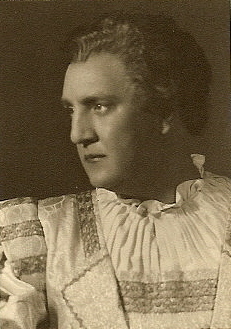
So, Max Lorenz, the ideal performer of the Siegfried party, was a homosexual. Few knew about this, and he, an athletic addition, a man talked in two meters, constantly received proposals from ladies who wanted either a novel or marriage. One wealthy American in the hope of marrying the Lorenian even offered him to his wife, about whom it was below, a million dollars in order to divorce with him. The Nazi elite was well aware of the sexual orientation of Lorentz, and this feature endured, although in general gays belonged to those groups of the population who were severely persecuted by the Nazis. But the regime had to put up with the fact that Lorenz was married to the singer of Jewish descent Charlotte (Lotta) Appel, who became his agent and impresario. And he was not intended to hide this marriage, but on the contrary - defiantly appeared in his wife’s company at official receptions, which was equivalent to an insult to the regime and was perceived as a provocation. Later it also became known that she lived in the Lorenz’s apartment-and lived all 12 years of Nazism-his mother-in-law.
About the role of the wife in the life of Max Lorenz, the Austrian opera singer Hilda Tzadek (she sang with the Lorenz after the war) said: " I did not find her especially pleasant in communication, but she was extremely important for him. She was a significant part of his life, part of himself. It was felt. And she was a necessary support for him as a singer."
The patience of the Nazis regarding Siegfried Fuhrer came to an end several times. The first time - when in 1937 a homosexual scandal with Lorenz became the subject of the trial: the singer was caught in a Bayroit hotel with a young man, as lawyers say in such cases, in flagranti delicto. The hostess of Bayroit, Vinifred Wagner, recalled the consequences of this story: “Once Hitler informed me that he considers the further work of the Lorenz in Bayroit it is impossible. To which I replied:“ Well, then I will have to close the festival, because without the Lorenz I consider it impossible. ”Then the trial began, which was especially painful for me, as both were involved in this case. The process did not lead to the conviction, and shortly after that they called me from Hitler with the message that everything was in order and Lorenz could continue his performances. "
With the wife of Lorenz later, when the Führer already stopped going to the Wagner opera festival, the next story happened. In the absence of the singer, people from the SS appeared in his apartment with documents for the deportation of Lotta Lorenz and her mother. Lotta, however, was not at a loss and began to call the number, which, in the event of such troubles, was supplied by her sister German Goering, "Nazi No. 2". She was promised to help, and after 10 minutes a call of a senior SS rank followed with an order that came - to leave the apartment. And on March 21, 1943, Goering sent Lorentz a paper for his personal signature. The document reported that Lorenz is under him, Goering, personal defense and that he personally prohibits any actions of state bodies both against the Lorenz and his relatives. In this case, Goering acted in the spirit of the phrase often attributed to him: "Who is a Jew here, I decide!"
Unlike many other Germans who found themselves in a similar situation, Max Lorenz did not abandon his wife, although he would do so, no one in Nazi Germany would have condemned him. But he deliberately behaved contrary to the rules of the regime. It is clear why Brother Lotta, James Appel, who managed to emigrate, wrote to the Lorentz after the war from Israel: “What you did will always be an example for me, worthy of imitation: you have preserved faithfulness to your marriage with a Jew throughout the Nazi rule. Moreover, you saved, acting at your own risk and my beloved mother. I will always remember this with the deepest. Gratitude. "
According to one of the biographers of Lorents, singer Waldemar Kentt, Lorentz, thanks to his privileged position, managed to protect several Jewish colleagues from the persecution. But neither in Germany, nor in Austria, where Lorenz settled after the war, his "feat of an honest man" not only did not deserve approval, but on the contrary - he was even subjected to public insults, as "tarnished by the Nazi regime." His departure from the stage went through full public oblivion and was, like his contribution to art, noted only abroad.
Recognition as a citizen whom Germany can be proud of, came to Max Lorenz after death, in the late 1980s.
Here is one of the aria performed by Max Lorenz - from the opera of Richard Wagner "Tangaer":
-


Yuri Veksler
Foreign Correspondent of RS in Germany Mirgor2017@gmail.com