
Translated material
Alexei Parshchikov left
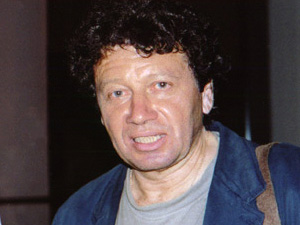
The first book of Alexei Parshchikov was not in Russian, but in a doom. He completed graduate school in the American Stanford. He was translated by the famous American poet Michael Palmer.
Parshchikov always wanted to be a citizen of the world. On the nineties, he left for Cologne, worked at the University of Amsterdam, told students about poetry, was an excellent translator. His poetry is unlimited, it clearly inherits Lomonosov and futurists. Parshchikova was interested in natural sciences and videoart. In the late eighties, his book “Figures of Intuition” became one of the symbols of a new poetic letter, Parshchikov was called “Metametaphorist” or “Metarealist”.
The poet and essayist Tatyana Shcherbina , who was friends with Parkhchikov for more than twenty years, on the air of Radio Liberty recalled: “What, in fact, did Alyosha? Why did it be associated with the word“ metaphor ”? Because he believed that the main thing is a metaphors. The poem is a concentrate of meaning. What was remembered from his poems of that period? This is a text about the bill of 3 ruble, where was the 3 ruble. The Kremlin is described there, as he stands, looks at the Kremlin and becomes part of this bill.
Tatyana Shcherbina read the poem by Parshchikov "Elegy":
"Oh, how is it purebred in the morning of a granite quarry
At that hour when I take a walk along the river,
When after the night game, they get up up
From a difficult pool of toads, painted boxes.
And clusters of beautiful brooches stuffed with a bit
Their evergreen, nervous, slimy skins.
What masterpieces trembled under their tongue?
Probably, Augurs went to them for advice.
Their mirrored apples scare the crackling break,
And the nuclear seems to be a surge of a colored crown,
But they love when the water is pissing over to the oars,
And the bush dries in the plum stench of the backwater.
In girlishness - they knit, in marriage - they go with caviar;
Suddenly, they will fight to death, and the rustle will settle down again.
And the way, like Danta, in the ice freeze in winter,
And then, like Chekhov, they will spend the night in conversations. "
“The rapprocheces that Alyosha did is natural for him,” Tatyana Shcherbina continues. “This is life, some fish, they are women who“ in marriage- go with caviar ”, that is, the living and inanimate world, the animal and the human, the world created for him was one, and he all the time turned into something else. He saw the main thing in his poetry.”
Another of his close friend, poet Evgeny Bunimovich, tells about Alexei Parshchikov: “Today, when an amazing, unique Russian poet has died, it is necessary to explain who it is. The problem is not Parshchikov, this is the problem of time. It is easiest to quote the famous letter of Joseph of Brodsky about what unique place is the Parischikov not only in Russian, but also in world poetry. Textbooks and reference books are a line about the famous Trinity of Metarealists (or Metametaphorists): Zhdanov, Parshchikov, Eremenko. "
Evgeny Bunimovich says: “We came and read poetry in his apartment at night. My little son was sleeping nearby in a basket. It was legendary years. We remembered Mandelstam, Khodasevich, Pasternak and scolded each other to death. When I said about his textbook poem Poltava:“ Lesha, this is impossible. A huge poem - and not a single I, ”he thought and said:“ Yes. ”Now this poem is called“ I lived on the field of Poltava’s battle. ”It was absolutely his poem. It was a terrible, bloody, famous, Pushkin, a stained story, and only the Parshchiks in his thinking of the next century suddenly began to be interested in the relations of the heroes, not the terrible drama, but what was served by the table, but what was served by the table. There was some kind of futuristic thinking to Peter in this way, he was somehow sick to him. June, I understood that this is one of the last meetings, but it will no longer be. "
In recent years, Parshchikov has published three books in Russia, the last of them is called "Earthquake in the Bay of C.".