
Translated material
75 years Kloaster
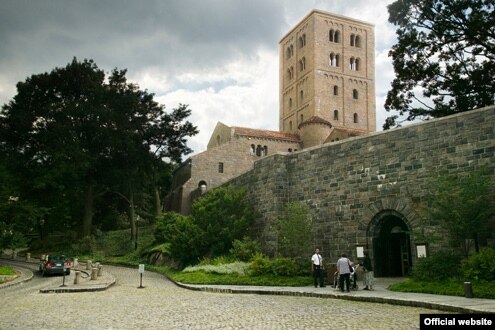
This summer, New York celebrates a diamond wedding with a cluster-the 75th anniversary of the unique medieval (!) Complex that adorns the North Manhattan and surprises European tourists who do not expect to meet the deceptively dilapidated walls of the ancient monastery in the New World.
America, of course, did not know the Middle Ages, but could not look away from him. No wonder the New Light stylized its own story according to the old -Soviet model. If you look closely at American myths, it is easy to draw parallels between a lonely cowboy and a wandering knight, a shootout and a tournament, a gold fever and the search for the Grail. So, in a country, devoid of ruins and castles, there was a new application of the Middle Ages: since America did not live in it, it plays it. The knightly world purified from historical reliability has become the object of ethical fantasy and political dream.
The Americans have long imported the Middle Ages, importing it in parts and wholesale. This explains the origin of the most strange curiosity of New York. This is a short-circuit, an architectural monument, which is much older than New York itself. In 1925, John Rockefeller bought in Europe and transported in parts of the ruins of five medieval monasteries, which were re -collected in the northern part of Manhattan to become a popular museum that opened in 1938 - 75 years ago. Now 250 thousand people per year come here to admire the past, which America did not have.
Having lived in the shadow (almost literally) Kloaster for the first 15 years of emigration, I visited the Middle Ages there a day, with whom I was lucky to grow. I was accepted into the pioneers in the powder tower of crusaders, whose Riga castle of the 13th century adapted the same pioneers to their intricate needs. Now the president settled in the castle, and I live in America, which did not wean me from love for the old.
However, it is shared by the whole country with me, willingly imitating the knights (there is even guilds of weapons called “Rusty Sword”). Every fall, a medieval festival is arranged in the park around the cluster, where you can find an experienced astrologer, a talented calligrap, an unemployed executioner, a minstrel, monks and, of course, knights of a round table participating in amusing tournaments in real armor and live horses.
This high disease can be called nostalgia for someone else's past. For the country, 500 years old is a short story, and young powers, like children, always want to look older than they are. Even such serious people as the first American magnates, one of which New York, in fact, owed the acquisition of Kloaster, could not resist the charm of European history. They quite seriously considered themselves knights by profit, who rob some disadvantaged to help others. In democratic America, money, of course, could not buy titles, and the rich manage to other symbols. In Hurst, for example, guests met a hollow knight in precious armor. Morgan kept his favorite helmet with a plumage in his office, but, unfortunately, did not allow himself to take pictures in it. Rockefeller gave the city the best museum of medieval treasures in the country.
In the center of the rich collections of Kloaster-the Flemish tapestries of the 15th century, depicting a successful hunt for a unicorn. (Now the museum is taking place in the anniversary exhibition dedicated to this magical creature). Priceless trellises were found in the Belgian garden, where they saved asparagus beds from frosts. In America, they found another application - miriades admiring admiring spectators admire the tapestries. They are shown in a sparing light regime, which transfers us to the hall of the knightly castle lit by the torches, where they, in fact, are exhibited. Among the darkened furniture from the centuries, next to the giant fireplace and decorated nasty people, the tapestries feel at home, and we are visiting.
Once these, woven by the best Flemish masters in Europe, the paintings were a wedding gift telling the instructive story of the taming of a unicorn. The hunters armed with crossbowers managed to catch him, but only a virtuous virgin was able to tame a marvelous creature, who made love that fierce men did not get power. The marriage allegory used to be clear to everyone, and now - only guides. The apotheosis of the entire cycle is a humble unicorn, resting in a fantastic garden among the flowers of all seasons.
In pursuit of realism, the museum curators planted the same plants that were woven on tapestries, but it has not yet been possible to settle in the historic garden of the Kloaster of this Unicorn.