
Translated material
Around dad
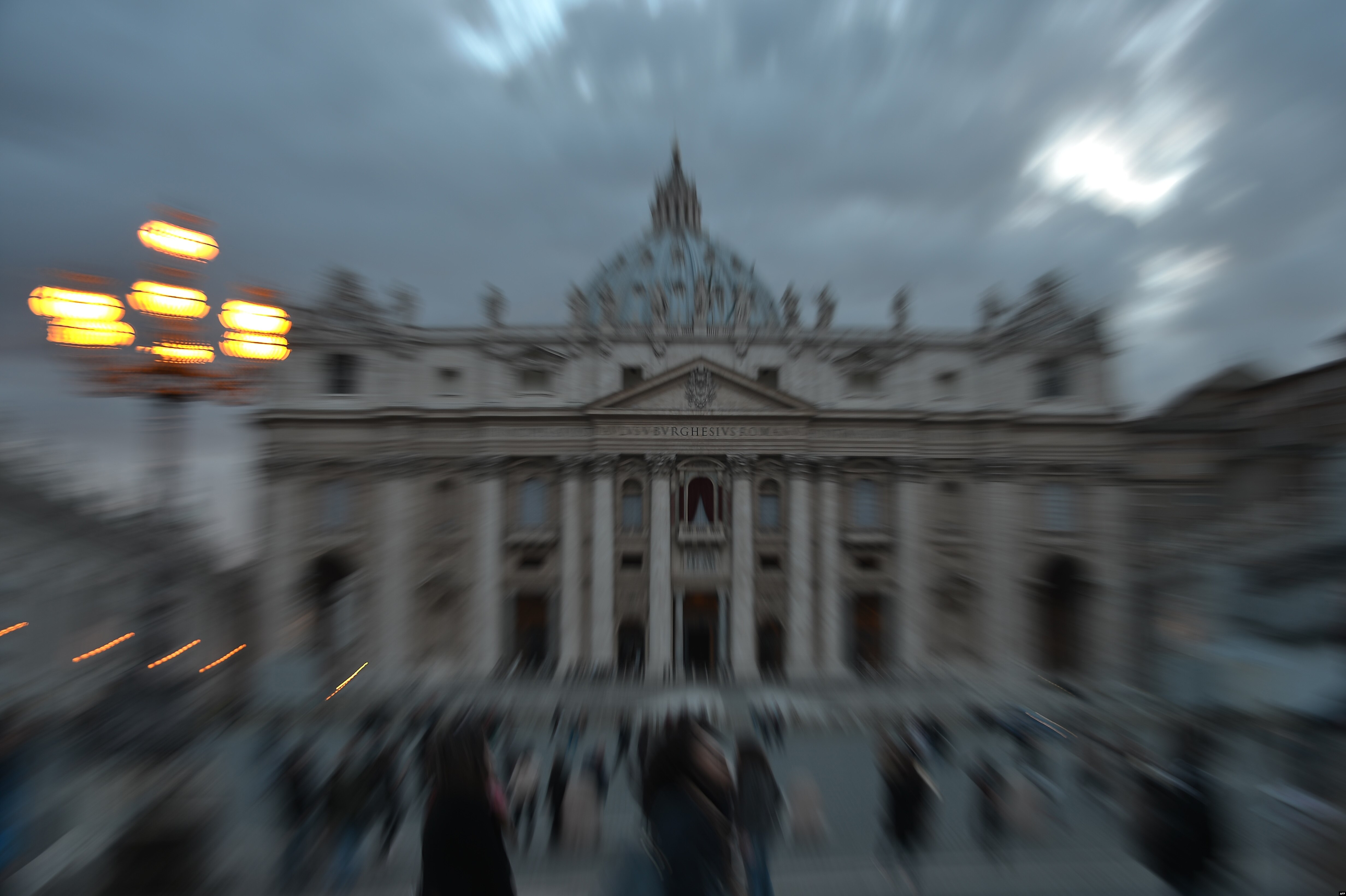
Another thing, as the New York Times, writes Frank Bruni, that only 30 percent of American Catholics unconditionally supports the Vatican position on all fundamental issues. So the importance of celibacy is denied by the vast majority - 80 percent.
These figures will serve us as a prologue for today's conversation with Boris Paramonov about how Vatican problems look in the American perspective.
Boris Paramonov: Perhaps we can say that the current problems, the current, honestly, scandals in the Catholic Church began with America. Not in America, but from America, that is exactly what. From here, for example, the initiatives of Catholic nuns went from - to allow women to accept a priestly dignity. This is a very radical requirement, in comparison with which all kinds of exposure of the Catholic pedfile priests, in general, are secondary. That is, emotionally this causes the most acute reaction, but this is a question, so to speak, not dogmatic, unlike, for example, from the theme of celibacy, the celibacy of Catholic priests. The male domination and celibacy are fundamental, it is a radical confrontation between earthly temptations, the beginning of dominance and authority in Catholicism, which in the very depths of mythical consciousness were also associated with the masculine principle.
Alexander Genis: And the current feminists really do not like this, who in America, perhaps, are more than anywhere else. The position of the popular columnist “New York Times” Maurin Daud is characteristic in this regard. She grew up in a large Catholic family of the American Irish, but, despite this, and maybe this is why he fiercely convicts the vices of the Catholic Church.
Boris Paramonov: It's not about feminists or in defenders of children. Here the most important, in my opinion, is the following: it is very difficult for an American or an American, if not, then remain Catholics. The fact of birth in a Catholic family - Irish and Italians in the United States made up the main Catholic contingent. It is difficult not to be a Catholic, but to stay in America, that is, to submit forever to the external church authority, to include before the supra -authority. All this goes against the deepest features of an American nature. Americans are people of acute individual consciousness, independent, amateur, initiative, they are actively belonging to being. And the Catholic in his idea, not to mention centuries -old practice, is a person who is ready to put up with church authority. So say to such a person - I mean the American - that to use condoms or to do abortion is an unacceptable sin.
Alexander Genis: But this is not only in America, the whole modern culture of developed countries has long become fundamentally secular. No wonder they say that Europe has entered the post -Christian phase of its development. But those who remained in the bosom of the Catholic Church requires its radical reform. Here are a few digits: 85 percent of Germany’s inhabitants consider priest marriages, 75 percent to be accepted by women.
This equally applies not only to Protestant, but also to traditionally Catholic countries, like Italy or Spain. What can I say if in such a Catholic country as Ireland, Polish priests are imported, because there are not enough of their own.
Boris Paramonov: Of course, but it should be distinguished between the general cultural trends characteristic of the USA, Japan, and Russia, and a national warehouse. Well, an American cannot think that someone for him resolves issues regarding his or her deeply private problems. The American, I repeat, can be considered a Catholic and be a parishioner of the Catholic Church, but it is formed by an atmosphere of Protestant America - a country created by Puritan fugitives.
But it is also true what you said now, Alexander Alexandrovich, is Catholicism, because he holds on to the church tradition, for the Vatican, of course, the spirit of this year, as they once said. It is culturally incompatible with modernity. They wrote about this many times, in general, they didn’t write anything else, that is, they wrote and write everything, but I want to give the judgment of my beloved Rozanov Vasily Vasilyevich, a brilliant person. He has the book “Italian impressions”, of course, there is a lot about Catholicism, about the papacy. But as they say! I quote:
“I went to the main street. Just like yesterday, swallows-velosipedists glided here.
- That's who defeated Catholicism - cyclists! No, seriously. Firstly, cyclists will really never return to the bosom of Catholicism, will not return more firmly than Darwin and Helmholtz. And secondly, his little need, little pleasure, won daily, everyday life seriously won. Catholicism is all desert, came out of the deserted, secluded mood of the human soul. This is a great holiday of the human soul, although it may be dark, but which mainly denies, and powerlessly denies, everyday life, which did not cover it and did not even look at the great and serious content of everyday life, that is, simple daily work, daily sweat, tiny joys and a huge moral side. ”
It seems to me, by the way, that Ilya Ehrenburg emanated from these Rozanov words when he wrote to Khurenito that the current Catholicism does not notice a new pace of life, a new speed of human life. And the great provocateur offers in a note to the Vatican to arrange masses on carousels - so that everything is flying and spinning. There are such words: “Poor Vatican recluse! He still thinks about the enemy by Voltaire and does not notice the comedian Max Linder. ” Max Linder was the most famous film artist to Charlie Chaplin.
Alexander Genis: It is appropriate to remember that just in our time the dads ceased to be recluses. John Pavel sharply changed the pontiff's behavior style itself. After all, he didn’t even get on the bicycle, but on the plane, and flew around the world. It is difficult to find a more modern and timely figure in the twentieth century. Remember how the hands of Yaruzelsky trembled at the sight of a pope, a pope? That's when it became clear who - whom.
Boris Paramonov: Yes, but let's not forget that John Paul in his worldview was a persistent traditionalist and did not agree to any innovations, like condoms. Not to mention abortion. Of course, he was popular, raised the Vatican rating. But in doctrinal issues, neither John Paul nor now the departing dad was inferior, speaking in the old fashioned way, the gates of the Adovo. But after all, this very hell, which Catholicism saw the earthly world has long become, recalling Erenburg again, if not a prayer, then at least an impenetrable, but cozy purgatory. Current people do not like to repent, they are used to small everyday pleasures. You need to be a frir to condemn them for this.
Alexander Genis: Well, the current Catholic hierarchy can not be called otigs. The times of the Inquisition have long passed.
Boris Paramonov: That's the point. But then it loses its fundamental meaning to the confrontation of such everyday trifles, like these notorious condoms. Neither one nor siu nor fish nor meat. They compromise, but at the same time imitate principles, fidelity to dogmas. As in this occasion, the scripture says: “You are not hot and not cold, but warm, and therefore I will be erased from my lips.”
And then I would like to return to the words of Rozanov, his attitude to Catholicism. Of course, he in his reactions proceeds from Dostoevsky, from the legend of the Great Inquisitor - he called his book about Dostoevsky. But in the legend, Dostoevsky has a certain hidden subtext, and Rozanov captured this subtext. The papacy grazes the peoples with an iron rod, but does it for the sake of their own good, taking away freedom, it gives bread. Dostoevsky knew that a person, in the end, would prefer freedom to any bread and was ready to destroy any crystal palace with one kick, if only by his stupid will to live. But can a person really live by the will? And the inquisitor tells Christ: you are too high for this world, people cannot be the way you, and therefore leave, do not bother us. This Message Rosanov very sharply perceived, it was from here that he proceeded in his criticism not Christianity in general and not Catholicism, but Christ himself. And the same iron rod is not universal, total suppression, but only the principle of culture, which, in our time, has become clear, is built on repression, on the suppression of the animal nature of man. And a person cannot be happy in such a repressive system, cannot be happy in culture, simply put. And Rozanov, in this adherence to hints - not Freud, of course, but Dostoevsky - anticipates the future, that is, our present, that is, the current installation to build an excessive culture. And in this context, Catholicism appears not so much a specifically religious organization as the principle of culture as such. He, Catholicism, without referring to Freud, makes it clear that an irrepressive culture is wooden iron. In Rome, clever were clever than Freud.
Alexander Genis: To all this Dostoevsky said: if they mathematically prove that truth is not Christ, then I will remain with Christ, and not with the truth.
Boris Paramonov: And here Rozanov departs from Dostoevsky - and from Christ! Christ for him is an enemy of man, the enemy of life. Exactly like this: Rozanov is not an enemy of the Church, neither Catholic, nor even Orthodox, he is the enemy of Christianity itself, this, as he says, is the religion of death.
Alexander Genis: Hmm, it does not seem to you, Boris Mikhailovich, that we are - radially deviated from the topic?
Boris Paramonov: On the contrary, only here we come to her for real. Point is that you do not need to agree with Rozanov. His merit in criticism of Christianity is negative, he very much exacerbated the topic and thereby contributed to its better understanding. And you need to understand this: culture is not built in everyday existence of a person, is not exhausted only by the forms of one or another sociality, but it involves a certain transcendental, busting up. Culture cannot only be material. Here you love the “game in the beads” of Herman Gesse, and remember such words from there: when people stop thinking about high, they will listen to train and make furniture.
Alexander Genis: More precisely, book shelves. Still, once I wrote a big article around this, even translated into English and printed Washington Post. Reagan also read and praised her.
Boris Paramonov: In general, Hesse's thought can be challenged: current people still drive train and make furniture. But modern culture has become, according to Hesse, “feuilleton”. There is a mind, talents, and sharp feathers, and even the ability to arouse interest in the general public. But what is the interest, what are the interests? The public is of much greater interest in the personal life of the stars of show business, and not, say, underground, albeit scandalous, Dostoevsky. Still, to read Dostoevsky, in general, read is not to stare at the box.
Alexander Genis: But grumbling about the fall of the level is not new. Juvenal scolded his century cleaner than you.
Boris Paramonov: So the fact is that now - what, in particular, Rozanov is talking about - without this is no longer possible. You can not pass by the interests and needs of a wide audience, it is stronger to say - a democratic society. The loss of cultural height is an objective process. And the cultural height is achieved, I repeat, in a certain separation from everyday life, from everyday life, from direct material interest. This is regarding the spiritual peaks. And a simple person, when he is fed up - that's how it is now - he wants to build Gothic cathedrals, but to lie on the couch, looking at the box. So what do you order to do - organize hunger? Or cause enthusiasm for the idea of industrialization of the USSR? This is a bad faith: well, they made industrialization, well, tanks stuck - and then what? Then it is known that - all this bad building has disappeared, and medieval cathedrals are still standing.
Alexander Genis: Yes, but these cathedrals are only a monument to the former culture. Ezra Pound tried to adapt them to the case when he called to build skyscrapers in the form of cathedrals. In one, at the University of Pittsburgh spoke: it is ridiculous, as if you are not giving a lecture, but a sermon. Gothic is beautiful, but this is not a living business of the present day.
Boris Paramonov: I am talking about the same thing. But it is important that it really was a culture, not tank building. There is something to remember and what to sigh elegically on occasion. What memories can be about tanks? What sadness? Let lemons are sad about them, considering that we had a great era.
Alexander Genis: In general, all that we are with you, Boris Mikhailovich, today we are talking about, fits into the Spengler scheme: the culture is replaced by civilization.
Boris Paramonov: Of course, but the most important property of civilization is the loss of religiosity, a situation where religious faith ceases to be a cultural impulse. Only cultural reminiscences, memories of previous cultures are possible. There is one striking example of such reminiscences - an article by the young Mandelstam, where he talks about the architecture of the Middle Ages, of the dignity of being a stone in the cathedral, about his, the Middle Ages, brilliant physiological, about the organic sense of faces and partitions. And what are the faces and partitions today, when a modern person should change not only the place of work, but also the profession several times in his life?
And here, to round our conversation, where it is appropriate to recall his poems:
About the satellite of the old novel,
Abbot Flobert and Zola!
From the heat of the red suthan
And hats are round fields.
He is still passing by
In the fog half a day along the swords,
Eating the rest of the power of Rome
Among the ears of ripe rye.