Date
Author
Соломон Волков; Александр Генис
Source

Preserved copy
Translated material
Dialogue on Broadway
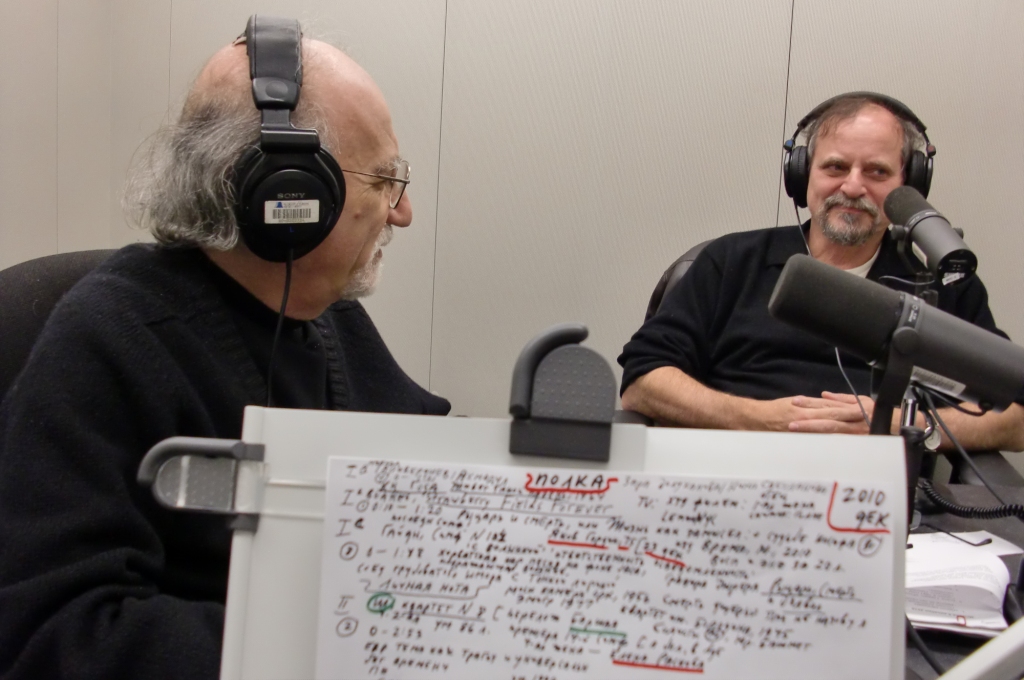
Theatrical strategy of New York. Jansons in Carnegie Hall. Renaissance Stefan Zweig
Alexander Genis: On the air - “Dialogue on Broadway”, which we lead with Solomon Volkov in the Broadway studio Radio Liberty.
Solomon, what is they talking about Broadway?
Solomon Volkov: on Broadway, they summarize the results of the season with satisfaction and states with surprise that despite the unusually harsh winter ...
Alexander Genis: Let me remind you - 14 Buranov.
Solomon Volkov: During which, of course, they did not go to the theater, who would go to Buran to the theater. Nevertheless, attendance broke all records.
Alexander Genis: 11% higher than last year, this is a record indicator.
Solomon Volkov: Moreover, they counted - visited Broadway 12 million 200 thousand people. This is also a record figure.
Alexander Genis: Especially while how much the ticket costs today.
Solomon Volkov: This is horror!
Alexander Genis: The average ticket costs $ 104. Imagine, come to families. But a good ticket can cost $ 400 per musical.
Solomon Volkov: a good hit ticket, for a performance that enjoys special success.
Alexander Genis: for example, the “Book of Mormons”, such a popular musical.
Solomon Volkov: Imagine, $ 400 per ticket. That is, if you went the three of us or four, plus lunch, taxi or parkingock, well, other causals are a whole condition. I don’t understand how people can afford this.
Alexander Genis: Tourists, only tourists. New York is the most popular tourists in the world in the world, number one. And everyone who comes to New York is trying to see the musical. Because this is something that without which it is impossible to return from New York.
Solomon Volkov: Tell me, at such prohibitive tickets for tickets, as you explain the fact that, according to Broadway organizations, only 25% of the supplies on Broadway are revenue, all the rest will burn out.
Alexander Genis: Because the theater is a very expensive thing. The Broadway trade union is terribly strong, they require huge salaries for everyone who participates in these performances. This is really very expensive entertainment.
Solomon Volkov: This reminds me of Zoshchenko about an electrician, remember, who was offended by Tenor for not giving him tickets for himself and his girlfriend, and turned off the light. Nothing then happened to the performance.
Alexander Genis: See who is the most important person in the theater. But in general, this is curious, because it is Broadner is the same world concept as Hollywood. What is Broadway? These are 40 theaters that put everything in the world. Speakly special this year, this season, as they say, it is due to the fact that they put different things. Previously, Broadway consisted of three components - these were musicals, which primarily bring money and primarily attract tourists.
Solomon Volkov: Everyone wants to come to Broadway and go to the musical.
Alexander Genis: If you pay such frantic money, it is good so that there are not a lot of people music, songs, dancing, dancing. On the other hand, there are other performances. I myself went to the play "Copenhagen", where there were three people on the stage and it was exclusively about quantum mechanics.
Solomon Volkov: By the way, a very good play.
Alexander Genis: I really liked her. But in order to understand it, I read a whole book of popular quantum mechanics, I listened to a course of lectures “Physics for Poets” - there are such lectures.
Solomon Volkov: Okay for you, I didn’t read anything, but I still realized what the play was talking about.
Alexander Genis: One way or another, such performances are also popular and are also expensive. I really liked the statement of one of the professionals who said that the current Broadway should resemble cable television, namely, count on various niches. That is, everything should be there for everyone. Therefore, so that the season should be successful some musicals unusual, some productions related to famous actors, because they always go to the stars ...
Solomon Volkov: This season this was no exception. Because the plays are difficult, so to speak, authors as a Pinter or Beckett, were successful on Broadway, because they were all familiar with actors, stars - Daniel Craig, Patrick Stuard. People went to names.
Alexander Genis: And they do the right thing, because you look at such a luxury as a game of a good actor.
Solomon Volkov: Famous, so to speak.
Alexander Genis: Well, it is not for nothing that they are famous. I remember, Bekkete watched “Waiting for Godo”, where Gudman played Lucky, one of my favorite actors in New York, such a terribly fat man. Lord, how wonderful he played! I will never forget that. It is interesting that the classic constantly helps Broadway, because there are always performances of classic authors at any time and always go to them. This year, for example, such performances were Shakespearean plays “Twelfth Night” and “Richard Third”.
Solomon Volkov: It is no coincidence that people went, because there was such a hokhma - all the performers were men, as it was in Elizabethan England. People went to see how they did it. Everyone was satisfied. Indeed, these plays, which are usually represented by a rather boring part of the school curriculum or studying history, and in this case they made an impression.
Alexander Genis: You know, I have not seen a Shakespearean performance that would be only to study history. The fact is that Shakespeare in America and England (in other countries I have not seen him) they always put it so that it is interesting. In general, Shakespeare is such a workhorse of the stage, he always manages to break through the 400-year-old wall that separates us from the classic. It is always interesting to watch it, because the directors always invent how to put it in a new way.
Solomon Volkov: I always recall Meyerhold’s words that he is taken to contain a theater that will only put Hamlet.
Alexander Genis: Thank God, it does not need this.
(Music)
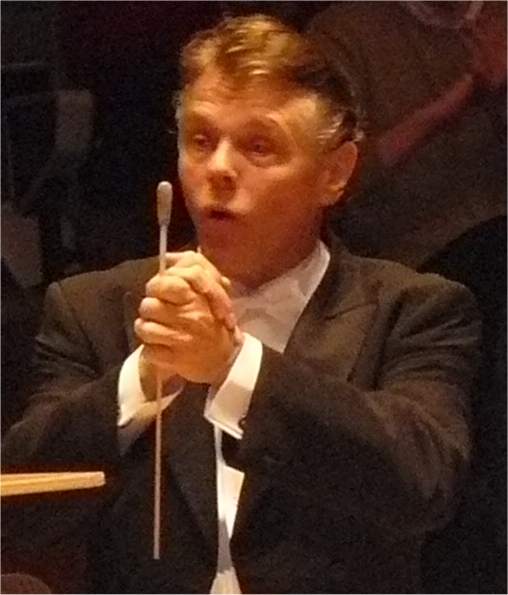
Solomon Volkov: with great success in New York, the Bavarian Orchestra, the Bavarian radio orchestra under the control of my fellow practitioner in the Leningrad Music School, of course, he is from Riga, that is, from our hometown, Marisa Jansons, toured. Maris, as we know, is the head of the two leading world orchestras, that is, the Munich Orchestra of the Bavarian Radio and the Amsterdam Orchestra of the concertgebau. These two orchestras are included in all five of the best orchestras in the world.
Alexander Genis: I was unlucky, I didn’t get tickets, but I listened on the radio broadcast from Carnegie Hall of the concert where Jansons conducted the fifth symphony of Shostakovich. Even on the radio, one could hear the delight caused this performance.
Solomon Volkov: People jumped up after performance, everyone was applauding for a very long time.
Alexander Genis: Shostakovich - after all, this is a very difficult author, he is so rooted in Russian history, a Russian tragedy that, it would seem, “what is hekube to us”. But in America they are more and more recognized.
Solomon Volkov: Thanks to the enthusiasm of such conductors as Jansons, for whom Shostakovich is something absorbed with milk, however, in this case, not a mother, but a father, the famous conductor Arvid Jansons, who was an associate of Mravinsky for many years.
Alexander Genis: And Mravinsky was the main interpreter of Shostakovich.
Solomon Volkov: Of course, this is the tradition of performing Shostakovich's music for Jansons Homemade.
Alexander Genis: Solomon, I never knew, and thanks to this concert I learned intimate details from the life of your classmate. It turns out that Jansons wanted to be a conductor since childhood, at the age of 4 he conducted, drawing up an orchestra from the crosses and all kinds of stationery. But his passion for football was even more, he went to the football school in Riga and wanted to be a football player. But his father told him that this could not be: “Our whole family can only be conductors.” Have you heard about Jansons's football hobbies?
Solomon Volkov: Jansons was fond of sports in Leningrad, where I met him. In general, everything that he was doing was given to him. He studied at a school where there was no separation of symphonic conductors, there, if you wanted to become a conductor, had to go to a choral conducting department. He was a choral conductor, played perfectly on the piano, which was of great importance for me, well versed in all objects, in mathematics and in all these mathematics, in which I was not boom at all. Only thanks to Jansons, as I always like to emphasize, I could finish school safely.
Alexander Genis: That is, we wrote off from him?
Solomon Volkov: wrote off with might and main. Thank you for not hindering this.
Regarding Jansons, the news came from the Amsterdam orchestra recently, only Munich leaves for him. Because it just becomes difficult for him to physically.
Alexander Genis: I heard that he had a heart attack.
Solomon Volkov: He has a long time to heart problems. Thank God they put all these things under control, but, of course, you need to think about health. On this visit, he came with the Munich Orchestra, I understand why Jansons left this orchestra along.
Alexander Genis: Why?
Solomon Volkov: Firstly, it consists to a large extent almost completely of young people who, to a large degree, Yansons himself picked up. You know, they listen to him like that, they play with such enthusiasm, obeying his will, they so want to do all this that it would be impossible to part with them. What is surprising when we say - Munich, the Munich Orchestra. It seems that these are Germans who should well, solidly play German music, first of all, Wagner. Well, Shostakovich, who is associated with the German tradition through Malera. But Jansons with this orchestra worked miracles in the sense that he raised them before my eyes. There was such an orchestra, which best succeeded in German music. But on this visit, he conducted Berlioz, nothing more far from German music than the work of Berlioz, it is impossible to imagine. And the orchestra played it, as if it were a French team. This evening with Jansons, they became French. And this is what Jansons achieves from each orchestra with whom he works so that the orchestra does not focus on one repertoire, on one of some style, and showed completely different music differently.
Alexander Genis: Solomon, is this a sign of the universality of the conductor?
Solomon Volkov: Yes. You know, I do not want to say here that one type of conductor is better than another, I do not want to say that the conductor who concentrates on some of his national style does what is closer to him, that something is missing, no. Conductors can be of different profiles. Jansons is just such a universal conductor.
Alexander Genis: How rare is this talent?
Solomon Volkov: This is very rare. And most importantly, this is a rarity for the orchestra, that Jansons manage to achieve. In general, in our time it seems that there should be a lot of conductors. What does the conductor do? The conductor himself does not play anything, does not sing. As they loved to say in due time, in my opinion, this Rimsky-Korsakov was the first to say that the conductor is dark.
Alexander Genis: I never get tired of repeating when I looked at the Encyclopedia of Brockhaus and Efron, what the conductor is, a dropmeaster was written there and four lines are allocated to the conductor.
Solomon Volkov: But the situation on the modern musical stage is such that all really large, interesting, respected conductors are not one orchestra, but two, sometimes three, because they are not enough. There are not enough people who could really stand in front of a group of a hundred people, suppose, to captivate these people and force them to subordinate their will, to turn into something one and functioning at a high professional level - this is on the one hand. And on the other hand, an extremely important circumstance: modern orchestras exist as an organization that must sell tickets, there is nothing shameful in this - this is the fact of cultural life. And the conductor must have charisma not only for the orchestra, but also for the public, he must attract an audience from the evening to his personality and his interpretations to the evening. Such people can be counted on the fingers. The departure of Jansons from the concertgebau, all tears are pouring there, because they will look for a replacement for a very long time, everyone will be unhappy in the end. Every time the conductor changes, someone is unhappy with the conductor change.
Alexander Genis: This is as painful as the change of the coach of the football team or the change of director in the theater.
Solomon Volkov: A very good comparison. Indeed, as good coaches are not enough, as well as directors, as we see, is not enough. Look in Moscow: there are no large charismatic, interesting, creative leaders at all existing Moscow theaters.
Alexander Genis: What was Lyubimov, say.
Solomon Volkov: There are such legendary names. And not in vain, people still recall such directors in Russia as Efros, Tovstonogov, Akimov. How many years have passed. After all, you and I were lucky in this sense, we went to the performances of these people when they were alive when they were present in the hall when they could be met in the interval. When the actors laid out, knowing that Tovstonogov would take them to them, if something wrong.
Alexander Genis: I saw an “idiot” in the production of Tovstonogov, so I remembered for my whole life.
Solomon Volkov: How many modern directors boast that after him there will be such a giant creative heritage and dozens, as in the case of Tovstonogov, dozens of actors, any of which at the moment can be called a great actor of his time.
Alexander Genis: Conductions are better because records remain.
Solomon Volkov: Performances can also be recorded at the moment.
Alexander Genis: The recorded performance can never be compared with the present, I am sure of that.
Solomon Volkov: Yes, I agree with you. By the way, we can somehow talk about this. And today I want to show how Berliosis sounded on this visit of Jansons with the Bavarian radiorcestr, what a real magical French music it was. The waltz from the "fantastic symphony" of Berlioz is conducted by Maris Jansons.
(Music)
Solomon Volkov: And completely deserved.
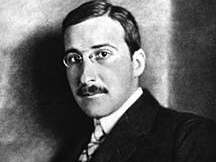
Alexander Genis: In America, not so. But now large changes have occurred, several reprints of the Cweyga, new translations have immediately been released, the biography of Stefan Zweig was released. And of course, the film made by Wes Anderson made much attention, this film is called “Grand Hotel Budapest, it is connected with Stefan Cweig, even the main character looks like him outwardly, I watched this film and can talk about him. What do you think happened, that suddenly Cweiga brought to America?
Solomon Volkov: This is, as always, there are strange cultural gulfstroms that suddenly swirl. Say, suddenly recently the attention of the American public was sharpened on Charles Krausa, about which we talked about, why it was suddenly Karl Kraus, but it turned out that there was some kind of vitamin in Kraus. Again, it is clear to us why Cweig can be popular-it has everything. This is a person who can tell an extraordinary romantic story with a mystical lining, about love, this is a person who can talk extremely exciting about the great personalities of the past. After all, we still think about many characters in the refraction of Stefan Zweig. For me, the story remained unforgettable, told by how Ruga de Lil composed “Marseeluste”, what was the night when de Lily dawned on the muse and the man immortalized his name. This is a symbol for me how a person can remain in the history of culture by the author of one work.
Alexander Genis: In other words, Stefan Zweig has everything to be a popular writer, namely melodramatism and psychologism.
Solomon Volkov: And the masterful ability to tighten the intrigue.
Alexander Genis: Critics, which he also has enough, call it this: Cweig is the Austrian Pepsi -Cola, which, I must say, is evil, but quite accurately. Because the prose of Stefan Zweig, in my opinion, is really a little old -fashioned. There, of course, is bright psychologism. But still it seems to me that she remained in her time. However, it seems to me that this is what makes him attractive today, because he transfers us to that central Europe, which is no longer there.
Solomon Volkov: By which we cry with you every time.
Alexander Genis: As we see, not only us, especially this year. I think that it is implicitly due to the centenary of the First World War. Steifan Zweig was a man who extremely sharply survived the First World War and left the unique memories of “yesterday's world”. For me, this is one of the main books about Europe of the twentieth century, because it is utopian by nature. Стефан Цвейг оставил воспоминания о космополитической столице Вене, где все, что происходило, было замешано на культуре, на искусстве, начиная от пирожных, кончая опереттой, все было связано с красотой. Это была столица космополитического искусств, в этом прелесть той Вены, по которой мы все тоскуем, которую мы любим и которую мы не можем забыть. Первая мировая война угробила эту Вену. Вчерашний мир, как говорил Цвейг, мир стабильности погиб навсегда. Именно в этом заключается тяга к этому миру, потому что это такая Атлантида, и он был одним из открывателей ее.
Стефан Цвейг был чрезвычайно музыкальным человеком, у него среди прочих его увлечений, ведь одно время он был очень богат, будучи действительно самым популярным автором в мире, так вот Цвейг собрал уникальную коллекцию автографов, в основном музыкальных, у него были автографы Моцарта, например. Вся эта коллекция сейчас в Британском музее, лна считается лучшей коллекцией музыкальных автографов. Цвейг и музыка, что вы можете сказать по этому поводу?
Соломон Волков: С Цвейгом и музыкой связана одна чрезвычайно любопытная и показательная история. Он выступил либреттистом в содружестве с композитором, которого мы с вами очень любим, о котором много знаем и который в последнее время нам с вами вспоминается довольно часто — это Рихард Штраус.
Александр Генис: Тем более, что этим летом, в июне исполнилось 150 лет со дня рождения Рихарда Штрауса.
Соломон Волков: Штраус во многих отношениях, во-первых, это замечательный композитор, и во-вторых, интересная трагическая фигура своего времени. Стефан Цвейг написал для него либретто оперы «Молчаливая женщина» в 1935 году, одна из лирически-бытовых, если угодно, опер Штрауса, он самые разные писал. У Штрауса, как мы знаем, из-за этого были чрезвычайно крупные неприятности.
Дело в том, что Штраус не эмигрировал, как многие другие видные представители немецкой культуры, как Томас Манн, он не эмигрировал из нацистской Германии, он остался, и не просто остался в ней, а занял пост председателя так называемой Имперской музыкальной палаты. Для тех, кто не очень вникал, что такое Имперская музыкальная палата, я могу привести параллель — это был как бы Хренников в нацистской Германии, то есть человек, который руководил всей музыкой, но у него даже были большие полномочия, чем у Хренникова, потому что Хренников был генеральным секретарем Союза композиторов только, хотя и имел мощные рычаги в исполнительском деле. Рихард Штраус же в качестве президента Имперской музыкальной палаты, в его руках были рычаги всей музыкальной жизни германской того времени. Он был вынужден уйти со своего поста не просто из-за своего сотрудничества с Цвейгом, а из-за того, что он написал Цвейгу довольно откровенное письмо о своем неприятии многих аспектов культурной жизни нацистской Германии. Письмо было перехвачено, перлюстрировано и ему предложили подать в отставку. Я не могу сказать, что можно извлечь из этой истории какую-то мораль. Остается просто чувство определенной горечи и понимания того, что во взаимоотношениях, наверное, любой крупной культурной фигуры, если этому человеку не повезло и он живет в авторитарном или тоталитарном государстве, неизбежно наступает момент, когда тебе приходится входить в некоторые отношения с этим государством и так или иначе ты идешь на какие-то компромиссы.
Александр Генис: Не будем забывать, что Рихард Штраус отказался снять фамилию либреттиста - еврея Цвейга - из афиши, что от него требовали во время премьеры этой оперы, из-за этого Геббельс не пришел на премьеру и оперу через три представления закрыли. То есть Штраус повел себя достаточно мужественно.
Соломон Волков: Примеров того, что Штраус себя вел весьма независимо во всей этой чрезвычайно непростой ситуации, их довольно много. Во-первых, в семье у него была еврейская кровь. Он крайне отрицательно относился к преследованиям евреев в нацистской Германии и не раз об этом высказывался. Когда ему предложили заменить Бруно Вальтера, немецкого дирижера еврейского происхождения, он сделал это с большой неохотой и только после того, как менеджеры Вальтера сказали ему, что сам Вальтер просил его об этом и хотел, чтобы он его заменил. И в итоге, я должен сказать, что Гитлер, который поначалу к Штраусу относился весьма доброжелательно, в итоге стал его считать чуть ли не врагом Третьего Рейха. Так что все не так просто. В итоге остается для нас при всем знании и понимании биографии, все-таки остается музыка, и мы ее либо принимаем, либо не принимаем. Я должен вам сказать, что в моем опыте дело обстоит почти всегда следующим образом: нам нравится, предположим, творчество некоей фигуры, тогда мы склонны разбираться и даже, может быть, оправдывать те или иные поступки, которые могут показаться не вполне может быть благовидными, и наоборот, нам не нравится творчество человека, и тогда мы начинаем придираться к каждому его неосторожному слову.
Александр Генис: Но вернемся к Цвейгу.
Соломон Волков: Я хочу показать фрагмент из этой оперы «Молчаливая женщина», чтобы наши слушатели понял, каков был стиль Штрауса в тот период в 1935 году.
(Music)