
Translated material
EU summit in Brussels
The program is maintained by Andrei Shari. Radio Liberty correspondents Evgeny Bovkun and Alexei Dzikovitsky participate - he talked with the head of the Center for Research at the Warsaw Institute of International Affairs, the editor of the magazine "Europe", the Gloromir Dembsky.
Andrey Shary: The main European news of the day is the opening of the EU Summit in Brussels. The focus of this high forum is the EU constitution. The document, as you know, regulates the activities of the main structures of the EU after its expansion in May next year. The debate continues. France and Germany are interested in the influence of countries on the decision -making of the EU depending on their population. Poland and Spain believe that such amendments would be unfair to small countries. As you know, representatives of Germany and Poland tried to agree on the eve of the opening of a meeting in Brussels, however, this could not be done. Not very successful, judging by what we know about the meeting, negotiations began in the capital of Belgium. The adoption of the EU constitution can be postponed until next year, the Prime Minister of Italy Silvio Berlusconi said on Friday - if the consent on this document is not reached, it is better to continue the consultation, he said.
Silvio Berlusconi: We will try to find a compromise solution that would satisfy all the interested countries and went for the benefit of Europe, Europeans, a decision that would make Europe capable of acting. If the compromise does not succeed, if negotiations do not give results, then it is better to continue intergovernmental consultations than to adopt a bad constitution.
Andrei Shary: At a meeting in Brussels, Germany agrees to achieve a compromise on the adoption of the European Constitution under strictly defined conditions. The German delegation is to ensure that the summit participants take into account its urgent requirement, which is also supported by France - the introduction of the so -called principle of the double majority in the Council of EU ministers. Read more about this - Radio Liberty correspondent in Germany Evgeny Bovkun:
Evgeny Bovkun: The participants of the European Union summit were postponed at the end of the day, without nourishing the special illusions that they would be able to solve today. It is enough, and the members of the German delegation emphasize that ninety -two issues out of a hundred are already agreed. The most controversial of the remaining is the distribution of votes in the Council of EU ministers. Germany cannot come to terms with only two mandates in this organ than Poland, although in terms of population, Germany after unification is twice as much as Poland. Gerhard Schroeder, however, emphasized that the main task of the meeting is to approve the new constitution of the community. "We want the Constitution, and this constitution should have a substance," said the Chancellor, demonstrating cautious optimism.
Before the summit, the head of the German government held separate negotiations with France President Shirak and British Prime Minister Blair. They had breakfast together, but refused to discuss the agenda of their backstage negotiations with reporters. According to information leaked to the German seal, it was, however, about how to break the resistance of Spain and Poland, firmly insisting on the agreement reached in Nice. In addition, Gerhard Schroeder hoped to persuade the British prime minister at the last minute in order to represent Poland’s possible initiatives in the same direction. For Germany, the introduction of the principle of the double majority is important primarily because the new project of the EU constitution provides for a significant expansion of decision -making practice by achieving the majority. Since after the adoption of the new Constitution, the European Union should become more transparent and democratic, the responsibility of members of the Joint Council of Ministers is growing strongly, and Germany cannot evade this responsibility, members of the Federal Republic of Germany delegation argue, protecting their tough position on the double majority. At the same time, Germany needs a compromise, because I do not want to earn the reputation of the "destroyer of European unity." In the end, she claims to put her man - preferably Yoshka Fisher - to the post of Minister of Foreign Affairs of the European Union.
Andrei Shary: The current voting system in the governing bodies of the EU was developed three years ago at a summit in the French city of Nice. This voting system suits many EU countries, including, for example, Poland, which then did not participate in the summit, since it was not a member of the EU. However, now Poland is trying to protect this system and does it very persistently, threatening the blockade of the EU actions. Our correspondent Alexei Dzikovitsky talked about the position of Poland at the Summit in Brussels with the head of the Center for Research at the Warsaw Institute of International Affairs, the editor of the magazine "Europe" by the Slavomir of Demzy.
Alexey Dzikovitsky: Mr. Dembsky, does Warsaw so firm position on the change in the voting system in the Council of Ministers of the European Union? Indeed, in this struggle, Poland remained almost one on one with the most powerful European states - Germany and France?
Slavomir Dembsky: Protection of their interests with the help of serious arguments always makes sense. Whether Poland was left alone with Germany and France or not, it will become clear over the next days - this is not yet known. The voting system, which was developed and accepted in Nice without the participation of Warsaw, is regarded as profitable for Poland. And what is beneficial for us, we must protect. At the same time, you need to understand that this is an absolutely normal situation for the European Union. There, every EU participating country in every possible way defends interests. And for us it is a curiosity, because Poland first participates in such negotiations in equal terms as a member of the European Union. You just need to get used to it.
Alexei Dzikovitsky: Czech Republic and Slovakia - Poland partners in the Vygrad group, literally on the eve of the summit in Brussels, practically refused to support Poland in the struggle "for Nice". Why is it not so important for them as for Poland?
Slavomir Dembsky: The Czech Republic and Slovakia are much smaller than Poland, and those changes that are proposed to make the European Union to the new Constitution, practically do not affect what weight the small EU member countries will have when adopting pan-European decisions. In principle, we are talking about medium -sized countries - Poland and Spain, which, according to the voting system adopted in Nice, have received an influence close to the influence of large states in the EU executive authority. Therefore, it is not surprising that these states do not want to abandon their position. Another moment. Until now, European integration has been based on the principle according to which large European states voluntarily gave part of their strength, their influence, smaller states, so that relations in the European Union were closer. And now we see that the two largest EU countries - Germany and France - want to change this rule.
Alexei Dzikovitsky: Mr. Dembsky, did it happen that Poland, concentrating exclusively on the voting system, missed other important provisions of the new European Constitution?
Slavomir Dembsky: No. The fact is that in addition to the voting system, there are no serious discrepancies regarding the provisions of the European Constitution project between countries. For example, the powers of the national parliaments of the EU member countries, which is very important, finally, are clearly defined. The convention has prepared a good project. There is only one problem - the counting of votes, and it must be solved.
Alexey Dzikovitsky: Germany and France are unhappy with Poland’s position and do not hide it. In your opinion, can any sanctions in relation to Warsaw be expected from Berlin and Paris?
Slavomir Dembsky: What are you, it is simply impossible to imagine! Of course, at the preliminary stage, some pressure elements may appear. However, when it reaches specific negotiations, you need to be aware of which of these arguments can really be used. The assumptions that the position of Poland can be reflected, for example, on economic relations within the EU, in my opinion, are not true. These are different things. If they could be united, then this would have been done for a long time. Then the European Union simply could not exist. The EU participating countries have a deep understanding of the need for consensus in all cases.
Alexei Dzikovitsky: Mr. Dembsky, for example that Poland will use the right veto and will not allow the adoption of the new EU constitution. What can be the consequences of this?
Slavomir Dembsky: I think that it will not reach. The threat of the failure of the draft Constitution of one of the EU member countries is important during negotiations. Participants in negotiations should understand what opportunities their partners have for maneuver. None of the parties agree to put the other side in a hopeless situation. After all, the main thing is to accept the project, and not threaten each other in negotiations. If any government cannot agree with the draft Constitution, then it does this not because to annoy the rest, but because it cannot do this for political reasons; It cannot guarantee that the obligations accepted by him at the summit will be ratified by parliament and adopted by the people. These are political realities. I think that in Brussels everyone will respect the position of their negotiation partner, and participants in the summit will jointly seek a compromise.
-
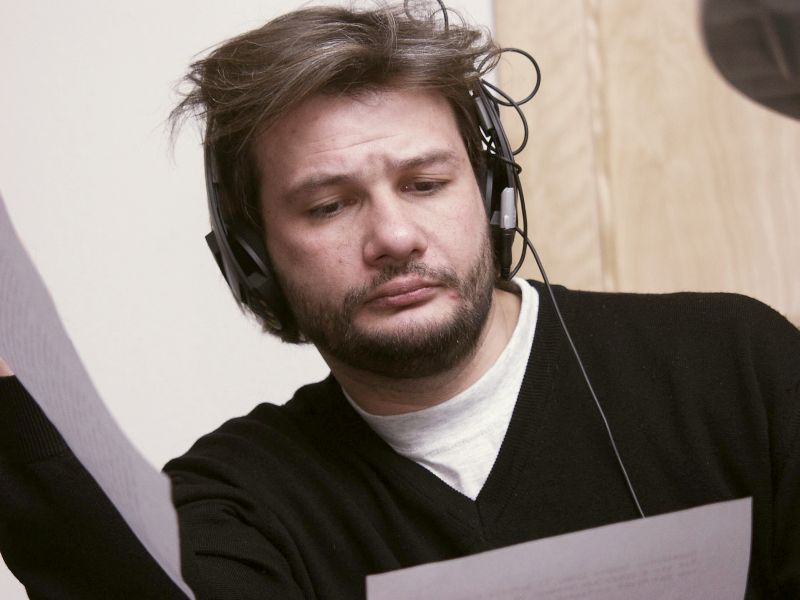

Andrey Shary
I.O. Regional Director of Radio Free Europe/Radio Liberty for Russian -Sound Content
Andrey Shary on Facebook
Sharya@rferl.org