
Translated material
Brain simulators
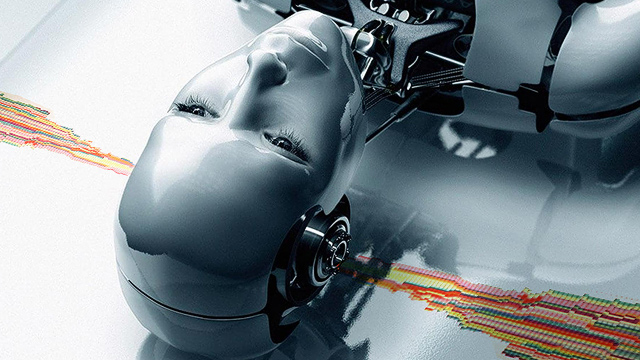
“I am smart ... and an ordinary person ... so weak ... slow ...”, - the rebellious robot says these words from Azimov. There is an idea of the imperfection of the human brain in comparison with the computer. The situation, in fact, is the opposite - these computers are now trying to build in imitation of the brain, and confirmation of this - messages of different research groups made in recent weeks.
1014 - This is the name of the report on the successes of the IBM Compass project. 10 in the fourteenth degree is an approximate assessment of the number of connections between cells in the human brain, and it was this order that was achieved in the last computer simulations of the project. “ Neurons ” and “ Sinapses ” (intercellular ties of neurons) - the terms from the dictionary of the physiology of the brain - firmly settled in the field of computer engineering.
The architecture of the usual computers, created back in the middle of the last century and named “von Neumanovskaya” in honor of the mathematician John von Neumann , involves a linear approach, and the step-by-step execution of teams. And, it seems, this approach is close to the limit of their capabilities, so computer engineers are more and more trying to create a new one, “non-Fon-Nemanic” computer architecture, in which the processes are not organized sequentially, but in parallel-as in our brain.
This is how one of the authors of the IBM report describes these processes Dharmendr Modha : “Functionality, low energy intensity, compactness”, “The human brain has a thrill with power - the ability to perceive, comprehend, act, act and interact, and at the same time consumes less energy than an electric bulb than a two -liter circus bottle”. Here is a video from the IBM “Era of Cognitive Systems”, where you can see how the Truenorth chip plays the trivial computer game Pong - “just like a person”.
In this new computer architecture, calculations are divided (“neurons” are responsible for them), memory (“synapses”), the exchange of information (“axons” and “dendrites”) - by analogy with the structure of the brain. Just as real, computer “neurons” receive information from thousands of neighboring “neurons”, process it and transmit signals, and computer “synapses” connect “neurons” and accumulate information.
In another work of recent times in this area , researchers from Germany, participants in the European Brainscales project, created the Spikey chip with analog components that literally reproduce the work of neurons and synapses that model their electric behavior. In Newscientist, one of the authors of the work of the Carlhainz Mayer explains: just as a real neuron sends a signal in the brain when the electrical stress on its membrane reaches a certain level, and in the chip, the capacitor playing the role of neuron becomes conducting with a certain Voltage. Analog components acting in the role of synapses have different levels of resistance - just the same connections between neurons become stronger or weaker depending on the frequency of their use.
This direction of the development of computer technology is not the only thing, for example, the idea of a quantum computer, which, by the way, is associated with the work of the latest Nobel Physics Prize laureates . However, it is precisely research in the field of computer brain simulation that attracts the special attention of the non -special press of their speculative proximity to the ideas of creating artificial intelligence.
Although researchers from IBM emphasized that in their project it was not about the simulation of the brain in the biological sense, in the comments to their work enthusiasts said that this is an important step on the path of creating a genuine artificial brain : “According to all estimates, we need many more years to recreate the real behavior of the human brain in a well-known universe, but, at least, it seems here, here, here, it seems, here, it seems, here. Progress has reached. ” Skeptics remind: the human brain is studied as poorly that it is still unclear as, in fact, to build its likeness.
Behind this private discussion, an old controversy rises about whether it is possible at all on a computer, algorithmic path to get consciousness. Determinism against free will. One approach is illustrated by the demon of Laplace - the mental experiment of the French mathematician of the XVIII -XIX centuries , according to which, if a mighty mind knows the situation of all bodies in the universe (from the largest bodies to the smallest atoms) and all the forces acting on them, he will understand the unified formula of everything and will see the future as clear as the past. On the other hand, our contemporary, physicist Roger Penrose offers a quantum model of the brain, according to which the processes of thinking are fundamentally unsuccessful. Here is a fragment of an interview with Penrose BBC, where he explains his position:
Penrose thus destroys the construction of new determinism, which seems to involve the creation of an artificial reason by mechanistic means - collecting the brain of a neuron. However, even among those who consider it possible to simulate human consciousness by the methods of cybernetics, the vision of this process is more complicated. For example, the lecture of Mikhail Burtsev , in which artificial intelligence becomes the result of the evolution of students of artificial neural networks that control computers or robots (and artificial neural city is just what IBM and other researchers work on). The lecture raises a wonderful question - this will be the evolution of a person who expands his phenotype with artificial intelligence, or will it be the appearance of a new species - artificial intelligence? (And then anyone will come to memory of a discussion between the rude Korneev and a polite amperean: “How do we know that the purpose of nature is to create a comrade amperean? Maybe the purpose of nature is the creation of a comrade of amperean”).
The complexity of the task is illustrated by another November study - a group of physicists has published work about the likeness of the evolutions of complex systems - brain, the Internet and the Universe. One of the authors of the work Dmitry Kryukov in an interview with Radio Liberty described the process of creating a graph of all elementary events in the entire history of the universe, and it sounded so difficult and grandiose that even partially cannot be given within the framework of the current article - in the coming days we will publish the interview completely. According to Kryukov, it turned out that the dynamics of the growth of the Universe turned out to be the dynamics of the growth of completely different systems, such as the Internet, social networks and the brain: “We do not have explanations for this amazing coincidence, but most likely there are some unknown fundamental laws, from which Einstein’s equalization follows in the particular case, describing the dynamics of the universe in the general. Theories of relativity, and unknown equations of the development of the Internet, social networks, brain and the like that we also do not know today. ” Kryukov emphasizes that we are talking about empirical, observed dynamics, and that we do not know the equations of movement for all these complex systems, but if we knew, we could predict their development. What is not a demon of Laplace?
The similar scale and complexity of the task of creating the artificial brain, perhaps, are beneficial to humanity, given what the consequences of such a scientific breakthrough are seen even by its adherents. The emergence of a superhuman mind is described under the term “technological singularity” in the famous 1993 article by a mathematician and science fiction writer Vehind . After the point of singularity, he believed, the human era should end quickly: somehow, in response to the question of whether computers will someday be as smart as a person, Winja said: “Yes, only very shortly”, bearing in mind that it is worth computers to equal a person, they will not stop there and instantly go forward. In the article of the era of mankind, a term was given within 30 years - that is, until 2023.
So far, however, it is not visible where artificial intelligence may come from, and you can not be afraid that the chain of transistors and wires will move, he will say hoarsely “hello”, jokingly will pass the Turing test (designed to distinguish a person from the car) and leave for Christmas purchases.
To completely reassure - the last message about the study in this article: a group of scientists from Cambridge University organized a center for studying existential risks , which attributed the threat from artificial intelligence.
Sleep calmly. Scientists will look after enraged robots.